





Meiji Era Pottery
These pieces of meiji era pottery bring traditional Japanese craftsmanship and intricate hand-painted decoration into the home.
Meiji Era Pottery
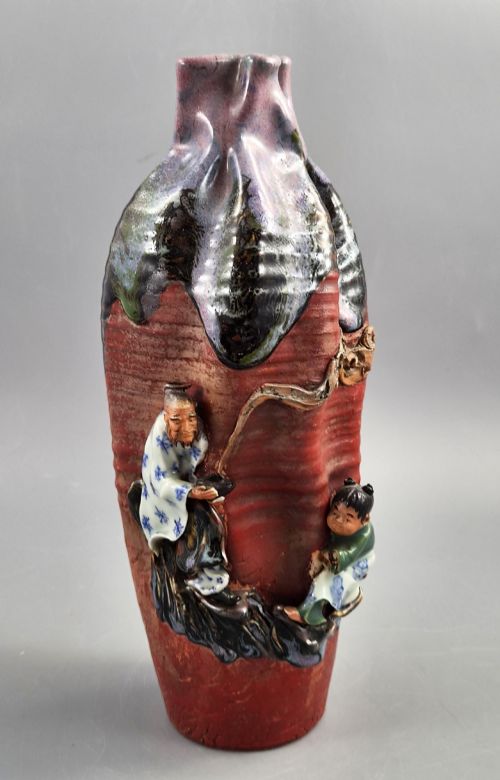
When you search for meiji era pottery, you are looking at items produced in Japan during the late nineteenth and early twentieth centuries. The selection on this page primarily comprises decorative vases, bowls, incense burners, and animal figurines created in various regional styles.
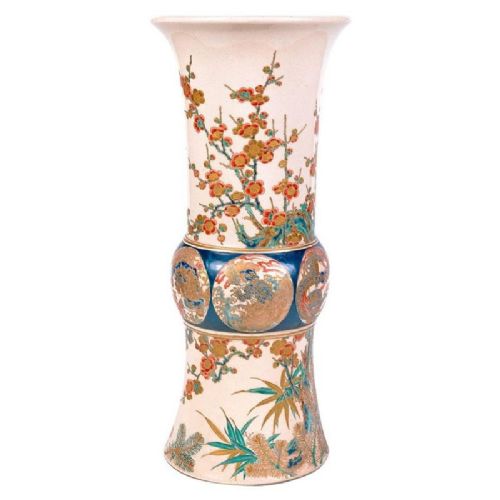
Vases and decorative vessels form the largest share of the current listings, alongside distinct figures like the Bizen lion dog and Mandarin duck okimono. These objects reflect the artistic output of a period that opened Japanese craftsmanship to Western markets while retaining traditional motifs.
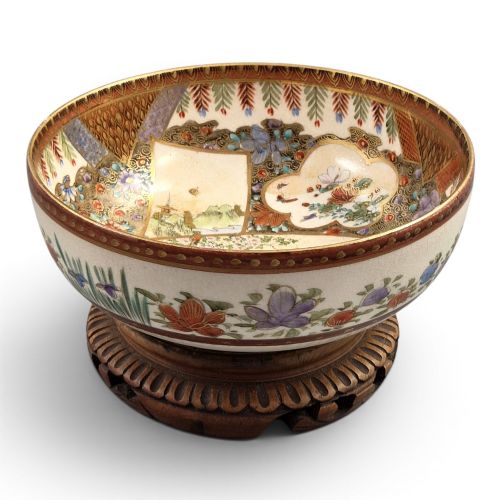
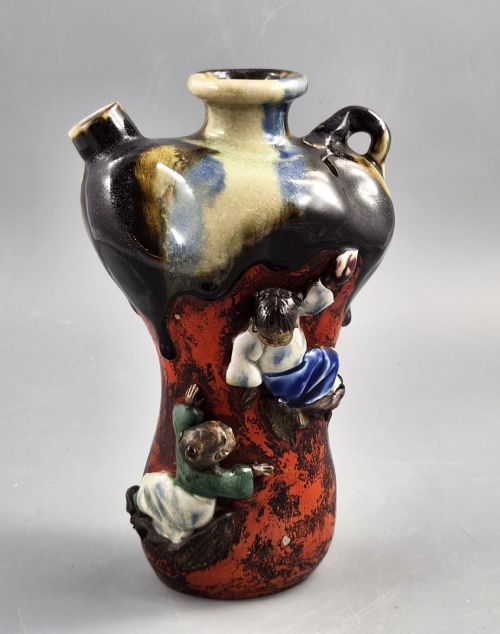
The objects span different production centres and aesthetics, from the finely crackled earthenware of Satsuma to the vibrant enamels of Kutani and the distinctive textured surfaces of Sumida Gawa. Most pieces date from the closing decades of the nineteenth century through to the early decades of the twentieth.
Materials and techniques
Potters utilised earthenware, porcelain, and terracotta as the primary structural bases for their vessels and figures. Earthenware bodies, particularly those used for Satsuma ware, provided a porous base designed to absorb the intricate enamel work.
Decoration relied heavily on coloured enamel, gold leaf, and specialised glazes to create detailed pictorial scenes of samurai, sages, and natural subjects. Certain pieces incorporated organic textures, such as the wood-like surface treatments found on specific Satsuma and cloisonné works.
A pottery lion dog keeps watch over the collection, ready to ward off unwanted spirits from the Victorian parlour.
Factors that distinguish the work
The standard of painting and gilding separates simpler commercial wares from the creations of master studios and signed artists. Precision in the facial expressions of figures and the fineness of the gold detailing indicate the level of care invested in the piece.
The integrity of the glaze and the complexity of the form also determine the standing of an item. Pieces featuring sculptural handles, moulded elements, or complex flambé effects require greater technical skill from the potter.
Makuzu Kozan II·Kinkozan·Ban ni·Inoue Ryosai
The Meiji Era Pottery Glossary
- Satsuma
- A type of earthenware originating from the Satsuma Domain, characterised by a crackled ivory glaze and dense enamel painting enriched with gold.
- Kutani
- A style of Japanese porcelain known for its strong, vibrant colour palette, often featuring greens, blues, yellows, and purples.
- Okimono
- A small Japanese ornamental carving designed for display on a shelf or in a tokonoma alcove rather than for practical use.
- Koro
- A traditional incense burner, typically fitted with a pierced lid to allow smoke to escape during use.
- Bizen
- A style of unglazed stoneware fired at high temperatures, known for its earthy reddish-brown colour and natural ash markings.
Meiji Era Pottery: Frequently Asked Questions
What is Satsuma ware?
Satsuma ware is a distinct form of Japanese earthenware defined by its pale, finely crackled glaze which serves as a canvas for detailed hand-painted scenes.
These pieces often incorporate generous amounts of gold leaf and enamel to depict figures, landscapes, and floral motifs.
How were incense burners used?
Incense burners, known as koro, were utilised to scent living spaces and temples by burning aromatic woods or resins within a contained vessel.
The pierced lids allowed the fragrant smoke to disperse evenly throughout the room while keeping the burning material secure.
How do I identify a maker's mark?
Makers and studios often applied painted, stamped, or incised signatures to the base of their pottery to record their workshop or individual identity.
Translating these Japanese characters requires consulting reference guides specific to Meiji period ceramics and regional kilns.
Where should I display these pieces?
These ceramic works suit stable display surfaces away from direct sunlight and sudden temperature fluctuations to protect their delicate enamel and gold leaf decorations.
Placing them on mantelpieces, cabinets, or dedicated display tables allows the intricate painting and sculptural forms to be viewed clearly.