

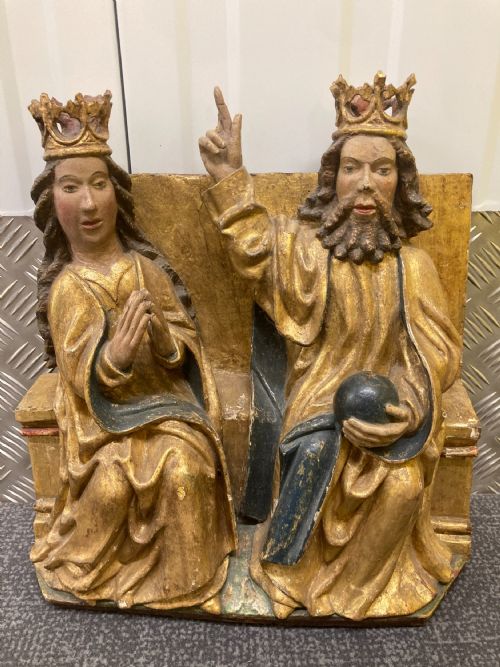


Medieval Wood Carving
Medieval wood carving brings solid oak, limewood and pine figural sculptures into your home, offering tangible connections to centuries of religious and domestic devotion.
Medieval Wood Carving
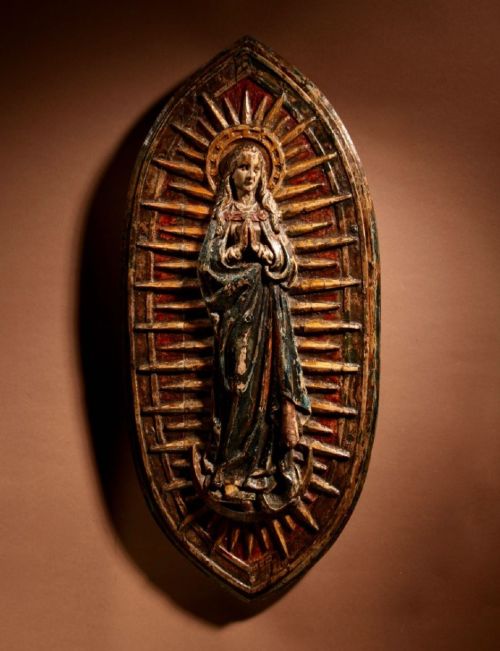
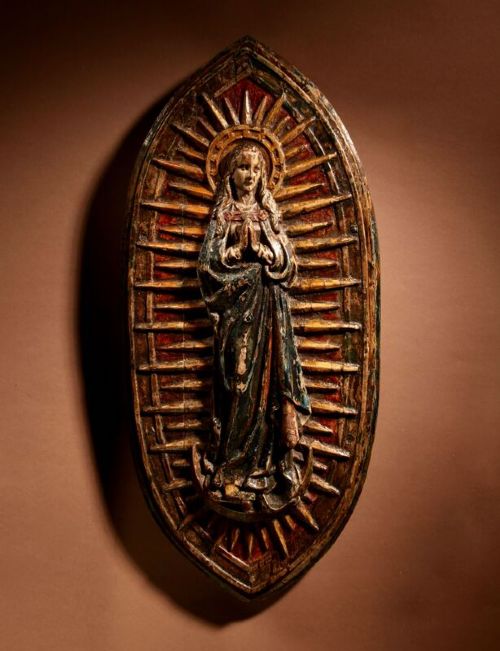
A medieval wood carving represents devotional figures, architectural elements and decorative panels produced primarily in the fifteenth and sixteenth centuries across continental Europe. You encounter figures of saints, Madonnas and church groups carved with distinct regional characteristics from Germany, Flanders and France. These objects survive as fragments of larger altarpieces, church furnishings or freestanding devotional statues.
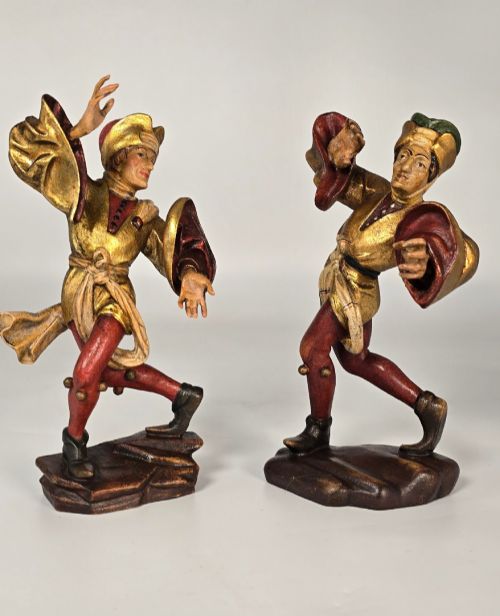
The material record also includes later revivals and interpretations from the nineteenth and twentieth centuries, such as Black Forest limewood figures and historicist cabinets. While authentic pre-reformation pieces dominate the earlier periods, later carvers continued to utilise traditional gothic motifs. This mix provides both primary church artefacts and later craftsmanship rooted in historical styles.
How they were made
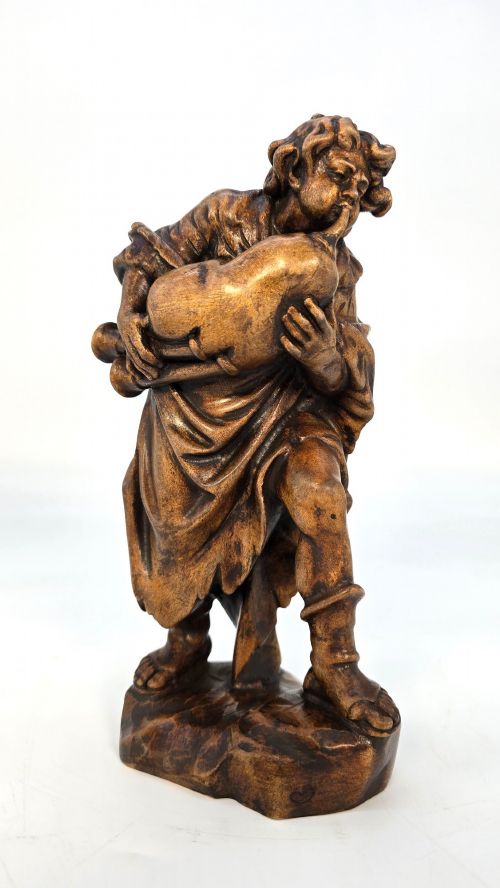
Carvers shaped these pieces predominantly from dense heartwoods like oak, limewood, pine and chestnut, working directly with chisel and gouge. The grain of the timber dictated the depth of the undercut and the crispness of the drapery folds.
Many surfaces received layers of gesso, polychrome paint or gold leaf to enhance the visual impact of religious figures in dim church interiors. Iron fixings and pins frequently secured projecting elements or joined separate sections of larger sculptural groups.
What varies in quality
The standard of a carving rests on the confidence of the hand behind the chisel, visible in the fluid movement of drapery and the anatomical expression of the face. Master carvers from regions like the Upper Rhine or Flanders achieved a psychological depth and naturalism that lesser workshops missed.
Surface preservation dictates much of the visual success, distinguishing pieces with original polychrome and gesso traces from those stripped down to bare, uniform timber by later hands.
The Medieval Wood Carving Glossary
- Polychrome paint
- Pigments applied to the surface of wood sculpture, often layered over gesso to provide lifelike colour and decorative detail. Surviving traces help date the piece and reveal its original appearance.
- Gesso
- A plaster mixture applied as a smooth base layer on wood before gilding or painting. It creates a stable ground for delicate surface ornamentation.
- Tracery
- Openwork pattern in stone or wood, commonly found in Gothic windows and panels. It translates structural support into delicate geometric designs.
- Architectural fragment
- A surviving portion of a larger building component, such as a carved screen, altarpiece or portal. These pieces show how decorative sculpture integrated with larger ecclesiastical structures.
- Altarpiece
- A devotional structure placed behind an altar, often featuring numerous carved panels and sculptural groups depicting sacred narratives.
Medieval Wood Carving: Frequently Asked Questions
How do I care for antique wood carvings?
Keep carvings away from direct heat sources and sudden temperature shifts to prevent the timber from splitting. Dust them gently with a dry, soft brush rather than using liquid polishes.
Maintain stable indoor humidity levels where the sculpture is displayed. Avoid applying modern oils or waxes unless specifically recommended by a conservator.
Where were these carvings originally displayed?
Most early figures originated inside churches and abbeys as part of altarpieces, rood screens or devotional shrines. Some smaller secular pieces functioned as decorative furniture elements or deed boxes.
Over the centuries, many ecclesiastical pieces entered private collections following church reformations and building demolitions.
What is an Anna Selbdritt carving?
An Anna Selbdritt depicts Saint Anne together with her daughter the Virgin Mary and the infant Jesus. This devotional subject became popular in late medieval European sculpture.
Artists used this three-figure composition to emphasise genealogy and the maternal lineage of Christ.