



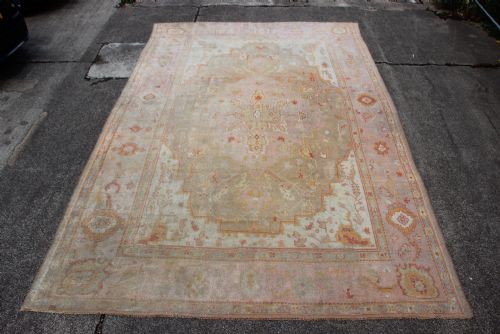
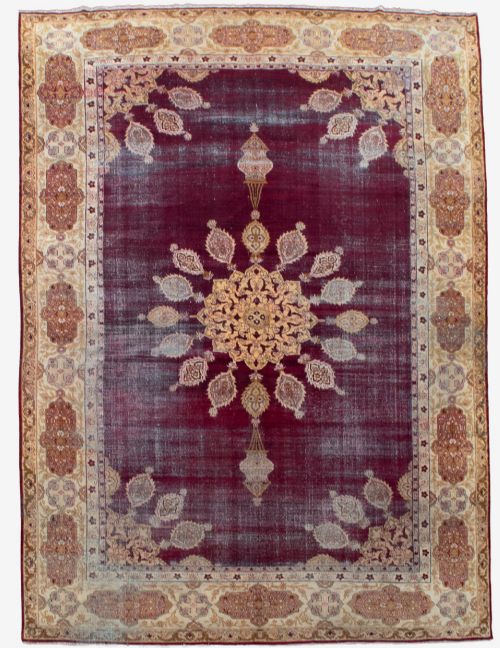
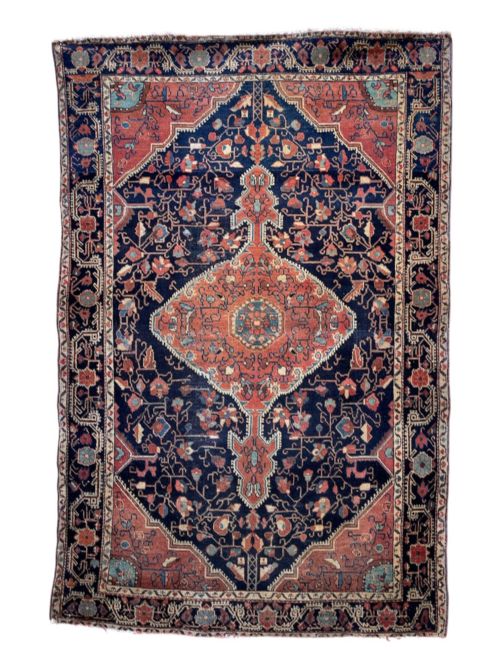
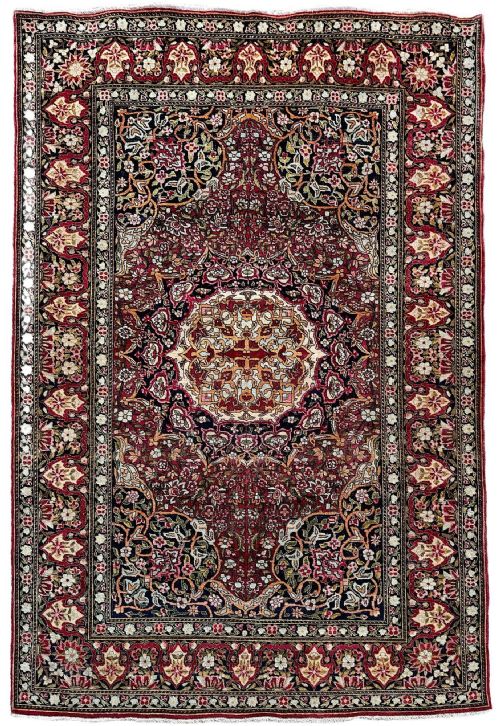
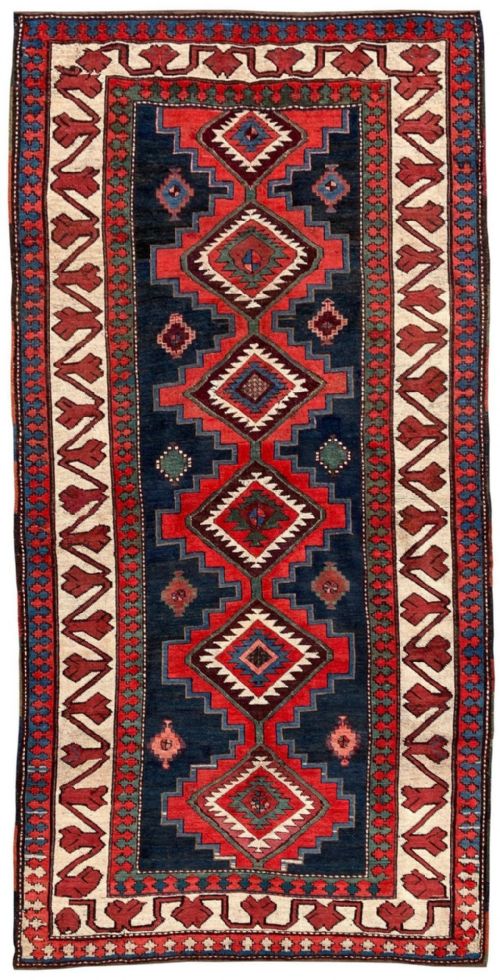
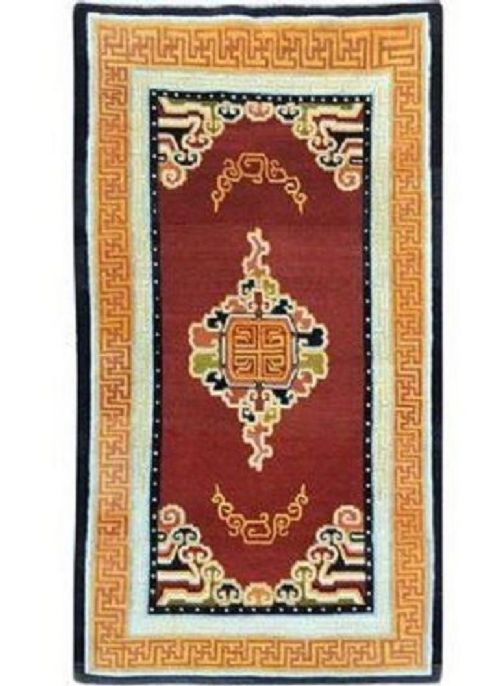
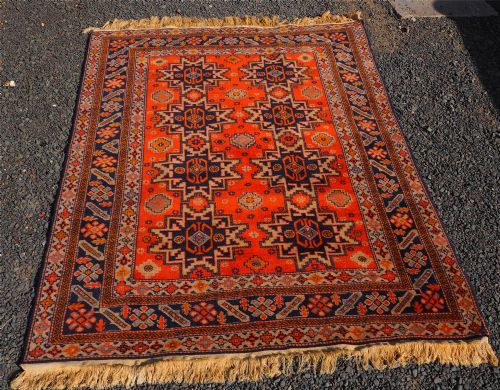
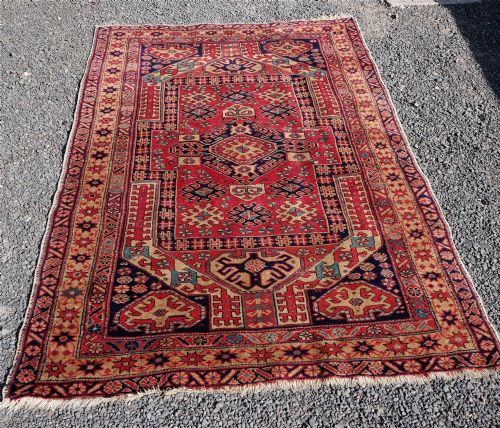
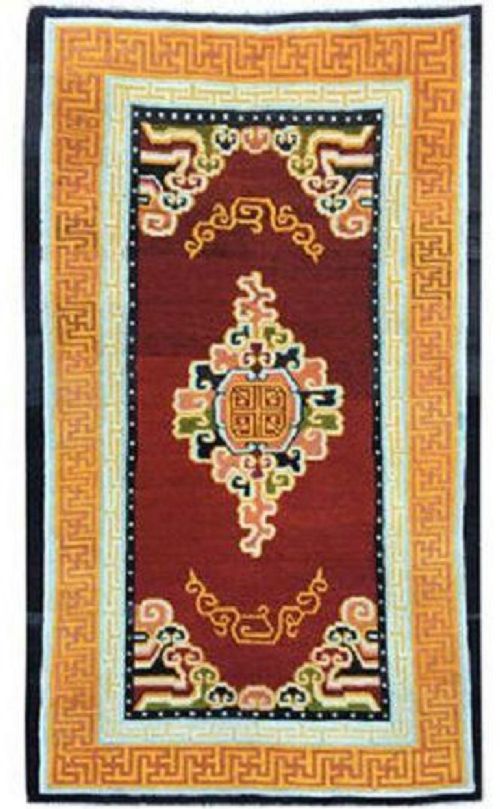
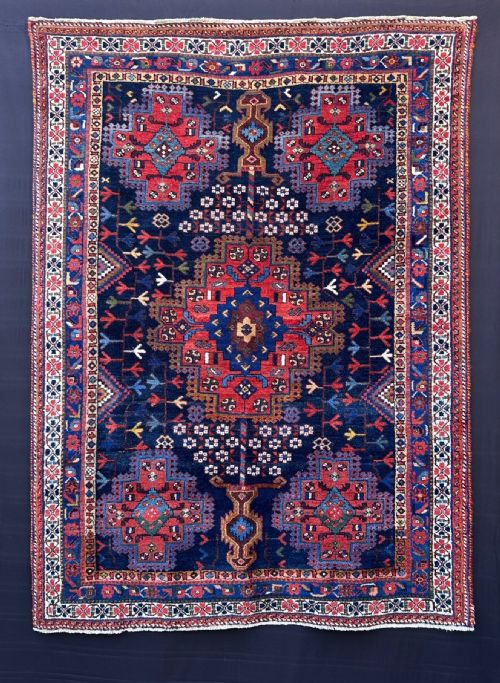
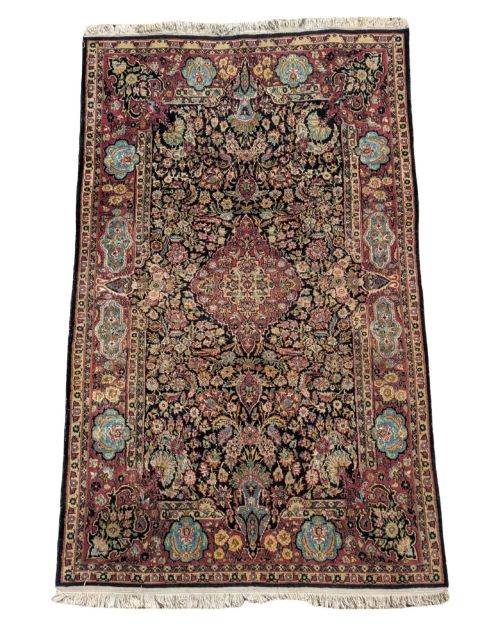
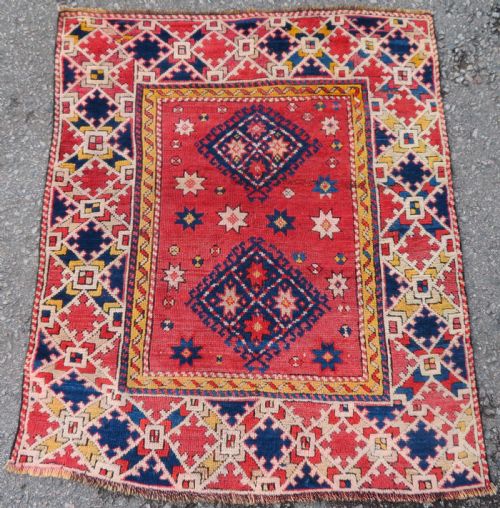
Medallion Area Carpet
A medallion area carpet brings a structured geometric or floral focal point into a room through traditional hand-knotting.
Medallion Area Carpet
Buyers examining a medallion area carpet will encounter pieces bearing regional identifiers such as Heriz, Bakhtiar, Oushak, Kazak, and Khamseh. The inventory leans heavily towards Persian traditional and tribal styles alongside Caucasian and Turkish village works, executed in wool, cotton, silk, and occasional camel wool fields.
Materials and construction methods
Makers constructed these floor coverings primarily using hand-knotted wool foundations, often paired with cotton warps and wefts to ensure structural stability. Selected pieces incorporate finer silk highlights or utilise soft camel wool within the field to create subtle textural contrast.
Weavers employed traditional village and workshop techniques, applying natural and mellow vegetable colours that settled into balanced patinas over decades of use. The density of the knots and the precision of the geometric or floral medallion layout reflect the origin, whether a nomadic Caucasian tribe or a larger Persian town workshop.
The current selection spans multiple periods, featuring pieces dated from the nineteenth century through the nineteen-sixties in wool, cotton, silk, and camel wool.
Assessing quality in woven carpets
Quality in a woven carpet rests upon the integrity of the foundation, the tightness of the knotting, and the clarity of the central medallion design. Superior examples display careful proportioning in the borders and harmonious dye saturation across the field.
The choice of materials also dictates distinction, where fine wool preparation or deliberate silk highlights elevate the handle of the textile. Consistency in the weave and stable structural edges demonstrate the competence of the original weaver.
The Medallion Area Carpet Glossary
- Medallion
- The central ornamental motif dominating the field of a carpet. It forms the primary focal point of the overall design composition.
- Warp
- The vertical threads stretched lengthwise on a loom before weaving begins. The knots are tied around these foundational elements.
- Weft
- The horizontal threads passed alternately over and under the warp threads. They hold the rows of knots securely in place.
- Pile
- The upright cut ends of the knot threads that form the plush surface of the carpet. Its height and density define the tactile feel.
- Field
- The main central background area of a carpet enclosed by the borders. It typically contains the central medallion or repeating motifs.
Medallion Area Carpet: Frequently Asked Questions
How do I place a medallion carpet in a room?
Position the carpet so that the central medallion anchors the furniture arrangement, such as beneath a coffee table or centred within a seating group.
Allow enough surrounding floor space to frame the borders properly without crowding the edges of the room.
Are these carpets suitable for heavy foot traffic?
Wool and cotton construction provides natural durability for daily use in domestic living spaces or hallways.
Heavier room-sized carpets handle regular movement well, provided they rest on a quality underlay to prevent slipping and friction.
How do I distinguish Persian from Caucasian styles?
Persian carpets frequently exhibit intricate curved floral patterns, fine botanical motifs, and balanced town workshop structures.
Caucasian examples tend to display bolder geometric medallions, sharper angles, and tribal motifs derived from regional village traditions.
What does camel wool indicate in a carpet?
Undyed camel wool provides a naturally soft, warm background tone within the field of the carpet.
This material often signals specific regional village production, such as traditional pieces originating from nineteenth and early twentieth century Konya workshops.