


Mechanical Winding Mantel Clock
A mechanical winding mantel clock brings reliable movement and solid craftsmanship directly to a room, offering both practical timekeeping and distinct period design.
Mechanical Winding Mantel Clock
A mechanical winding mantel clock sits neatly on a shelf, table or mantelpiece, bringing traditional timekeeping into daily life. When searching for a mechanical winding mantel clock, buyers encounter various forms including traditional carriage clocks, bracket clocks, and striking mantel pieces.
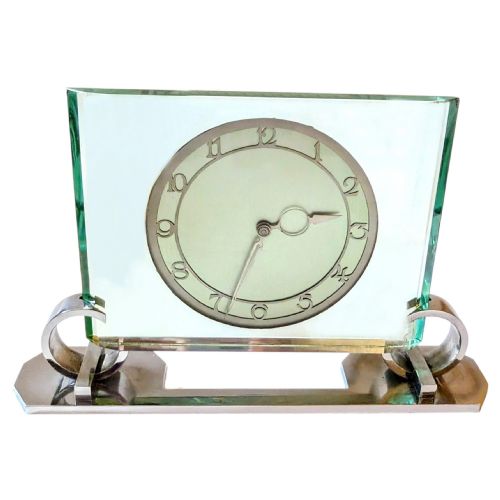
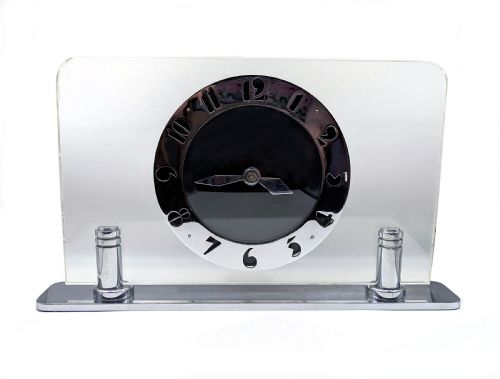
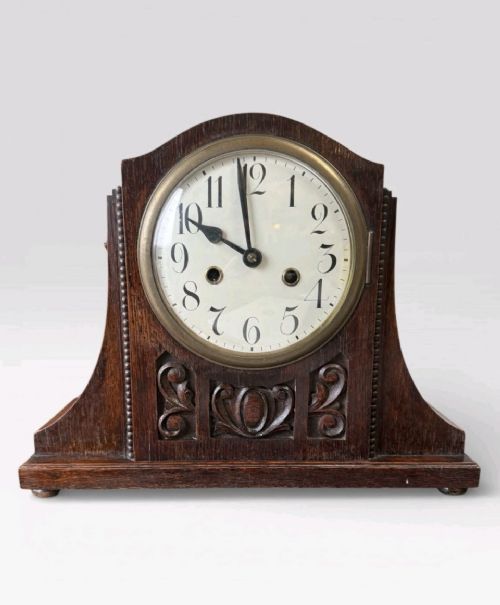
The selection spans several distinct eras, from Victorian brass carriage clocks and 19th century mahogany fusee bracket clocks to Art Deco modernist designs from the 1920s and 1930s. Smiths clockmakers, L Epee, and Kienzle appear among the makers, alongside French workshops and London retailers.
Materials range from polished brass, gilt brass, chrome and glass to rich timbers like oak and mahogany, often complemented by enamel dials. These pieces function as desk clocks, table clocks and mantel clocks, driven by mechanical wind movements and 8 day systems.
Construction and materials
Clockmakers constructed these housings using robust hardwoods like mahogany and oak, or cast them in heavy brass, gilt brass, nickel plating and chrome. Glass panels frequently protect the delicate mechanisms while offering a clear view of the escapement and gears inside.
Enamel dials provide a crisp, legible face for the numerals, paired with finely shaped metal hands driven by spring or fusee movements. The internal gear trains rely on precise engineering to maintain consistent tension and accurate timekeeping over days of operation.
Listings feature brass, mahogany, oak and chrome materials across 19th Century, Victorian, Edwardian and Art Deco periods.
Factors of quality
Superior examples demonstrate substantial weight in their brass cases and precision in the movement of their mechanical components, such as multi-jewelled gear trains and repeater functions. The heft of a massive L Epee case or a detailed French five-minute repeater indicates dense, high-grade casting and assembly.
Design execution distinguishes standard production from notable works, seen in the clean geometric lines of Art Deco Bauhaus German pieces or the careful wood grain matching on single and twin fusee bracket clocks by established makers.
Smiths Clockmakers·L Epee·Mappin and Webb·Bravingtons Ltd of London·Bourdin Paris·Maple of London·Jaeger LeCoultre·Kienzle·Joseph Soldano·Penlington and Batty
The Mechanical Winding Mantel Clock Glossary
- Fusee
- A conical pulley used in mechanical clocks to maintain even power as the mainspring unwinds. This mechanism ensures consistent force is delivered to the escapement for greater accuracy.
- Carriage clock
- A portable, spring-driven clock originally designed for travelling by horse-drawn carriage. They typically feature a brass housing with bevelled glass panels and a swing handle on top.
- Bracket clock
- A traditional table clock originally built to sit on a wall bracket to distribute sound effectively. These clocks often feature wooden cases in mahogany or oak with brass dial details.
- Grande-sonnerie
- A complex striking mechanism that chimes the hours and quarters automatically on every quarter hour. It represents a high level of horological skill in antique timepieces.
- Repeater
- A mechanism that chimes the last hour or minutes when a lever or button is pressed. This complication allowed owners to check the time in the dark.
Mechanical Winding Mantel Clock: Frequently Asked Questions
How often should I wind a mechanical mantel clock?
Most standard mechanical winding clocks require attention every eight days, though specific movements vary by design and gear configuration.
Following a regular schedule helps maintain consistent tension on the mainspring for steady timekeeping.
Where should I place a carriage clock?
A carriage clock sits securely on any stable, level surface such as a mantelpiece, desk or side table where it remains safe from knocks.
Keep the clock away from direct sunlight and damp areas to protect the brass case and glass panels.
What is the difference between a fusee and a standard spring movement?
A fusee movement uses a conical pulley and chain to equalise the declining power of the mainspring as it unwinds. Standard spring movements rely directly on the uncoiling force of the spring without this intermediary regulator.
How do I identify an Art Deco mantel clock?
Art Deco mantel clocks feature geometric shapes, streamlined forms and modernist numerals typical of the 1920s and 1930s. Materials often include oak, chrome and contrasting metals rather than ornate traditional carving.