






Mechanical Chime Clock
A mechanical chime clock brings together intricate brass gear trains and acoustic hammers that strike bells, gongs, or tubes to mark the passing hours.
Mechanical Chime Clock
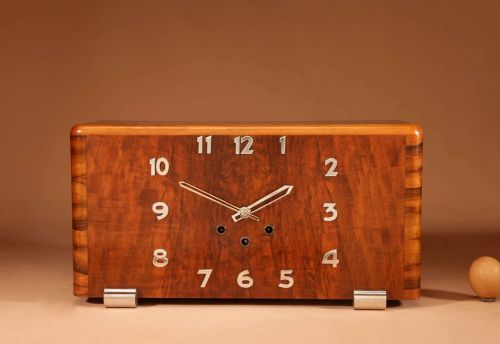
A mechanical chime clock is a timekeeping device driven by springs or weights that sounds distinct musical intervals or hours using internal hammers. You will find these pieces spanning the Victorian era through the mid-twentieth century, encompassing periods like the 1920s and 1950s.
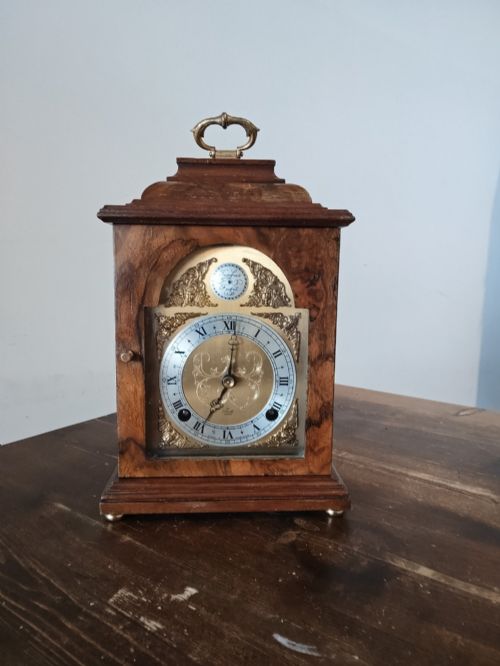
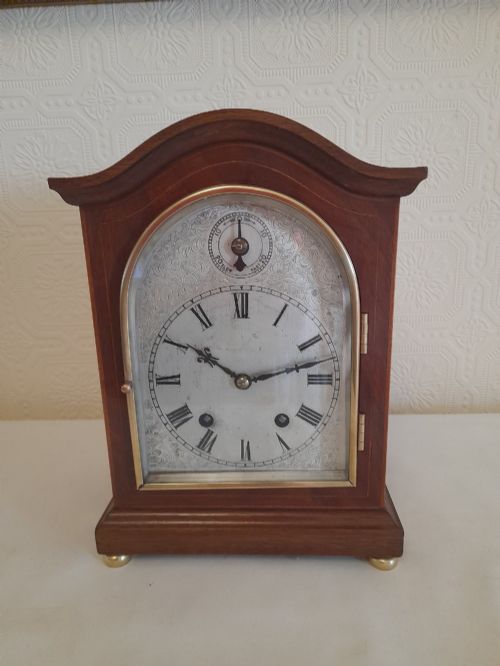
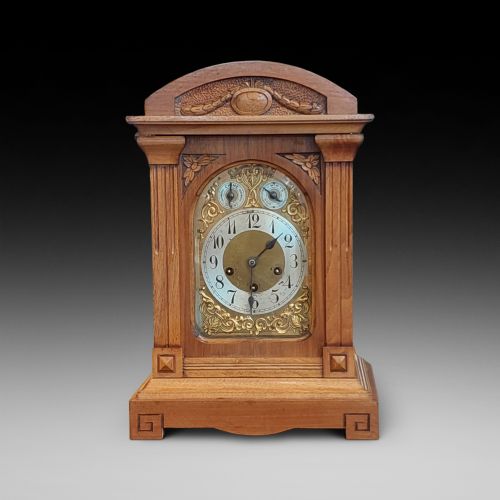
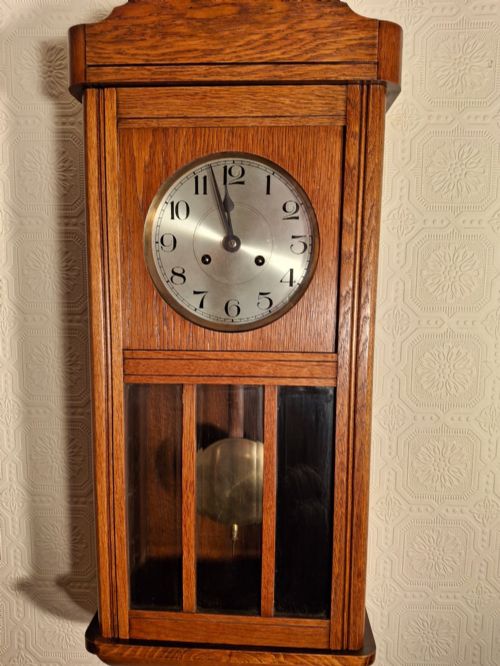
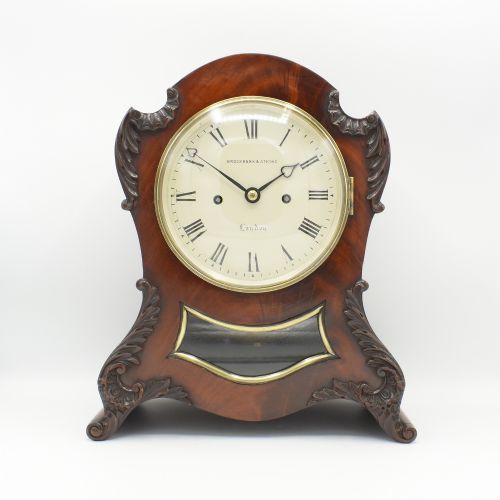
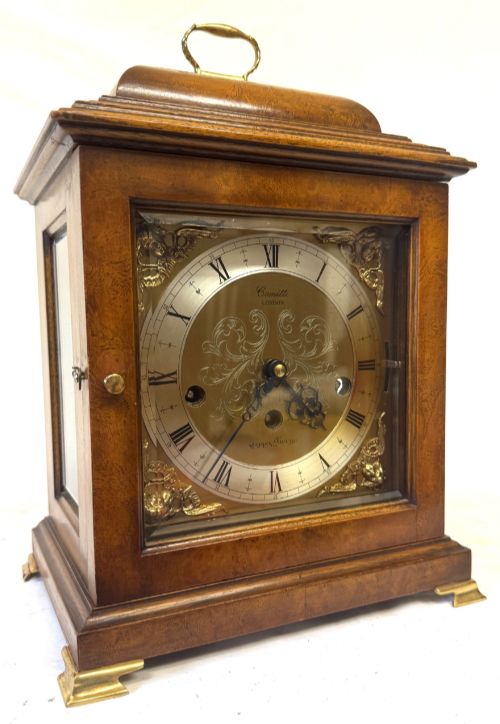
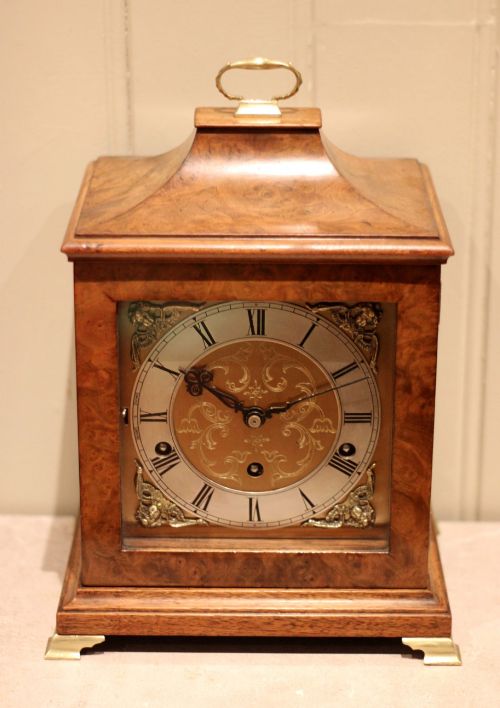
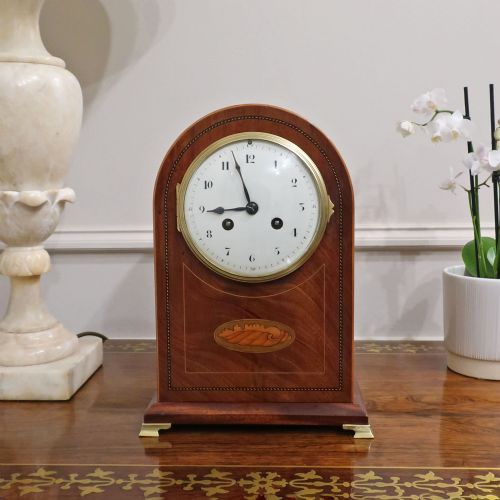
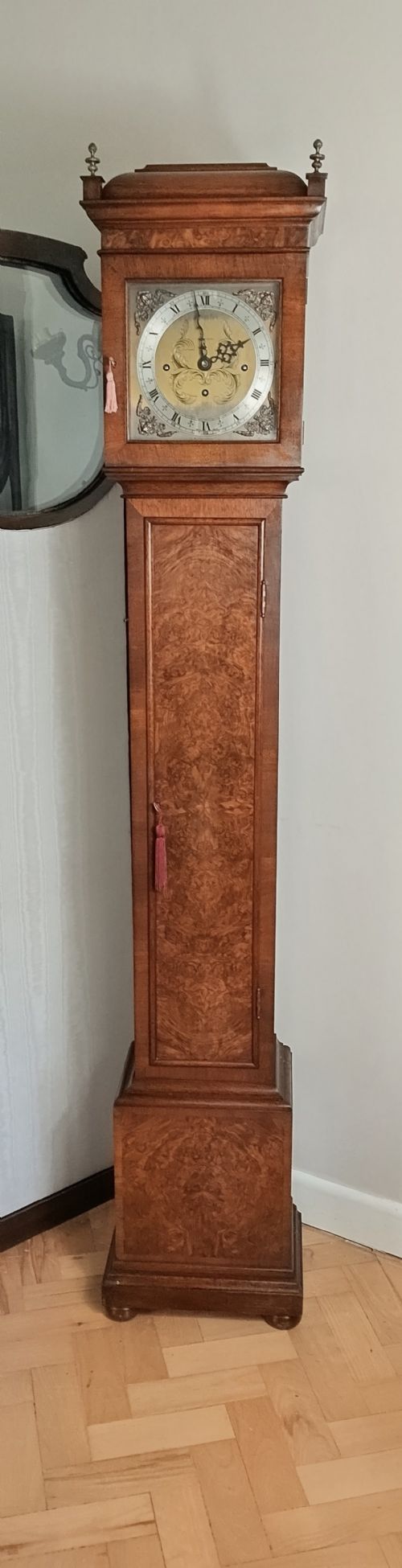
The physical forms vary considerably across the inventory, ranging from compact mantel and bracket clocks designed for table placement to larger wall clocks and tall floor-standing grandfather or grandmother longcase clocks. The selection leans heavily toward wooden table and bracket formats alongside substantial floor-standing longcase examples.
Stylistic influences observed among these timepieces stretch from traditional English and Georgian revival designs to distinct Art Deco, Arts and Crafts, and Edwardian aesthetic movements. Walnut and oak dominate the cabinet woods, frequently augmented by burl veneers, brass dials, and glass viewing panels.
How They Were Made
Cabinetmakers constructed the exterior housings using solid timbers like mahogany, oak, walnut, and ebonised wood, often applying burr walnut veneers and decorative brass mounts or inlaid details. These timber cases enclose complex brass spring-driven or weight-driven movements engineered by specialist horological workshops.
The acoustic capability relies on carefully tuned steel gongs, wire bells, or hanging brass tubular bells struck in sequence by mechanical hammers to produce melodies such as the Westminster chime. Enamel dials, silvered chapters, and bevelled glass panels complete the assembly, allowing visibility of the internal mechanics and oscillating pendulums.
Mechanical Chime Clock Retail Price Guide 2026
Typical asking prices for mechanical chime clock among the pieces listed under this phrase on Sellingantiques today, from the lower quarter to the upper quarter. They describe what is for sale here now, not the wider market.
The listings demonstrate a strong representation of Edwardian and Victorian oak bracket clocks alongside mid-century walnut longcase pieces.
What Varies in Quality
The distinction between standard examples and superior pieces rests on the complexity of the movement and the precision of the cabinetwork. Heavier brass plates, multiple trains, and intricate musical repertoires indicate higher workshop standards.
Cabinet execution separates ordinary production from exceptional output, visible in the selection of matched burr walnut veneers, hand-cut brass appliques, and refined acoustic tuning of the chime rods or bells. Maker attribution also plays a role, with established firms employing finer materials and more durable gear trains.
W & H·Comitti Of London·Brockbanks & Atkins·Mappin & Webb·Vedette·Enfield·Winterhalder & Hofmeier·Lenzkirch·Gustav Becker·Barraud & Lunds
The Mechanical Chime Clock Glossary
- Bracket clock
- A portable timekeeper originally designed to sit on a wall bracket but later placed on tables or mantelpieces. These wooden-cased pieces frequently feature intricate chiming or striking movements.
- Grandmother clock
- A slender, scaled-down version of the traditional longcase floor clock, standing shorter in height. They typically house spring-driven or weight-driven chiming movements inside narrow timber cases.
- Fusee
- A conical pulley connected to the mainspring by a chain or cord that equalises the driving force as the spring unwinds. This mechanism improves timekeeping consistency throughout the winding cycle.
- Ting-tang
- A two-hammer striking mechanism that sounds two different notes on the quarters before striking the hour. It provides a distinct acoustic signature distinct from full tune chimes.
- Westminster chime
- A four-note melody played on quarter-hours, originally written for the clock tower at the Palace of Westminster. Mechanical versions utilise multiple hammers striking gongs or bells in sequence.
Mechanical Chime Clock: Frequently Asked Questions
What is the difference between a bracket clock and a mantel clock?
Bracket clocks historically sat upon architectural wall brackets to project sound effectively through a room, whereas mantel clocks were designed specifically for placement on fireplace shelves. Over time, the terms became largely interchangeable.
Bracket examples often feature more robust architectural wooden cases with carrying handles, while mantel versions frequently display varied stylistic periods from Victorian revival to Art Deco.
How do I identify the chiming mechanism type?
Examining the number of winding holes on the dial reveals whether the piece has a time-only, half-hour striking, or full chiming movement. Three holes typically indicate a three-train movement for time, hour strike, and melody.
Opening the back door or side glass panels allows visual inspection of the gongs, bells, or tubes mounted inside. The arrangement of the hammers against these acoustic elements defines the musical output.
Where should I place my clock for the best sound?
Placing the clock against a solid interior wall enhances the acoustic resonance of the chime, particularly for wall-mounted models and tall floor clocks. Hollow partition walls tend to dampen the sound.
Ensuring the piece rests on a completely level surface maintains the correct beat of the escapement and prevents the pendulum from stalling. Stable placement also helps the chime hammers strike the gongs cleanly.