

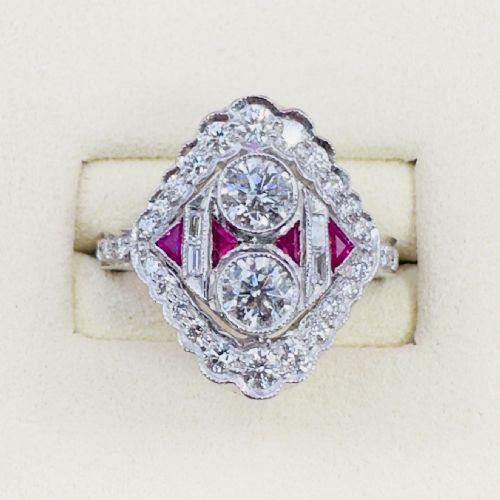
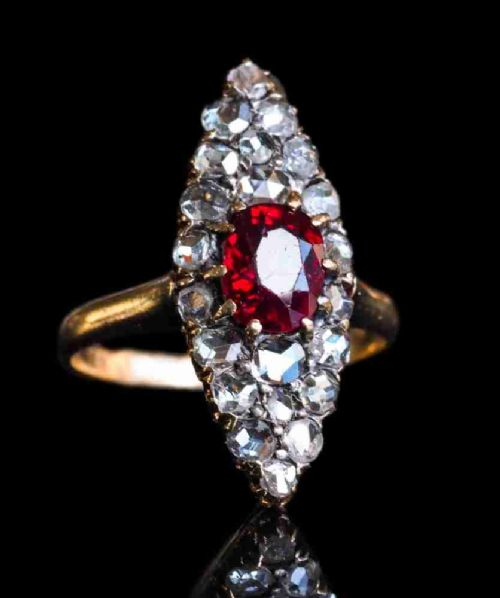


Marquise Diamond Cluster Ring
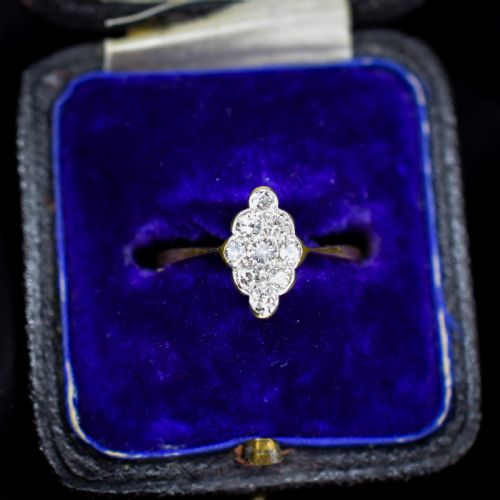
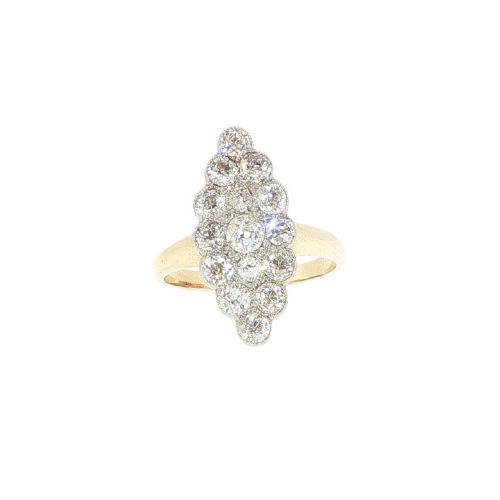
A marquise diamond cluster ring delivers an elongated silhouette that flatters the hand, combining central brilliance with surrounding gems across multiple decades of design.
Marquise Diamond Cluster Ring
A marquise diamond cluster ring centres on a boat-shaped or navette profile, framed by smaller stones that create a pronounced visual impact on the finger.
The selections span Victorian, Edwardian, and Art Deco periods, alongside Mid-Century iterations, showing how makers altered proportions across generations.
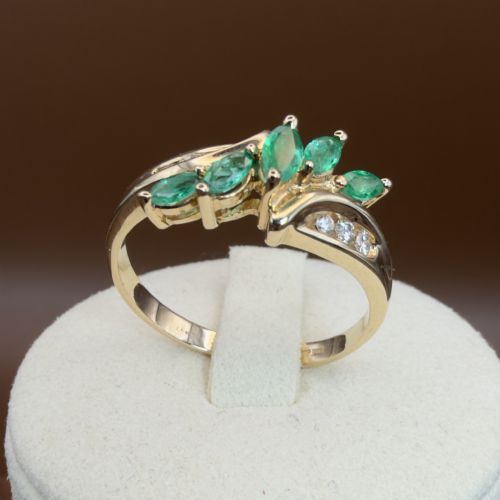
Many examples incorporate rubies, sapphires, or emeralds alongside the diamonds, shifting the colour palette from stark white platinum to warm yellow and white gold.
Materials and Construction
Goldsmiths utilised 18ct yellow gold, 18ct white gold, and platinum to set the stones, frequently combining platinum heads with gold shanks in early twentieth-century examples.
Stones are secured with fine claws or flush rubover settings that follow the curved, pointed contours of the characteristic navette silhouette.
Lapidaries cut central diamonds in old European, old mine, or marquise shapes, paired with calibre-cut rubies, emeralds, and sapphires following the prevailing style of the period.
Gemstone combinations recorded include diamonds paired with natural rubies, emeralds, sapphires, pearls, and turquoise in navette arrangements.
Assessing Quality and Execution
Superior execution shows in the precise symmetry of the pointed navette ends and the seamless integration of the outer cluster stones around the centre.
The choice of supporting gemstones affects the overall balance, with natural unheated rubies or high-clarity sapphires elevating the standard of the piece.
Metalwork refinement dictates the grade, where delicate millegrain edges and pierced under-bezels display superior benchwork compared to heavier, unarticulated mounts.
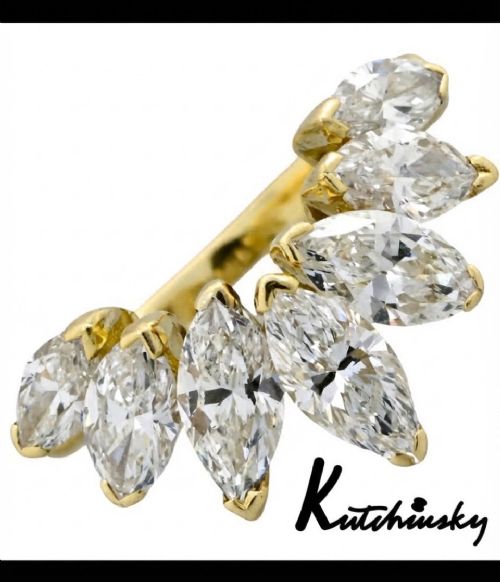
Kutchinsky
The Marquise Diamond Cluster Ring Glossary
- Navette
- French for little boat, describing the elongated, pointed shape typical of these cluster rings.
- Old cut
- A diamond facet style hand-cut before modern brilliant standards, featuring high crowns and small tables.
- Millegrain
- A decorative technique of small raised metal beads bordering the edge of a setting.
- Cluster ring
- A ring design featuring a prominent central stone surrounded by a group of smaller gems.
- Rubover setting
- A mounting style where a thin collar of metal folds over the outer edge of the stone to hold it securely.
Marquise Diamond Cluster Ring: Frequently Asked Questions
How do I wear a marquise ring daily?
The elongated profile sits lengthwise along the finger, requiring attention to avoid catching the pointed tips on clothing or fabric.
Pairing the ring with plain wedding bands or wearing it as a standalone piece protects the delicate outer cluster work from daily wear.
What periods do these rings come from?
The selection includes Victorian, Edwardian, and Art Deco eras, alongside later Mid-Century designs up to the nineteen-sixties.
Each era brings distinct metal choices, ranging from early yellow gold settings to platinum mountings typical of the nineteen-twenties and thirties.
Are coloured gemstones common in these clusters?
Many examples substitute or combine diamonds with sapphires, emeralds, or rubies set around a central diamond or coloured stone.
These coloured variations reflect the aesthetic preferences of Victorian dress rings and Art Deco cocktail jewellery.
How do I identify an old cut diamond?
Old cut diamonds display smaller tables and steeper crown angles, often showing distinct facets under magnification compared to modern cuts.
These stones were hand-polished to catch candlelight, producing a softer, deeper shimmer than contemporary brilliant cuts.