
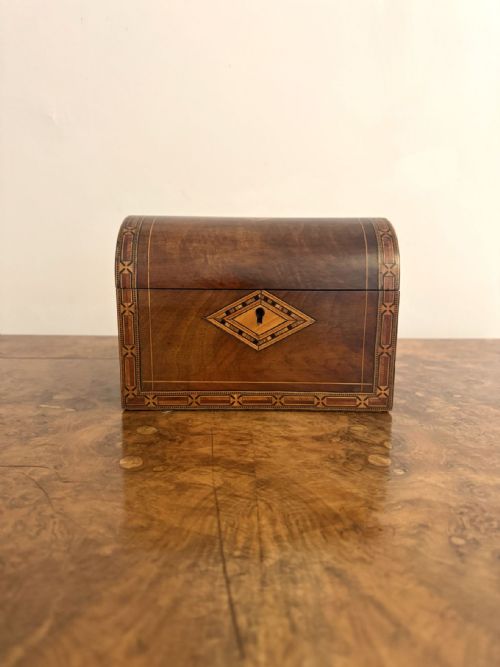
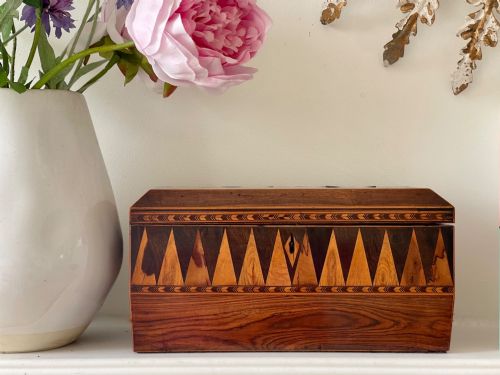

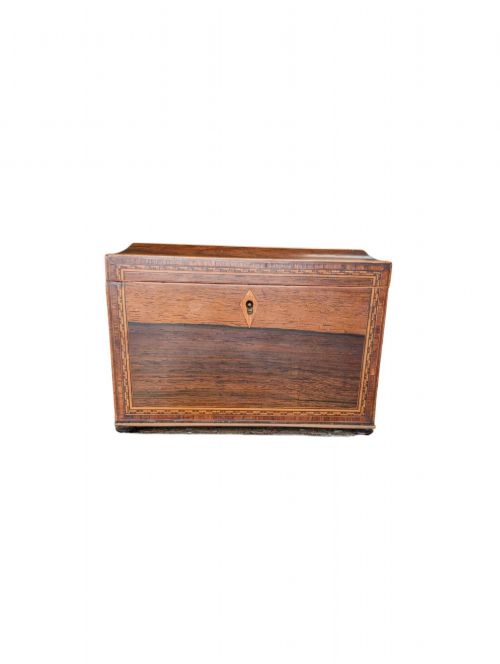
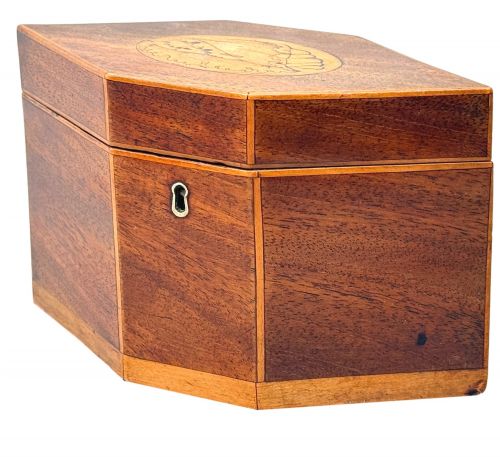
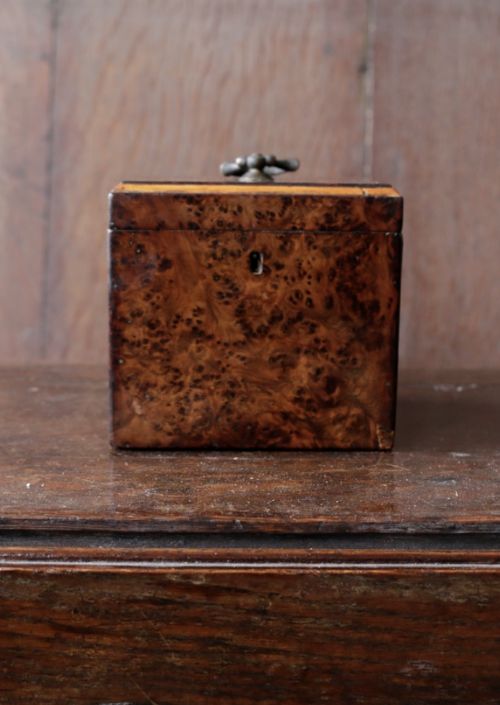


Marquetry Wooden Tea Chest
A marquetry wooden tea chest brings geometric precision and rich timbers into a room, holding centuries of social history within its small fitted interior.
Marquetry Wooden Tea Chest
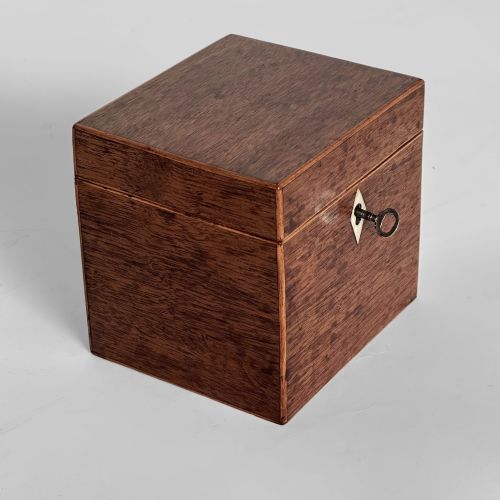
A marquetry wooden tea chest is a specialised lidded box designed to store precious dry leaves during periods when tea was a costly import. Buyers search for these pieces to acquire period decorative containers with compartmentalized interiors intended for domestic display.
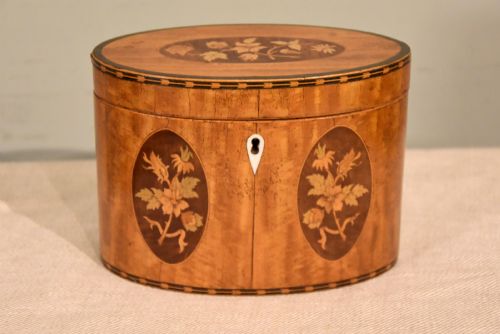
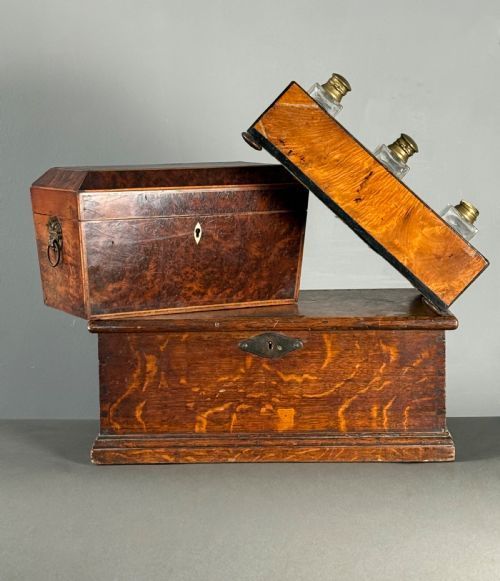
Materials span a broad spectrum of native and exotic timbers including mahogany, satinwood, rosewood, walnut, harewood, partridge wood, burr yew, and gonçalo alves, often enhanced by contrasting stringing and pictorial wood inlays.
How They Were Made
Cabinetmakers constructed these chests using solid framing timbers or sturdy panel carcasses overlaid with fine decorative veneers. Woods such as satinwood, harewood, and rosewood provided smooth canvases for intricate cutting and fitting.
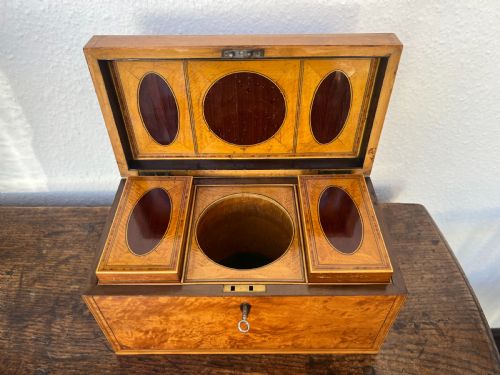
Surface ornamentation relied on meticulous veneer work, wood inlay, and parquetry, sometimes complemented by applied Tunbridge mosaic patterns, brass stringing, shell motifs, or bone and mother-of-pearl details. Interior compartments frequently retained small lidded canisters and mixing bowls.
Structural integrity depended on tight joinery, accurately matched grain, and the precise placement of decorative banding around lids, corners, and panels to create balanced geometric or pictorial compositions.
Geometric parquetry and Tunbridge inlay appear alongside pictorial wood veneers, reflecting stylistic shifts from the Georgian period into the Victorian era.
What Varies in Quality
The standard of a piece rests heavily on the ambition of its timber selection and the complexity of its veneer work. Highly figured surfaces like burr yew, amboyna, and detailed pictorial marquetry distinguish finer items from simpler mahogany or plain satinwood boxes.
Execution of the inlaid motifs and stringing dictates visual success; sharp, precise geometry and tight joints demonstrate superior cabinetmaking over clumsy alignment. The survival of original fitted interiors, internal lids, and working locks elevates the standing of any container.
Henry Hollamby
The Marquetry Wooden Tea Chest Glossary
- Marquetry
- The art of applying decorative pieces of veneer to a structure to form intricate patterns or pictures. It differs from parquetry through its use of curved or pictorial designs rather than geometric grids.
- Teapoy
- A freestanding decorative chest mounted on a central pillar or tall legs, designed for storing and serving tea. These pieces often feature internal caddies and mixing bowls.
- Tunbridge Ware
- Small wooden objects decorated with mosaic patterns made from tiny blocks of naturally coloured timbers. This specialised craft flourished in Kent during the nineteenth century.
- Sarcophagus
- A box form featuring a convex or domed lid tapering towards a flat top, mimicking ancient stone tombs. Makers adopted this architectural silhouette for grand nineteenth-century caddies.
- Stringing
- Thin lines of contrasting wood inlay used to outline panels, drawers, and borders on cabinet furniture. It provides clean visual definition to veneered surfaces.
Marquetry Wooden Tea Chest: Frequently Asked Questions
What is a marquetry wooden tea chest used for?
These lidded boxes were originally manufactured to store expensive loose tea leaves under lock and key in wealthy households. Today, collectors utilise them as decorative tabletop containers or secure repositories for small keepsakes.
Interior compartments usually contained lidded canisters to separate different grades of tea, alongside a central glass or metal mixing bowl. Their sturdy construction and fitted layouts make them practical for organising trinkets in modern interiors.
How do I tell a Georgian tea chest from a Victorian one?
Georgian examples often lean towards restrained satinwood, mahogany, or harewood veneers with delicate shell inlays, oval shapes, and bright brass escutcheons. They reflect classical proportions and neoclassical design influences.
Victorian pieces frequently utilise darker timbers like rosewood and burr walnut, alongside bolder architectural forms such as sarcophagus shapes or intricate Tunbridge mosaic decoration. Their hardware is heavier and internal fittings often show greater complexity.
Are all these tea chests made of solid wood?
Cabinetmakers rarely built entire tea chests from solid expensive exotic timbers, preferring instead to apply fine veneers over stable secondary wood carcasses. This method prevented warping while displaying rich grain patterns.
Internal partitions and secondary framing timbers typically consist of pine, cedar, or oak, while the visible exterior surfaces carry decorative hardwoods such as rosewood, satinwood, or mahogany.
How should I care for an antique wooden tea chest?
Keep wooden caddies away from direct sunlight and sudden temperature shifts to protect delicate veneers and old animal glues from drying out. A light application of appropriate furniture wax helps nourish the timber.
Avoid placing damp items inside the compartments, particularly if original metal or foil linings remain vulnerable to moisture. Gentle dusting with a soft cloth preserves the polished surface without abrasion.