
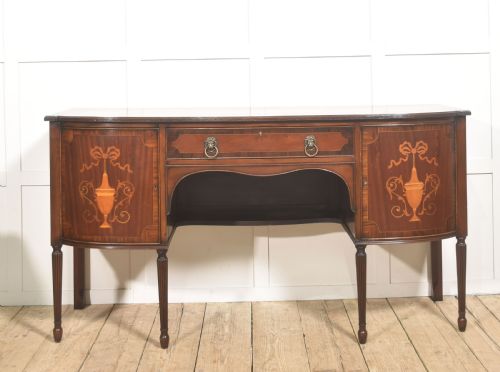


Marquetry Wooden Sideboard
A marquetry wooden sideboard brings intricate inlaid timber work into a room, offering both generous storage and striking decorative presence.
Marquetry Wooden Sideboard
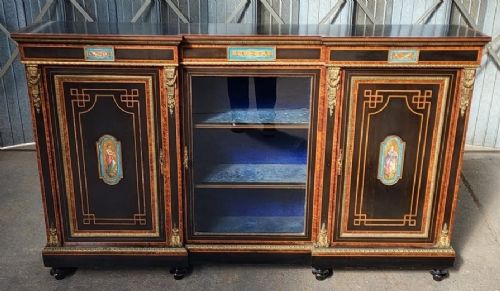
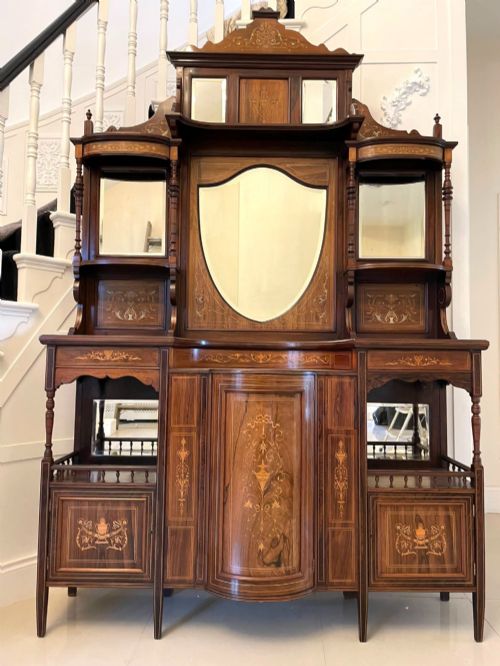
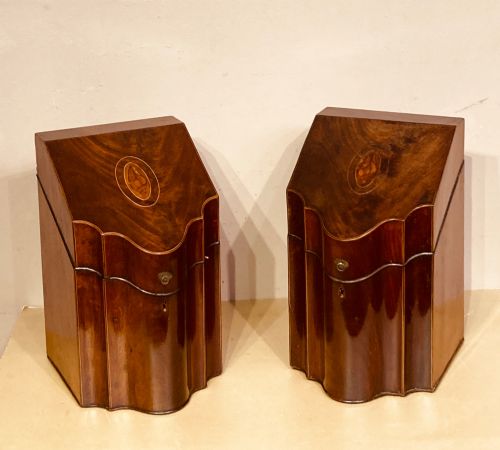
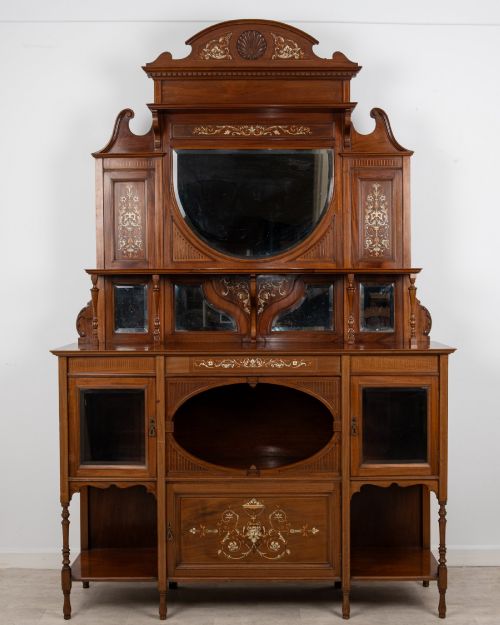
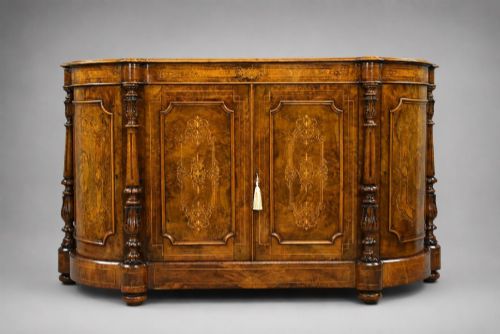
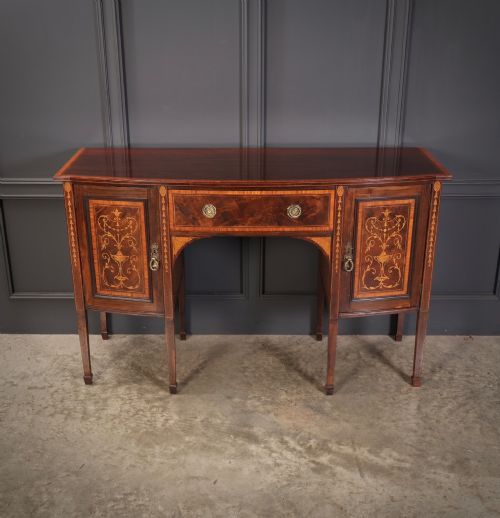
A marquetry wooden sideboard combines substantial storage cabinetry with decorative wood veneers arranged in complex pictorial patterns. The selection here spans the Victorian, Georgian, and Edwardian periods, alongside nineteenth century interpretations and French Louis XVI styles.
The forms extend beyond standard sideboards to include credenzas, side cabinets, commodes, chiffoniers, and buffet pieces. Walnut, burr walnut, mahogany, and satinwood dominate the construction timber, providing varied natural grounds for the inlaid ornamentation.
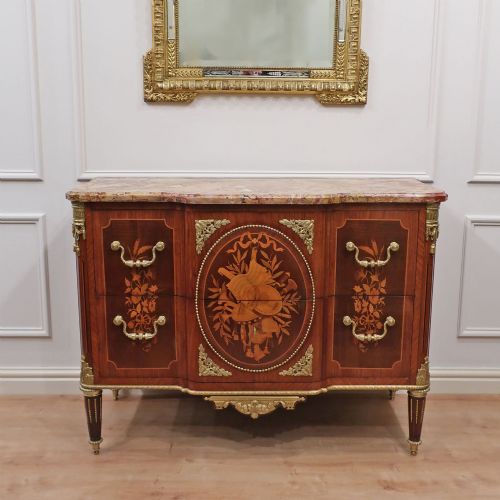
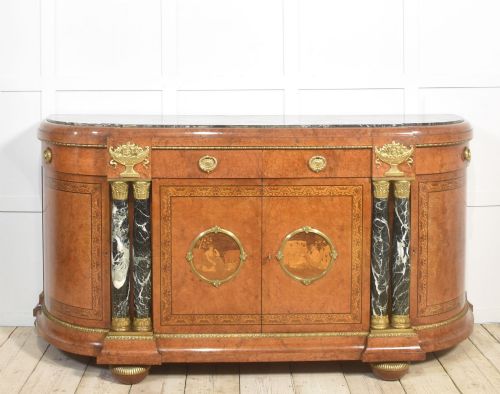
Makers and workshops from Britain, France, Italy, Spain, and Austria produced these furnishings, incorporating styles from the Neoclassical to Sheraton Revival. Pieces range from large George III mahogany designs to compact Edwardian inlaid sideboards and French marble topped commodes.
Materials and construction techniques
Cabinet makers utilised foundational timbers such as mahogany, oak, walnut, and fruitwood, applying finely sliced veneers to create the surface patterns. Marquetry involved cutting contrasting woods, including satinwood and various exotic timbers, and fitting them together into paper-thin pictorial sheets before glueing them to the carcase.
Metal mounts in brass and ormolu often reinforced corners and framed panels, while marble slabs provided durable tops for commodes and buffets. Glass doors appeared on cabinets and credenzas, and brass inlay accented specific Regency and Victorian designs.
Assessing craftsmanship and finish
Quality rests upon the precision of the veneer cutting and the tightness of the joints where different timber grains meet. Superior examples maintain crisp alignment in their floral or geometric marquetry without visible gaps or excessive filler between the contrasting wood elements.
The choice of underlying timber and secondary woods dictates structural integrity, with dense burr walnut and mature mahogany marking higher tier production. Selection of supplementary materials, such as heavy fire-gilt ormolu mounts and thick marble tops, separates standard utility items from exhibition grade pieces.
Whytock and Reid of Edinburgh·Gordovil Spain·Pietro Ferrario
The Marquetry Wooden Sideboard Glossary
- Marquetry
- The art of applying decorative veneer pieces to a wooden structure to form geometric or pictorial designs. Craftsmen assemble thin wood sections precisely to cover furniture surfaces.
- Credenza
- A low dining room cabinet or sideboard, frequently fitted with glass doors or curved ends. Victorian iterations often incorporate intricate walnut marquetry and mirror backs.
- Ormolu
- Gilded bronze mounts applied to furniture for decorative trim and edge protection. This technique gained widespread use on nineteenth century French and English luxury cabinets.
- Satinwood
- A durable, lustrous yellow timber utilised extensively for fine stringing and cabinet panels. It provides a bright contrasting background for darker woods.
- Chiffonier
- A compact sideboard or low cupboard featuring shelves or drawers. These pieces became common during the Victorian era for smaller dining spaces.
Marquetry Wooden Sideboard: Frequently Asked Questions
What is a marquetry wooden sideboard?
A marquetry wooden sideboard is a storage cabinet decorated with fitted wood veneers that create intricate patterns and pictures. These pieces combine practical cupboard space with elaborate surface artistry.
Craftsmen utilised timbers like mahogany, walnut, and satinwood to build these items, which range from Georgian dining room servers to Victorian credenzas.
How do I date a sideboard?
Dating relies on identifying construction timber, hardware types, and stylistic influences such as Sheraton Revival or Neoclassical design. Wood choices like burr walnut or heavy mahogany often align with specific nineteenth century manufacturing methods.
Cabinet proportions and the complexity of the veneer work also point to the era of production, spanning from the eighteenth century through the Edwardian period.
Where were these cabinets placed?
These furnishings were designed primarily for dining rooms and grand hallways to store tableware, linen, and silver. Credenzas and side cabinets also served as display surfaces for porcelain and decorative objects.
Marble topped variants functioned well in reception rooms where durable, water-resistant surfaces were useful for serving drinks or holding plants.
How do I care for inlaid wood?
Inlaid wood requires protection from direct sunlight and dramatic humidity changes to prevent the delicate veneer from lifting. Maintaining a stable indoor climate keeps the glued joints secure.
Regular dusting with a dry cloth preserves the finish, while occasional wax application nourishes the timber without harming the fine marquetry details.