
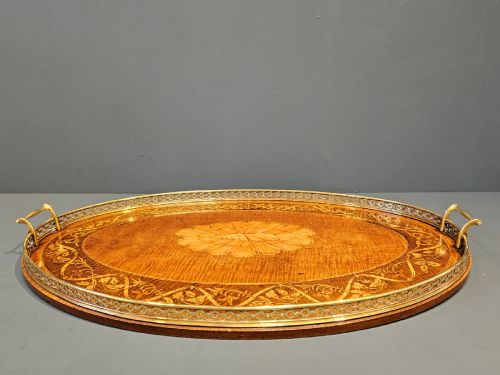
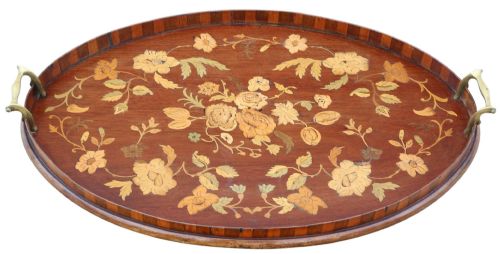
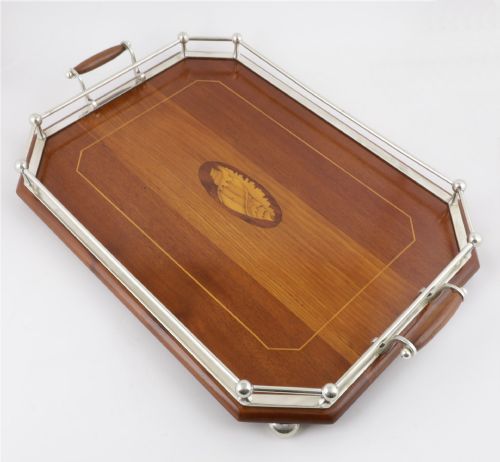
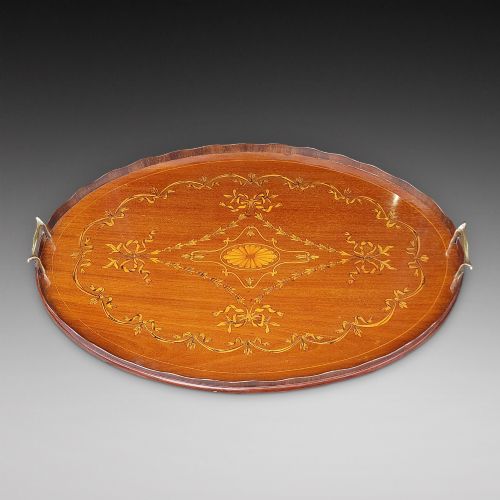
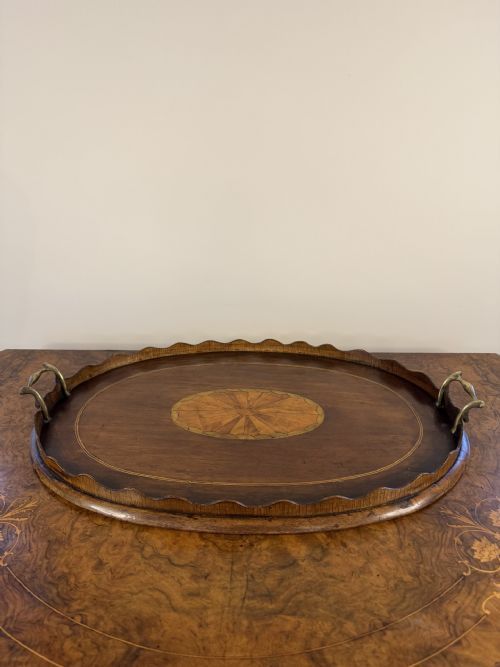
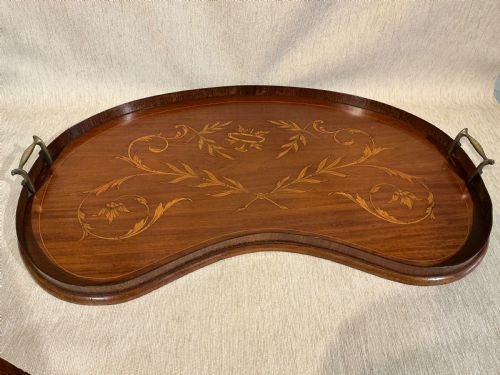


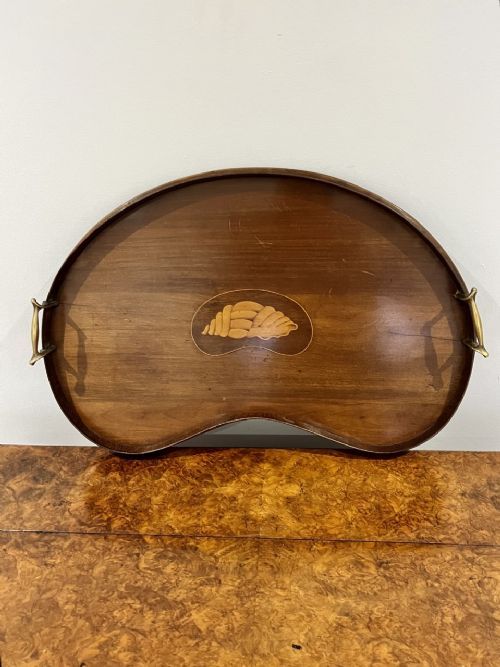


Marquetry Wooden Drinks Tray
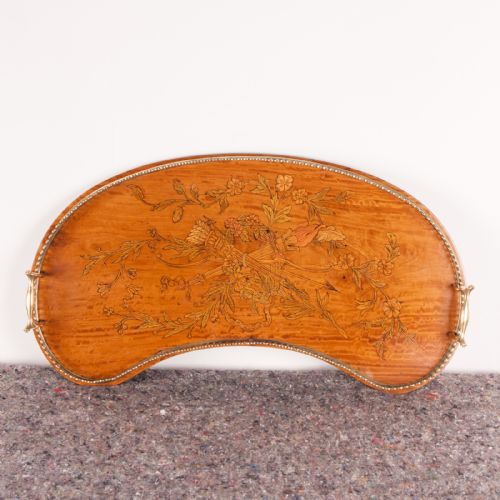
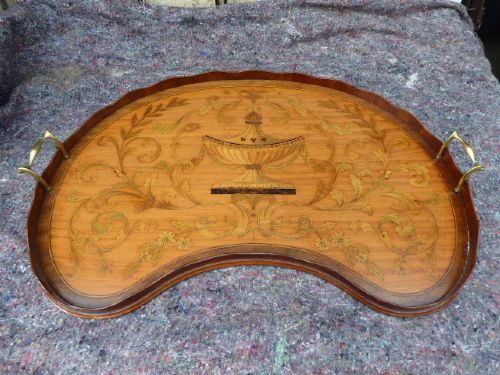
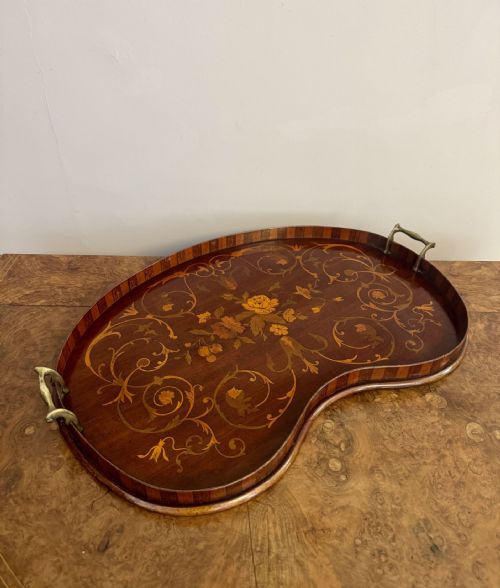
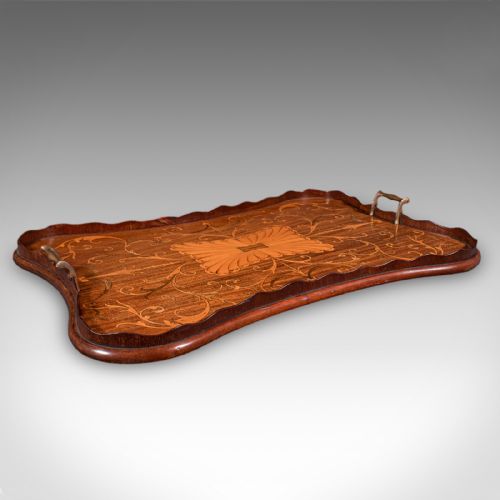
These marquetry wooden drinks trays combine practical serving surfaces with intricate inlaid timber designs from the Victorian, Edwardian, and Georgian eras.
Marquetry Wooden Drinks Tray
A marquetry wooden drinks tray serves as both a functional tabletop accessory for afternoon tea or spirits and a decorative centrepiece. These pieces appear in serving trays, butler's trays, and occasional side tables on stands.
The selection ranges from oval and octagonal shapes to kidney-shaped and round platters. Dating spans from the Georgian period through the Victorian and Edwardian eras, with many examples originating around nineteen hundred.
Materials and construction
Craftsmen built these trays primarily using mahogany and satinwood, frequently enhanced with boxwood, rosewood, and burr yew veneer. Marquetry inlay forms the pictorial or geometric surface patterns.
Many examples incorporate brass or silver-plated galleries, side rails, and wooden turned handles to secure the drinks and prevent sliding during service.
Listings feature mahogany and satinwood timbers decorated with marquetry inlay and occasionally framed by brass galleries.
Quality differences
The calibre of the marquetry inlay distinguishes standard production from finer workshop output, with tightly fitted contrasting timbers indicating superior craftsmanship. The choice of primary wood, such as figured satinwood or rich mahogany, elevates the visual depth.
Hardware additions like pierced brass galleries or solid silver-plated mounts alter the perceived status of a tray. The precision of the joinery around handles and raised rims separates utilitarian items from decorative presentation pieces.
Edwards and Roberts
The Marquetry Wooden Drinks Tray Glossary
- Marquetry
- Decorative veneer work where pieces of various woods are fitted together to form pictorial or geometric designs. This technique creates the detailed surface ornamentation seen on these trays.
- Gallery
- A raised miniature railing or border fitted around the edge of a tray to retain items. These galleries are commonly constructed from brass or silver-plated metal.
- Veneer
- A thin layer of fine wood applied to a base timber to provide a decorative surface. It permits complex grain patterns and multi-timber designs.
- Kidney-shaped
- A curved, asymmetrical furniture and tray outline resembling a kidney bean. This form appears frequently among Edwardian examples.
- Butler's tray
- A portable serving tray designed for domestic service, occasionally elevated on a folding stand to function as a side table.
Marquetry Wooden Drinks Tray: Frequently Asked Questions
How do I clean a marquetry tray?
Dust the surface gently with a dry, soft cloth to prevent abrasive damage to the veneer. Avoid liquid polishes and moisture that could penetrate the wood joints or lift the delicate inlay.
Apply a microcrystalline wax sparingly if the timber requires nourishment, buffing it off completely after a short period. Keep these items away from direct sunlight and radiators to stop the wood from drying out and cracking.
Can I use these trays for serving drinks?
These trays were originally designed for serving afternoon tea or hosting drinks, so they remain functional for light hospitality use. Direct contact with moisture or alcohol can damage the antique finish and veneer.
Utilise coasters and small placemats to protect the historic surface from condensation and heat marks. Wipe any accidental spills immediately with a dry cloth.
How do I date a wooden tray?
Examine the timber species, the style of the marquetry, and the construction methods used on the underside or gallery. Georgian examples often feature simpler mahogany foundations, while Edwardian pieces frequently showcase satinwood and kidney shapes.
Look for tool marks and the type of fixings securing the handles or gallery rails. Comparing the design characteristics to known periods helps narrow down the decade of manufacture.
What is a tray on stand?
A tray on stand consists of a removable serving tray placed atop a matching or compatible folding wooden base. This configuration allows the piece to function as an occasional side table in a drawing room.
Many surviving examples date from the Edwardian era when portable serving furniture gained popularity. The stands are usually designed to complement the timber and inlay of the tray itself.