


Marquetry Wine Cooler
A marquetry wine cooler brings the intricate woodwork of past centuries straight into a room as a striking focal point for entertaining.

Marquetry Wine Cooler
When you search for a marquetry wine cooler, you encounter pieces that double as decorative plant holders, planters, jardinières and cellarettes. These versatile vessels often cross over with occasional and side tables, serving multiple functions within a home.
The versions most frequently met on this page date from the nineteenth century, particularly the Victorian era, alongside eighteenth-century examples and turn-of-the-century pieces. Styles range from Dutch and French Louis designs to Georgian and Edwardian interpretations.
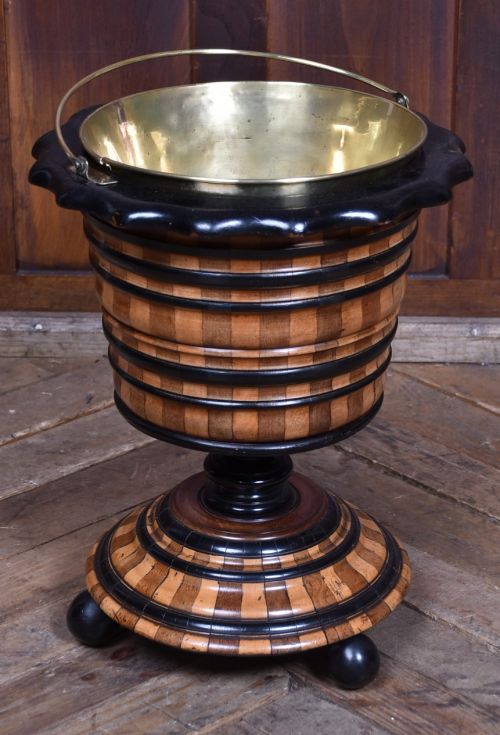
Makers utilised various timbers and floral or geometric inlay patterns to create pieces that stood on the floor or functioned as tabletop jardinières. Many examples include internal liners of metal or brass to hold water and ice for bottles or plants.
How they were made
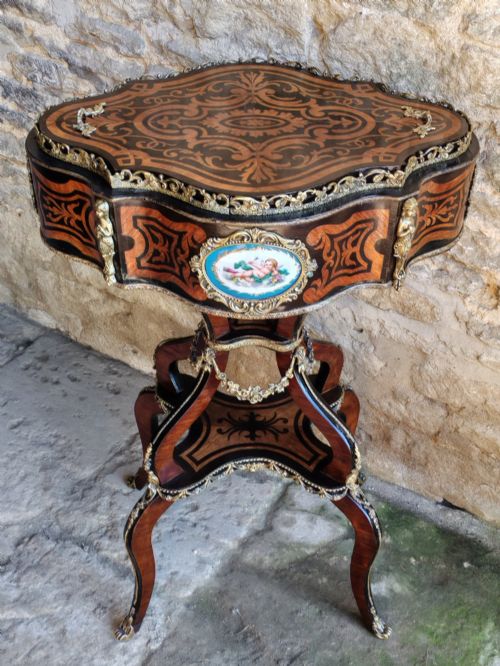
Craftsmen built the carcasses of these vessels from sturdy foundational timbers like mahogany, walnut, rosewood or ebonised wood, which were then veneered. Over these surfaces, intricate marquetry patterns were applied using contrasting woods such as satinwood.
Many nineteenth-century and revival pieces incorporated cast brass or ormolu mounts to accent the corners, handles, and feet. Removable brass liners were fitted inside the compartments to protect the delicate wood from moisture during use.
Some nineteenth-century vessels served a double life, functioning as a wine cooler when dinner guests arrived and a plant stand the morning after.
What varies in quality
The standard of a marquetry wine cooler depends heavily on the precision of the wood inlay and the crispness of the botanical or geometric motifs. Finer pieces display tight, seamless joints in the contrasting veneers without visible gaps or excessive filler.
The quality of the secondary materials, such as heavy cast ormolu mounts and robust brass liners, distinguishes standard workshop production from exhibition-grade pieces. Carcass timbers also differ, with dense burr walnut or figured satinwood commanding greater appreciation than plain woods.
Whytock & Reid
The Marquetry Wine Cooler Glossary
- Marquetry
- Decorative veneer work where small pieces of various woods are assembled into pictorial or geometric patterns. This technique covers the exterior surfaces of the cooler to create rich visual contrast.
- Jardiniere
- An ornamental pot or stand designed to hold plants or flowers. In many listings, this term is used interchangeably with wine cooler due to their similar construction and waterproof liners.
- Cellarette
- A lockable container used for storing bottles of wine or spirits near the dining table. They frequently share forms with nineteenth-century planters and coolers.
- Ormolu
- Gilt bronze mounts applied to furniture and decorative objects for enrichment. These metallic accents frame the marquetry panels on French and revival pieces.
Marquetry Wine Cooler: Frequently Asked Questions
What is a marquetry wine cooler used for?
These vessels originally served to chill wine bottles at the dining table using ice and water contained within metal liners. Over time, many owners repurposed them as decorative planters or indoor jardinières for displaying foliage.
Today, they function equally well as striking standalone accent furniture or side tables in reception rooms.
How do I care for the wooden surface?
Protect the delicate veneer and marquetry by keeping the piece away from direct sunlight and rapid temperature fluctuations. Regular dusting with a soft, dry cloth preserves the finish without requiring heavy polishes.
Ensure that internal brass liners are removed and dried thoroughly after holding damp plants or ice to prevent moisture damage.
How do I distinguish eighteenth-century from Victorian pieces?
Eighteenth-century examples often exhibit simpler, robust structural lines in mahogany or walnut with restrained inlay work. Victorian and later revival pieces frequently feature busier burr walnut marquetry, ebonised surfaces, and ornate ormolu mounts.
Examining the construction methods of the interior carcass and the style of the brass liner provides further clues to the manufacturing date.
Are these coolers waterproof inside?
Most pieces feature removable brass or metal liners designed to contain moisture from melting ice or watered plants. These liners protect the surrounding wooden marquetry carcass from direct contact with liquid.
Over the centuries, original liners may have been replaced or lost, so verifying the presence of an appropriate liner is common practice.