
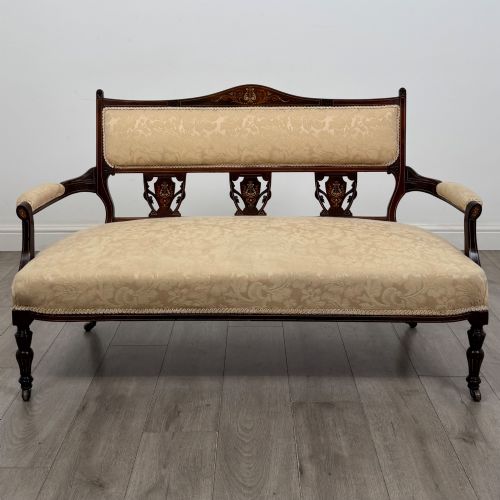
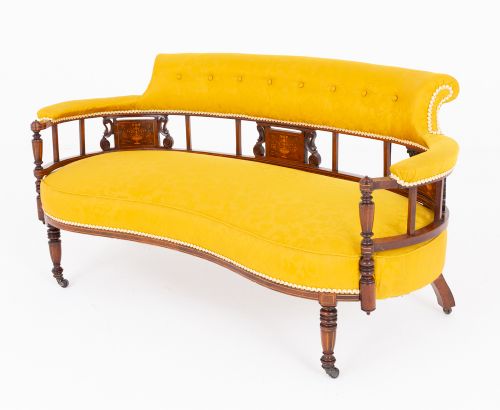


Marquetry Two Seat Sofa
A marquetry two seat sofa brings patterned wood inlay and compact seating together, offering period charm for a sitting room or bedroom.
Marquetry Two Seat Sofa
A marquetry two seat sofa provides intimate seating framed by polished timbers and detailed wood patterns. These pieces emerge chiefly from the Victorian, Late Victorian, and Edwardian eras, spanning the late nineteenth century and the opening decades of the twentieth century.
Most examples found here take the form of salon settees or window sofas designed for lighter use in reception rooms rather than heavy lounging. Mahogany and rosewood form the primary structural timbers, supporting upholstered seats covered in fabric, damask, or velvet.
The search phrase encompasses items listed variously as settees, couches, and two-seater sofas. Buyers encounter Edwardian interpretations most frequently, alongside Victorian antecedents employing similar inlaid decorative schemes.
How they were made
Cabinetmakers constructed the frames using solid mahogany or rosewood, shaping the timber to form curved backs and supportive armrests. Craftsmen then applied decorative veneers, cutting contrasting pieces of satinwood and bone to create intricate floral or geometric marquetry patterns across the wooden surfaces.
Upholstery completed the piece, with traditional stuffing secured over webbing and springs before finishing with damask, velvet, or patterned fabric. Brass details sometimes appeared on castors or structural mounts, adding functional hardware to the wooden framework.
Forms across this inventory include salon settees, window sofas, and two-seater couches upholstered in velvet, damask, and fabric.
What varies in quality
The precision and complexity of the wood inlay determine much of the distinction between standard production and superior examples. Finer pieces incorporate varied timbers like satinwood and bone alongside the mahogany ground, creating sharper contrast and more detailed floral motifs.
Structural integrity of the timber frame and the crispness of the carved or shaped woodwork separate robust parlour furniture from simpler items. The choice of upholstery material and the retention of original framing timber also influence the character of each piece.
The Marquetry Two Seat Sofa Glossary
- Marquetry
- Decorative veneer work formed by fitting together small pieces of wood, bone, or other materials to create pictorial patterns on a furniture surface. This technique requires considerable skill from the cabinetmaker.
- Settee
- A medium-sized upholstered seat with a back and arms, designed to accommodate two or more people. The term frequently interchanges with sofa and couch in nineteenth and twentieth-century records.
- Satinwood
- A hard, yellowish timber native to Ceylon and India, prized for its lustrous grain and used extensively for inlay and banding. It provides a bright contrast against darker woods like mahogany.
- Damask
- A reversible figured fabric traditionally woven on a draw loom, often utilised for period upholstery. Its patterns appear through contrasting flat and satin weaves.
- Edwardian
- Pertaining to the reign of King Edward VII, spanning the years from nineteen hundred to nineteen ten. Furniture from this period often exhibits lighter proportions and refined inlay work.
Marquetry Two Seat Sofa: Frequently Asked Questions
What is a marquetry two seat sofa?
A marquetry two seat sofa is a compact upholstered seating piece decorated with fitted wood veneers forming pictorial or geometric designs. These items date primarily from the Victorian and Edwardian eras.
Cabinetmakers designed them for salons and bedrooms where space was at a premium. They combine structural timbers like mahogany with decorative inlay work.
How do I date these sofas?
Dating relies on the overall form, timber choices, and decorative style recorded in the listing details. Victorian examples tend to be heavier with deeper rosewood or mahogany tones.
Edwardian pieces generally present lighter proportions with satinwood inlay and refined marquetry motifs. Construction methods and upholstery styles offer further chronological clues.
Are these sofas comfortable for daily use?
These pieces were built for formal reception rooms and parlours rather than casual lounging. The seats rely on period springing and stuffing methods which may feel firmer than modern furniture.
Many buyers choose to place them in bedrooms, hallways, or secondary sitting areas. Some examples require professional re-upholstery to ensure daily comfort.