

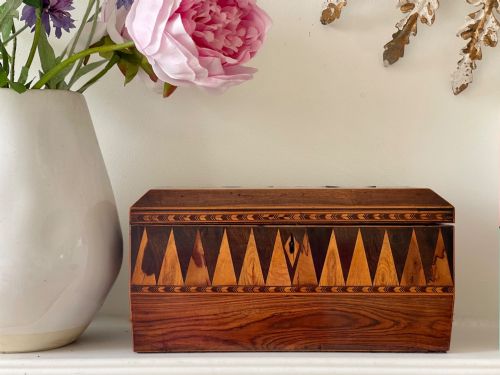
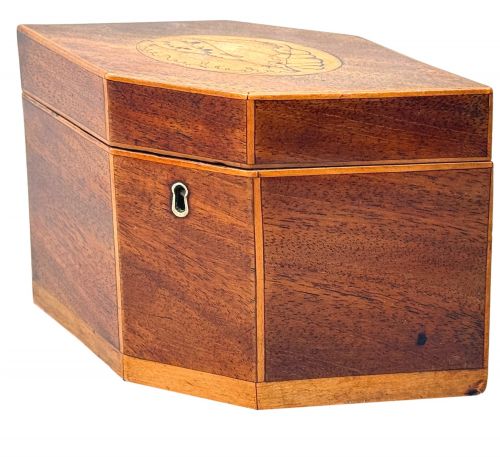
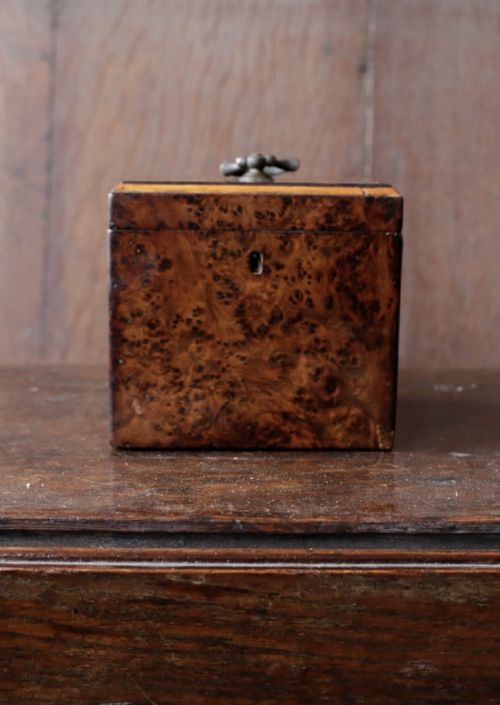

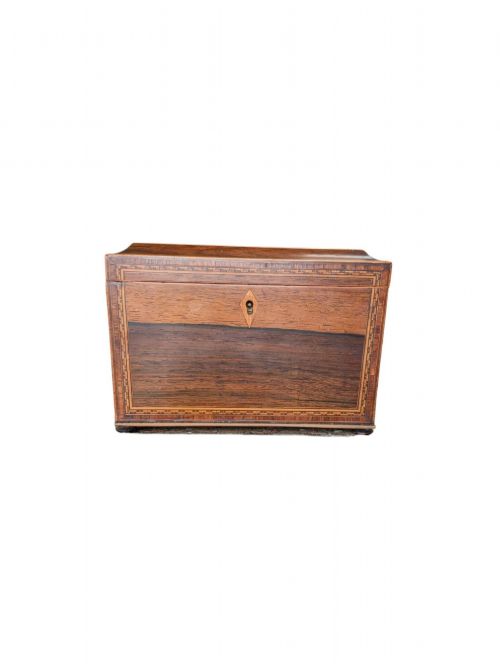


Marquetry Tea Chest Box
A marquetry tea chest box brings structured elegance to the room, storing prized leaves in patterned wooden splendour.
Marquetry Tea Chest Box
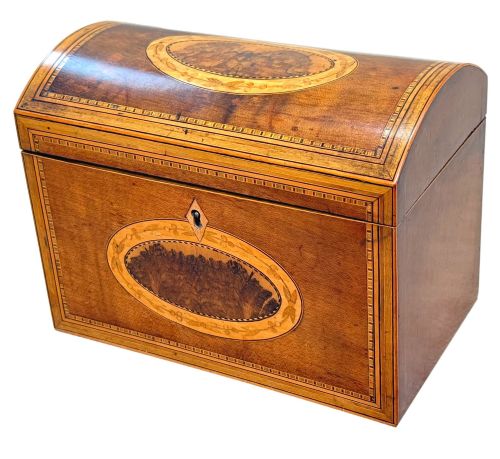
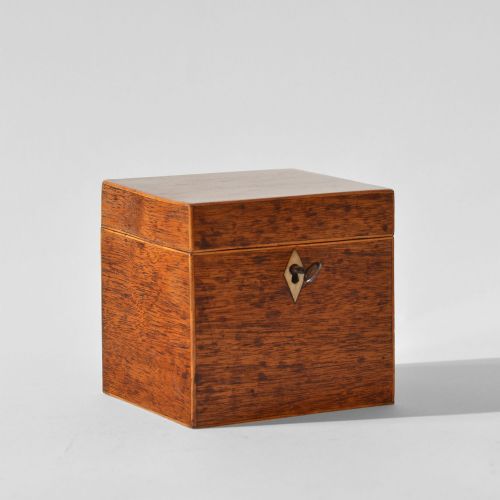
A marquetry tea chest box serves as a receptacle for dried tea leaves, emerging in forms such as tea caddies, teapoys, and decorative boxes. These containers originate predominantly from the Georgian, Regency, and Victorian periods.
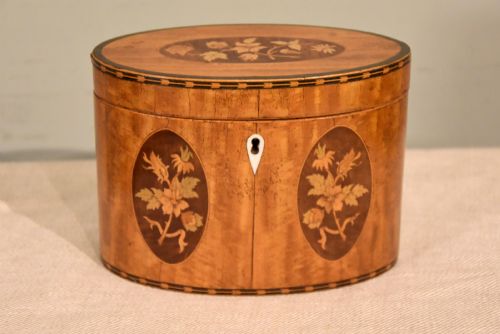
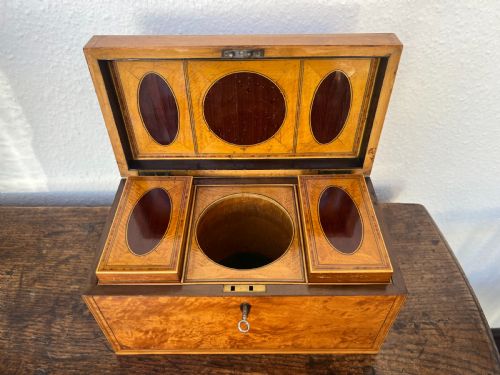
The objects take shapes ranging from simple rectangles to hexagons, ovals, cubes, and sarcophagus forms. Buyers encounter varieties outfitted with fitted interiors, inner canisters, and sugar dishes.
Examples often incorporate wood inlay alongside materials like tortoiseshell and brass. The assortment reflects craftsmanship spanning the eighteenth and nineteenth centuries.
How they were made
Craftsmen utilised timbers such as mahogany, satinwood, rosewood, walnut, harewood, and partridge wood for the primary carcases and veneers. Woods like boxwood and bone provided contrasting details for intricate patterns.
Wood inlay and marquetry techniques formed pictorial or geometric motifs on surfaces, supplemented by Tunbridge inlay in specific regional works. Brass stringing and occasional tortoiseshell panels added further decorative complexity to the construction.
Marquetry Tea Chest Box Retail Price Guide 2026
Typical asking prices for marquetry tea chest box among the pieces listed under this phrase on Sellingantiques today, from the lower quarter to the upper quarter. They describe what is for sale here now, not the wider market.
What varies in quality
The precision and intricacy of the wood inlay define the upper tier of execution, where disparate timbers align tightly to create crisp geometric or pictorial designs. Simpler pieces rely on basic banding or single shell motifs rather than comprehensive surface decoration.
The choice of primary wood impacts the distinction of the piece, with rarer exotic hardwoods and burr veneers marking superior workshop output. Retained interior fittings, original keys, and intact compartmentalisation elevate the integrity of surviving specimens.
Henry Hollamby
The Marquetry Tea Chest Box Glossary
- Marquetry
- Decorative veneer applied to a wooden structure in geometric or pictorial patterns. This technique employs various contrasting timbers to create complex visual designs across the surface.
- Tunbridge Ware
- Wood mosaic work originating from Tunbridge Wells, forming detailed pictures from tiny wood prisms. These pieces use numerous natural wood colours without additional paint.
- Teapoy
- A pedestal table fitted with a box for holding tea or a collection of caddies. They stand on central pillars or legs, serving as mobile tea stations.
- Sarcophagus
- A box shape featuring a sloping lid and often resting on paw feet, resembling an ancient stone coffin. Makers adopted this classical silhouette during the Regency and George IV periods.
- Harewood
- Sycamore wood stained grey using chemical processes or mineral dyes. Cabinet makers utilised this green-grey timber extensively during the eighteenth century.
Marquetry Tea Chest Box: Frequently Asked Questions
What is a marquetry tea chest box?
A marquetry tea chest box is a lidded container decorated with patterned wood veneers, designed to preserve and dispense valuable loose tea leaves.
These boxes incorporate internal compartments or removable canisters to separate different varieties of tea.
How were tea caddies used?
Tea caddies were kept locked in the dining room or drawing room, as tea was a costly commodity controlled by the head of the household.
The host would unlock the box to measure out the leaves for each pot, often blending varieties to personal taste.
How do I date a tea box?
Dating relies on the prevailing furniture styles, timber choices, and construction methods visible in the carcase and interior.
Georgian examples frequently feature satinwood and shell motifs, while Victorian pieces often display Tunbridge inlay or heavy burr walnut.
Where should I place it?
These boxes sit well on side tables, desks, or chests of drawers as decorative accents in living spaces.
Owners should keep them away from direct sunlight and fluctuating heat sources to protect the delicate wood veneers.