

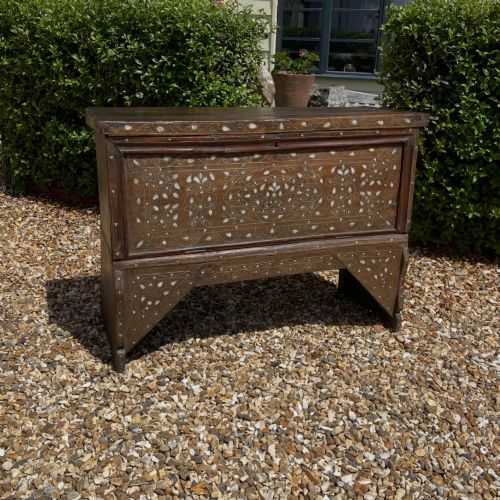


Marquetry Storage Trunk
These marquetry storage trunks bring centuries of intricate timber work and robust daily utility into the home.
Marquetry Storage Trunk
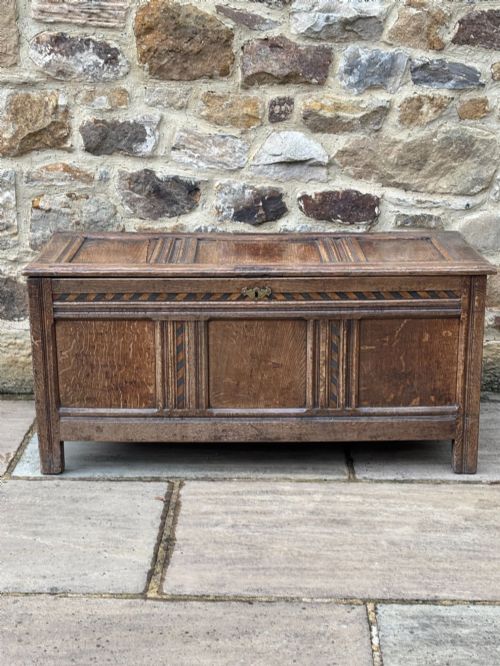
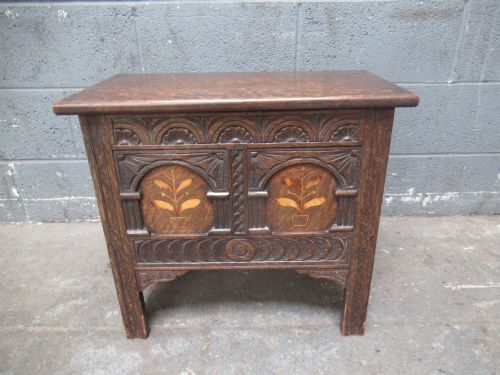
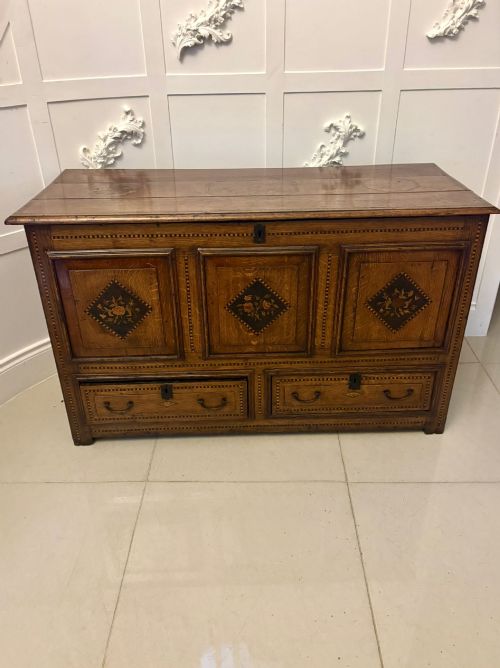
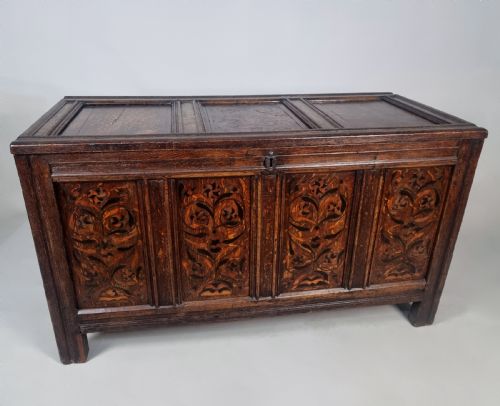
A marquetry storage trunk is a substantial receptacle designed for holding household textiles, valuables or tools, distinguished by decorative patterned wood veneers applied to the exterior. The examples found here span several centuries, encompassing seventeenth-century oak coffers, Georgian mule chests with integrated drawer storage, nineteenth-century continental walnut dome coffers, and specialised tool chests.
Mule chests and coffers form the backbone of these listings, often featuring hinged lids above timber panel construction. Alongside traditional English and Welsh oak pieces, the inventory extends to Syrian inlaid trunks and Dutch travelling cabinets, demonstrating a wide geographic spread of inlay traditions.
The aesthetic vocabulary ranges from formal Jacobean arcading and Elizabethan Revival motifs to profuse continental floral patterns and geometric wood inlay. Buyers encounter both domestic household receptacles and specialised travelling or tool trunks associated with master craftsmen.
How they were made
Construction relies upon solid primary timbers such as oak, mahogany, and walnut, forming the structural shell of coffers, mule chests, and cabinets. Joinery methods include traditional framing and paneling, which accommodated the natural seasonal movement of solid timber without splitting.
The signature decorative element utilises wood inlay, fruitwood, and bone to create elaborate surface patterns across lids, panels, and drawer fronts. Metalwork components, specifically brass and iron, provide hinges, lock plates, and carrying handles necessary for the daily operation and security of these storage vessels.
Marquetry Storage Trunk Retail Price Guide 2026
Typical asking prices for marquetry storage trunk among the pieces listed under this phrase on Sellingantiques today, from the lower quarter to the upper quarter. They describe what is for sale here now, not the wider market.
Listings feature oak, walnut, mahogany, and fruitwood, alongside decorative additions of brass, iron, and bone across various centuries.
What varies in quality
The sophistication of the surface decoration largely dictates the standing of an individual piece, separating straightforward utilitarian boxes from masterwork furniture. Precision in the execution of the wood inlay, along with the variety and contrast of materials like fruitwood and bone, marks the distinction between competent local joinery and high-status workshop production.
Structural integrity and the survival of original hardware, including brass and iron hinges, locks, and carrying handles, heavily influence the character of each trunk. Furthermore, the presence of fitted interiors, such as those found in cabinet makers and shipwrights tool chests, elevates the functional complexity of the piece.
The Marquetry Storage Trunk Glossary
- Marquetry
- The art of applying decorative pieces of veneer to a structural structure to form pictorial or geometric designs. This technique utilises contrasting timbers, fruitwood, and bone to create detailed surface patterns.
- Coffer
- A heavy wooden box traditionally used for holding valuables, documents, or textiles. Early examples frequently feature carved panels or inlaid decoration across the front and lid.
- Mule Chest
- A storage chest that incorporates one or more drawers beneath the main internal compartment. They emerged in the seventeenth and eighteenth centuries to provide easier access to stored garments.
- Arcaded
- Decorated with a series of arched openings resembling architectural arcades. This motif appears frequently on seventeenth-century oak panels.
- Fruitwood
- Dense, fine-grained timber derived from fruit-bearing trees such as pear, apple, or plum. Craftsmen utilised these light-toned woods for contrast in detailed inlay work.
Marquetry Storage Trunk: Frequently Asked Questions
What is a marquetry storage trunk?
A marquetry storage trunk is a wooden box or chest featuring decorative wood veneer patterns applied to its exterior surfaces. These pieces range from seventeenth-century oak coffers to nineteenth-century continental walnut dome chests and specialised tool trunks.
They were built to hold textiles, valuables, or tools while serving as prominent decorative furniture within the home.
How do I use a coffer today?
Coffers function well in modern interiors as living room coffee tables, blanket boxes at the foot of a bed, or hallway storage for shoes and linens. Their hinged lids provide practical hidden storage while the decorative exterior adds historic character to a room.
Ensure the internal surfaces are clean and dry before storing delicate fabrics inside antique timber.
What is the difference between a coffer and a mule chest?
A coffer is essentially a deep box with a hinged lid, offering top access only to the internal storage space. A mule chest includes one or more drawers built beneath the main compartment, combining chest storage with drawer accessibility.
This evolution appeared as domestic storage needs shifted toward easier retrieval of garments.
How do I date an inlaid chest?
Dating relies on observing construction methods, timber choices, and the style of the inlay work. Seventeenth-century pieces typically feature heavy oak framing with geometric panels, whereas eighteenth-century Welsh examples and nineteenth-century continental walnut coffers display different proportions and veneer techniques.
Hardware styles, such as iron strap hinges or brass cotter pins, also offer clues to the period of manufacture.