





Inlaid Blanket Box
An inlaid blanket box provides deep storage while displaying centuries of woodworking skill through contrasting timbers and geometric patterns.
Inlaid Blanket Box
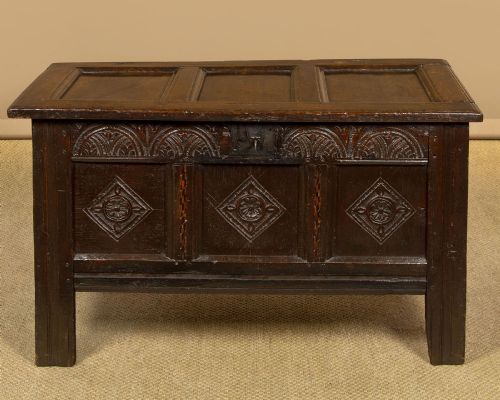
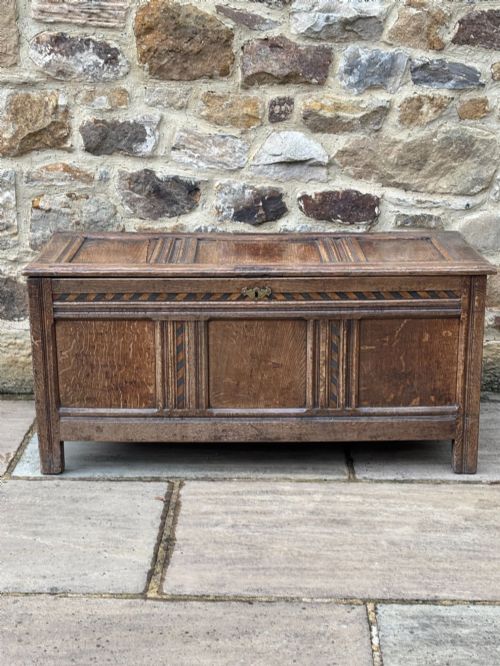
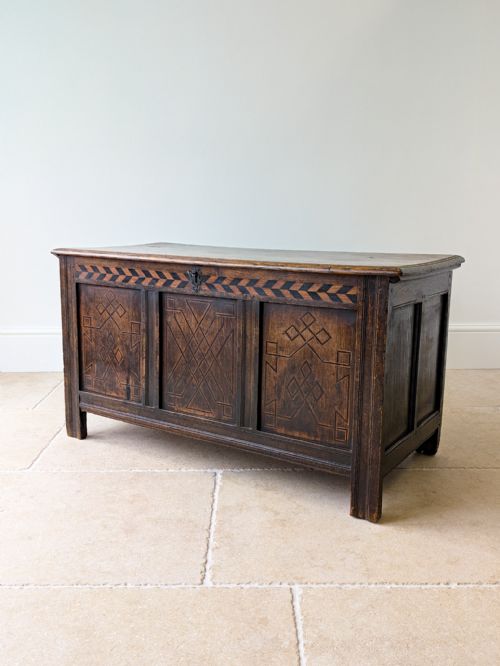
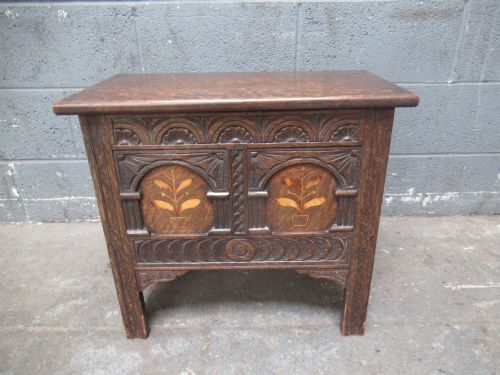
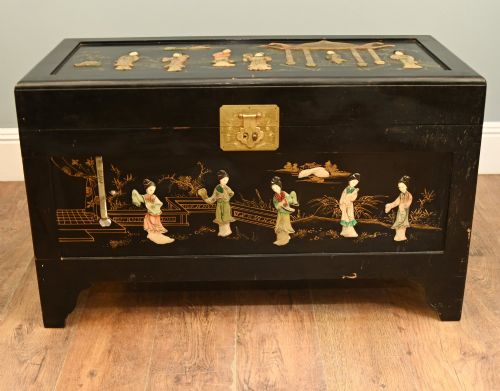
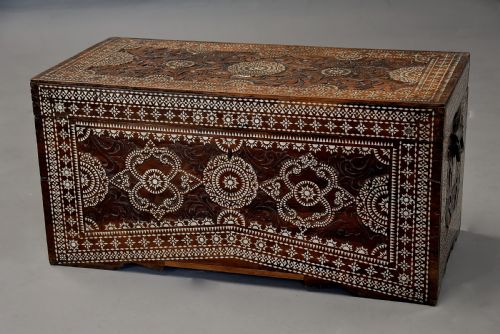
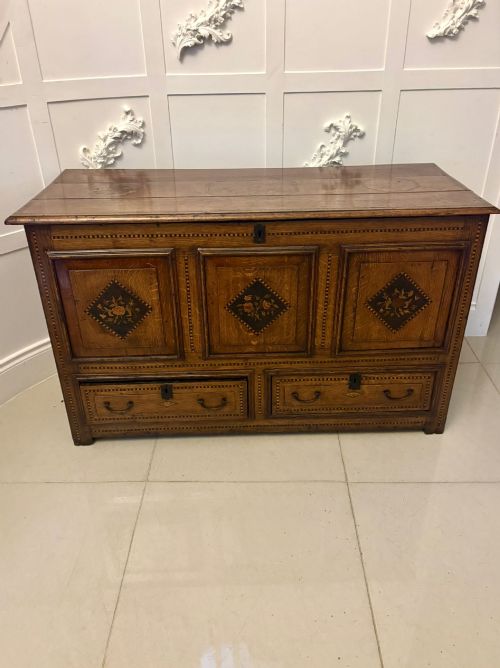
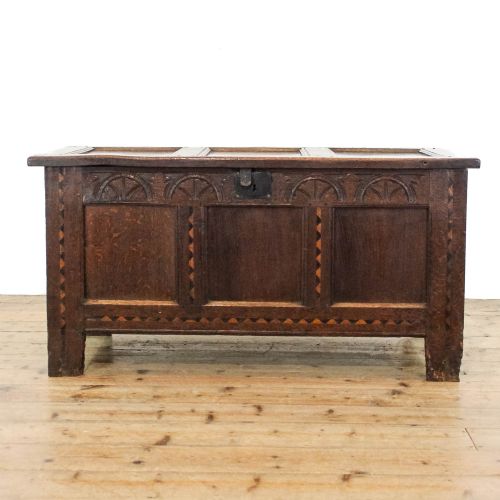
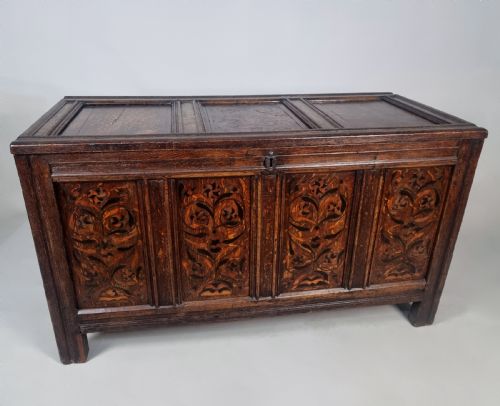
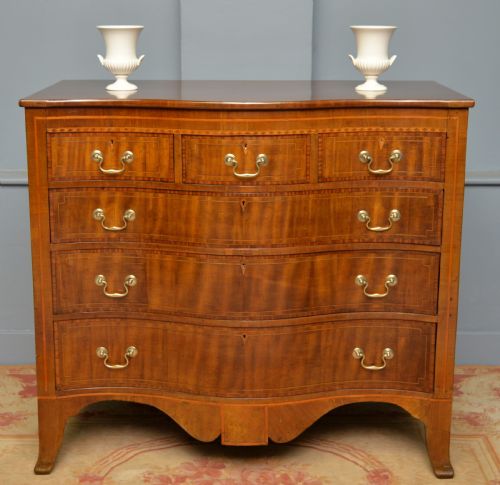
An inlaid blanket box serves as a robust storage chest, often referred to in listings as a coffer, trunk, mule chest, or coffor bach. These pieces range from substantial sixteenth and seventeenth-century oak examples to refined eighteenth-century Georgian furniture and nineteenth-century global imports.
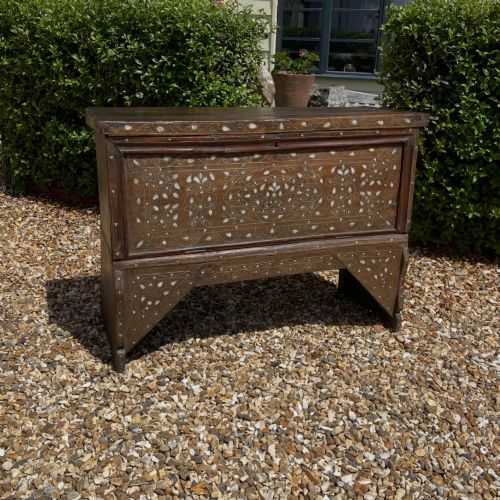
The versions most commonly met on this page are sturdy oak coffers featuring period marquetry or panel inlay, alongside regional Welsh pieces and exotic nineteenth-century trunks decorated with mother of pearl or contrasting woods.
Makers designed these items to secure household textiles and valuables, resulting in sturdy lids and deep internal compartments that transition well into modern living spaces as coffee tables or statement storage.
How they were made
Carpenters primarily constructed these pieces using solid oak, mahogany, walnut, and regional hardwoods, assembled with traditional frame and panel techniques to allow timber to expand and contract naturally. Joiners secured structural joints using pegged mortise and tenon construction.
Craftsmen applied wood inlay, marquetry, and contrasting veneers such as satinwood, ebony, and fruitwoods into recessed channels carved directly into the primary timber. Metal components like brass handles, iron strapwork, and studded accents were hand-forged or cast to reinforce corners and lids.
Inlaid Blanket Box Retail Price Guide 2026
Typical asking prices for inlaid blanket box among the pieces listed under this phrase on Sellingantiques today, from the lower quarter to the upper quarter. They describe what is for sale here now, not the wider market.
Several miniature Welsh coffers were built by apprentices practicing their dovetails before tackling full-sized furniture.
What varies in quality
The standard of an inlaid blanket box depends heavily on the precision of the cabinet work and the complexity of the contrasting timber patterns. Fine examples show crisp, tightly fitted marquetry with minimal infill and intact primary woods without extensive modern replacement timber.
Age and regional attribution also influence desirability, particularly with early seventeenth-century oak pieces or documented vernacular forms like the Welsh coffor bach. The integrity of the original hinges, locks, and internal till boxes further separates standard utility chests from collector pieces.
The Inlaid Blanket Box Glossary
- Coffer
- A large wooden chest traditionally used for storing valuables, textiles, or documents. These sturdy boxes often feature hinged lids and raised feet.
- Mule chest
- A storage chest that incorporates one or more drawers beneath the main internal compartment. This form developed during the late seventeenth and eighteenth centuries.
- Coffor bach
- A Welsh term translating to little coffer, denoting a miniature chest or box often fitted with drawers. These regional pieces were traditionally made as dowry items or apprentice pieces.
- Marquetry
- The art of applying decorative veneer pieces to a structural surface to form intricate pictures or geometric patterns. Craftsmen use contrasting woods, bone, or shell for visual depth.
- Arcading
- A decorative row of arches supported by piers or columns, frequently carved onto the panels or rails of seventeenth-century furniture. This architectural motif provides distinct period dating clues.
Inlaid Blanket Box: Frequently Asked Questions
How were blanket boxes used historically?
Households utilised these large chests primarily to store heavy woolen blankets, winter garments, and valuable linens away from damp floors and pests. In earlier centuries, they also served as seating benches and travel trunks for transporting personal belongings.
Wealthier families kept important documents, church silver, and family deeds inside locked coffers. The addition of internal till boxes provided secure compartments for smaller items like coins and jewellery.
How do I clean an antique wood chest?
Maintain antique wooden surfaces by dusting gently with a dry, soft cloth and occasionally applying traditional beeswax to nourish the timber. Avoid modern silicone sprays and household multi-surface cleaners, which strip historic patina.
Keep the chest away from direct heat sources and strong sunlight to prevent the timber from splitting and the historic inlay from lifting. Proper humidity control protects both the primary wood and delicate veneered details.
What is the difference between a coffer and a trunk?
Carpenters built traditional coffers as heavy frame-and-panel furniture pieces intended for static placement inside domestic interiors. They typically feature heavy oak construction and architectural mouldings characteristic of seventeenth-century joinery.
Trunks generally refer to more portable travel containers, often reinforced with iron, brass mounts, or studded leather for transit. Later nineteenth-century examples often incorporated exotic woods or specialised campaign hardware for mobility.
How can I tell an older oak coffer apart?
Examine the construction methods, tool marks, and timber shrinkage to evaluate the age of an oak coffer. Seventeenth-century pieces typically display hand-riven boards, pegged joints, and authentic period lock plates.
Look for signs of hand-carving and traditional marquetry rather than machine-cut veneers or modern adhesives. Nail types, hinge styles, and the natural oxidation of the oak over centuries offer reliable indicators of period authenticity.