

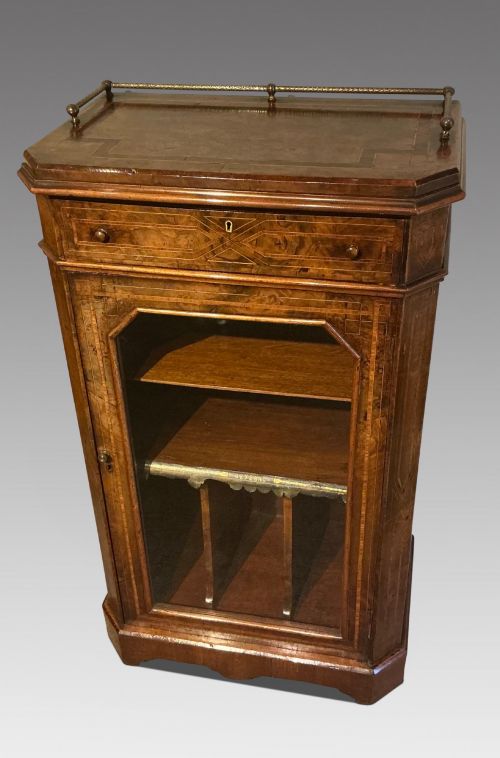
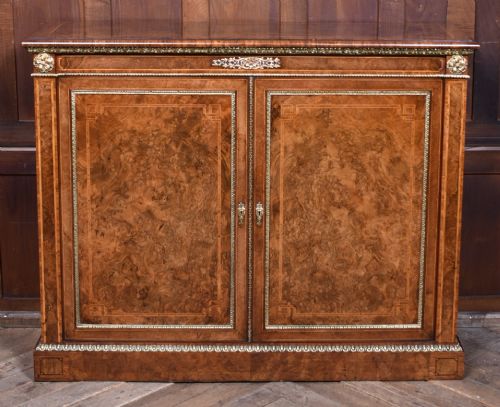
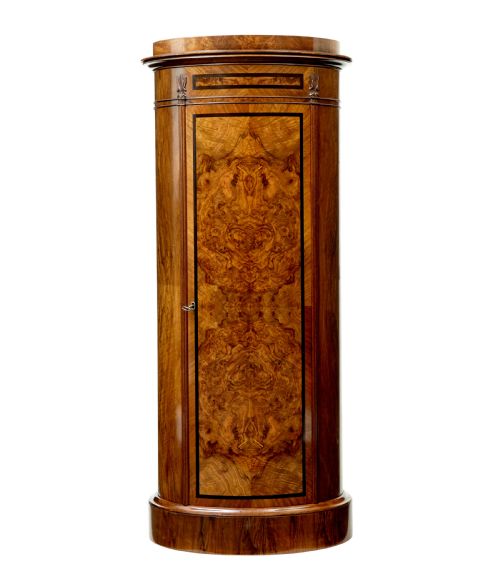
Marquetry Storage Cupboard
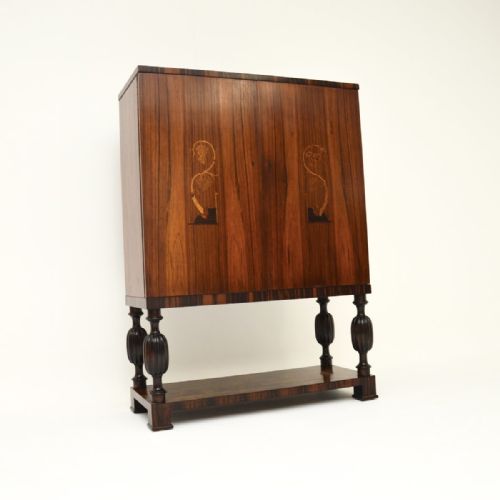
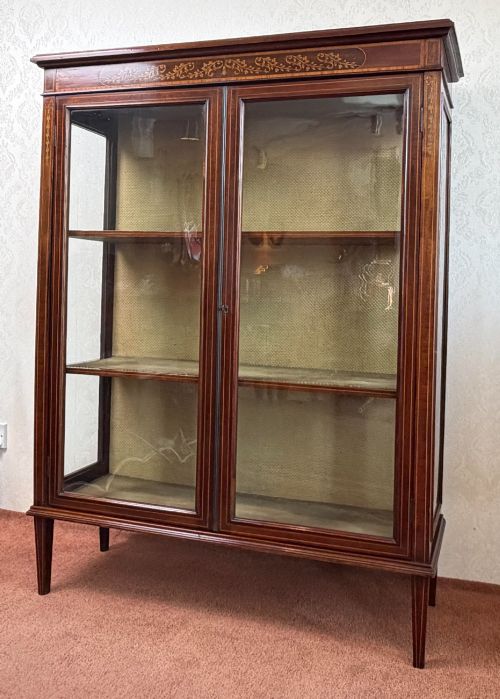
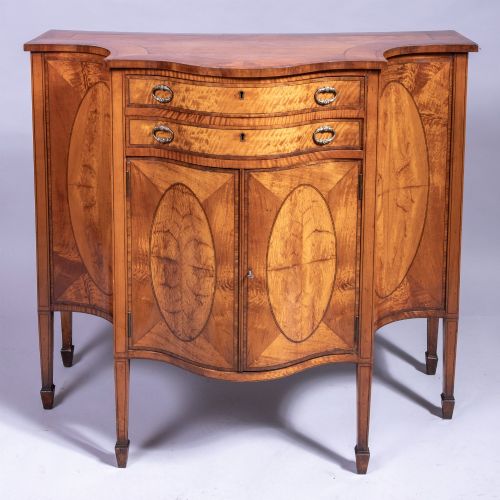
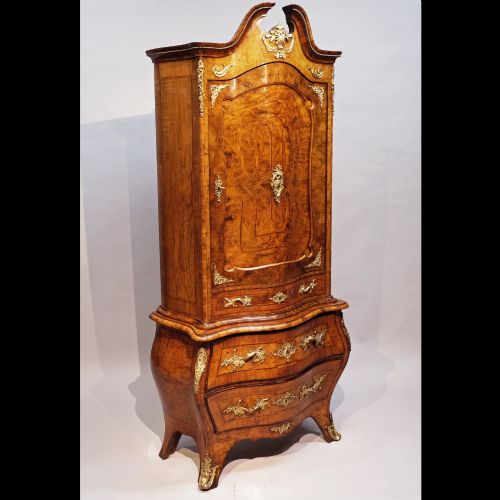
These marquetry storage cupboard pieces bring patterned wood veneers into daily storage, offering panelled floral motifs and fitted interior compartments.
Marquetry Storage Cupboard
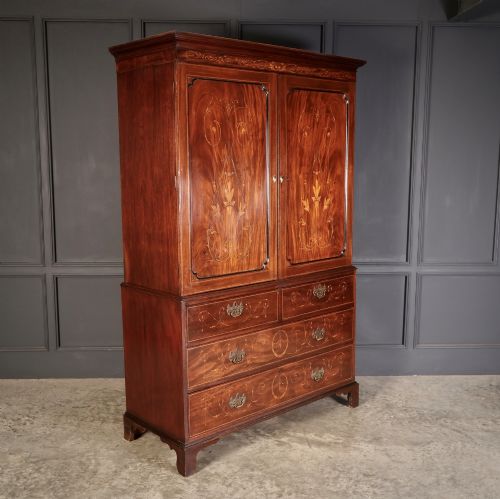
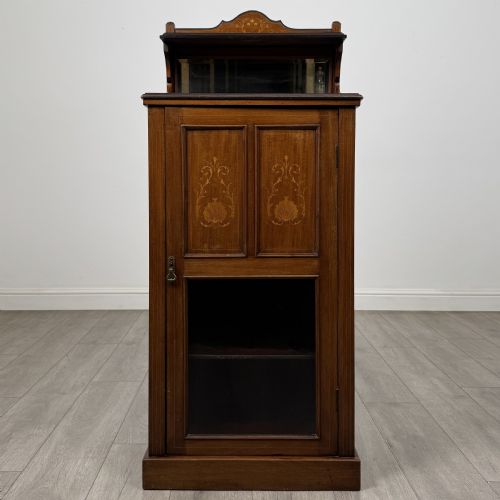
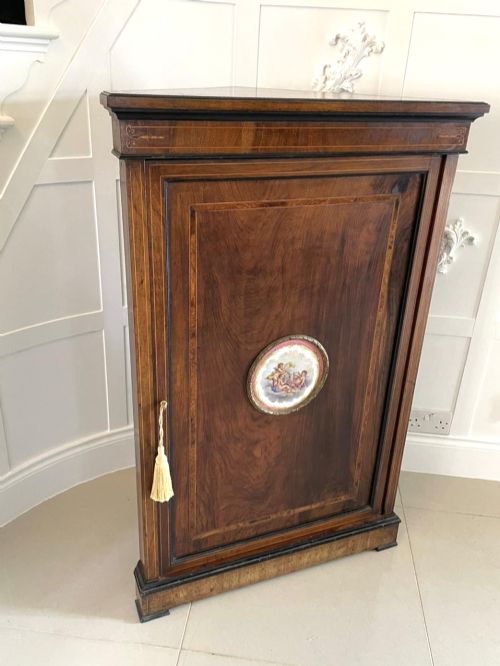
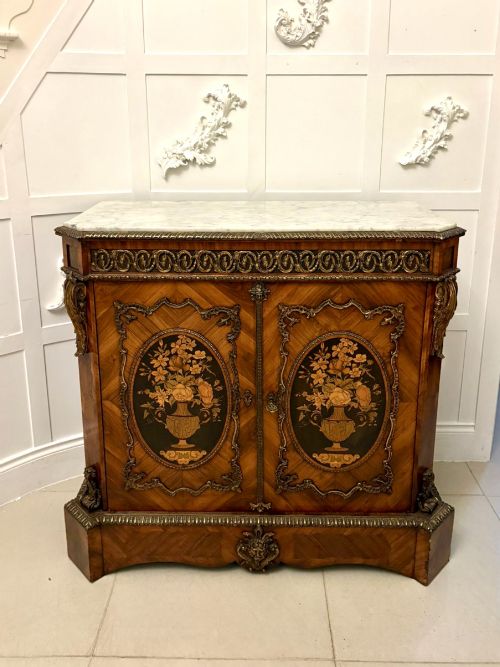
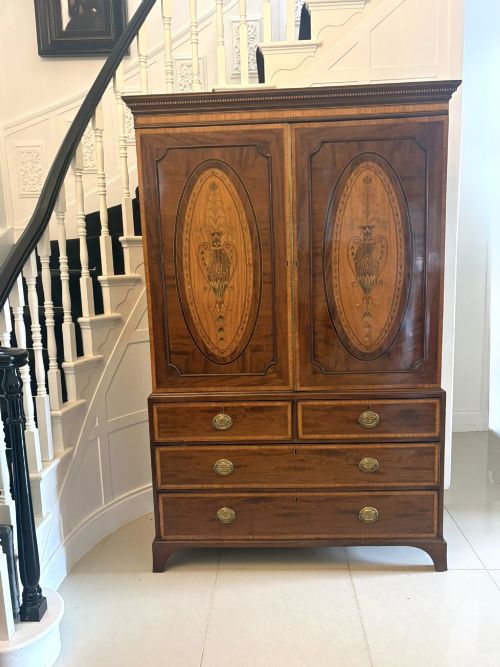
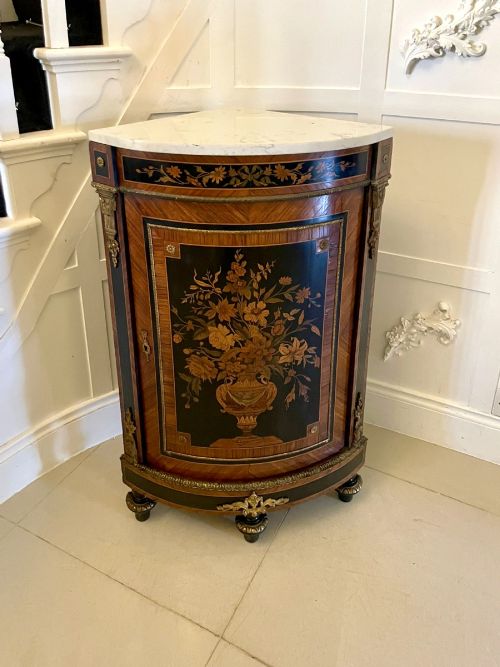
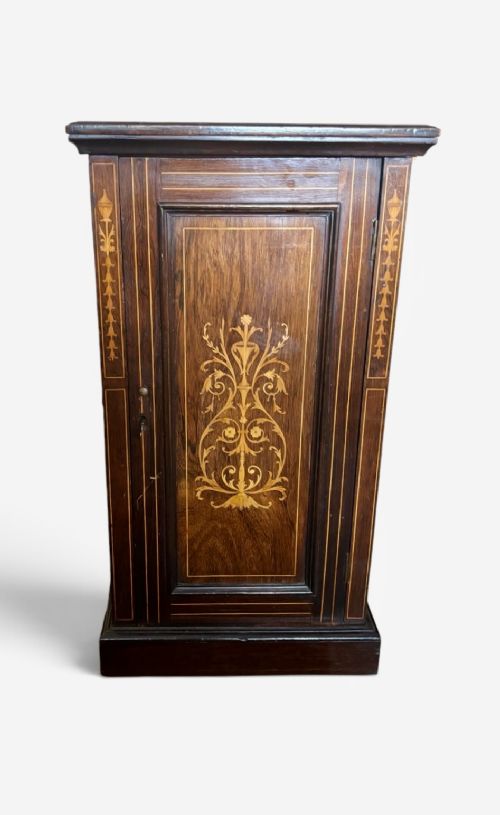
A marquetry storage cupboard brings together fitted interior spaces and patterned wood veneers across various historical periods, most notably the eighteenth and nineteenth centuries. These pieces appear in forms such as corner cabinets, side cabinets, music cabinets, and larger linen presses or housekeepers wardrobes.
The selection here draws on Georgian, Victorian, and Edwardian eras alongside continental styles including Louis XVI and Louis XV. English and French workshops produced these items to serve domestic storage needs while displaying intricate surface patterns.
Buyers will find both tall upright linen presses and lower side cabinets fitted with doors and internal shelving. Walnut, mahogany, and satinwood provide the structural foundation for these varied storage formats.
Materials and construction
Cabinet makers constructed the primary carcase of a marquetry storage cupboard using hardwoods such as mahogany, walnut, or oak. Fine veneers of satinwood, kingwood, and rosewood were then applied to create contrasting geometric or floral panels.
Decorative surfaces frequently incorporate floral inlay alongside brass mounts, ormolu details, and inset marble tops on continental examples. Joinery relied on traditional methods to stabilise the timber before the intricate marquetry cutting and fitting took place.
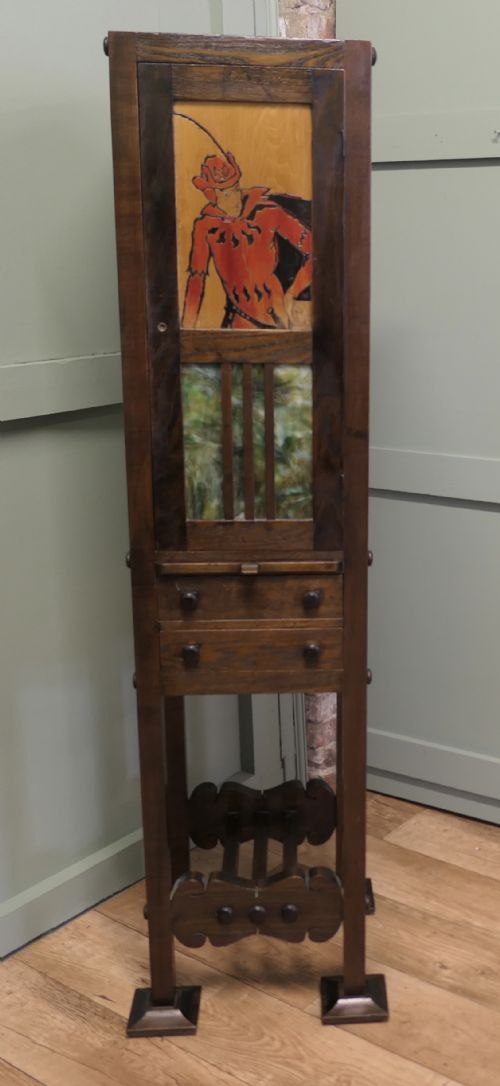
Periods represented span from the eighteenth century through Victorian, Edwardian, and Art Nouveau eras.
Craftsmanship and design
Quality in a marquetry storage cupboard depends upon the precision of the veneer work and the integration of the decorative panels into the main timber frame. Finer examples display seamless alignment in floral or geometric motifs across opening doors and drawers.
The choice of secondary woods and the inclusion of supplementary materials such as marble tops or ormolu mounts elevate certain pieces above standard utility furniture. Wholescale balance and proportion between the inlaid decoration and the overall cabinet form determine the standing of each piece.
Druce & Co·Whytock & Reid·Gordovil Spain·Galle
The Marquetry Storage Cupboard Glossary
- Marquetry
- Decorative veneer work assembled in patterns to form pictures or geometric designs on furniture surfaces. Craftsmen cut thin layers of different coloured woods and fitted them together before application.
- Linen press
- A tall storage cupboard historically used for storing household linen and clothing, typically featuring sliding trays or shelves behind upper doors. Many examples incorporate drawer bases below the main cabinet section.
- Ormolu
- Gilt bronze mounted as a decorative feature on furniture, common in French cabinet making. This technique adds metallic highlights to the edges and corners of marble topped pieces.
- Satinwood
- A durable hardwood with a lustrous, satin-like sheen, frequently utilised in nineteenth-century inlay and stringing. Its pale golden colour provides contrast against darker woods such as mahogany.
- Vitrine
- A glass fronted display cabinet designed for exhibiting ceramics or small decorative objects. These pieces often feature marquetry decoration on the lower panels or framework.
Marquetry Storage Cupboard: Frequently Asked Questions
Where should I place a marquetry storage cupboard?
These cabinets suit dining rooms, living spaces, or hallways where their decorative wood veneers can be seen clearly. Keep them away from direct sunlight and heat sources to protect the sensitive timber veneers.
Ensure the floor is level so the doors hang correctly and open without binding against the frame.
How do I clean a marquetry surface?
Dust the cabinet regularly with a soft, dry cloth to prevent dirt build-up in the veneer joints. Avoid using harsh chemical polishes or excessive water on the inlaid panels.
Apply a traditional beeswax occasionally to nourish the wood and maintain the natural lustre of the finish.
What is the difference between marquetry and inlay?
Marquetry involves covering the entire surface of a furniture piece with a mosaic of fitted veneer pieces to form a picture or pattern. Inlay generally involves cutting a recess into a solid piece of wood and inserting a contrasting material.
Both techniques appear across the cabinets listed here, often combined on the same door panels.
How can I tell a French style cabinet from an English one?
French storage cupboards frequently feature serpentine fronts, ormolu mounts, and fitted marble tops. English pieces tend to rely on straight lines, mahogany or walnut carcases, and subtle satinwood stringing.
Examining the secondary timbers inside the drawers often reveals the likely region of manufacture.