


Marquetry Slant Front Bureau
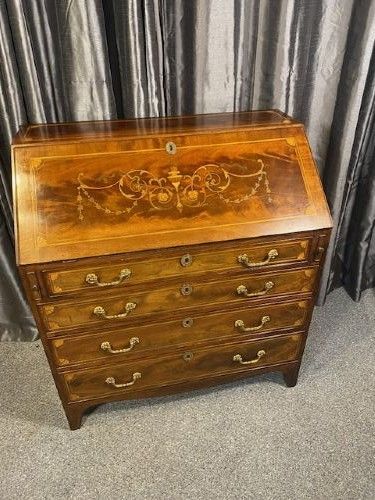
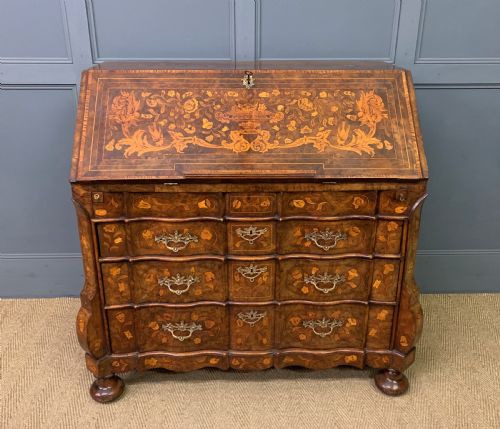
A marquetry slant front bureau brings intricate floral and geometric wood inlay together with a sloping fall-front desk, offering both hidden storage and a fine writing surface.
Marquetry Slant Front Bureau
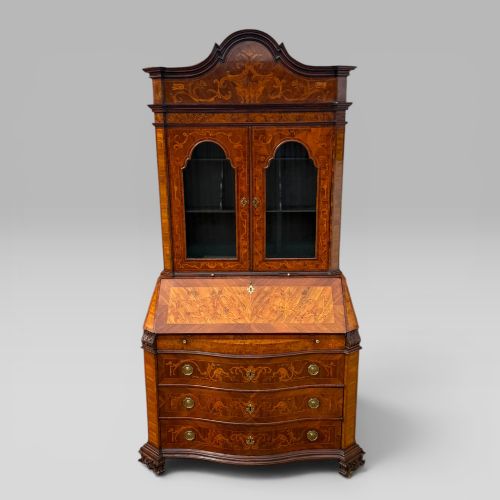
A marquetry slant front bureau combines a hinged writing flap that opens to reveal internal compartments with a fitted case for documents and correspondence. These pieces span centuries of cabinetmaking, with examples ranging from compact writing desks to large bureau bookcases fitted with upper display sections.
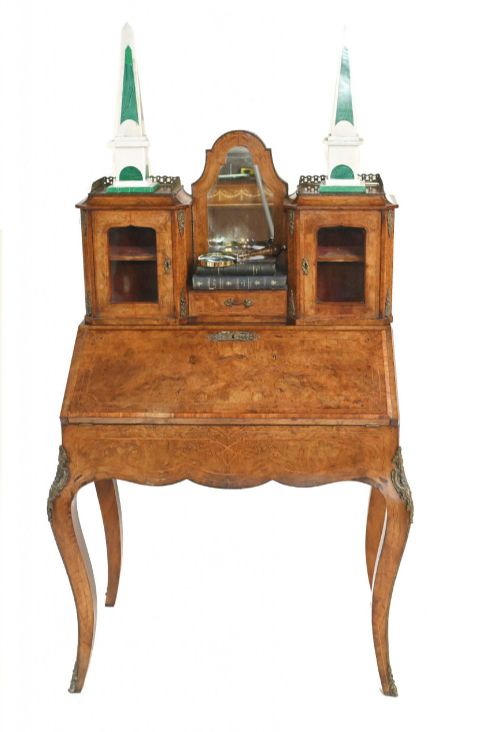
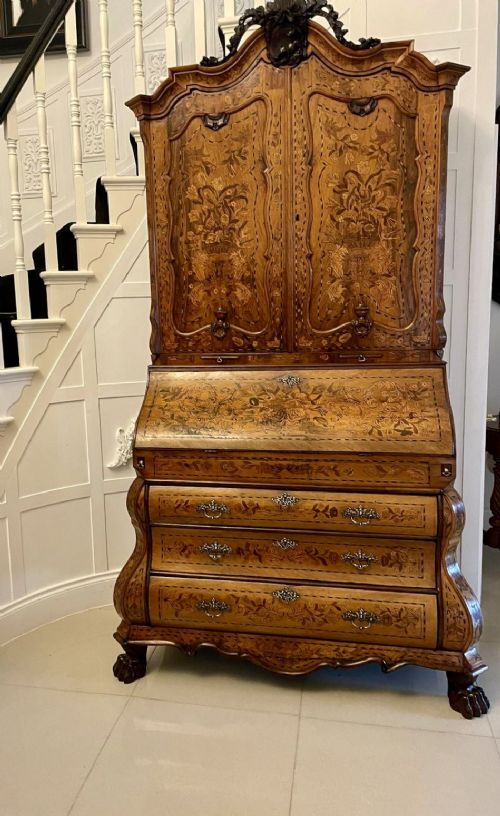
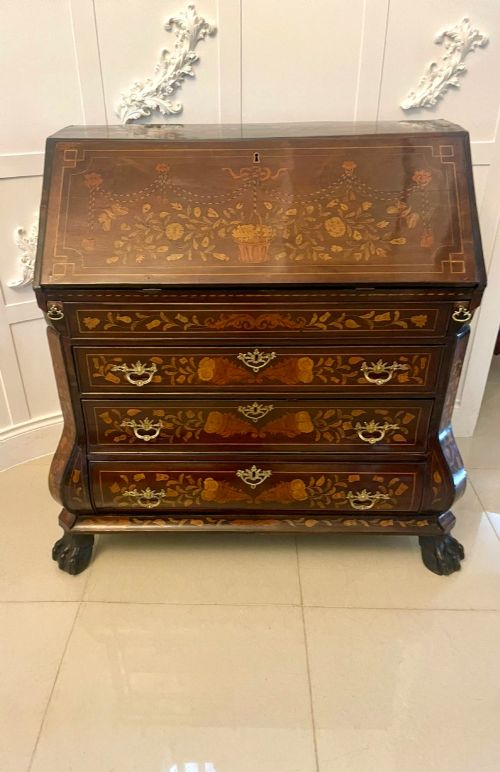
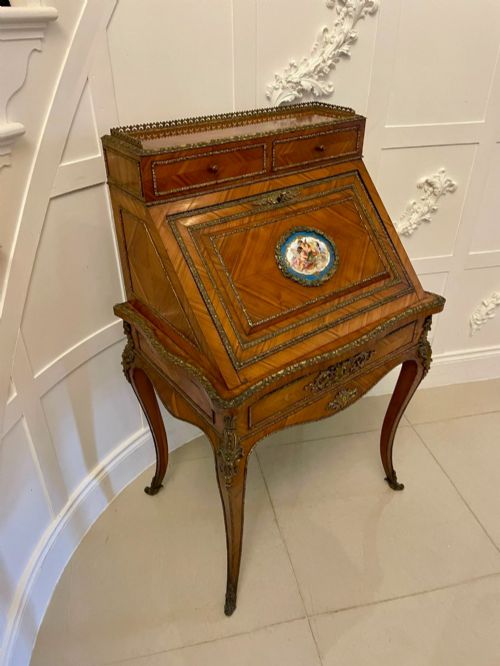
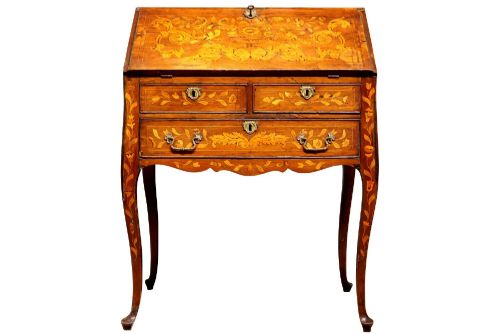
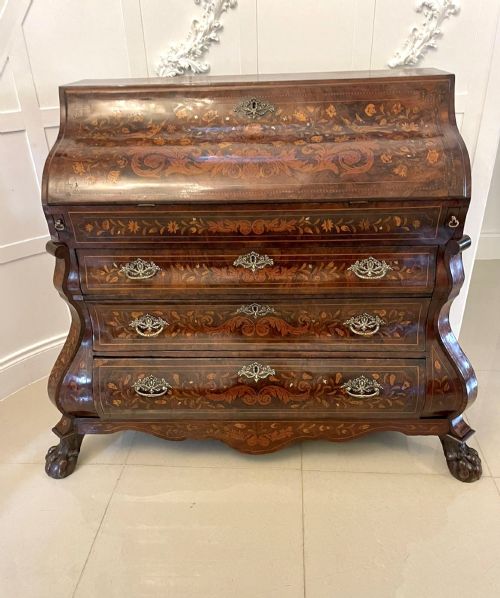
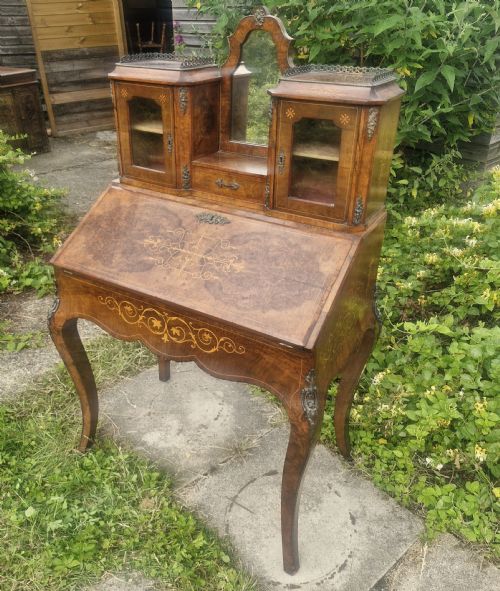
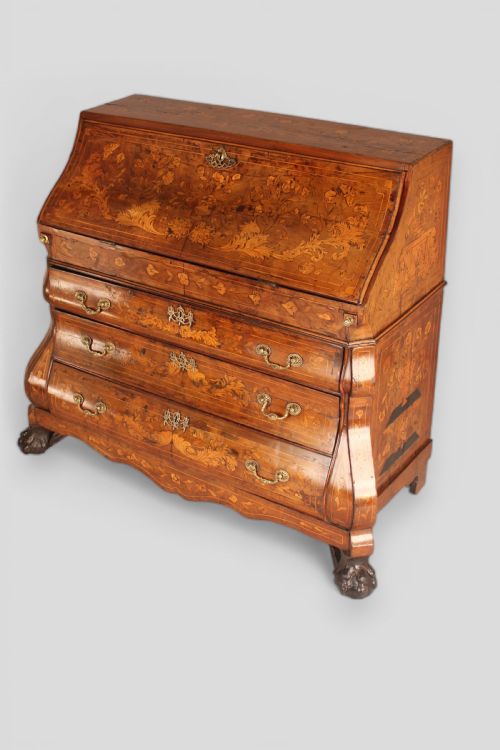
The versions most common on this page originate from eighteenth-century workshops and nineteenth-century revival periods. They appear in forms such as the bombe bureau with swelling sides, the delicate bonheur-du-jour, and the upright Davenport desk.
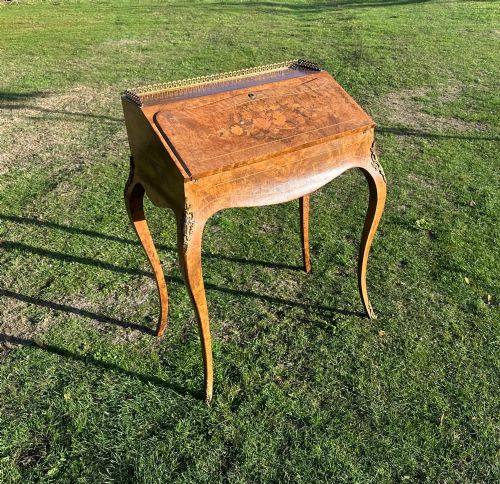
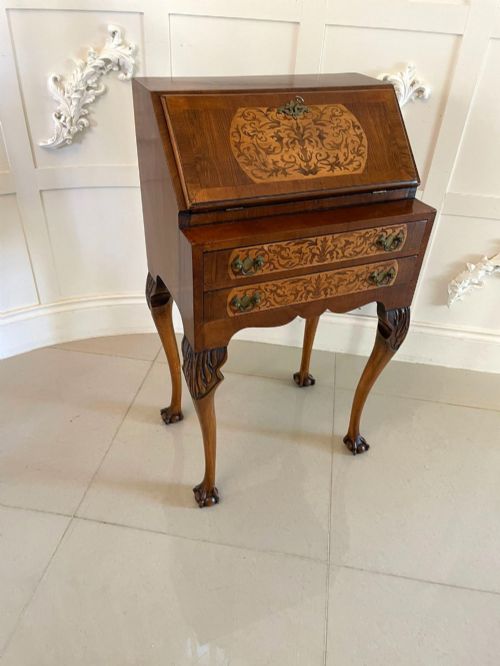
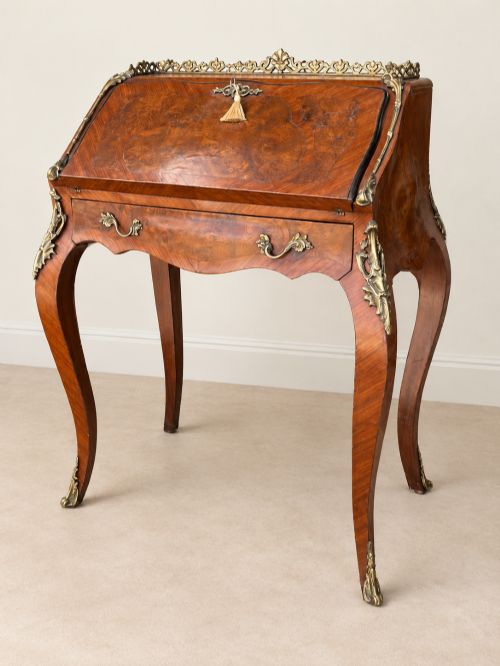
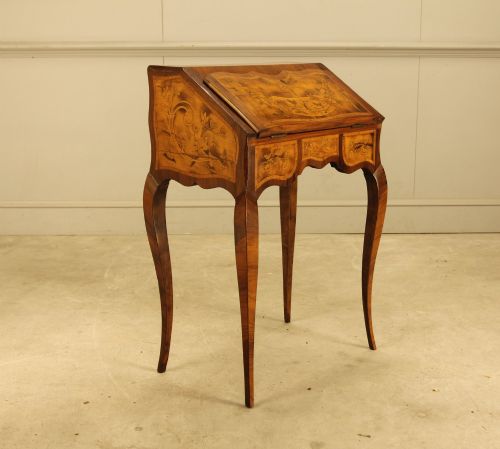
Makers across various European regions applied distinct regional aesthetics to the form, producing Dutch floral marquetry, French Louis XV styles, and English walnut pieces. Each variant adapts the basic sloping desk concept to the domestic fashions of its era.
How they were made
Cabinetmakers constructed the carcases using native and exotic timbers such as walnut, burr walnut, rosewood, and kingwood, often laid over sturdy secondary woods. Surface decoration relied on detailed marquetry, assembling contrasting veneers of fruitwood and other timbers to form floral, pictorial, or geometric patterns.
Metal mounts in brass and ormolu reinforced corners, framed panels, and decorated drawer pulls, complementing the inlaid timber surfaces. Glass doors appeared on taller bureau bookcase variants to enclose upper shelving for books and decorative objects.
Marquetry Slant Front Bureau Retail Price Guide 2026
Typical asking prices for marquetry slant front bureau among the pieces listed under this phrase on Sellingantiques today, from the lower quarter to the upper quarter. They describe what is for sale here now, not the wider market.
Secret compartments hidden behind sliding pigeonholes offered eighteenth-century writers a safe retreat for love letters and spare keys.
What varies in quality
The precision and complexity of the marquetry inlay determine much of a piece's standing, separating simple geometric borders from elaborate, multi-toned floral arrangements that cover the entire carcase. Grain selection also plays a role, with richly figured burr walnut and matched veneers commanding attention for their visual depth.
Structural execution dictates the longevity of the mechanism, particularly the joinery of the slant front and the smooth operation of internal pigeonholes and small drawers. The integration of cast bronze ormolu mounts and original brass hardware distinguishes finer workshops from more utilitarian production.
The Marquetry Slant Front Bureau Glossary
- Marquetry
- The art of applying pieces of veneer to a structure to form decorative patterns and pictorial designs. It transforms a plain wooden surface into a canvas of contrasting grains and colours.
- Bombe
- A swelling, convex outward curve found on the front and sides of furniture carcases. This volumetric shaping requires advanced woodworking skill to match the veneer smoothly over compound curves.
- Bonheur-du-jour
- A light, ladies' writing desk featuring a small cabinet or set of shelves on the upper surface. These compact pieces gained popularity during the nineteenth century.
- Bureau bookcase
- A dual-purpose piece combining a sloping desk compartment below with an enclosed shelving unit above. They provide substantial storage for books and writing materials.
- Ormolu
- Gilded bronze used for decorative mounts, feet, and keyhole escutcheons. It adds metallic contrast to dark timber surfaces.
Marquetry Slant Front Bureau: Frequently Asked Questions
How do I use a slant front bureau?
Lower the hinged writing flap to reveal an internal arrangement of small drawers, pigeonholes, and central compartments designed for correspondence and stationery.
The sloping surface provides a traditional writing desk space, and closing the flap conceals paperwork while keeping the room tidy.
How do I date an antique marquetry bureau?
Examine the secondary woods inside the drawers, the style of the brass hardware, and the construction methods used for the internal pigeonholes and dovetails.
Design characteristics such as Dutch bombe shaping or French Louis XV cabriole supports also point toward specific manufacturing decades.
Where were most floral marquetry bureaus made?
Many fine floral marquetry pieces originated in the Netherlands during the eighteenth century, where cabinetmakers specialised in intricate multi-wood floral urn and bird designs.
Similar floral inlay techniques also appeared in English and French workshops influenced by continental baroque and rococo styles.