






Marquetry Needlework Box
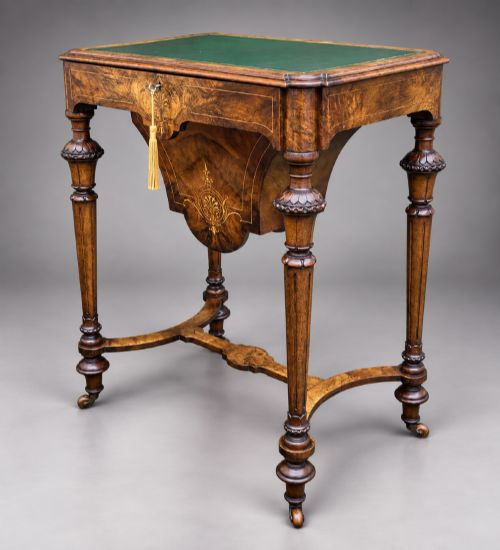
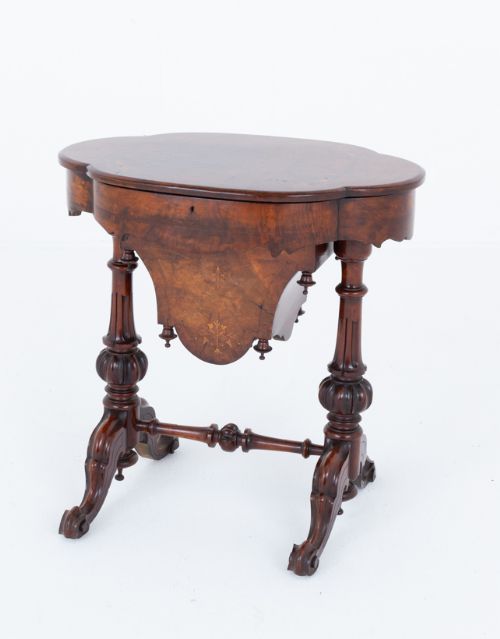
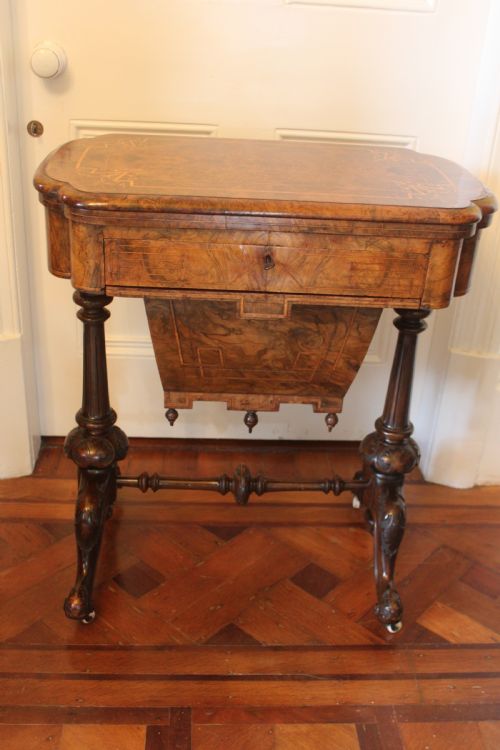
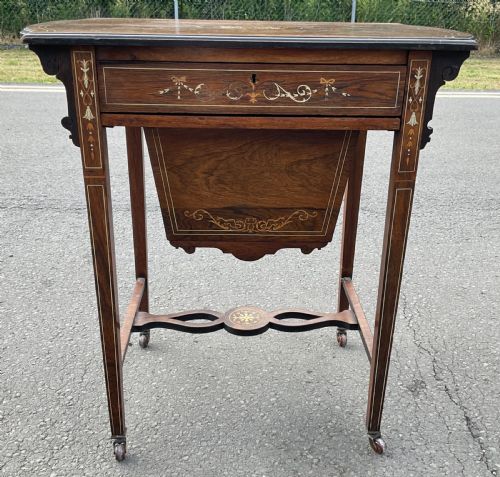
These marquetry needlework box pieces are timber caskets and tables designed for sewing, offering fitted interiors and intricate wood inlay.
Marquetry Needlework Box
When you search for a marquetry needlework box, you encounter timber receptacles and tables built to house sewing equipment. The selections span the nineteenth century and the Edwardian era, taking the form of sewing tables, work tables, and decorative boxes.
Burr walnut and rosewood dominate the listings, frequently enriched with boxwood, satinwood, and brass details. Many examples include a fitted interior for cottons and needles, whilst others function as games tables or occasional side tables.
How they were made
Cabinet makers utilised dense hardwoods such as walnut, rosewood, and mahogany as the primary carcase materials. These timbers provided a stable foundation for decorative veneers.
Artisans applied wood inlay and marquetry using contrasting species like boxwood and satinwood to create geometric or floral patterns. Specific pieces incorporate Tunbridge Ware techniques for mosaic wood pictures.
Some nineteenth-century makers concealed games boards inside the sewing table lid for moments when embroidery became tedious.
What varies in quality
The precision of the marquetry cutting distinguishes standard boxes from superior examples. Tighter joints between contrasting veneers indicate greater skill in the workshop.
Internal complexity also divides the range. Fitted compartments with original miniature lids and compartments retain higher craftsmanship than plain lined interiors.
Waring & Gillow
The Marquetry Needlework Box Glossary
- Marquetry
- Decorative patterns formed by inserting pieces of wood, shell, or ivory into a veneer. This technique creates pictorial or geometric surface designs.
- Tunbridge Ware
- Woodworking characterised by mosaic designs made from thousands of tiny tinted wood blocks. It originated in Kent during the nineteenth century.
- Burr Walnut
- Timber taken from a walnut tree growth where the grain has grown in a deformed swirl. It produces highly figured and patterned veneer surfaces.
- Boxwood
- A dense, pale yellow hardwood used historically for stringing and fine inlay details. It provides sharp contrast against darker woods like rosewood.
Marquetry Needlework Box: Frequently Asked Questions
What is a marquetry needlework box?
It is a decorative wooden container or table designed to store sewing implements, threads, and needles.
Such pieces usually feature patterned wood veneers on the lid and exterior surfaces.
How were work tables used?
Victorian ladies used work tables for sewing, embroidery, and correspondence in the parlour.
Many designs combine a workbag suspended underneath with a top surface suitable for writing or games.
How do I date a Victorian sewing box?
Dating relies on timber choices, construction methods, and stylistic cues from the period. Walnut and rosewood became especially popular during the mid-nineteenth century.
Cabinet hardware and internal silk linings also offer clues to the decade of manufacture.
Where should I place a sewing table?
These pieces function well as occasional tables beside chairs or sofas in a living room. Their fitted interiors make them useful for storing small modern items.