
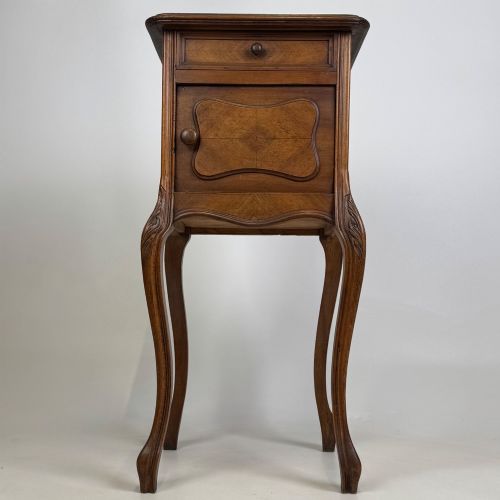
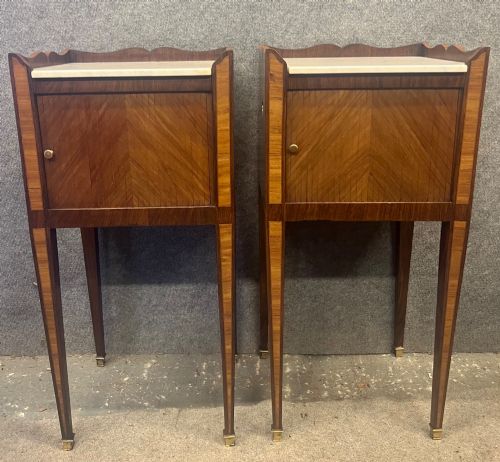
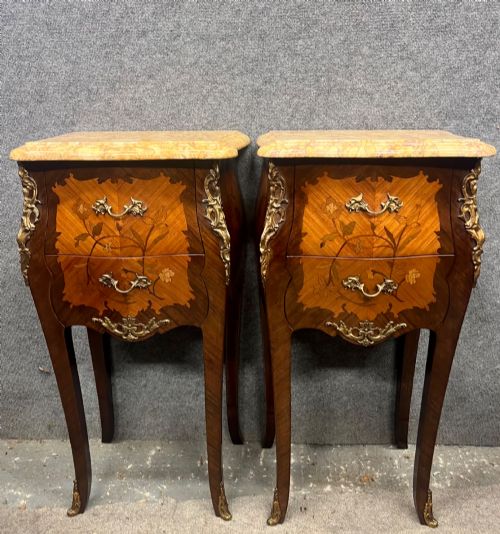
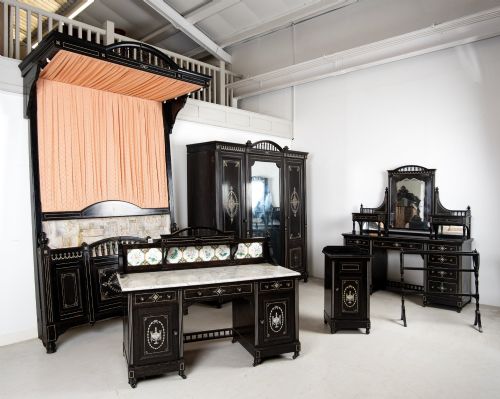
Marquetry Marble Table
A marquetry marble table combines intricate wood inlay with a heavy stone slab, bringing continental elegance to a room.
Marquetry Marble Table
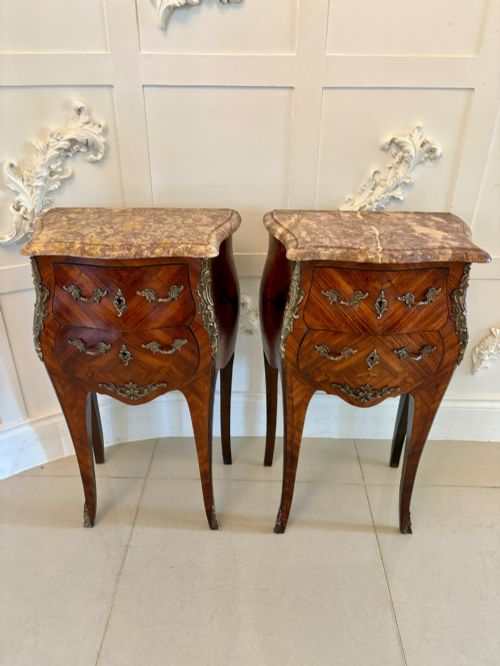
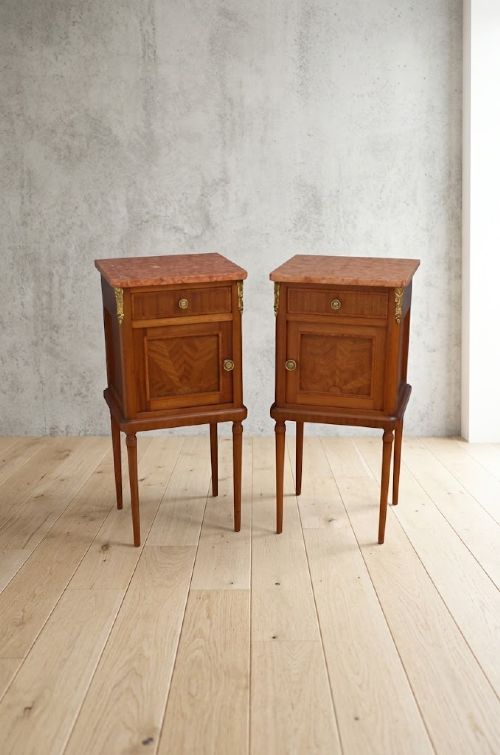
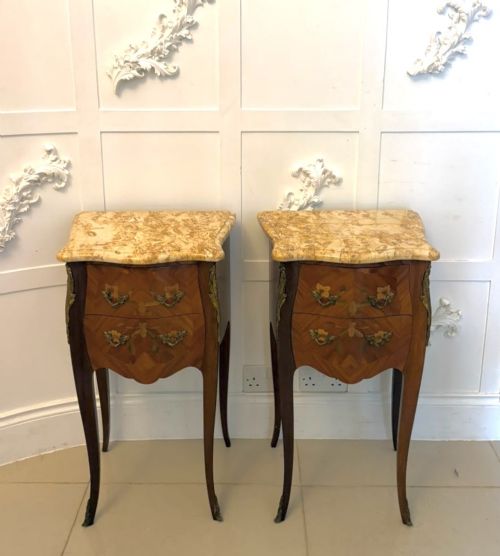
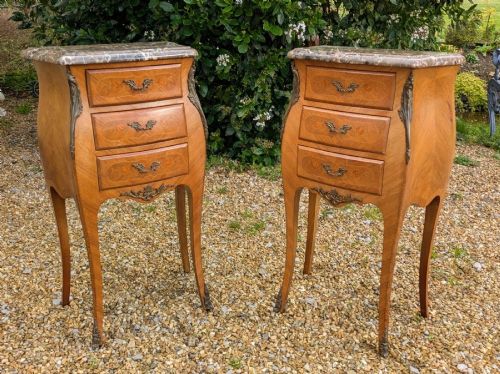
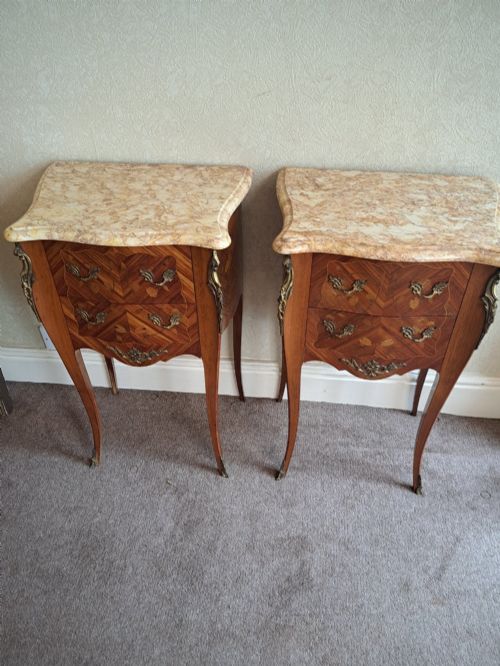
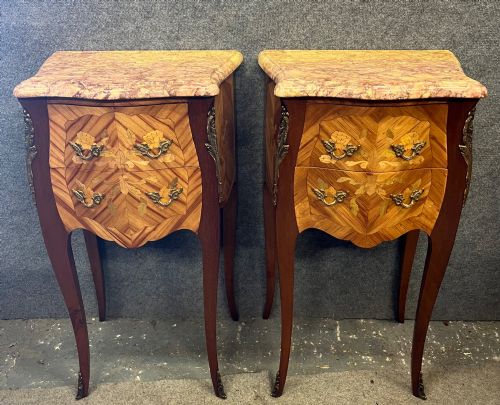
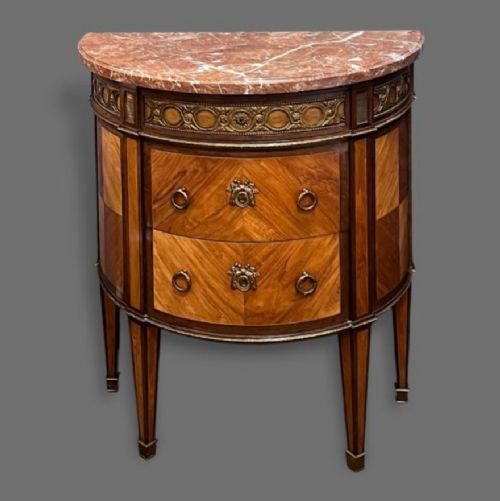
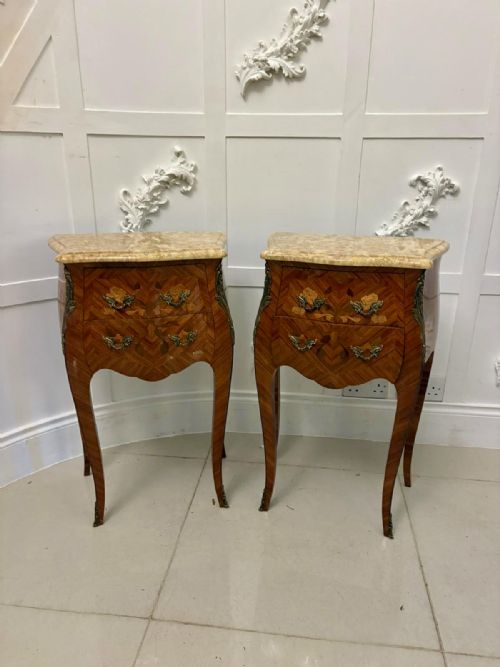
The periods represented span from the nineteenth century through the Edwardian era and into the 1920s and 1930s. Buyers frequently meet pairs of smaller bedside chests and standalone tables displaying classical revival styles.
Materials and construction
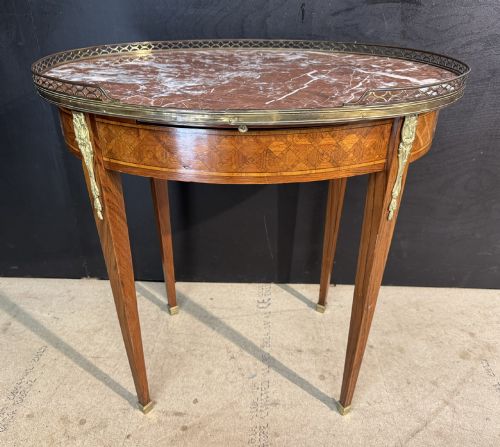
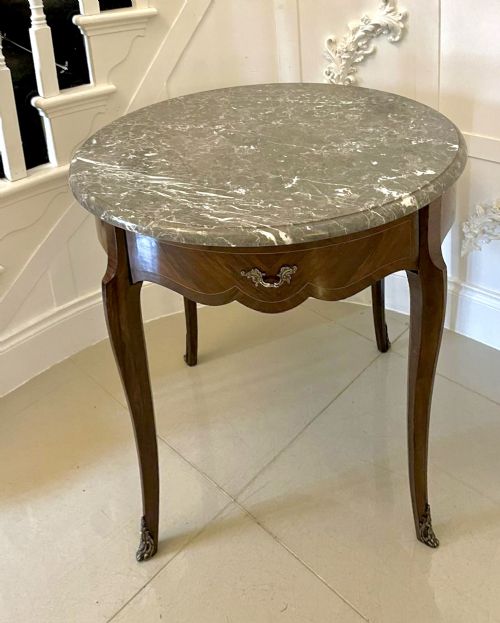
Cabinet makers utilised a foundational carcass of woods such as walnut, mahogany, kingwood, satinwood, and rosewood. Surface decoration relies on precise marquetry inlay, arranging contrasting veneers to form floral or geometric patterns.
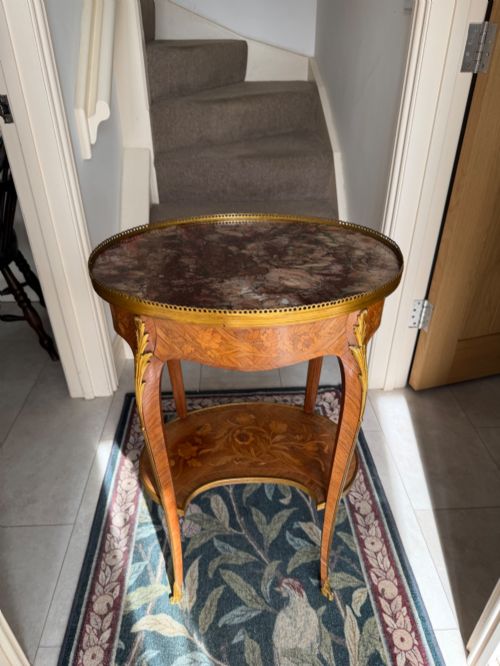
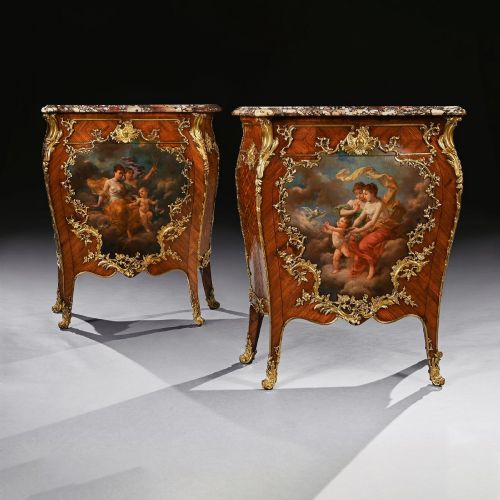
Slabs of polished marble form the upper surfaces, frequently secured above brass, ormolu, or gilt bronze mounts. Structural detailing often incorporates ebonised finishes and shaped serpentine or bombe forms.
Listings incorporate woods such as kingwood, walnut, mahogany, and satinwood alongside marble and ormolu.
Markers of quality
The distinction between standard examples and the finest pieces rests upon the precision of the veneer work and the integration of the stone top. Superior marquetry displays tight joints and subtle tonal shifts within the timber, avoiding muddy contrasts or crude staining.
Metal mounts provide another indicator, where cast ormolu or gilt bronze elements exhibit sharp chasing rather than soft, repetitive casting. The marble itself should sit flush to the timber framework, possessing natural depth and careful edge profiling.
François Linke
The Marquetry Marble Table Glossary
- Marquetry
- The art of applying decorative veneer pieces to a structure to form intricate pictorial or geometric designs. Craftsmen cut various woods to fit together tightly like a puzzle.
- Ormolu
- Gilded bronze mounts applied to furniture for decoration and corner protection. This technique was widely employed in French cabinet making during the eighteenth and nineteenth centuries.
- Bombe
- A swelling, outward-curving furniture shape that bulges on the sides and front. This profile requires advanced carpentry skills to match the veneer correctly.
- Commode
- A low chest of drawers, often standing on relatively tall legs and featuring a marble top. The form originated in France and became central to formal bedroom and reception room furnishings.
- Guéridon
- A small round table supported by one or more columns or figures. These pieces frequently served as candle stands or light occasional tables in nineteenth-century interiors.
Marquetry Marble Table: Frequently Asked Questions
What rooms suit a marble top table?
These tables find natural placement in bedrooms as bedside cabinets or in living spaces as lamp and centre tables. The stone surface provides a practical, resilient top for daily use.
Smaller side tables and console versions also function effectively in hallways or reception rooms where surface space is required without heavy visual bulk.
How do I care for the marble?
Marble requires gentle cleaning with a damp cloth and neutral soap, avoiding acidic substances like citrus or vinegar that etch the polished surface. Routine wiping prevents liquid absorption and staining.
Periodic application of a specialist stone wax helps maintain the sheen and protects the natural pores of the material against everyday wear.
How do I identify the period?
Dating relies on examining construction methods, timber choices, and stylistic revival cues such as Louis XV or Art Deco influences. Nineteenth-century pieces often show heavier carcase construction and rich use of kingwood or mahogany.
Later Edwardian and 1920s examples frequently present lighter satinwood framing or simplified geometric marquetry patterns aligned with changing interior tastes.
Are these tables sturdy enough for daily use?
The heavy stone slabs provide substantial weight that keeps the tables stable, though the delicate veneer requires sensible handling. Placing protective pads under heavy objects prevents scratching the polished top.
Joints on quality pieces remain solid over generations if kept away from excessive humidity or direct heat sources that dry out the timber.