


Antique Scagliola Table
An antique scagliola table brings faux-marble ingenuity into the room, offering smooth coloured surfaces without the weight of solid stone.
Antique Scagliola Table
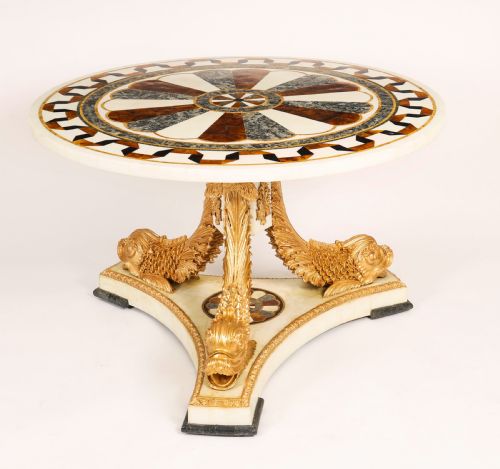
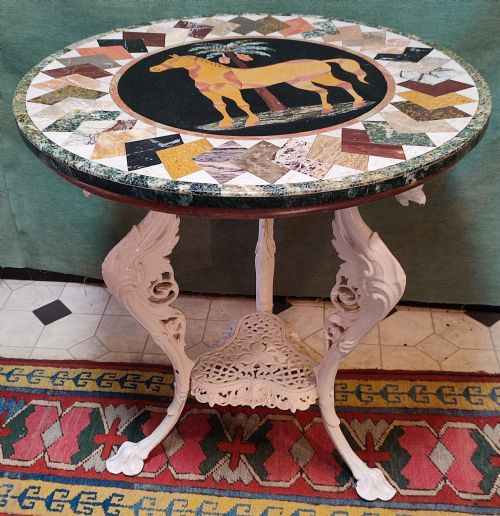
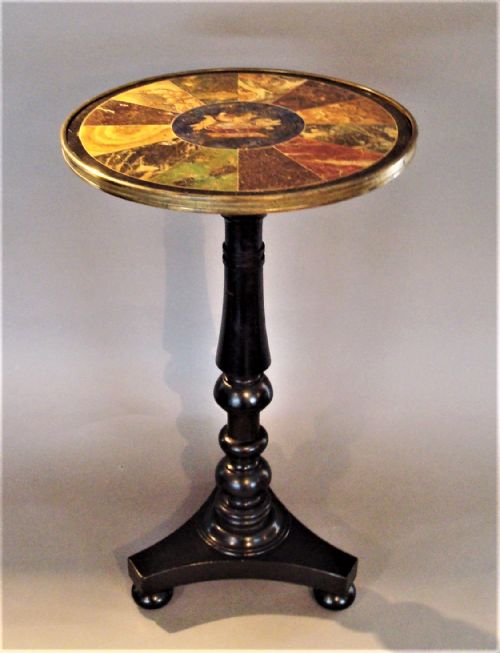
When you search for an antique scagliola table, you encounter pieces defined by plaster-based inlay work that mimics precious marbles and stones. The examples on this page span centre tables, occasional tables, console tables, and coffee tables, drawing on Italian traditions and later revivals. Most pieces you meet combine these simulated stone tops with timber or metal bases.
The evidence shows origins across the eighteenth and nineteenth centuries, including Georgian, Regency, William IV, Victorian, and Edwardian periods. Makers utilised styles ranging from Neoclassical Revival and Italian Rococo to Venetian Rococo and Regency designs. These forms served as grand centrepieces in reception rooms or functional surfaces in refined interiors.
How they were made
Craftsmen built these tables using pigmented gypsum, animal glue, and natural colours mixed to replicate the intricate veining of natural marble. This composite material was applied to a backing, polished to a high sheen, and set into frames of mahogany, walnut, giltwood, or cast iron. Some tables incorporate genuine specimen marble alongside the scagliola work.
Structural support relied on carved timber, gilded woodwork, or sturdy cast iron and stone, depending on the stylistic period. Carved giltwood console tables and heavy centre tables demonstrate the marriage of ornate bases with flat decorative tops. The combination of heavy stone or scagliola surfaces required robust joinery and solid framing.
What varies in quality
Quality rests upon the depth and realism of the surface inlay, distinguishing convincing stone imitations from crude coloured plaster work. Superior tables display seamless integration between the scagliola top and its wooden or gilded support. The crispness of carved details in the giltwood or mahogany bases separates finer workshop output from standard production.
The sophistication of the palette and the complexity of the geometric or floral patterns dictate the distinction between ordinary and exceptional pieces. Proportion and balance between the heavy top and the base frame also determine the visual success of the furniture.
The Woodley family
The Antique Scagliola Table Glossary
- Scagliola
- A composite material made from pigmented gypsum, selenite, and glue, used to imitate marble and other hard stones. Craftsmen inlaid and polished this mixture to create complex decorative patterns.
- Console table
- A table designed to be fixed against a wall, frequently supported by ornamental brackets or legs. These pieces often feature elaborate carved giltwood frames.
- Centre table
- A freestanding table intended to stand in the middle of a room rather than against a wall. The evidence shows these pieces appearing in nineteenth-century settings.
- Specimen marble
- Marble composed of various small pieces of different coloured stones assembled into a geometric mosaic. This technique often appears alongside scagliola work on tabletop surfaces.
- Giltwood
- Wood that has been covered with a thin layer of gold leaf or gesso preparation. This finish appears frequently on eighteenth-century console tables.
Antique Scagliola Table: Frequently Asked Questions
What is scagliola?
Scagliola is a composite technique using pigmented plaster and glue to imitate costly marbles and inlaid stone. Artisans carved recesses into a base and filled them with coloured pastes.
After drying, the surface was polished to achieve a smooth, stone-like finish that fooled the eye in grand interiors.
Where did these tables sit?
Console tables stood against walls in reception rooms, often beneath mirrors, while centre tables occupied the middle of large spaces. Occasional and coffee tables served lighter domestic functions.
Their decorative tops made them visual focal points regardless of room placement.
How do I date a table?
Dating relies on stylistic clues such as Neoclassical motifs, Regency shapes, or Victorian proportions. Materials like cast iron or bleached timber also point toward specific decades.
Comparing the base construction with the tabletop helps establish the period of manufacture.
Are these tops fragile?
The plaster-based composition of scagliola requires careful handling to avoid chipping or surface abrasion. Moisture and harsh cleaning agents can damage the polished finish over time.
Gentle dusting and appropriate placement preserve the integrity of the inlaid design.