
Marquetry Mahogany Bookcase
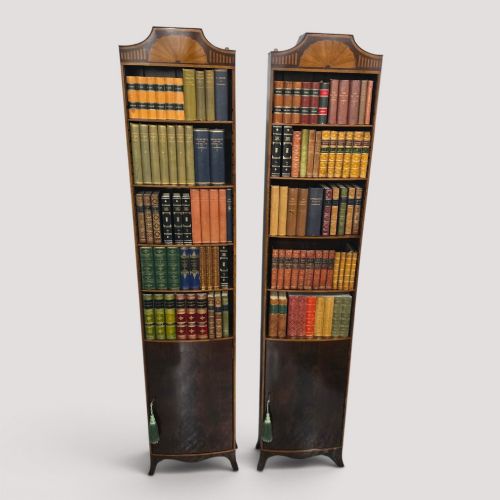
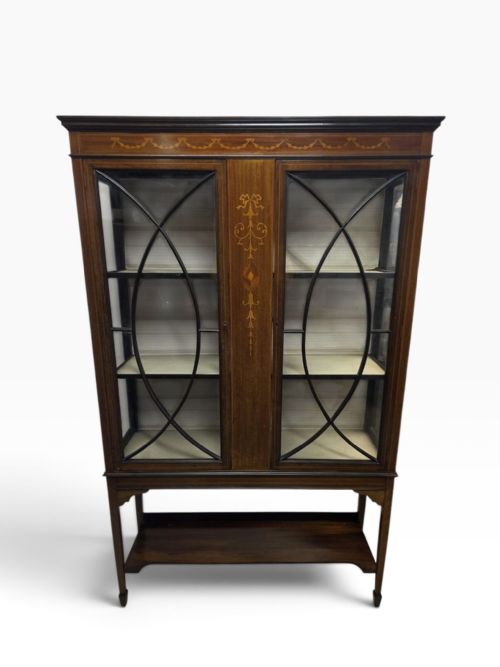
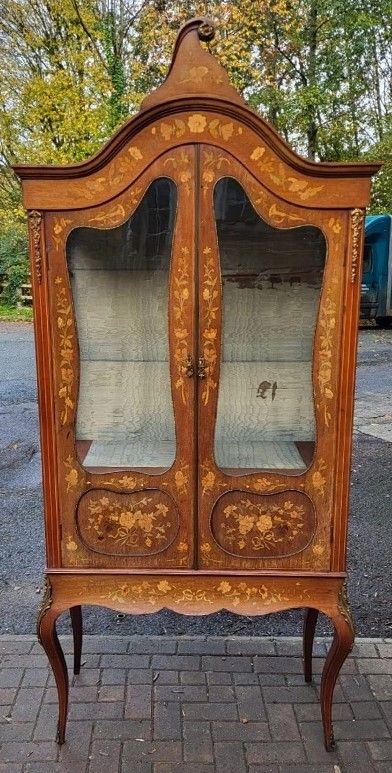
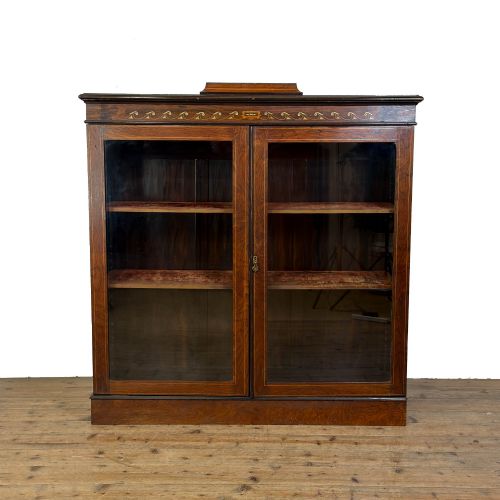
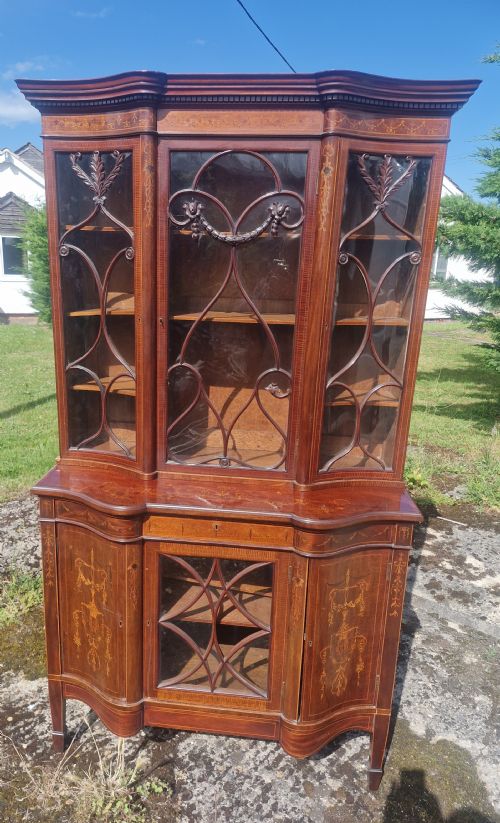
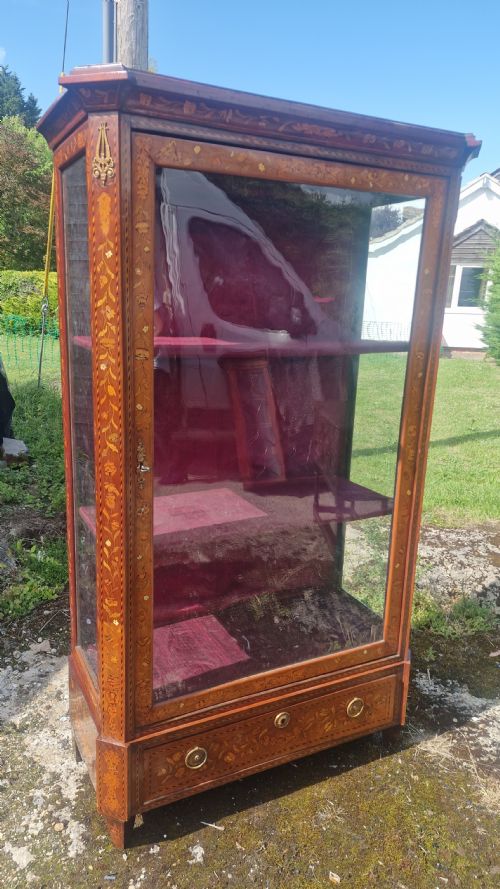
These marquetry mahogany bookcase pieces bring together warm timber and detailed floral or geometric inlay to house your volumes with elegance.
Marquetry Mahogany Bookcase
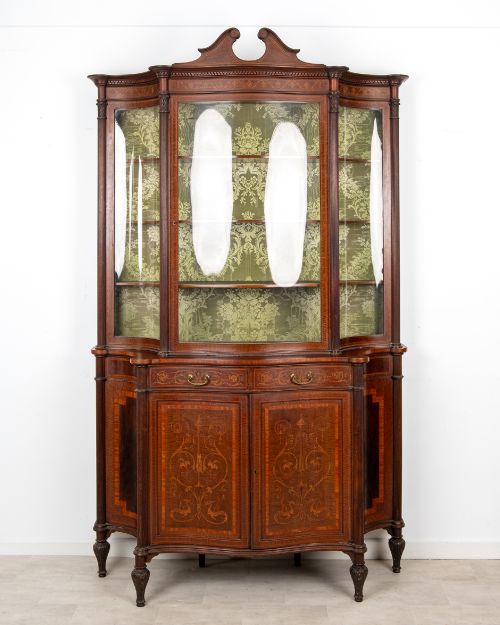
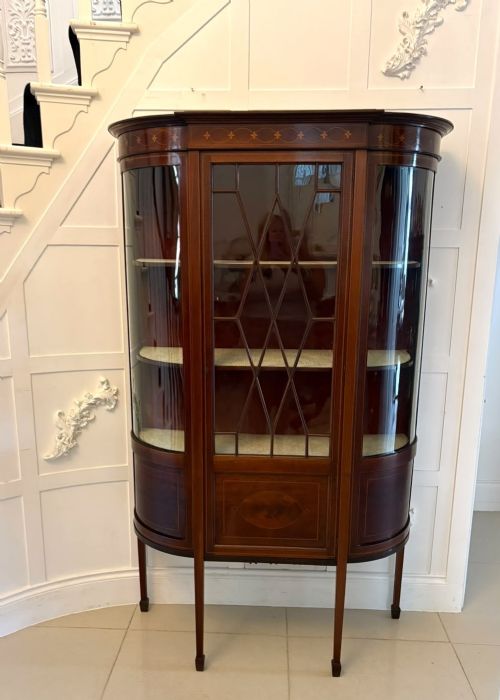
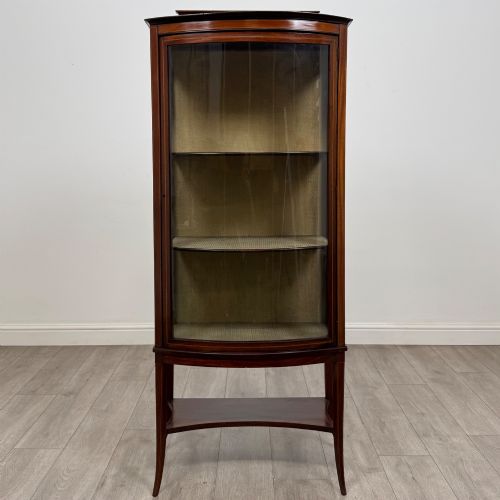
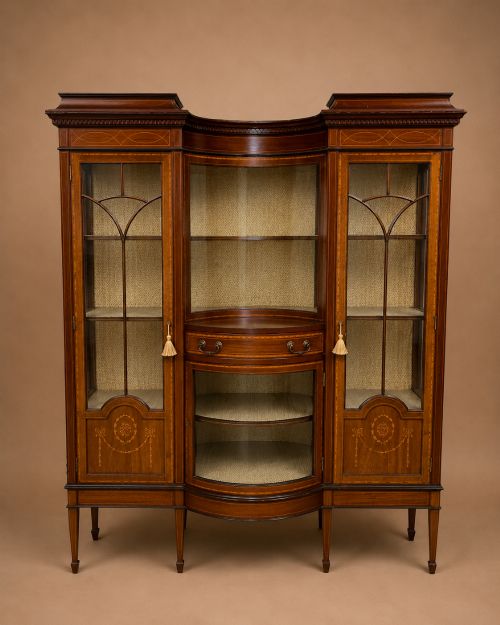
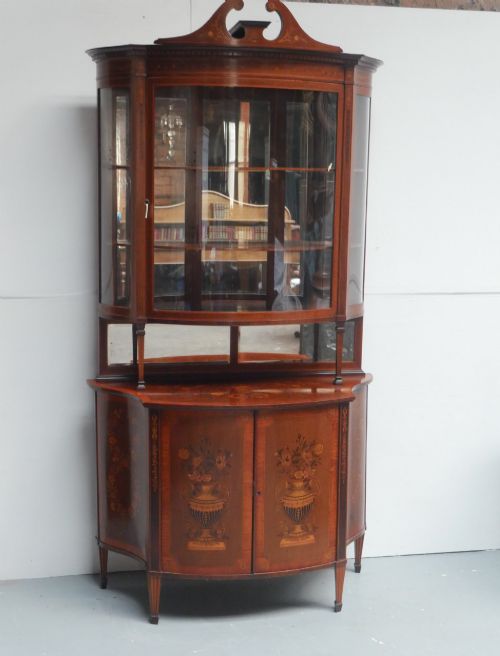
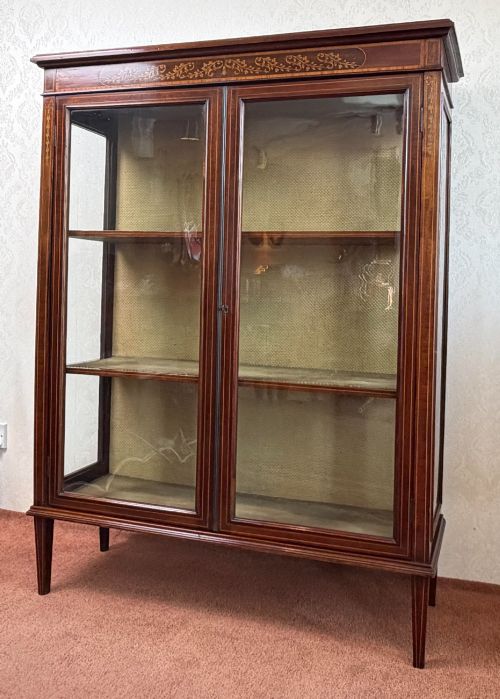
A search for a marquetry mahogany bookcase opens up a diverse selection of storage furniture, primarily spanning the Victorian and Edwardian eras, alongside pieces from the eighteenth and twentieth centuries. You will encounter tall breakfront bookcases, glazed display cabinets, compact corner units, and practical revolving bookcases.
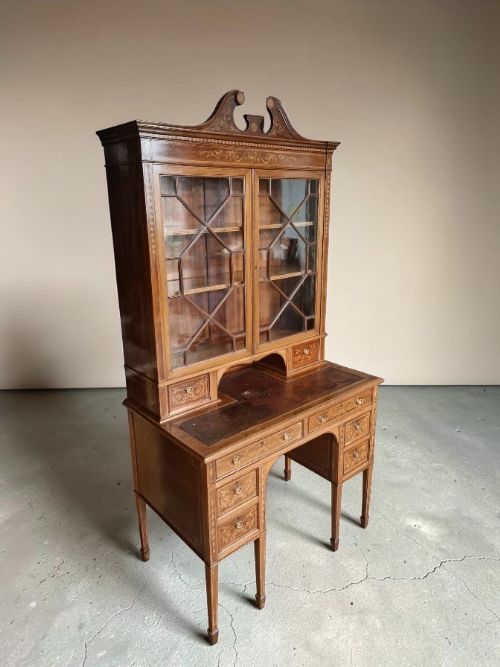
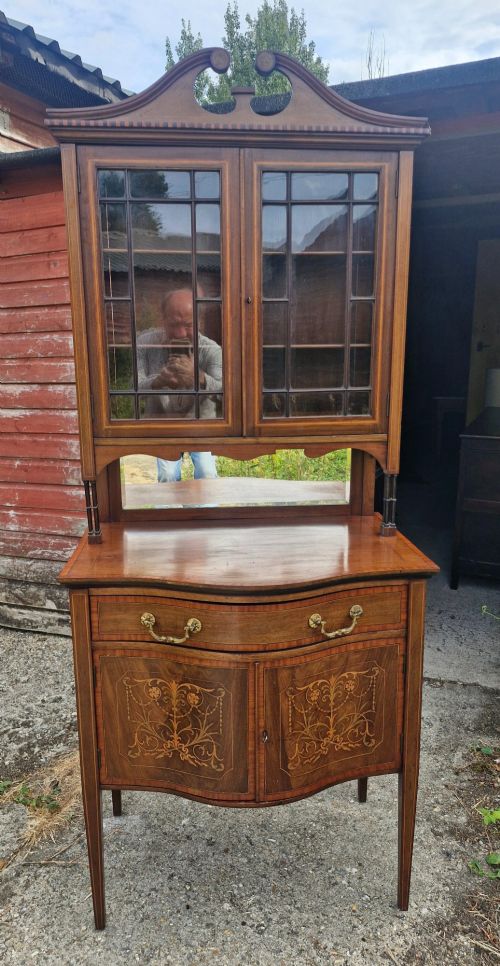
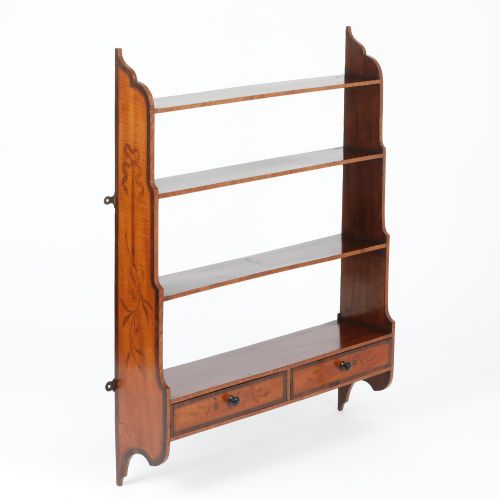
The Edwardian period heavily dominates the selection, frequently featuring Sheraton Revival styling with delicate inlaid motifs. Alongside these upright cabinets, you will discover bureau bookcases equipped with drop-down writing slopes and hanging wall shelves designed to save floor space.
How they were made
These items rely on solid and veneered mahogany as the primary structural timber, often enriched by contrasting lighter woods such as satinwood for banding and pictorial details. Craftsmen utilised precise marquetry inlay techniques, cutting floral and ribbon motifs into veneers before pressing them flush into the timber ground.
Glazing bars divide large glass panels on the display sections, while brass hardware secures doors and supports adjustable interior shelving. Secondary timbers line the interiors of drawers, and polished finishes protect the rich reddish-brown grain of the mahogany.
Some revolving bookcases spin effortlessly, designed for easy access to small collections of favourite volumes.
What varies in quality
Overall proportion and architectural detailing also dictate grade, with breakfront forms, serpentine fronts, and named maker attribution elevating a cabinet's design stature.
Edwards & Roberts·Maples & Co
The Marquetry Mahogany Bookcase Glossary
- Marquetry
- Decorative veneer work arranged in pictorial patterns. Craftsmen piece together different coloured woods to create floral or geometric designs.
- Satinwood
- A pale, lustrous timber native to India and Ceylon. It provides sharp visual contrast when used for banding and inlay against darker mahogany.
- Breakfront
- A cabinet front where the central section projects forward past the flanking wings. This architectural layout adds depth and presence to large bookcases.
- Vitrine
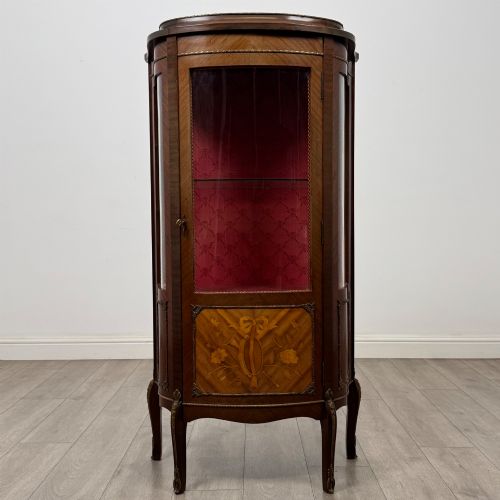
- A glass-fronted display cabinet designed for showing porcelain or collectables. These pieces often feature glazed side panels to maximise interior light.
Marquetry Mahogany Bookcase: Frequently Asked Questions
What periods do these bookcases come from?
Most examples originate from the Victorian and Edwardian eras, particularly around the late nineteenth and early twentieth centuries. You can also find eighteenth-century pieces alongside later twentieth-century reproductions.
Stylistic cues like Sheraton Revival influence help distinguish the Edwardian interpretations from earlier Georgian and Victorian prototypes.
How do I care for mahogany furniture?
Keep these items out of direct sunlight to prevent the rich mahogany polish from fading or drying out. Maintain a stable room temperature to protect the delicate wood veneers and marquetry inlay from lifting.
Dust regularly with a soft, dry cloth and apply traditional beeswax sparingly when the timber appears dry.
Are the shelves adjustable?
Many of the larger cabinets and bookcases feature adjustable wooden shelving supported by rack-and-pinion systems or traditional wooden fillets. Smaller wall shelves and certain older bureau interiors often have fixed partitions.
Check individual cabinet descriptions to confirm whether shelf heights can be altered to suit your volumes.
What is the difference between a display cabinet and a bookcase?
Bookcases generally focus on open or glazed shelving designed specifically to hold rows of books. Display cabinets often feature glass side panels and velvet-lined interiors intended for showcasing decorative objects.
Many surviving examples combine both functions, offering glazed upper display areas alongside lower cupboard storage.