
Marquetry Inlay Desk
A marquetry inlay desk combines intricate wood veneers with a functional writing surface, offering both a decorative focal point and a traditional workspace.
Marquetry Inlay Desk
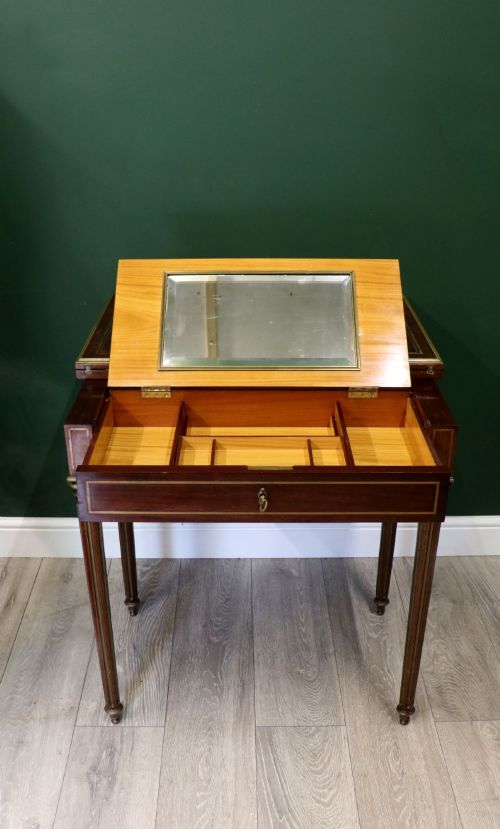
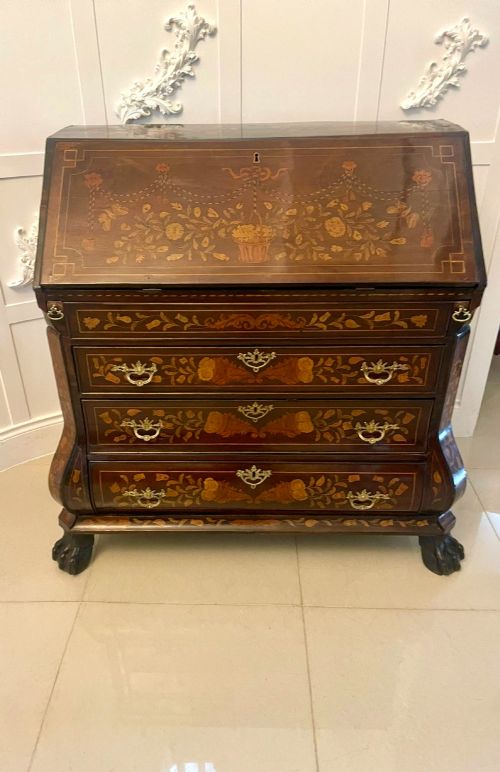
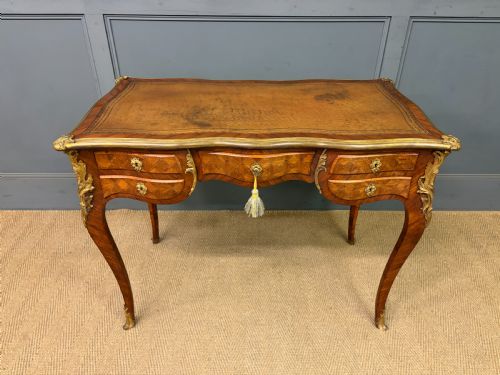
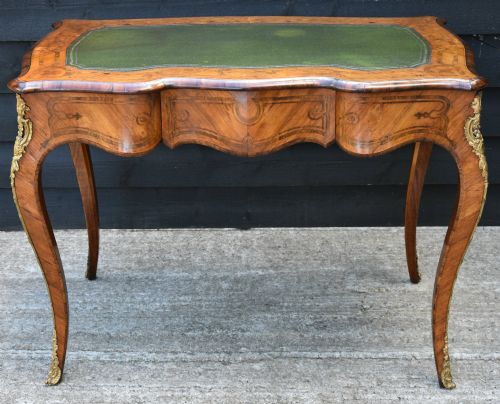
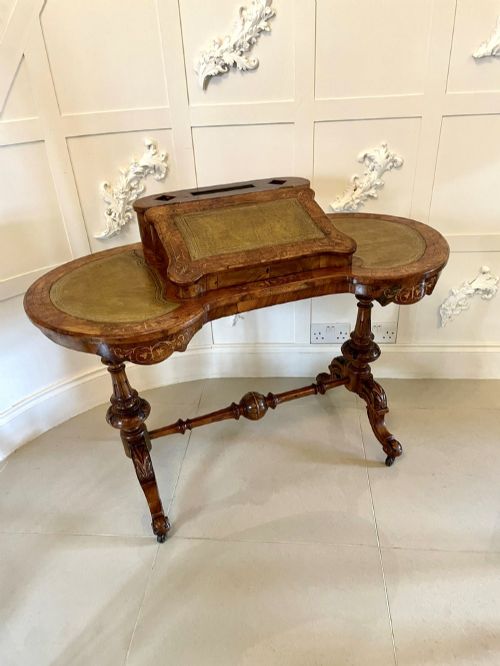
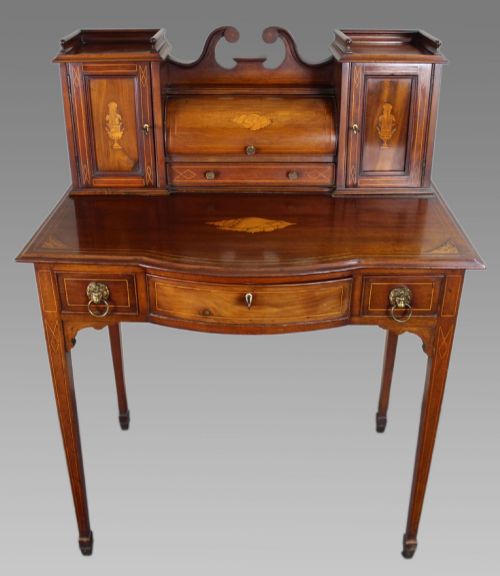
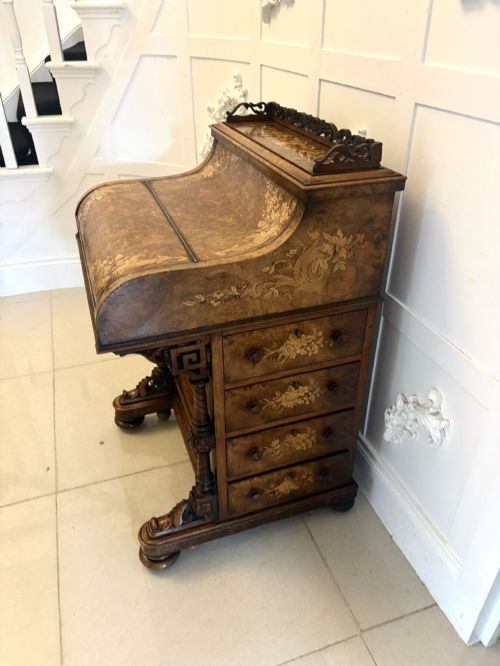
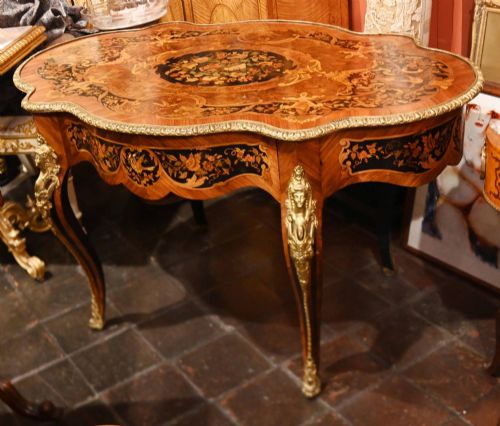
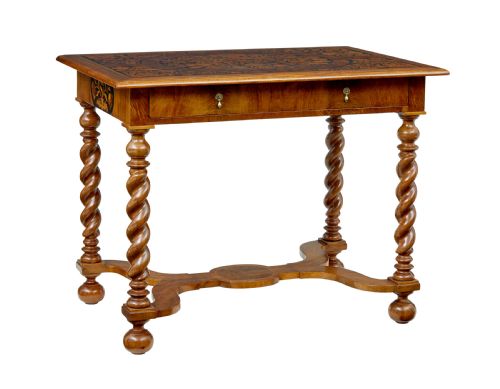
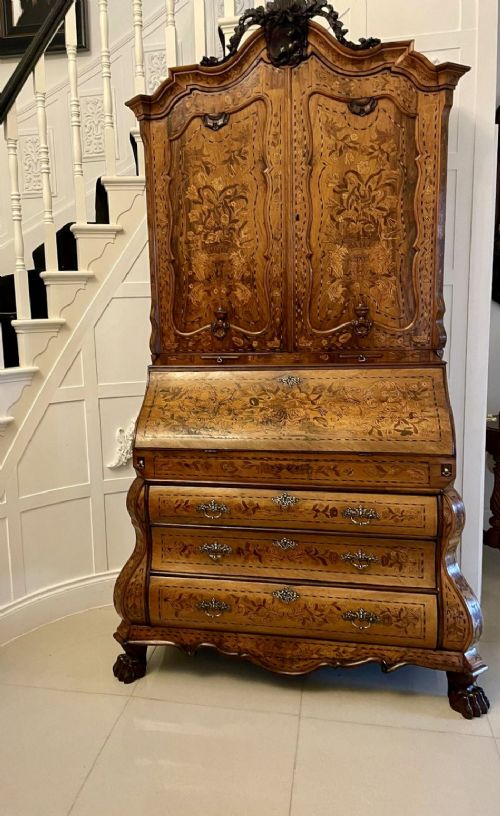
A marquetry inlay desk is a fitted writing surface decorated with detailed wood veneer patterns, spanning periods from the 17th century through the Edwardian era. Buyers encounter various forms on this page, including bureau bookcases, cylinder bureaux, and freestanding writing tables originating from English, French, and Dutch workshops.
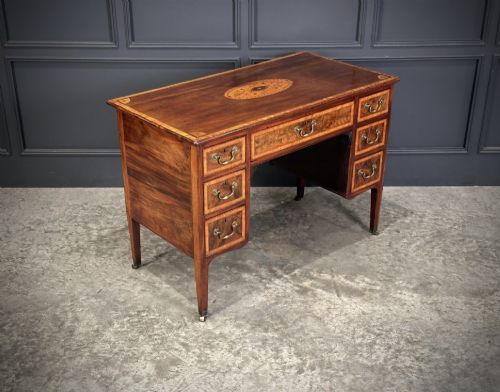
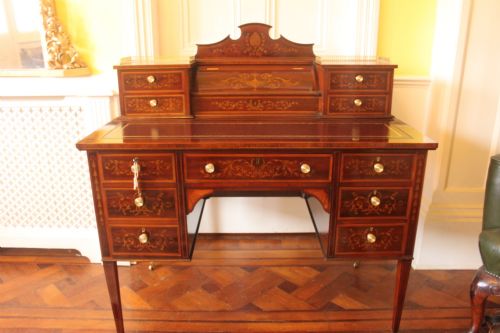
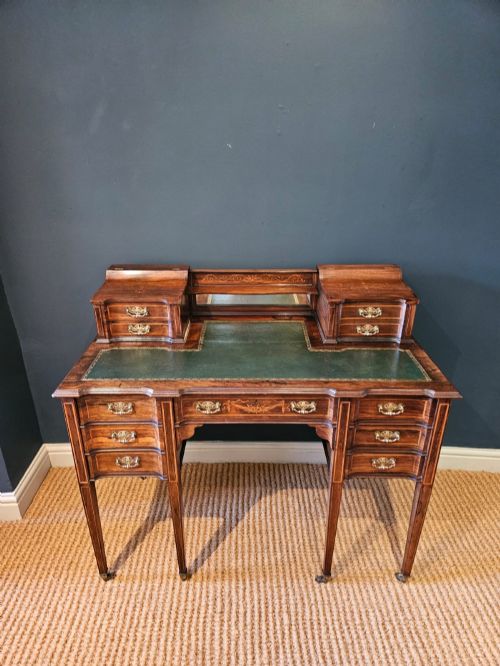
The selection ranges from elaborate Dutch floral marquetry to restrained Edwardian Sheraton Revival pieces in mahogany and satinwood. Many examples utilise burr walnut and rosewood as primary carcasses, enriched with contrasting fruitwoods and bone inlay.
Materials and Techniques
Cabinetmakers construct the carcase using structural timbers such as mahogany, walnut, or oak, applying fine veneers of satinwood, kingwood, and rosewood over the surface. Floral and geometric patterns are cut from contrasting wood types and fitted together like a puzzle before being pressed onto the timber.
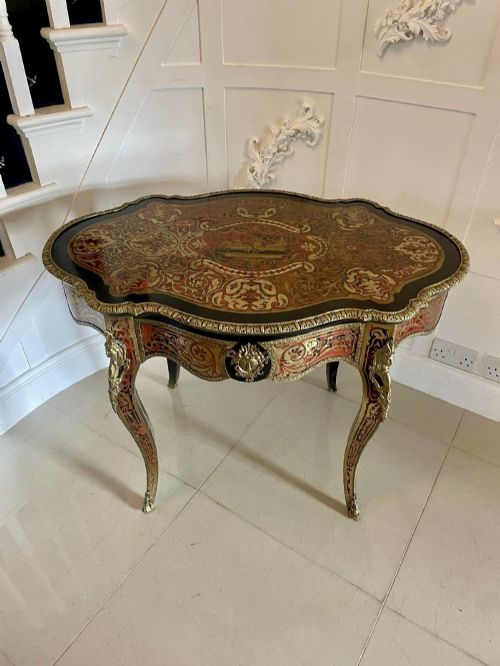
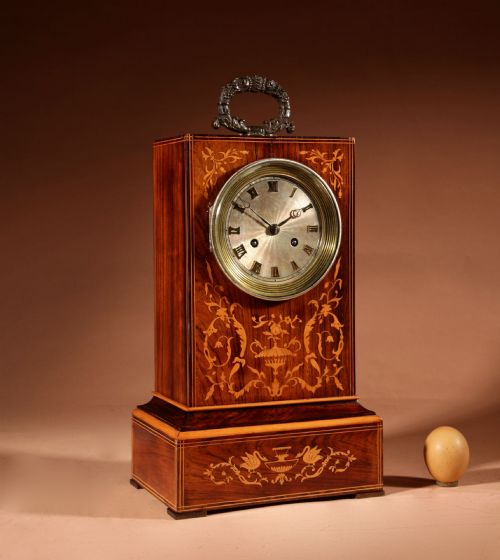
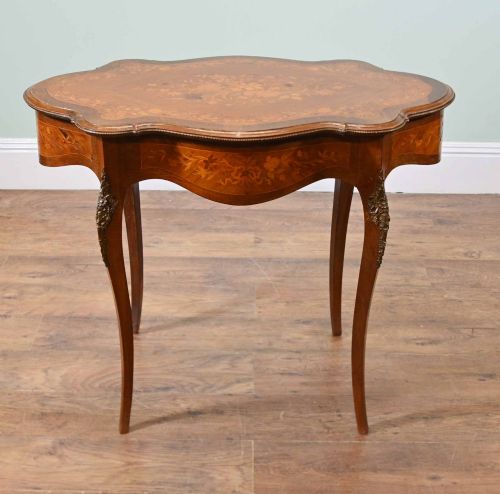
Detailed embellishments often include cast ormolu mounts, brass stringing, and bone inlay, particularly on 19th-century French and Dutch pieces. Surface finishing relies on traditional polishes that highlight the natural grain variations of the contrasting veneers.
Listings feature 17th-century double dome bureau bookcases alongside Edwardian satinwood writing desks and 19th-century French ormolu-mounted centre tables.
Evaluating Quality
Quality rests upon the precision of the veneer cutting and the complexity of the pictorial design, where tighter joints between individual wood pieces indicate superior craftsmanship. The choice of primary timber also dictates standing, with burr walnut and figured satinwood commanding greater regard than standard domestic hardwoods.
Secondary detailing separates standard production from exceptional work, seen in the inclusion of cast ormolu mounts, fire-gilded hardware, and secondary interior fittings like secret drawers within a bureau or cylinder desk.
Maple And Co.·Gillows Oxford Street Workshop
The Marquetry Inlay Desk Glossary
- Marquetry
- The art of applying fitted pieces of wood veneer to a structural carcase to form decorative pictorial patterns. It differs from simple inlay by covering the entire surface with a mosaic of wood.
- Bureau bookcase
- A dual-purpose piece combining a sloping writing flap over drawers with an upper shelving section enclosed by doors. These often display complex floral marquetry across the fall front.
- Ormolu
- Gilded bronze mounts applied to furniture edges and corners for decoration. Found frequently on French revival desks.
- Satinwood
- A durable hardwood with a natural golden sheen utilised extensively in English and Edwardian revival writing tables. It provides a bright contrasting background for darker veneer work.
- Bureau de dame
- A small ladies' writing desk, often featuring a cylinder top or sloping fall front. These compact pieces frequently incorporate rosewood and floral marquetry.
Marquetry Inlay Desk: Frequently Asked Questions
How do I care for a marquetry desk?
Keep the wood away from direct sunlight and heat sources to prevent the delicate veneers from drying out and lifting from the carcase.
Apply a traditional beeswax polish sparingly and buff with a soft cloth to maintain the lustre of the timber without building up heavy residue.
Are these desks suitable for daily writing?
Most antique writing tables and cylinder bureaux provide a stable surface for everyday correspondence and laptop use.
Users should protect older leather or wood writing flaps with a blotter to prevent scratching the historic polished surface.
What is the difference between inlay and marquetry?
Inlay involves inserting pieces of wood, metal, or bone into depressions carved directly into a solid wood surface.
Marquetry assembles an entire picture from various veneers on a backing sheet before gluing the complete composition onto the furniture carcase.
How can I tell an 18th-century desk from a later revival piece?
Examine the secondary interior timbers, construction methods, and the natural ageing of the veneer and glues used beneath the surface.
Revival pieces from the Edwardian period often display cleaner internal softwood framing and machine-cut dovetails compared to earlier hand-built examples.