




Marquetry Inlay Corner Cabinet
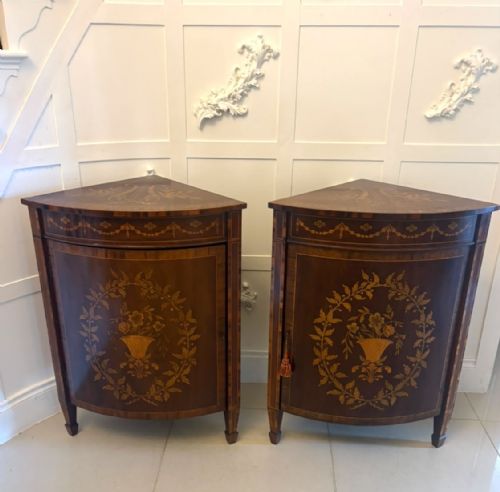
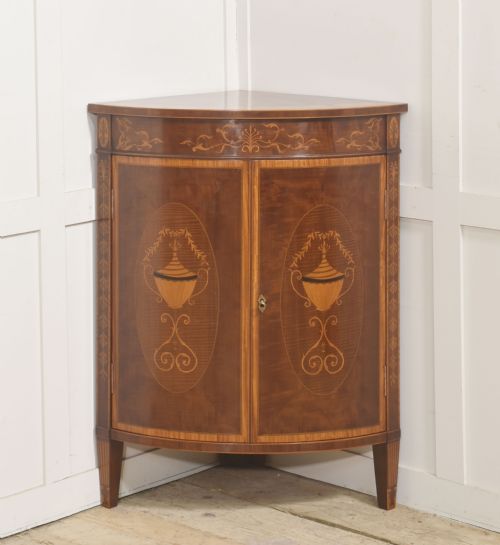
A marquetry inlay corner cabinet turns awkward angles into display space with floral patterns and contrasting wood veneers.
Marquetry Inlay Corner Cabinet
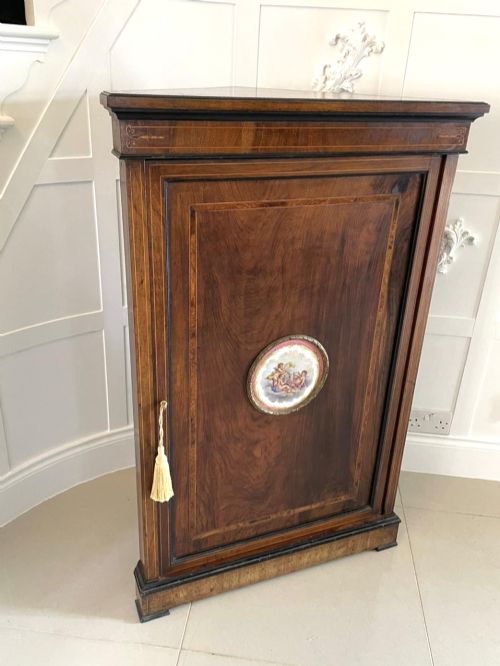
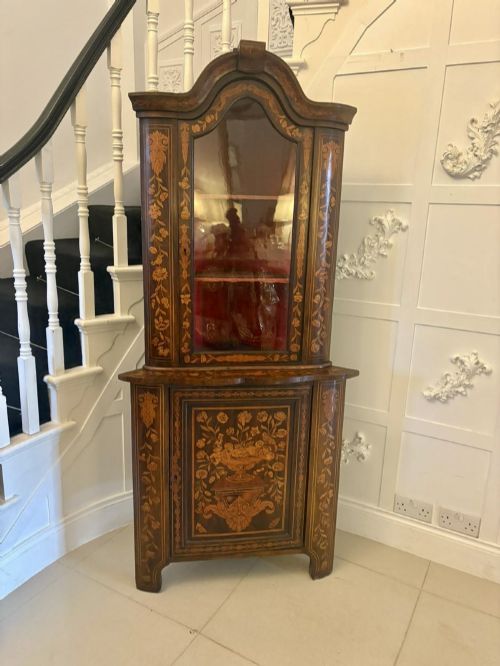
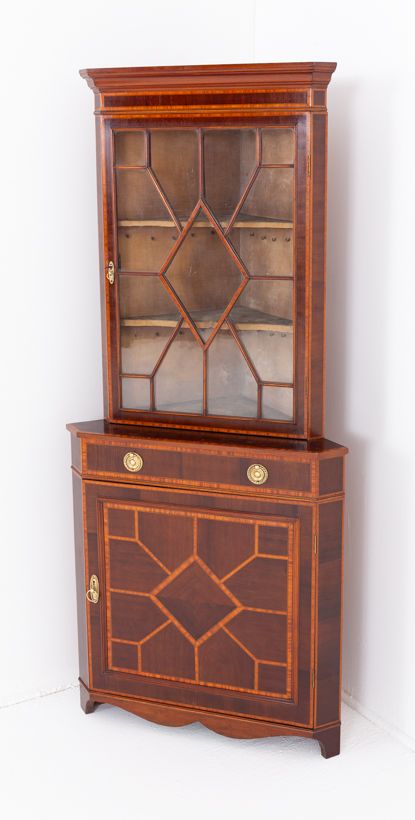
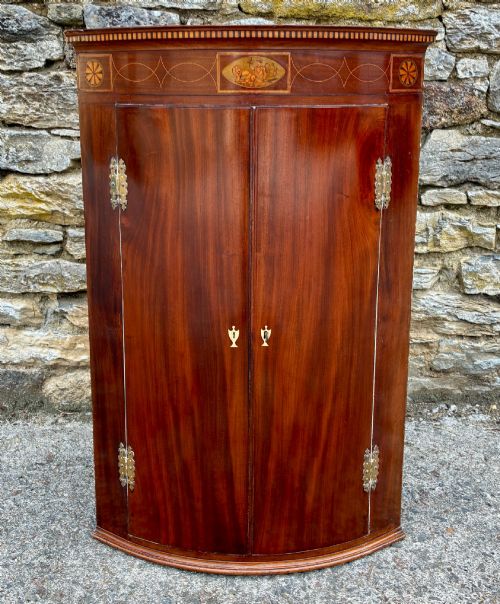
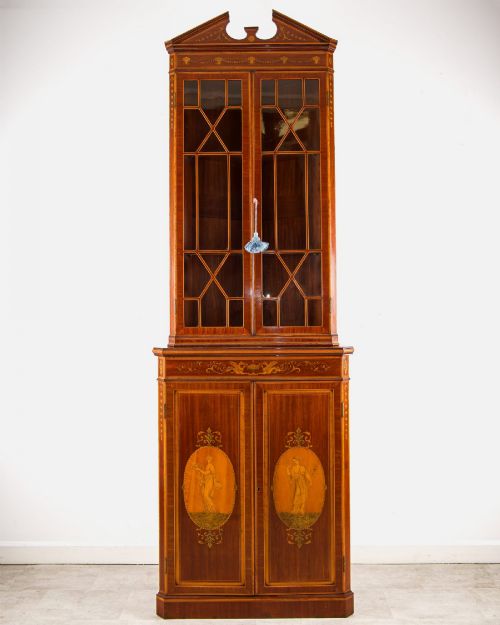
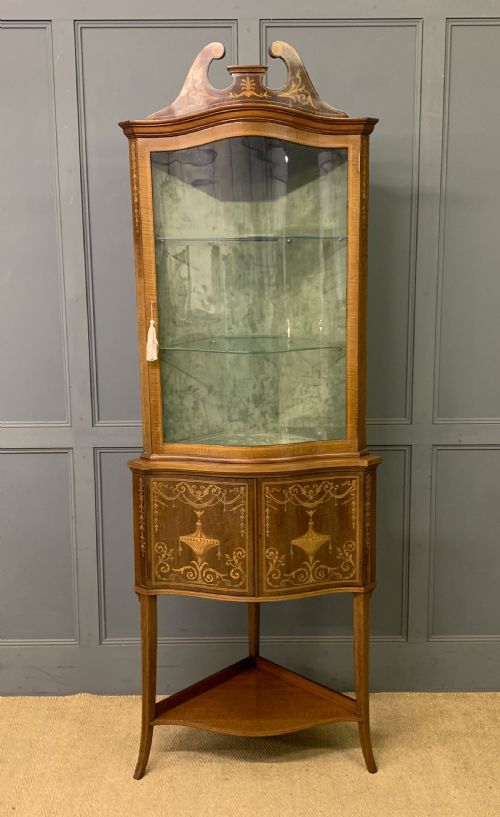
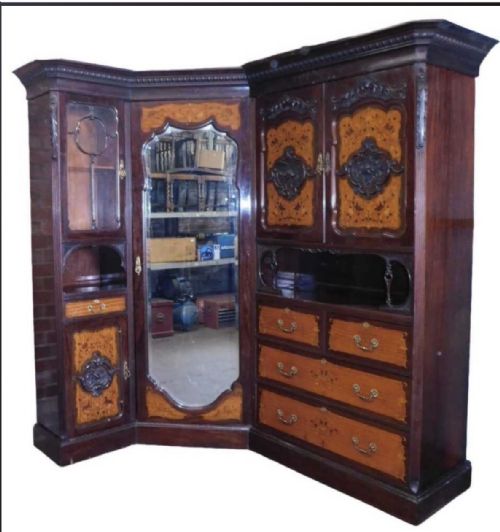
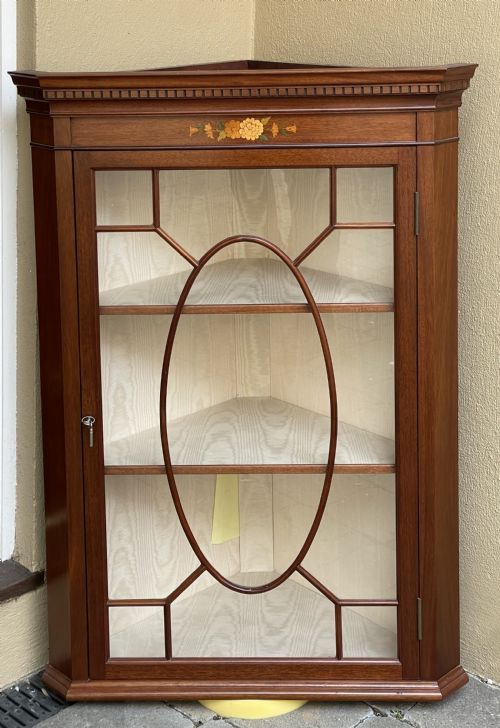
A marquetry inlay corner cabinet makes use of empty room angles, appearing in forms such as hanging cupboards, standing display pieces, and double height two-part units.
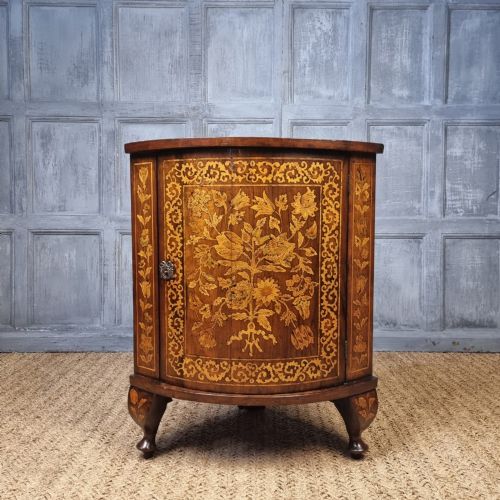
The selections span the Georgian period, the Victorian era, and the Edwardian epoch, alongside Dutch Baroque and Sheraton Revival interpretations.
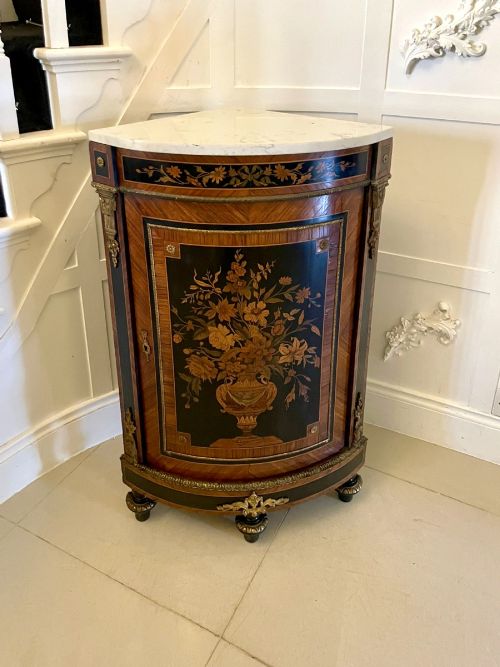
Makers utilised mahogany, oak, walnut, rosewood, and tulipwood as primary timbers, shaping them into bow front and serpentine profiles.
Materials and construction
Cabinet makers built carcases from solid timbers including mahogany, oak, and walnut, applying delicate veneers for the exterior surfaces.
Intricate marquetry and contrasting inlays of satinwood and brass created floral and geometric motifs across doors and panels.
Glazing with astragal bars appeared on display pieces, while polished marble tops finished certain Continental examples.
Listings feature mahogany, oak, walnut, and rosewood across Georgian, Victorian, and Edwardian periods.
Assessing the cabinet
The precision of the veneer work and the complexity of the marquetry patterns separate standard production from superior craftsmanship.
Timber selection dictates overall merit, where richly grained mahogany, rosewood, and satinwood elevate a piece.
Structural integrity, original brass hardware, and the crisp execution of glazed doors define the standard of survival.
Edwards And Roberts
The Marquetry Inlay Corner Cabinet Glossary
- Marquetry
- Decorative veneer work assembled in patterns using various wood types. This technique creates pictorial scenes or floral motifs on cabinet doors.
- Astragal glazing
- Wooden bars dividing glass panes within a door. These strips form geometric patterns across display cabinets.
- Serpentine front
- A furniture front curving outward in the centre and inward at the sides. This shape requires skilled carpentry.
- Compactum
- A multi-functional wardrobe or storage unit designed for efficient use of space. These pieces combine hanging areas with internal shelving.
- Bow front
- A convex curved cabinet face that projects outward. This shape softens room angles.
Marquetry Inlay Corner Cabinet: Frequently Asked Questions
Where do I place a corner cabinet?
These units fit directly into unused room angles to maximise floor space.
They function well in living rooms, dining rooms, or hallways where wall space meets.
How do I distinguish Edwardian from Georgian pieces?
Edwardian versions often display lighter satinwood inlays and Sheraton Revival influences.
Georgian examples tend to rely on heavier proportions and simpler mahogany or oak grain.
What is the difference between hanging and standing models?
Hanging varieties mount directly to walls to float above floor level.
Standing models rest on the ground, sometimes extending into double height display furniture.
How do I care for marquetry surfaces?
Keep wooden surfaces away from direct sunlight and excessive heat sources.
Apply suitable wax polish occasionally to maintain the sheen of the veneer.