


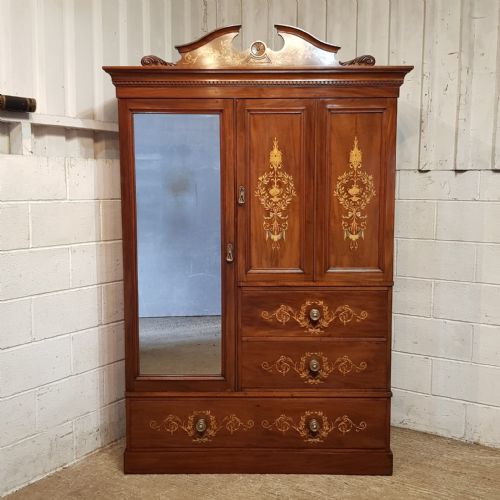
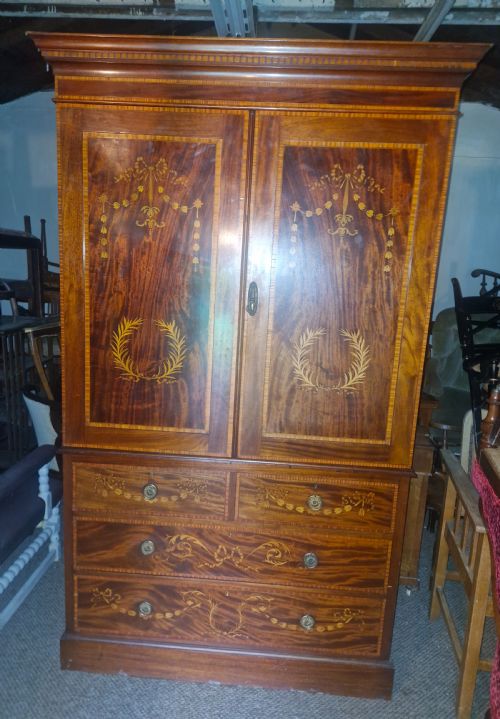
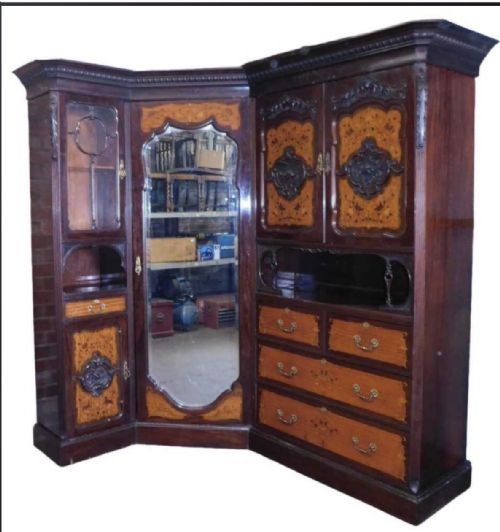

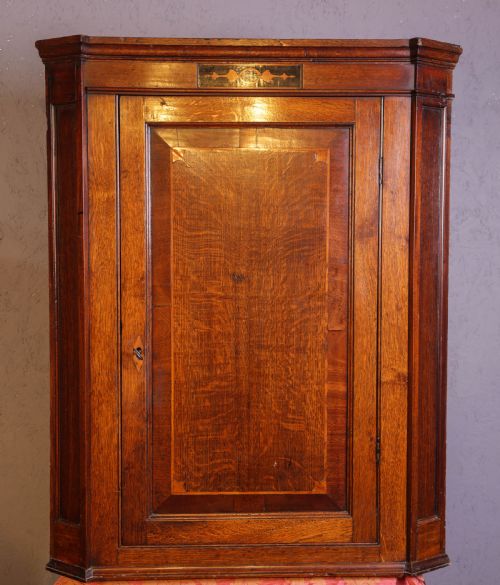


Marquetry Inlaid Wardrobe
A marquetry inlaid wardrobe brings architectural presence and floral detail into a bedroom through centuries of cabinet-making skill.
Marquetry Inlaid Wardrobe
When searching for a marquetry inlaid wardrobe, buyers encounter large bedroom storage furniture spanning the Georgian, Victorian, Edwardian and 1930 periods. The selection runs from tall single and triple door wardrobes to linen presses, compactum cabinets and complete bedroom suites.
Mahogany and walnut provide the primary carcass structures across most examples, often accompanied by satinwood, rosewood, oak and kingwood. These pieces originated in English, Dutch and French workshops, utilising architectural breaks and fitted interior compartments.
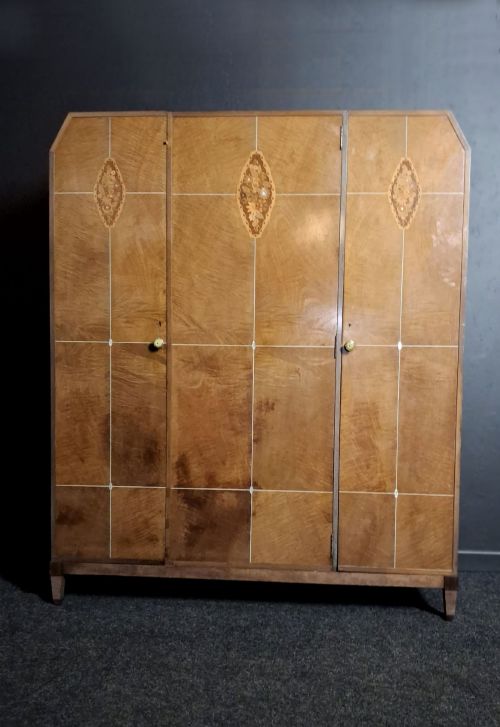
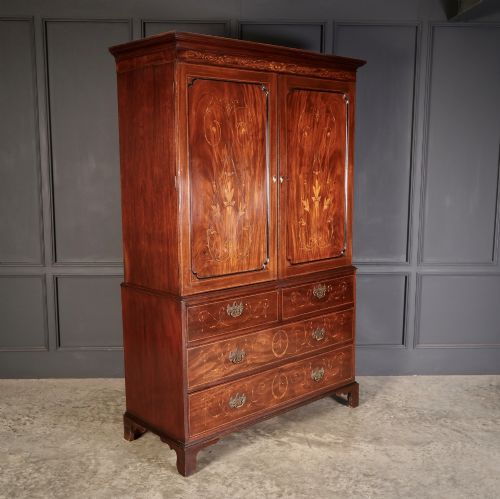
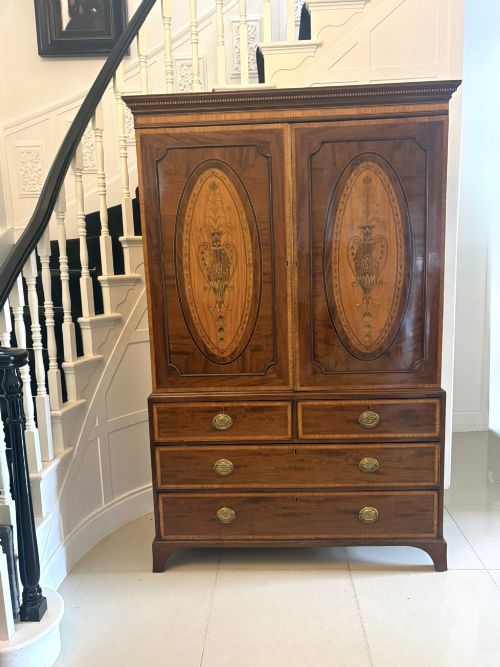
Edwardian mahogany pieces and Victorian walnut cabinets dominate the current selection, frequently displaying elaborate floral marquetry panels alongside mirrored doors.
Materials and Technique
Cabinet makers constructed these wardrobes using solid timbers and decorative veneers applied to carcases of mahogany, walnut, oak and rosewood. Brass hardware, ormolu mounts and glass mirrors frequently complete the assembly.
Marquetry inlay techniques involve cutting contrasting pieces of satinwood, fruitwood and other fine timbers to form floral or geometric motifs set flush into the surface. Workshops combined this meticulous veneer work with hand carving and polished finishes.
Marquetry Inlaid Wardrobe Retail Price Guide 2026
Typical asking prices for marquetry inlaid wardrobe among the pieces listed under this phrase on Sellingantiques today, from the lower quarter to the upper quarter. They describe what is for sale here now, not the wider market.
Several wardrobes hide fitted compartments behind mirrored doors designed to check morning attire across the centuries.
Assessing the Pieces
Differentiation across the range rests on the complexity of the marquetry designs and the choice of underlying timber veneers, such as figured walnut or select mahogany. Dense, multi-coloured floral panels require greater precision from the artisan than simple geometric borders.
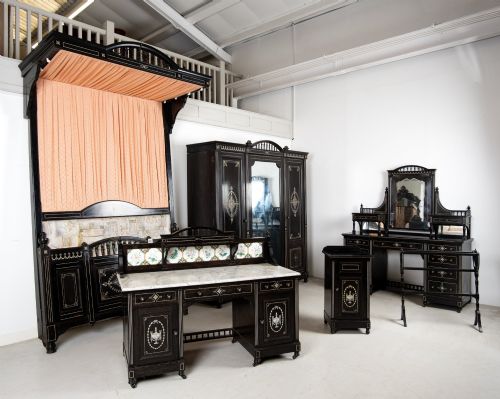
Structural scale and internal configuration also separate standard single door cupboards from large breakfront combination wardrobes and fitted compactum units. Comprehensive bedroom suites and pieces retaining original bevelled glass mirrors and brass fittings demonstrate higher original ambition.
Druce & Co.·B Cohen & Sons·Edwards & Roberts·Gillows of Lancaster·Maples & Co
The Marquetry Inlaid Wardrobe Glossary
- Marquetry
- Decorative veneer work assembled from pieces of different coloured wood to form pictures or patterns. Artisans cut these precise shapes by hand before gluing them to the carcase.
- Compactum
- A fitted wardrobe containing a combination of hanging space, shelves and drawers. These multi-purpose pieces maximise bedroom storage efficiently.
- Linen Press
- A piece of furniture featuring linen slides or shelves enclosed by doors above a chest of base drawers. Earlier examples often combined wardrobe functions with traditional linen storage.
- Breakfront
- A cabinet design where the central section projects forward from the flanking wings. This architectural arrangement creates depth and visual rhythm on large wardrobes.
- Satinwood
- A lustrous yellow-brown timber utilised for contrasting inlays and decorative banding. It provides bright visual accents against darker woods like mahogany.
Marquetry Inlaid Wardrobe: Frequently Asked Questions
How do I style a large wardrobe?
These large storage pieces command attention in a master bedroom, functioning best against neutral walls that allow the timber grain and inlay work to stand out.
Pairing the wardrobe with matching bedside cabinets or related case furniture creates visual cohesion within the room.
What fits inside these wardrobes?
Interior layouts vary significantly depending on whether the piece is a hanging wardrobe, a linen press or a compactum. Many contain clothes rails, sliding trays, shoe racks and small drawers behind their main doors.
Measuring garment lengths and checking internal shelf depths helps determine practical daily use.
How do I distinguish Edwardian from Victorian?
Victorian wardrobes often employ dark figured walnut or heavily carved mahogany with dense, ornate floral marquetry and ebonised details. Edwardian pieces tend to utilise lighter mahogany and satinwood with refined Sheraton Revival neoclassical motifs.
Proportions on Edwardian examples frequently appear lighter and more symmetrical than their heavier 19th-century predecessors.
Can these wardrobes be dismantled?
Many larger triple and breakfront wardrobes were constructed to be taken apart for transport and installation in period homes. Cornices, plinths and side wings often separate from the central carcass.
Confirming the dismantling method assists with moving the furniture through modern doorways and stairwells.