
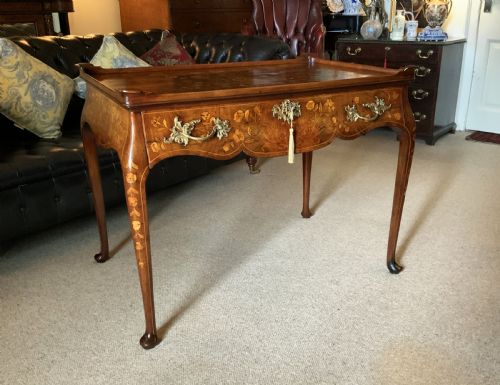


Marquetry Floral Console Table
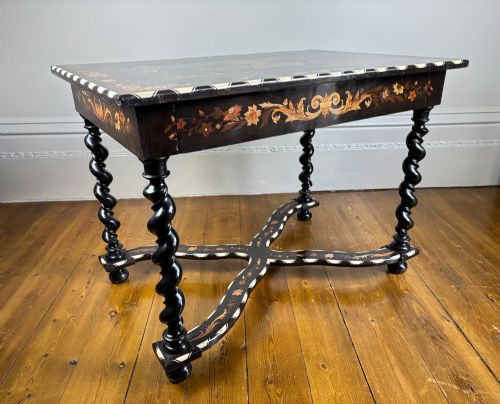
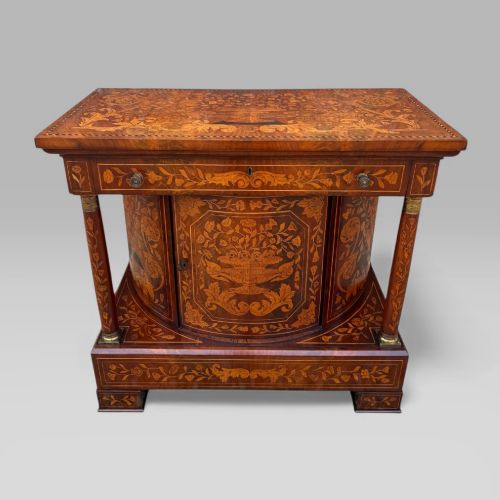
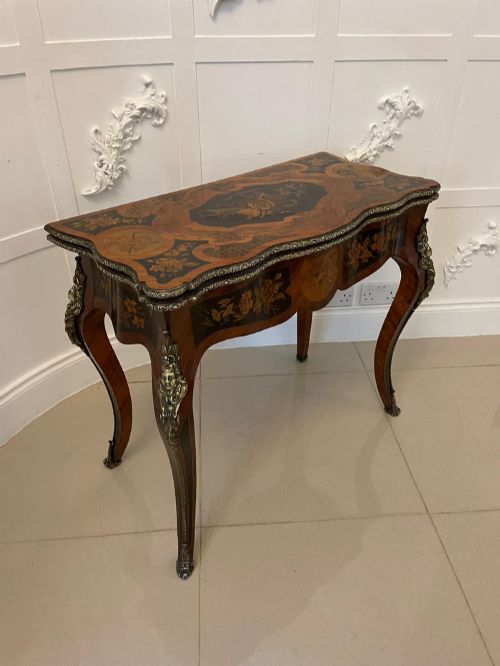
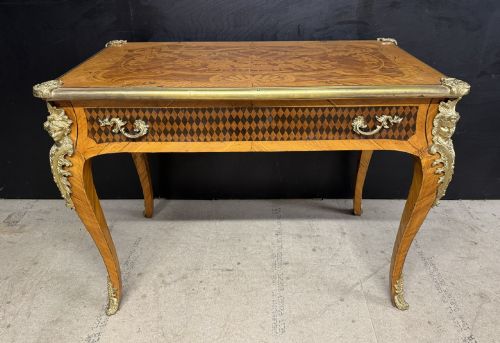
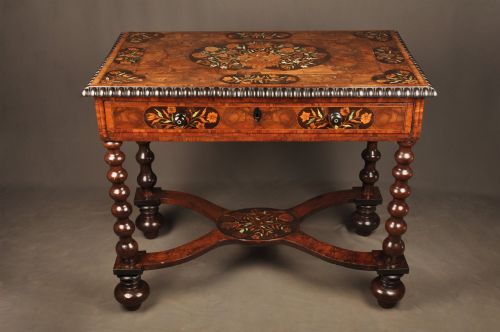
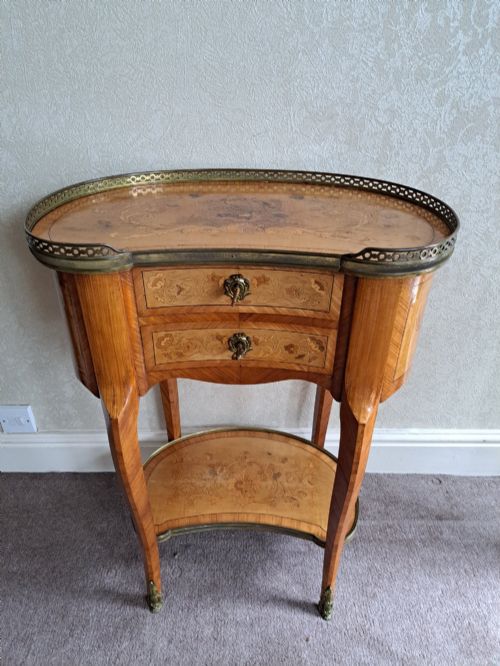
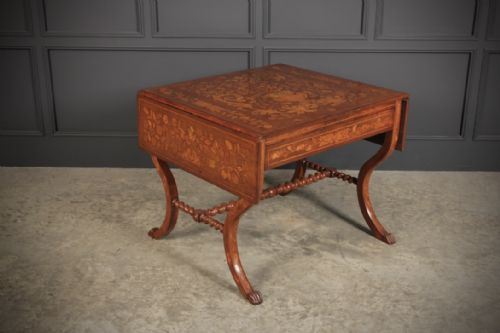
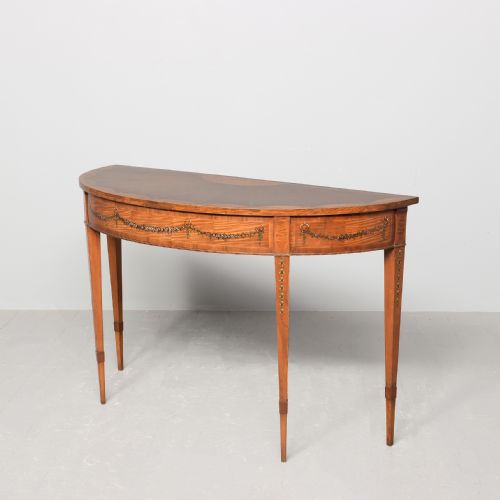
These marquetry floral console table examples bring together intricate wood inlay and sculptural forms to anchor a hallway or reception room.
Marquetry Floral Console Table
Originating largely from English, French, and Dutch workshops, these pieces employ rich timber veneers arranged into floral and avian motifs. Buyers encounter both eighteenth-century Dutch Baroque designs and later nineteenth-century French Louis Revival interpretations across the available selection.
Assessing Craftsmanship and Detail
Quality rests in the complexity of the veneer work and the crispness of the floral motifs, where superior examples display tight joints and subtle shading within the wood. The integration of cast ormolu mounts and bronze detailing further separates standard production from exhibition pieces.
Structural integrity of the timber base and the condition of the historic polish dictate the durability and visual depth of the console. Finer pieces maintain their original brass or bone inlays without shrinkage cracks in the surrounding walnut or rosewood carcases.
Periods represented span from the seventeenth century through the Edwardian era and the 1920s.
Henry Dasson
The Marquetry Floral Console Table Glossary
- Marquetry
- The art of applying decorative pieces of veneer to a structural structure to form pictorial designs. This technique allows cabinet makers to create complex floral and landscape patterns using contrasting timbers.
- Ormolu
- Gilded bronze mounts applied to furniture edges, legs, and aprons for decorative enhancement. This material became particularly popular during the French Louis XV and Victorian revival periods.
- Console table
- A table designed to stand against a wall, traditionally supported by two or four legs or wall brackets. These items often feature shaped marble tops or elaborate friezes.
- Demi-lune
- A half-moon shape characteristic of certain serving and console tables. This curved silhouette suits narrow hallways and pier spaces.
- Veneer
- A thin layer of superior wood applied to a base timber carcass. It provides the canvas for detailed marquetry compositions.
Marquetry Floral Console Table: Frequently Asked Questions
Where should I place a console table?
These tables suit narrow entrance halls, reception rooms, or living spaces where a shallow footprint is required against a wall. Their decorative tops make them effective focal points beneath a mirror or painting.
Freestanding versions with finished backs can also sit in the centre of a room to display decorative objects or lamps.
How do I care for antique marquetry?
Keep wooden furniture away from direct sunlight and heat sources to prevent the veneers from drying out and lifting. Regular dusting with a soft, dry cloth maintains the polished finish without chemical build-up.
Apply a traditional beeswax polish sparingly to nourish the timber and preserve the subtle colour variations in the floral inlay.
How do I tell Dutch and French styles apart?
Dutch examples from the eighteenth and nineteenth centuries frequently feature dense floral and bird marquetry in walnut, with pronounced serpentine or bombé outlines. The craftsmanship often emphasises dark backgrounds contrasting with light fruitwood veneers.
French pieces, particularly those from the Victorian or Louis Revival periods, lean towards kingwood and rosewood veneers supplemented by elaborate ormolu mounts and scrolling cabriole legs.
What is the difference between a console and a side table?
A console table is traditionally designed to stand directly against a wall, sometimes requiring wall fixings or featuring a flat back edge. Side tables are generally finished on all four sides and can float away from walls as needed.
Both forms appear frequently in historical records with extensive floral marquetry tops.