

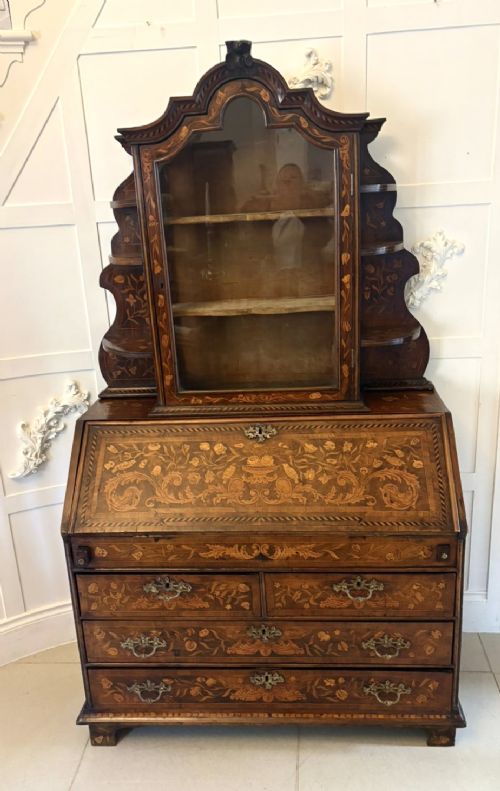


Marquetry Desk with Bookcase
A marquetry desk with bookcase combines a fitted writing surface and enclosed shelving, decorated with intricate wood inlay.
Marquetry Desk with Bookcase
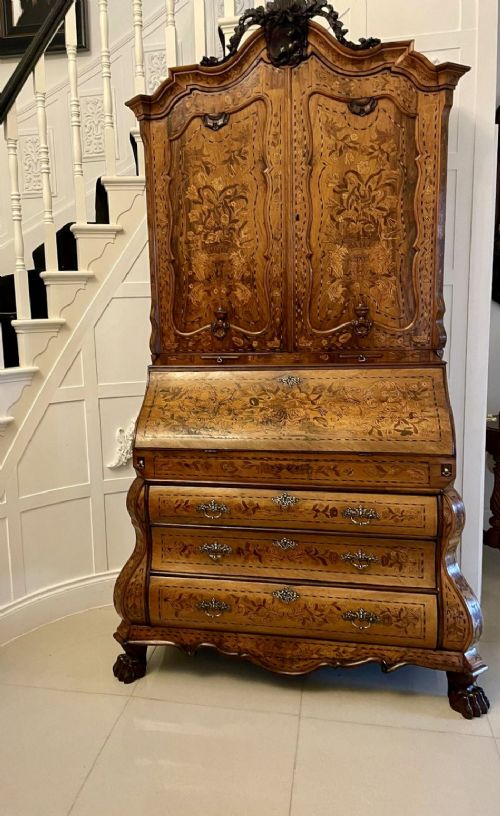
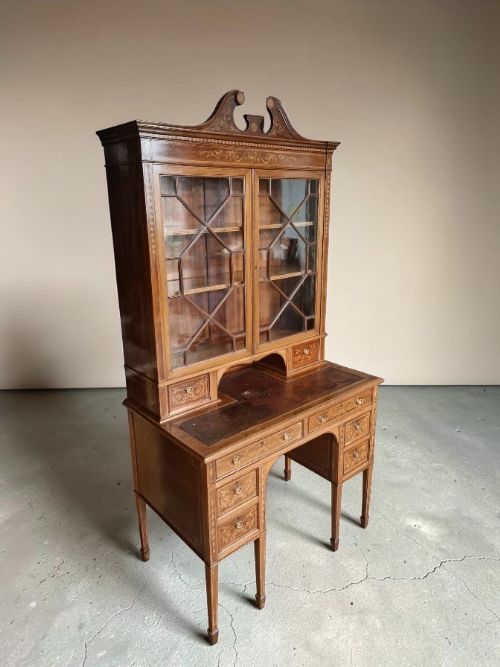
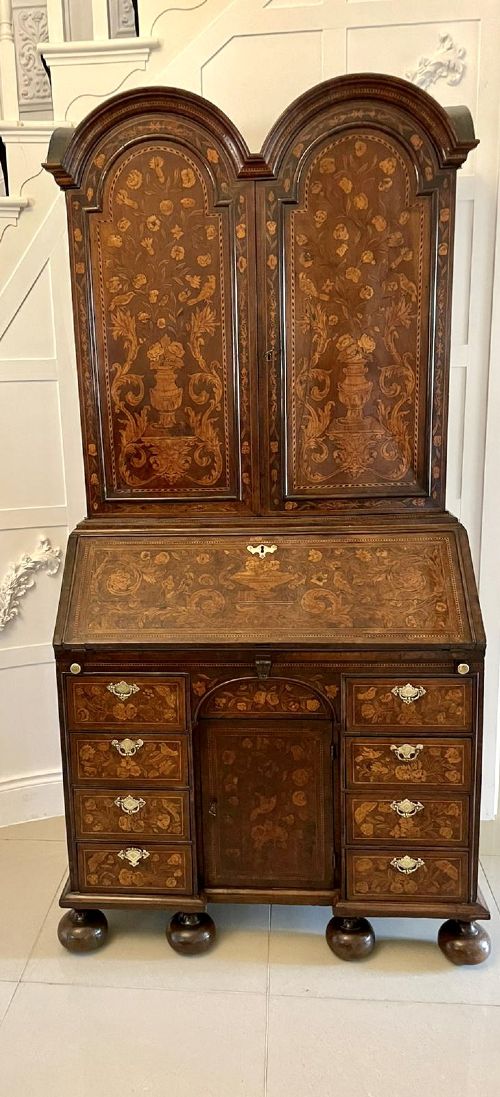
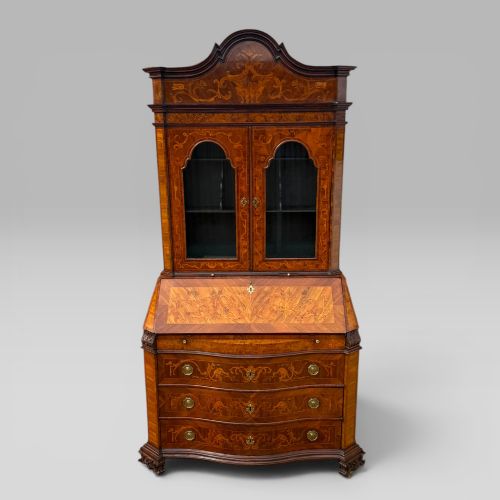
A marquetry desk with bookcase brings together a writing cabinet and a glazed or panelled upper shelving unit, creating a striking dual-purpose furniture form. When you search for a marquetry desk with bookcase, you encounter impressive dual-height pieces that serve for both correspondence and display.
The examples seen on this page span several centuries, reaching from the seventeenth century through the Georgian and Edwardian eras. Bureau bookcases and bureau cabinets dominate the forms, offering drop-front desks alongside upper storage.
Origins vary across English, Dutch, and Italian workshops, displaying regional preferences in contour and floral or geometric patterns. Walnut and mahogany form the structural foundation of these pieces, enriched by contrasting wood veneers.
Construction and materials
Cabinetmakers constructed these pieces using solid timbers like walnut and mahogany as a stable carcase for intricate surface decoration. Fine veneers of satinwood, burr walnut, and fruitwood were then applied to create detailed floral and geometric marquetry patterns.
Makers utilised contrasting wood types and occasionally brass details to accentuate the intricate inlay work across the fall fronts and cabinet doors. Glass panelling in the upper bookcase sections allowed for the secure display of books and valued possessions.
Secret compartments hidden behind sliding pigeonholes inside the desk flap remind us that eighteenth-century owners loved to keep private financial records secure.
Assessing quality
Quality in a marquetry desk with bookcase rests upon the precision of the wood inlay and the selection of figured veneers. Finer examples display meticulous botanical or geometric patterns that align seamlessly across opening doors and drawers.
The choice of primary timber and secondary woods indicates the standard of workshop production, with burr walnut and rich mahogany commanding attention. Proportion and the integrity of the original hardware further separate standard production from masterwork execution.
The Marquetry Desk with Bookcase Glossary
- Marquetry
- Decorative veneer work forming pictures or patterns by assembling small pieces of different coloured woods. It differs from inlay by covering the entire surface rather than being set into hollowed recesses.
- Bureau bookcase
- A writing cabinet featuring a sloping fall-front desk combined with an upper shelving or storage unit enclosed by doors. This form evolved to house personal papers and a library within a single tall item.
- Burr walnut
- Timber taken from a growth on a walnut tree, prized for its swirling, highly figured grain patterns. Cabinetmakers utilised these decorative veneers on prominent surfaces to create rich visual texture.
- Fall front
- A hinged writing flap that pulls down to reveal a fitted interior of small drawers and pigeonholes. When closed, it conceals the desk workspace and protects the contents.
- Bombe
- A swelling, outward-curved contour found on the lower sections of specific continental cabinets. This sculptural shaping requires specialist woodworking skill to veneer successfully.
Marquetry Desk with Bookcase: Frequently Asked Questions
How do I date these desks?
Dating relies on observing construction methods, timber choices, and stylistic details associated with specific historical periods. Seventeenth-century examples often feature elaborate walnut marquetry, while Georgian pieces favour cleaner architectural proportions.
Later Edwardian revivals draw inspiration from earlier Sheraton or Dutch designs. Examining the interior drawer construction and secondary woods provides further clues to the manufacturing date.
Where should I place it?
These tall cabinet pieces require a sturdy wall placement with adequate clearance for the drop-front writing flap to open fully. Position them away from direct sunlight and heat sources to protect the delicate wood veneers and historic timber.
Their substantial height and decorative presence make them suitable as focal points in studies, libraries, or spacious reception rooms.
What is the difference between marquetry and inlay?
Marquetry involves assembling a mosaic of various wood veneers on a paper backing before gluing the entire sheet to the furniture carcase. It covers the surface in intricate pictorial or geometric designs.
Inlay, by contrast, involves cutting recesses directly into a solid piece of wood and fitting contrasting materials into those carved channels.