
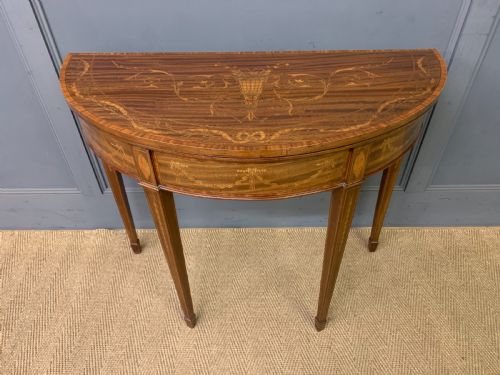


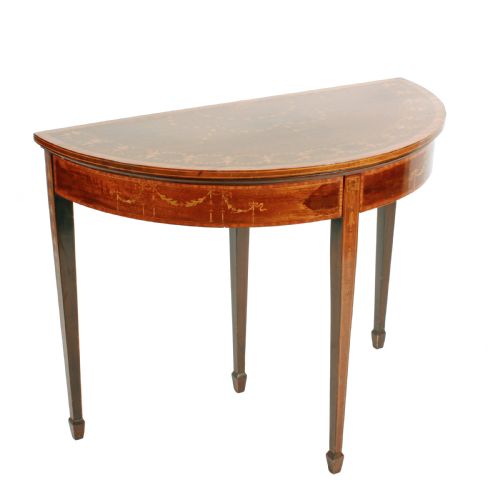


Marquetry Demilune Console
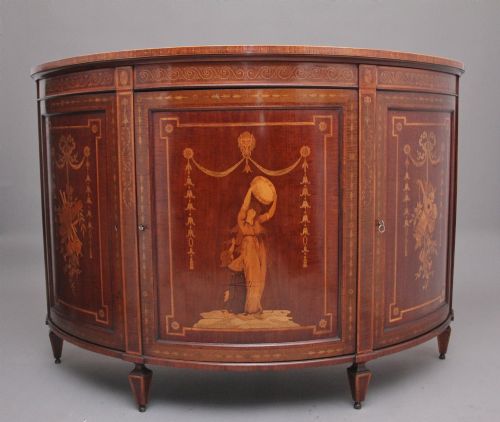
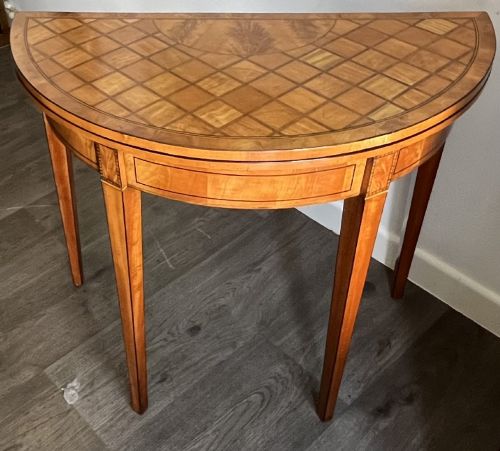
These marquetry demilune console tables combine curved half-round surfaces with elaborate floral and geometric wood inlay, bringing refined Georgian and Edwardian elegance to any interior.
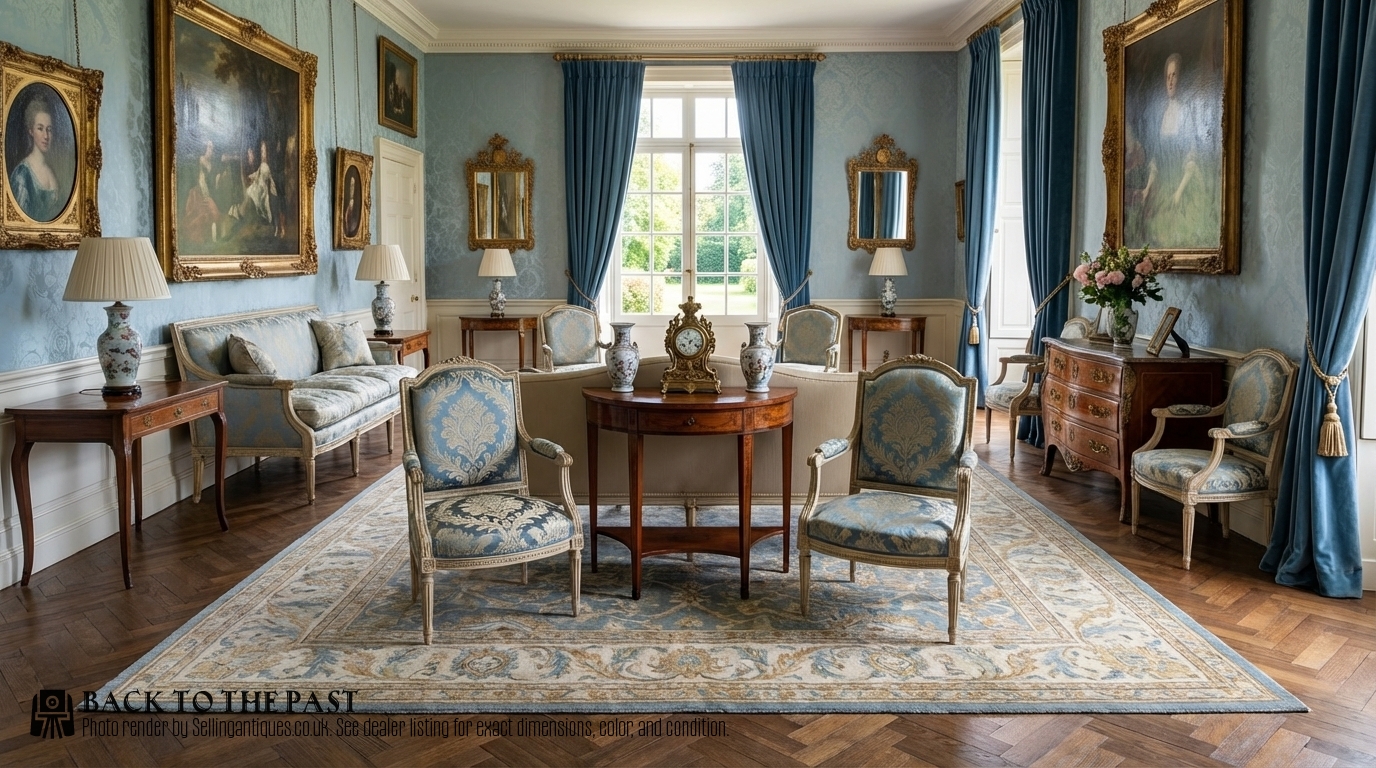
Marquetry Demilune Console
When you search for a marquetry demilune console, you are looking at semicircular tables adorned with patterned wood veneers, ranging from late 18th century Georgian originals to Edwardian Sheraton Revival pieces.
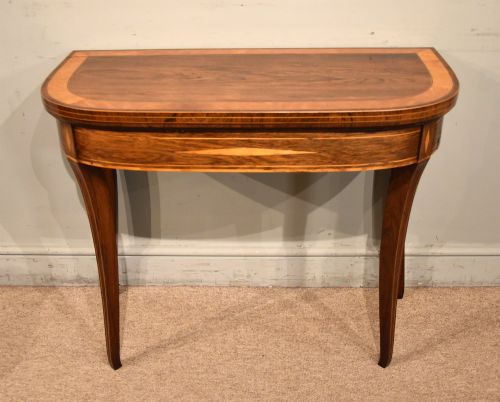
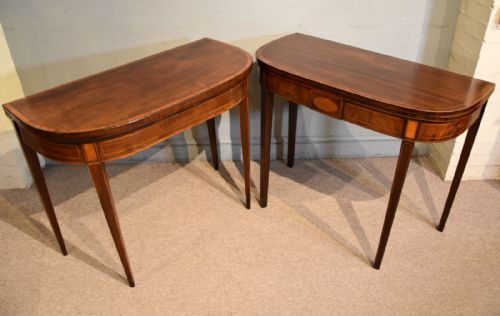
The form frequently appears as a card table, tea table, or half round commode designed to sit flush against a wall before opening for play or display.
The selection on this page centres primarily on satinwood and mahogany structures enhanced by boxwood and floral marquetry.
Materials and Construction
Cabinet makers constructed these pieces using a solid timber frame of mahogany, walnut, or satinwood, onto which delicate decorative veneers were meticulously applied.
Marquetry patterns utilise contrasting timbers such as boxwood and rosewood, cut and fitted together to create intricate floral and neoclassical motifs.
Brass fittings and hinges often secure the foldover leaves and internal compartments found on the card and games table variants.
Listings feature satinwood, mahogany, and rosewood across Georgian, Victorian, and Edwardian periods.
Judging Quality and Execution
The distinction between ordinary and exceptional pieces lies in the crispness of the marquetry cutting and the harmonious selection of timber grains.
Superior examples demonstrate seamless integration of contrasting woods like satinwood and padoukwood, maintaining structural integrity across curved surfaces without warping.
Edward and Roberts
The Marquetry Demilune Console Glossary
- Demilune
- Half-moon shaped. This semicircular profile allows the furniture to stand neatly against a flat wall.
- Marquetry
- The art of applying decorative pieces of veneer to a structure to form intricate pictorial designs.
- Satinwood
- A durable, lustrous yellow-brown timber prized for its fine grain and glowing appearance in 18th and 19th century furniture.
- Sheraton Revival
- A late Victorian and Edwardian design movement that reinterpreted the light, neoclassical elegance of the 18th century designer Thomas Sheraton.
Marquetry Demilune Console: Frequently Asked Questions
How were demilune consoles used historically?
These tables typically stood against drawing room walls to display decorative items or hold candles until needed for evening card games.
Many incorporate foldover tops that double their surface area when guests arrived.
What is the difference between Georgian and Edwardian pieces?
Georgian examples date from the 18th century and exhibit period craftsmanship in woods like satinwood and mahogany.
Edwardian pieces often reflect the Sheraton Revival style, reproducing earlier elegance using similar marquetry techniques.
How do I care for satinwood veneer?
Keep these pieces away from direct sunlight and radiators to prevent the delicate wood veneers from drying out or splitting.
Apply a traditional beeswax polish occasionally to nourish the timber grain.
Are these tables suitable for small rooms?
The flat back of a demilune design allows the furniture to fit snugly against walls without protruding deeply into the living space.
Foldover versions provide surface flexibility for compact interiors.