
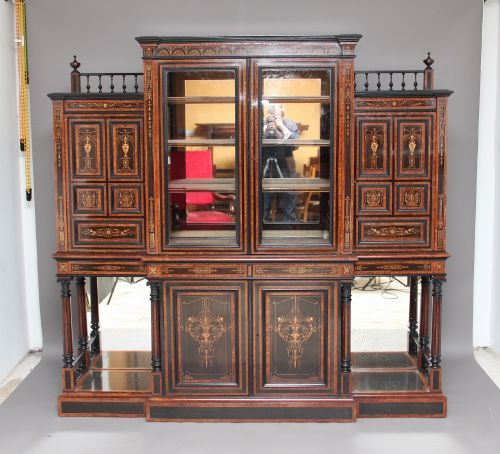
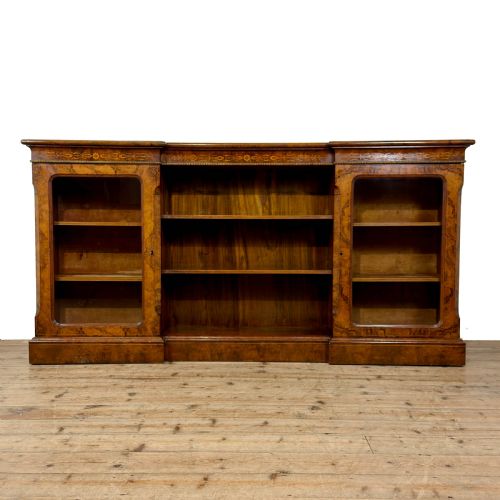


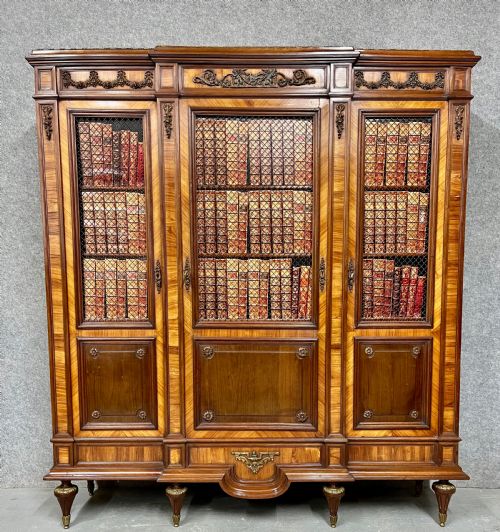

Marquetry Breakfront Bookcase
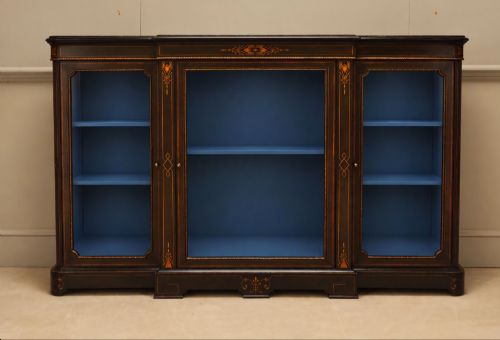
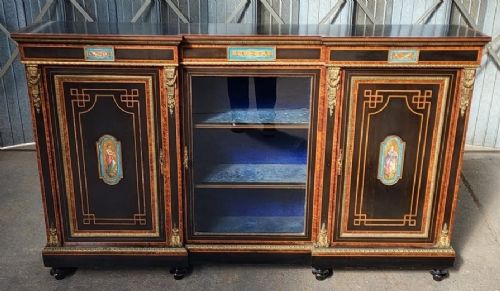
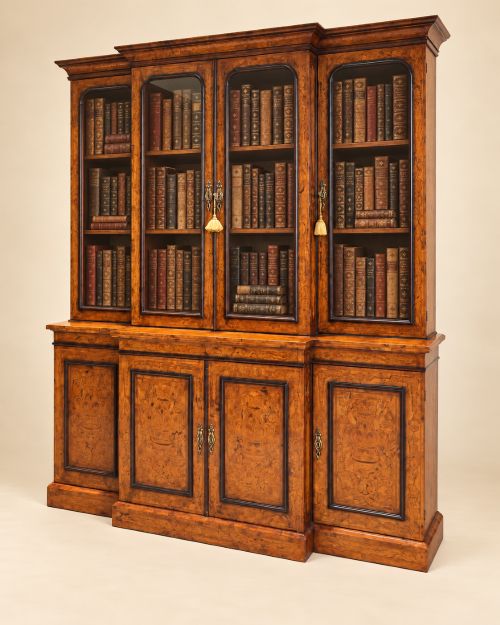
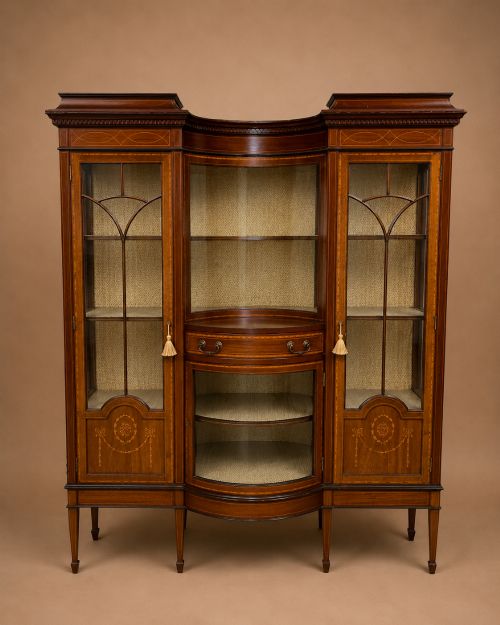
A marquetry breakfront bookcase organises a room with projecting central shelving and intricate wood-inlaid veneers.
Marquetry Breakfront Bookcase
A marquetry breakfront bookcase combines generous shelved storage with a tiered architectural facade that steps forward at the centre. When hunting for a marquetry breakfront bookcase on this page, Victorian and nineteenth century examples in walnut, mahogany, and satinwood dominate the selection.
These grand library pieces and display cabinets originate primarily from the nineteenth century, spanning Victorian, Edwardian, and Regency revival periods. Makers such as Edwards and Roberts produced exceptional iterations featuring glazed doors alongside timber inlay.
The form functions equally well as a breakfront glazed bookcase or a display cabinet for treasured volumes and porcelain. Lower cupboard sections frequently conceal additional adjustable shelving behind panelled or glazed doors.
How they were made
Cabinetmakers utilised dense foundational timbers like mahogany and walnut, applying decorative veneers such as burr walnut, satinwood, and kingwood across the expansive surfaces. Boxwood and various contrasting woods formed intricate marquetry panels, depicting floral motifs and classical urns.
Structural embellishments relied on cast or gilt ormolu mounts, brass stringing, and glazed panel doors to frame the recessed and projecting sections of the facade. Hand-cut dovetailing secured the interior shelving and drawer carcases.
Listings feature nineteenth-century mahogany, burr walnut, and satinwood, alongside revival styles from the Victorian and Edwardian periods.
What varies in quality
The precision of the marquetry cutting and the choice of veneer figure dictate the visual impact of the piece. Finer examples display meticulous grain matching and crisp botanical inlays without warping or shrinkage in the foundational timbers.
Hardware integrity, such as original brass mounts, working locks, and heavy fire-gilt ormolu, separates standard production from superior cabinet work. The depth of the breakfront moulding and the clarity of the glass panes further indicate workshop distinction.
Edwards and Roberts·Collinson and Lock·Lamb of Manchester
The Marquetry Breakfront Bookcase Glossary
- Breakfront
- A cabinet design where the central section projects forward from the flanking wings. This architectural arrangement creates depth and visual rhythm across large library pieces.
- Marquetry
- The art of applying decorative veneer pieces to a structural surface to form pictorial or geometric patterns. Craftsmen use contrasting timbers like boxwood and satinwood to achieve tonal shading.
- Ormolu
- Gilded bronze mounts applied to furniture for decorative accent. This technique adds metallic contrast to dark woods such as mahogany and ebonised timber.
- Cross-Banding
- A border veneer technique where grain runs perpendicular to the main panel. This method frames the central wood figure and adds a crisp perimeter line.
- Ebonised
- Timber treated to resemble ebony through staining or painting. Victorian cabinetmakers utilised this finish to emulate expensive exotic hardwoods.
Marquetry Breakfront Bookcase: Frequently Asked Questions
How do I care for marquetry?
Marquetry requires stable room humidity and protection from direct sunlight to prevent veneer lifting and timber shrinkage. Regular dusting with a soft cloth maintains the polished surface without abrasive cleaners.
Applying microcrystalline wax periodically feeds the antique timbers and preserves the contrast of the inlaid boxwood and satinwood details.
Where were these bookcases placed?
These large storage pieces traditionally anchored grand estate libraries, formal drawing rooms, and dining parlours. Their imposing scale demanded substantial wall space in Victorian homes.
Today they function effectively in spacious studies and living areas, housing comprehensive book collections alongside decorative ceramics.
How do I spot Victorian revival styles?
Victorian revival pieces borrow classical motifs from Georgian, Regency, and French Louis XVI aesthetics. They frequently combine rich burr walnut or mahogany with intricate marquetry and gilt mounts.
Examining the construction methods, interior carcase timbers, and lock mechanisms helps distinguish nineteenth century production from later interpretations.