


Marquetry Blanket Chest
These marquetry blanket chest examples combine timber construction with decorative patterned inlay, offering substantial storage alongside period character.
Marquetry Blanket Chest
A marquetry blanket chest serves as a practical storage trunk while displaying intricate patterned woodwork across its exterior surfaces. The pieces gathered under this search phrase range from substantial sixteenth-century examples to later Victorian revivals and regional Welsh designs.
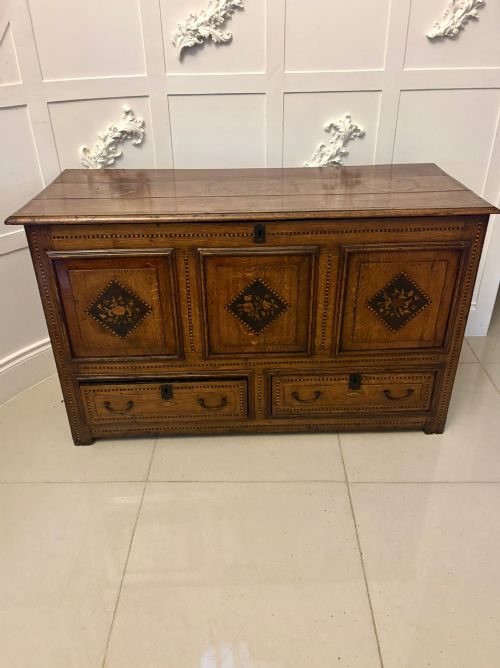
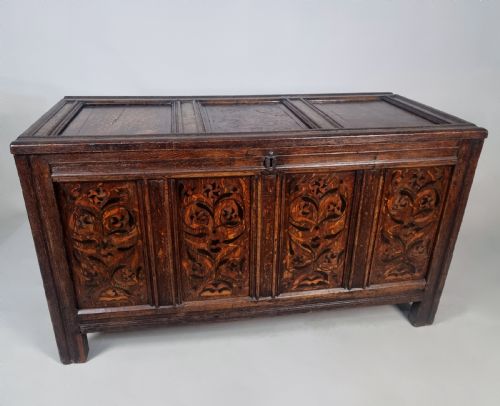
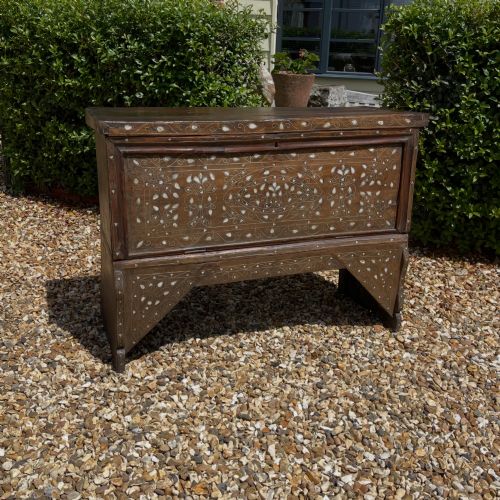
Most entries belong to the seventeenth century or draw upon that aesthetic, featuring sturdy timber frames complemented by fruitwood, bone, or contrasting wood inlays. Alongside standard blanket boxes, the selection includes mule chests incorporating lower drawers, alongside miniature boxes and dome-topped trunks.
How They Were Made
Maker's workshops built these pieces primarily using native hardwoods such as oak and walnut, occasionally incorporating fruitwood for lighter contrasting elements in the inlay work. Iron and brass hardware, including hinges and locking plates, provided structural reinforcement and functional security.
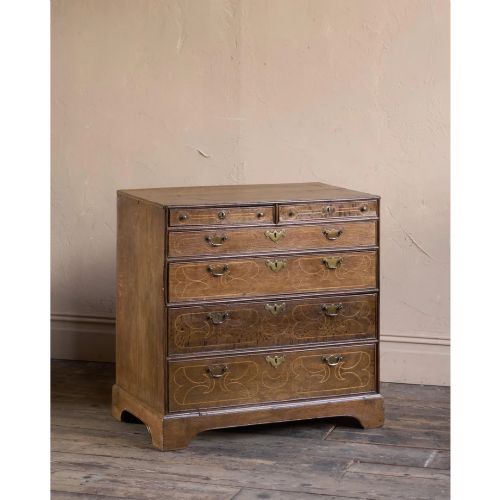
The decorative surfaces rely on precise woodwork techniques where contrasting veneers are fitted into recessed channels within the primary timber background. Artisans sometimes integrated bone details to enhance the geometric or floral patterns characteristic of the period.
Listings feature oak, walnut, and fruitwood examples spanning from the sixteenth century through the Victorian era.
What Varies in Quality
The standard of a marquetry blanket chest rests upon the precision of the inlay work and the integrity of the primary timber structure. Finer examples display tight, complex geometric or pictorial patterns with minimal gaps between the contrasting woods.
Proportion and surface preservation heavily influence the character of each piece. Later restorations or replacement timber elements alter the historical consistency, while crisp carving and well-matched grain patterns distinguish superior workshop output.
The Marquetry Blanket Chest Glossary
- Marquetry
- Decorative veneer work arranged in geometric or pictorial patterns across a timber surface. This technique requires meticulous cutting and fitting of different wood species.
- Mule chest
- A storage chest featuring one or more drawers built into the base beneath the main compartment. This form bridges the traditional blanket box and the chest of drawers.
- Coffer
- A heavy wooden box traditionally used for storing valuables, linens, or documents. They often feature robust joinery and secure locking mechanisms.
- Arcaded
- Decorated with a series of arched motifs carved into the woodwork in relief. This architectural detail frequently appears on seventeenth-century panels.
Marquetry Blanket Chest: Frequently Asked Questions
What is a marquetry blanket chest?
A marquetry blanket chest is a wooden storage box decorated with fitted patterns of contrasting wood veneers.
These pieces combine utilitarian linen storage with intricate decorative craftsmanship spanning several centuries.
How do I date a wooden coffer?
Dating relies on examining the construction joints, timber species, and style of any carved or inlaid decoration.
Earlier pieces typically display hand-riven oak boards and simpler iron hardware, while later revivals adopt different structural habits.
Where were these chests used?
These pieces functioned in domestic interiors for storing household textiles, garments, and valuables.
Their sturdy construction also allowed them to serve as seating or tables within period chambers.
What is the difference between a coffer and a mule chest?
A standard coffer provides top-loading access to a single internal compartment.
A mule chest incorporates one or more functional drawers beneath the main storage well.