



Marquetry Armoire Cabinet
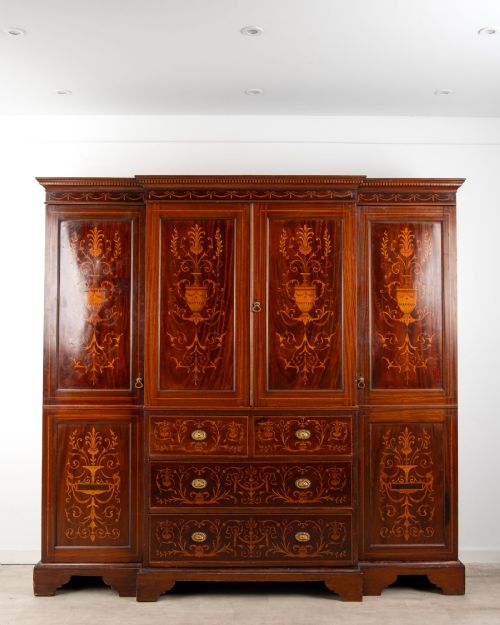
These marquetry armoire cabinet pieces bring historic wood-working skill into a room, offering large storage through decorative inlaid panels.
Marquetry Armoire Cabinet
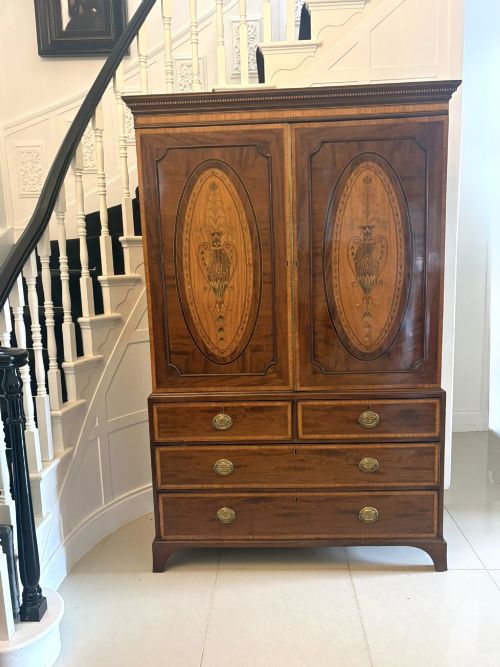
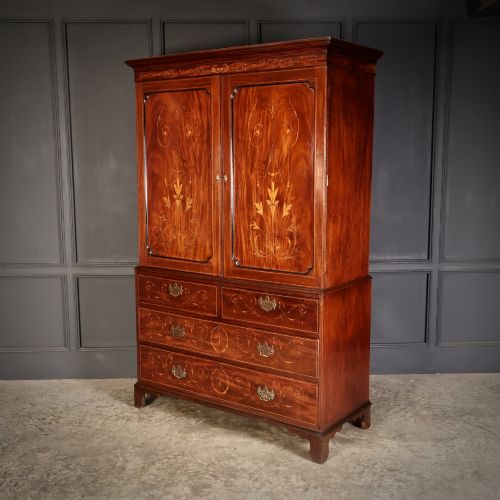
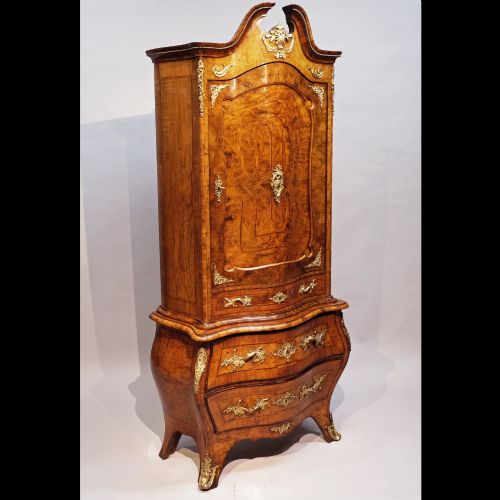
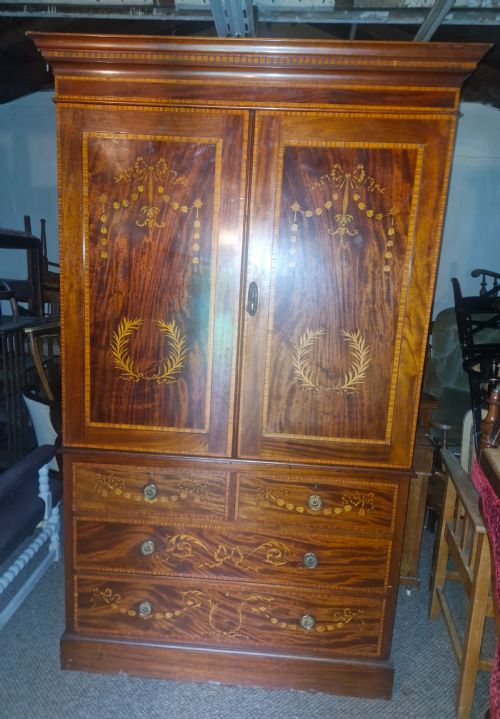
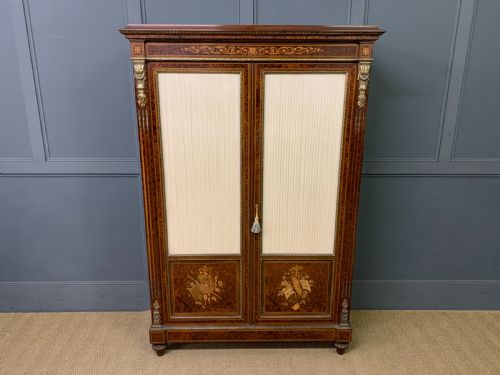
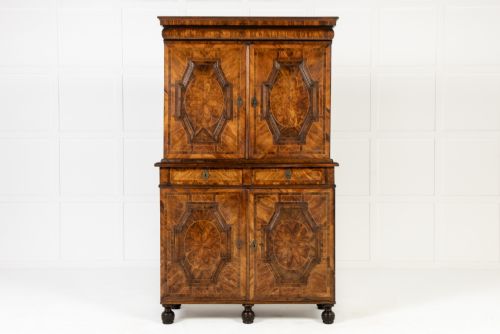
A marquetry armoire cabinet combines large storage furniture with detailed wood inlay, appearing in forms such as linen presses, wardrobes, and cabinet on chest designs. When searching for a marquetry armoire cabinet, buyers encounter pieces spanning from the seventeenth century through the Edwardian period, alongside Dutch Baroque, Georgian, and French styles.
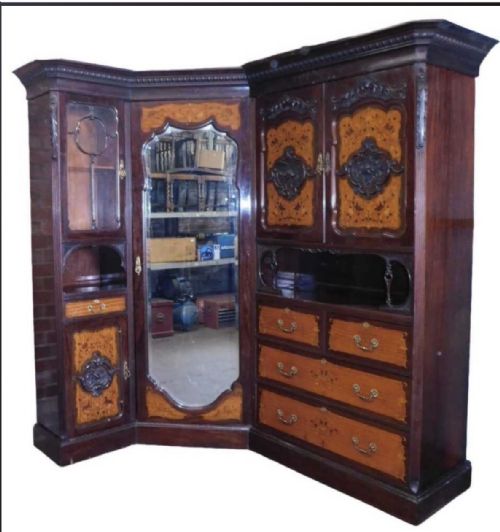
The selection ranges from tall nineteenth-century French armoires to eighteenth-century Dutch walnut cabinets featuring floral inlay. Buyers frequently meet Edwardian mahogany and satinwood inlaid wardrobes alongside traditional linen presses and compactum designs.
Materials and construction methods
Craftsmen built these pieces using primary timbers such as mahogany, walnut, kingwood, and burr walnut, often pairing them with contrasting woods for inlay work. Satinwood inlay, fruitwood, brass, and ormolu mounts appear across the periods to highlight the structural forms.
Makers cut varied wood veneers to assemble pictorial floral patterns and geometric motifs into the surface of the doors and panels. Cabinets frequently combine structural carcases of oak or pine with finely figured exterior veneers.
The listings span from the seventeenth century through to the Edwardian era, incorporating Dutch Baroque, Georgian, and French styles.
Quality factors in marquetry furniture
The skill of the veneer cutter dictates the visual depth of the marquetry, separating simple surface decoration from complex pictorial floral inlay. Precision in matching the grain of walnut, mahogany, or satinwood across large wardrobe doors influences the overall visual balance.
The integration of ormolu mounts, brass details, and internal linen press trays or hanging spaces defines the standard of the piece. Selection of high-grade burr timbers and the crispness of the original inlay work indicate the tier of the cabinet.
Druce & Co.
The Marquetry Armoire Cabinet Glossary
- Marquetry
- The art of applying decorative pieces of veneer to a structure to form ornamental designs and pictures.
- Armoire
- A large wardrobe or cabinet used for storing clothes, typically featuring doors that open to reveal hanging space or shelves.
- Linen Press
- A tall storage cabinet traditionally designed for storing household linen, often featuring sliding trays or drawers beneath upper doors.
- Ormolu
- Gilded bronze used for decorative mounts and feet on furniture, particularly prominent in French pieces.
- Compactum
- A fitted wardrobe designed with multiple internal compartments, drawers, and hanging spaces for efficient storage.
Marquetry Armoire Cabinet: Frequently Asked Questions
What is a marquetry armoire cabinet used for?
These cabinets serve as primary storage furniture for clothing, linen, and household items, combining internal shelving or hanging space with large enclosed doors.
They function as substantial focal points in bedrooms and living spaces while keeping personal items concealed behind decorated wood panels.
How do I identify seventeenth-century pieces?
Seventeenth-century pieces typically display heavier timber construction, such as walnut or kingwood, with early cabinet on stand formats or Dutch Baroque influences.
They rely less on delicate satinwood inlays and more on deep grain figures, substantial mouldings, and architectural forms.
What distinguishes a linen press from a wardrobe?
A linen press traditionally includes internal sliding trays or shelves behind the upper doors, originally intended for flat linens, positioned above a chest base.
A standard wardrobe focuses primarily on vertical hanging space for garments, though many historical pieces merge these functions into compactum designs.
How should I care for inlaid wood surfaces?
Inlaid surfaces require steady indoor humidity and protection from direct sunlight to prevent the fine veneers and fruitwood details from lifting or fading.
Regular dusting with a dry cloth and occasional application of appropriate furniture wax preserves the polish of the mahogany or walnut.