
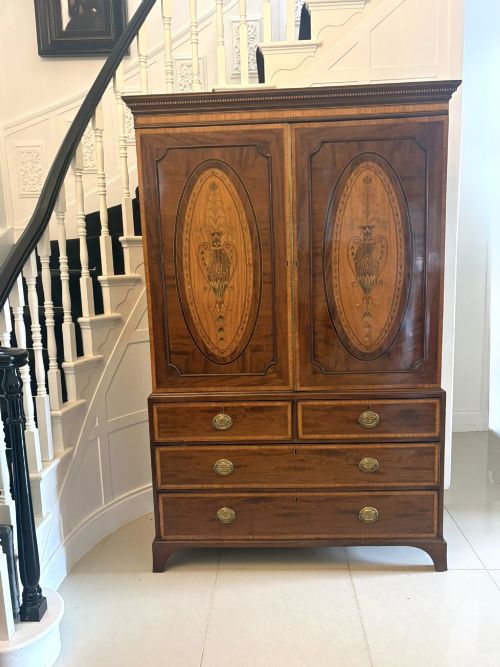
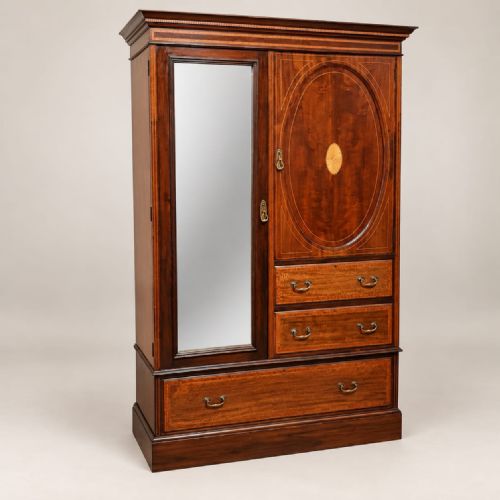
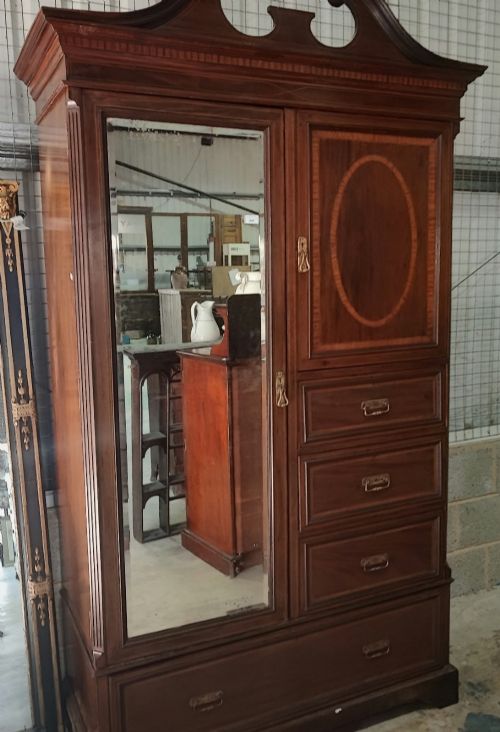
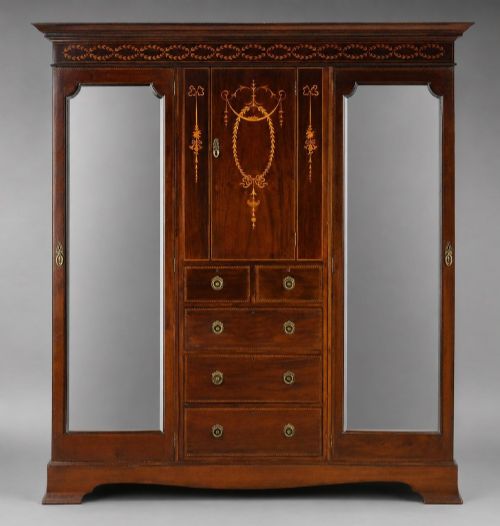


Satinwood Inlaid Press
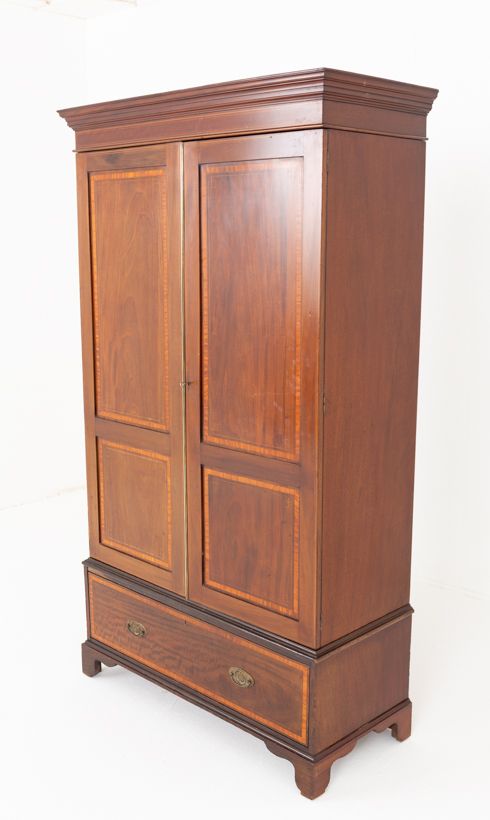
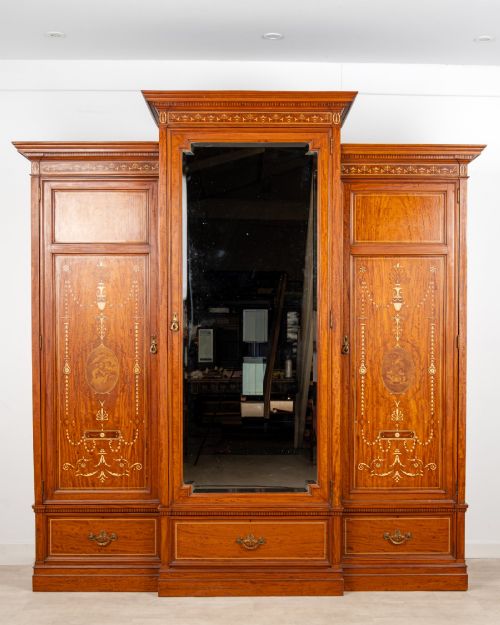
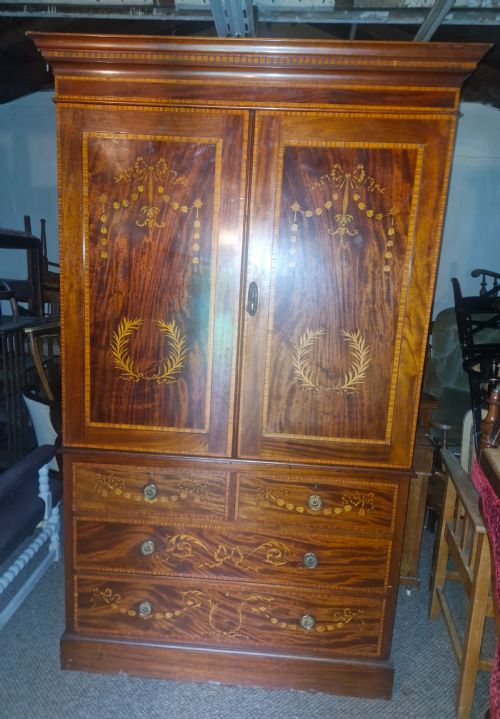
A satinwood inlaid press offers grand storage with decorative stringing and banding, combining deep mahogany or pale satinwood for an imposing bedroom presence.
Satinwood Inlaid Press
A satinwood inlaid press is a substantial storage piece designed to hold linen or garments, uniting deep timbers with pale contrasting veneers. The pieces seen here span from the George III and Georgian eras through the Victorian period, with a strong representation of Edwardian and Sheraton Revival examples.
Most items on this page combine a functional upper cupboard section, often housing sliding trays or hanging space, with drawers below. These large bedroom and housekeepers' pieces frequently incorporate mirrored doors or compactum configurations alongside traditional linen press designs.
Origins stretch across the 18th, 19th, and early 20th centuries, reflecting changing domestic requirements for hanging and folded storage. Buyers encounter both grand Georgian cupboards with swan-neck pediments and lighter Edwardian triple wardrobes sharing the same distinctive inlaid detailing.
Materials and construction
Makers constructed these presses using structural carcasses of mahogany or satinwood, enriched with contrasting veneers of boxwood and rosewood. Brass hardware, mirror glass, and painted details frequently complete the decoration.
Inlay and banding techniques define the surface work, utilising precise geometric or floral motifs set into the primary timber. Cabinetmakers shaped solid woods and applied fine veneers to large panel doors and pediments, ensuring both durability and visual contrast.
Listings feature mahogany, satinwood, and rosewood timbers across Georgian, Victorian, and Edwardian periods.
Distinguishing quality
Quality rests on the crispness of the satinwood inlay and the selection of the primary timber figures. Pieces displaying fine banding, well-matched veneers, and intact original internal linen slides command greater attention from collectors.
Structural integrity of large cornices, heavy panel doors, and fitted internal compartments distinguishes the finer workshops from standard production. The retention of original brass fittings and undamaged mirror glass further elevates a piece within its period.
Edwards and Roberts·Druce and Co·Waring and Gillow·Maples and Co
The Satinwood Inlaid Press Glossary
- Linen Press
- A tall piece of furniture designed with upper doors enclosing sliding shelves or trays for folded textiles, paired with lower drawers. These items evolved from housekeepers' cupboards into prominent bedroom storage.
- Satinwood
- A hard, durable timber with a natural golden sheen and smooth grain, frequently used for contrasting veneers or primary surfaces. Cabinetmakers valued it for its reflective qualities and ability to take fine inlay.
- Inlay
- A decorative technique where pieces of contrasting wood, such as boxwood or satinwood, are set flush into recesses within the main surface. This method creates borders, medallions, and geometric patterns across doors and drawer fronts.
- Compactum
- A multi-compartment wardrobe combining hanging space, drawers, and linen shelves within a single unified structure. This form maximises storage efficiency in larger Victorian and Edwardian bedrooms.
- Sheraton Revival
- A late 19th and early 20th century design movement inspired by the neoclassical furniture of George Thomas Sheraton. Pieces from this style utilise delicate satinwood banding and classical proportions.
Satinwood Inlaid Press: Frequently Asked Questions
How do I date a satinwood inlaid press?
Dating relies on carcass construction, the style of the pediment, and the specific characteristics of the inlay work. Georgian pieces typically show heavier proportions and architectural cornices, while Edwardian versions lean towards lighter satinwood finishes and painted details.
Examining internal timber and drawer linings also helps determine whether a piece originates from the 18th, 19th, or early 20th century.
Did these presses come apart for transport?
Most large presses and compactum wardrobes were designed to dismantle into manageable sections, including a heavy cornice, central hanging or shelving carcases, and a separate drawer base.
This modular construction was essential for moving substantial mahogany and satinwood furniture up staircases and into period bedrooms.
Are original linen slides important?
Original internal linen slides significantly enhance the authenticity and historical integrity of Georgian and Victorian press cupboards.
While some pieces were altered later to accommodate hanging clothes, surviving trays demonstrate the original domestic function of storing folded household textiles.