
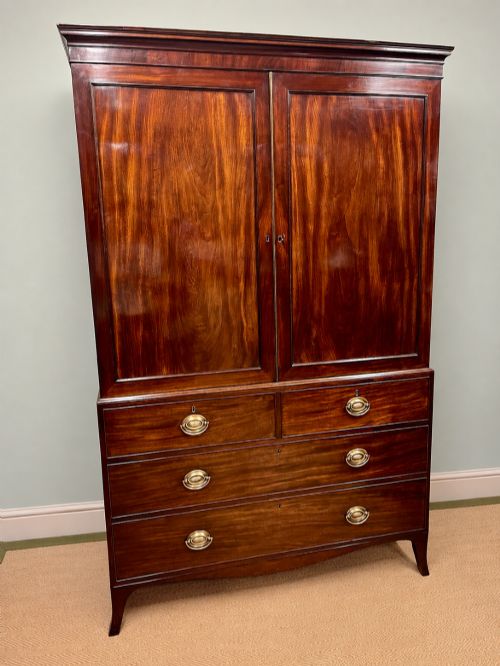
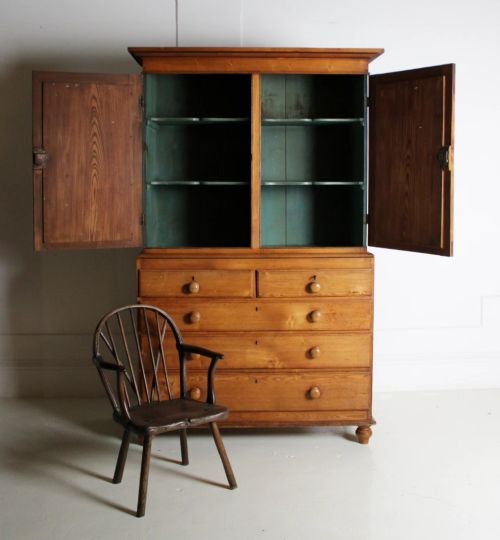
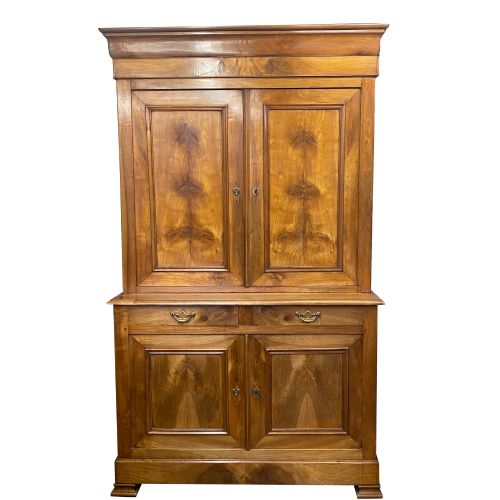
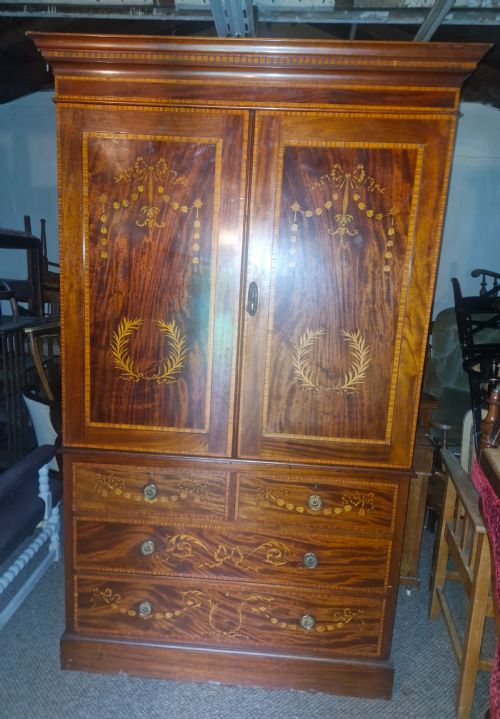


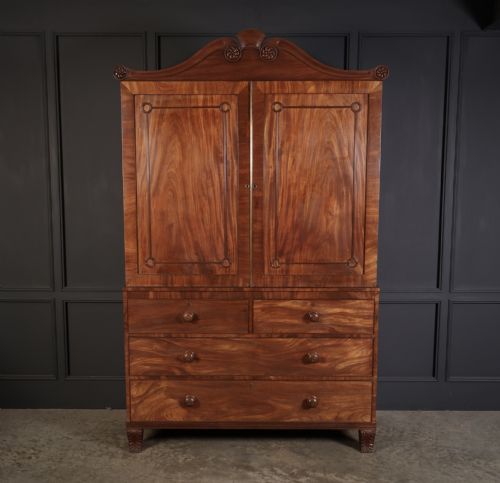


Two Section Press Cupboard
A two section press cupboard is a substantial storage piece built to hold linen and garments, prized for its impressive presence and architectural scale.
Two Section Press Cupboard
When you search for a two section press cupboard, you are looking at substantial storage furniture designed in two distinct tiers, usually featuring upper cabinet doors enclosing sliding trays or shelves above a chest of drawers base. These pieces served as the primary wardrobe and linen store in period homes before fitted closets became common, offering remarkable capacity and presence.
The versions you are most likely to meet on this page span the Georgian, Regency, and Victorian periods, constructed in timbers such as mahogany, oak, ash, and cherry wood. Many examples reflect regional cabinet-making traditions, including Welsh oak deuddarn designs and French provincial storage cabinets.
Alongside traditional linen presses, the selection encompasses housekeeper cupboards and campaign cabinets, demonstrating the varied forms this functional storage furniture took across different decades.
How they were made
Cabinet-makers built these two-part cupboards using solid native and imported timbers, frequently applying flame mahogany veneer or rosewood crossbanding to the principal surfaces for decorative contrast. Secondary woods like ash and oak provided sturdy interior framing and drawer linings.
Detailing often included fine boxwood or satinwood inlay work, brass drop handles or campaign-style hardware, and hand-cut dovetail joints on the drawers within the lower section.
Periods represented across the selection range from George III and Georgian eras through Regency, Victorian, and Edwardian times.
What varies in quality
Quality in these cupboards rests primarily in the choice of timber and the sophistication of its presentation, such as the selection of well-figured flame mahogany veneer or neatly contrasting rosewood crossbanding. Finer examples display meticulous attention to proportion and crispness in inlay work, whereas simpler vernacular pieces rely on the honest grain of solid oak or ash.
The internal architecture also distinguishes the range, separating standard utility pieces from substantial cabinet-maker productions that incorporate fitted sliding linen trays and superior brass hardware.
Druce & Co.·Whytock & Reid of Edinburgh
The Two Section Press Cupboard Glossary
- Linen press
- A tall piece of furniture featuring upper doors enclosing sliding shelves or trays, positioned above a chest of drawers base. Originally built specifically to store flat linen.
- Crossbanding
- A narrow strip of veneer applied to the border of a panel, arranged so that the grain runs at right angles to the surrounding wood. This technique creates a neat framing effect.
- Deuddarn
- A traditional Welsh two-part cupboard featuring enclosed upper and lower tiers. These regional pieces form part of the broader vernacular cabinet tradition.
- Campaign cabinet
- Portable furniture constructed in sections with recessed brass fittings, designed for easy dismantling and transport. They often use durable hardwoods like mahogany.
Two Section Press Cupboard: Frequently Asked Questions
What is a two section press cupboard?
A two section press cupboard is a large piece of storage furniture divided horizontally into an upper cabinet and a lower chest of drawers base. They were traditionally used to store household linen and folded garments.
The upper section typically encloses sliding wooden trays rather than hanging space, reflecting a time when clothes were folded rather than hung on coat hangers.
How do I date a press cupboard?
Dating relies on observing the primary timber, construction methods, and stylistic details such as bracket feet, cornice moulding, and inlay work. Georgian and Regency pieces often feature figured mahogany and delicate crossbanding.
Later Victorian and Edwardian examples may show heavier proportions or different handle styles, while vernacular oak pieces often retain traditional panel construction methods characteristic of earlier eras.
How were press cupboards used originally?
These cupboards served as the main wardrobe and linen storage facility in bedrooms and corridors before fitted bedroom furniture became standard. The sliding trays kept folded textiles neat and accessible.
The lower drawer section held heavier items or smaller garments, making the entire piece a central storage hub for the home.
Where should I place a press cupboard?
Because of their height and substantial depth, these cupboards require a wall with adequate clearance and ceiling height. They suit large bedrooms, dressing rooms, or wide hallways.
Ensure you measure both the height of the ceiling and the two individual sections, as these cupboards separate into top and bottom parts for easier transport.