



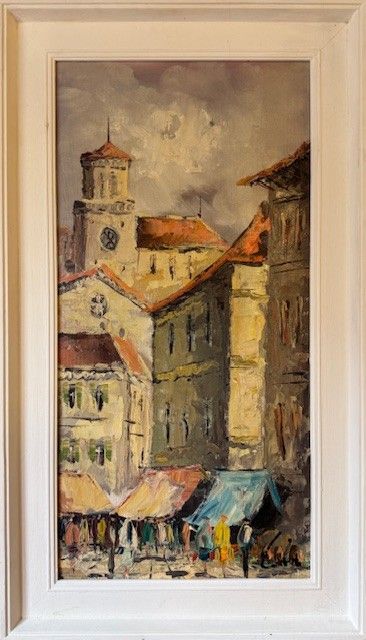


Market Scene Artwork
Market scene artwork captures the bustling energy of daily commerce and town life through the eyes of artists working across the nineteenth and twentieth centuries.
Market Scene Artwork
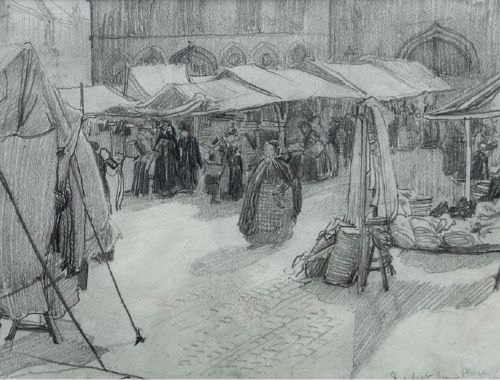
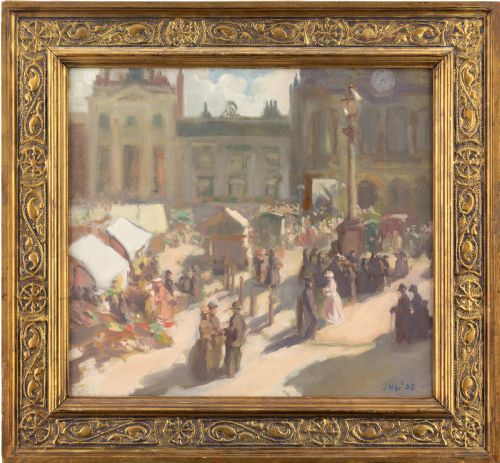
Market scene artwork encompasses framed paintings, watercolours, and drawings depicting town squares, fruit vendors, and bustling trading floors from various historical periods. The examples found here range from nineteenth-century British watercolours and oils to mid-twentieth-century tropical and European interpretations.
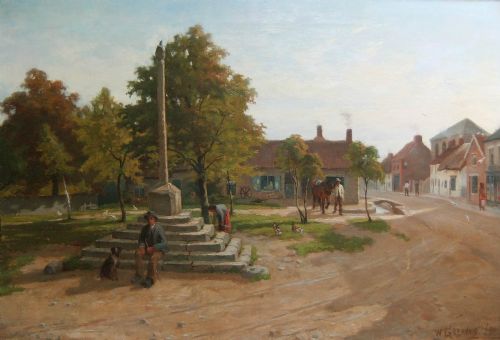
Buyers encounter depictions extending from quiet Yorkshire villages and Sussex towns to Venetian canals and Belgian squares. These works document civic life and local commerce through diverse regional lenses.
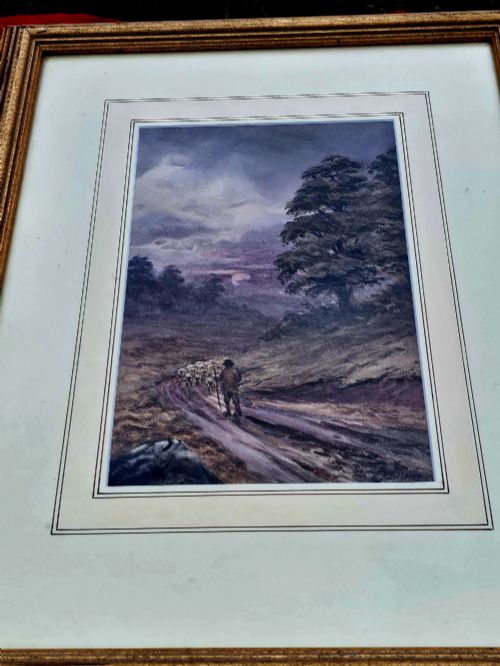
The dominant formats on this page are watercolours on paper and oil paintings on canvas or panel, frequently housed in period giltwood frames. Artists record these daily gatherings using mediums that span traditional realism to impressionistic brushwork.
Materials and techniques
Artists record market scenes using oil paint, watercolour, tempera, and pencil on supports such as canvas, paper, wood panel, and board. Oil on canvas allows for textured impasto and rich colour mixing, whilst watercolour on paper offers translucent washes that capture natural light in outdoor town settings.
Surviving pieces often retain their original giltwood or moulded wooden frames, which protect the edges of the canvas or paper support. Applied techniques range from detailed nineteenth-century academic realism to looser impressionistic strokes seen in British and continental works.
Listings feature works created across the nineteenth and twentieth centuries, using oil paint, watercolour, tempera, and pencil on canvas, paper, and wood.
Quality variations
Quality rests upon the artist's ability to handle perspective, crowd movement, and atmospheric light within a busy composition. Stronger pieces convey the bustle and scale of a public square with confident brushwork and balanced tonal contrast.
The sophistication of the palette and the preservation of the original pigment distinguish superior examples from ordinary decorative works. Greater depth is achieved when figures and architecture interact harmoniously rather than appearing stiff or isolated.
John Hodgson Lobley RBA·Cornelis Christian Dommersen·Rowland Henry Hill·Ernst Louizor
The Market Scene Artwork Glossary
- Watercolour
- A painting method where fine pigment is suspended in a water-based, translucent solution. It is traditionally applied to paper to achieve luminous washes of colour.
- Giltwood
- Wood that has been coated with a thin layer of gold leaf or gilt powder. It is commonly found on traditional frames enclosing nineteenth and twentieth-century paintings.
- Genre painting
- The pictorial representation of scenes from everyday life, typically involving ordinary people engaged in common activities. These works provide social history alongside artistic merit.
- Impressionism
- A style of painting characterised by relatively small, thin, yet visible brush strokes and an emphasis on accurate depiction of light. Artists working in this manner often capture transient moments outdoors.
Market Scene Artwork: Frequently Asked Questions
How do I date a market painting?
Dating relies on stylistic clues, framing, artist signatures, and the clothing worn by the figures depicted in the square.
Comparative study of an artist's documented working period helps narrow the timeframe to a specific decade.
Where were these artists working?
The creators of these works travelled across Britain, France, Belgium, and wider Europe to record local town squares and trading days.
Some painters belonged to specific regional art movements, capturing the character of their immediate surroundings.
How should I hang watercolour art?
Watercolour paintings require protection from direct sunlight to prevent the pigments and paper support from fading over time.
Displaying them on interior walls away from moisture helps preserve the delicate washes.
What defines a townscape scene?
A townscape focuses on urban architecture, streets, markets, and public spaces rather than purely rural landscapes.
Human activity usually forms the central narrative, animating the surrounding buildings and open squares.