


Marbled Top Desk
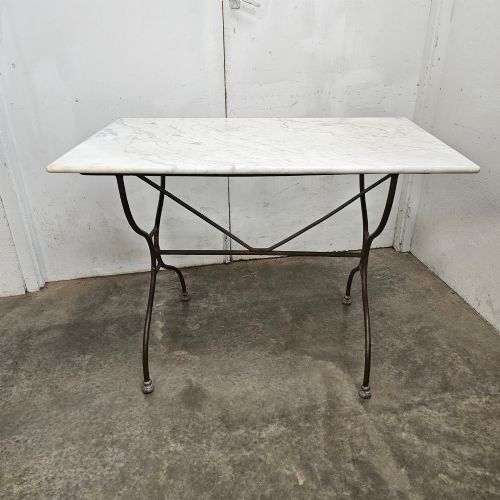
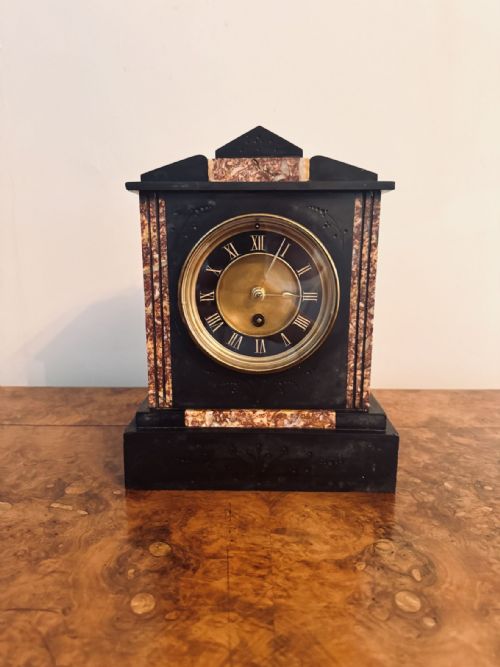
These pieces of furniture bring together solid timber frames and heavy stone surfaces for writing and display.
Marbled Top Desk
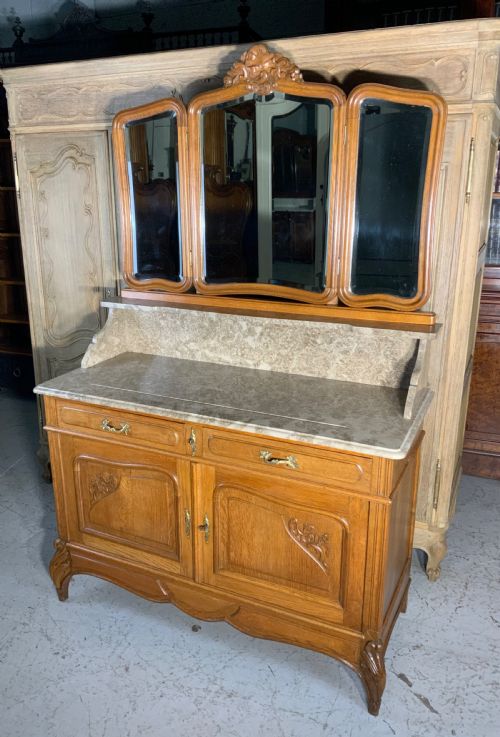
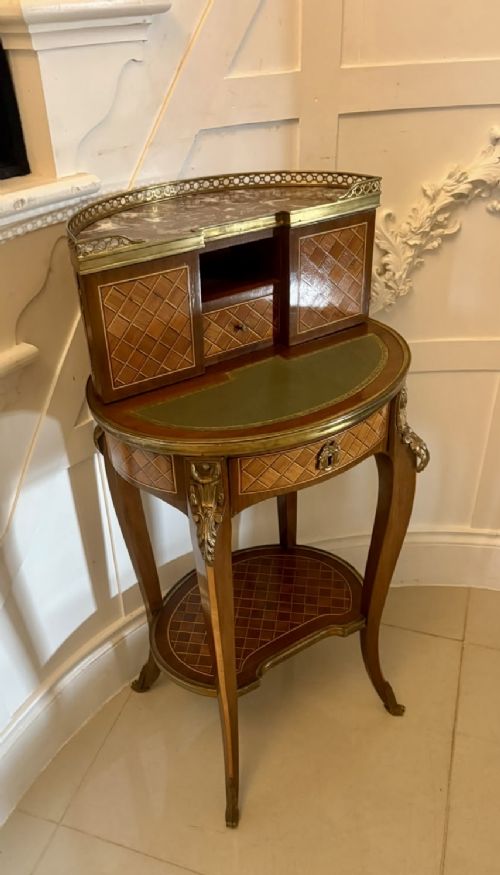
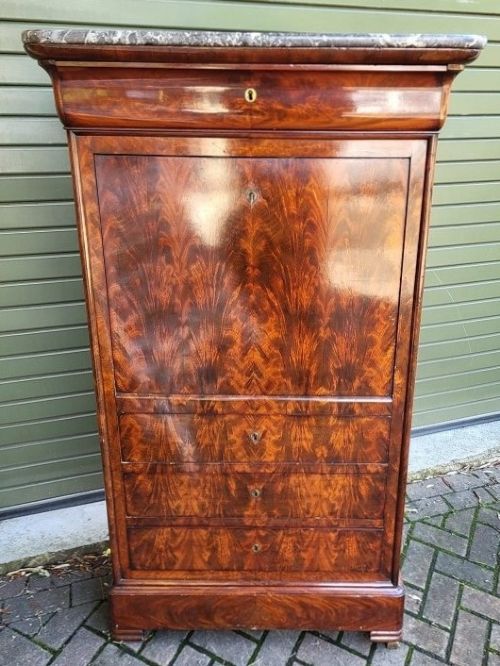
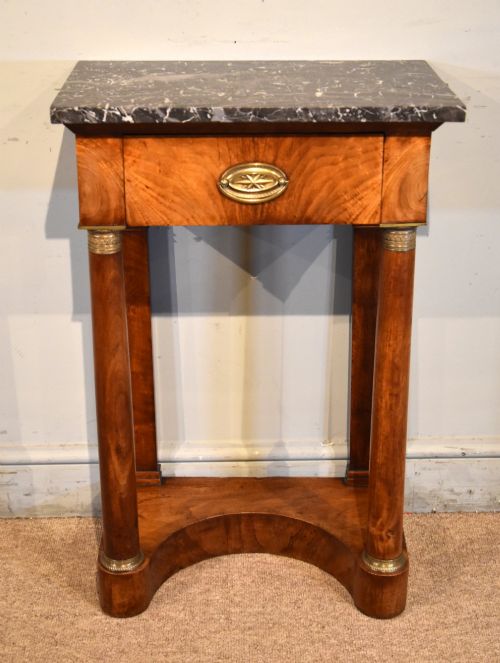
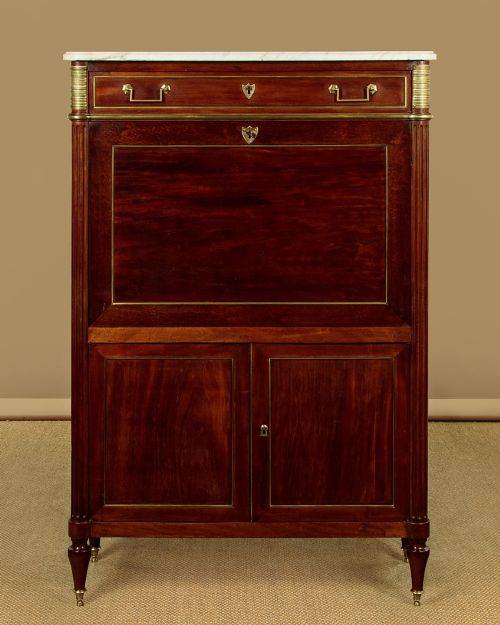
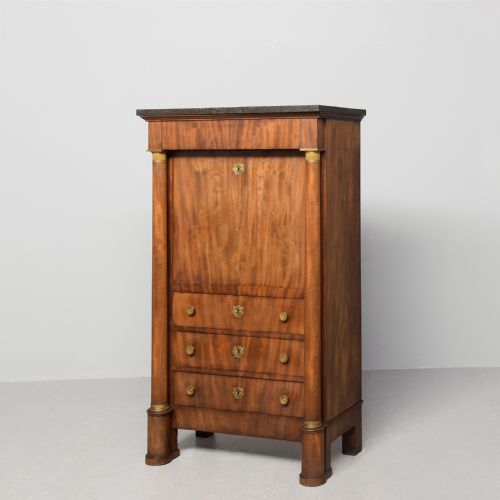
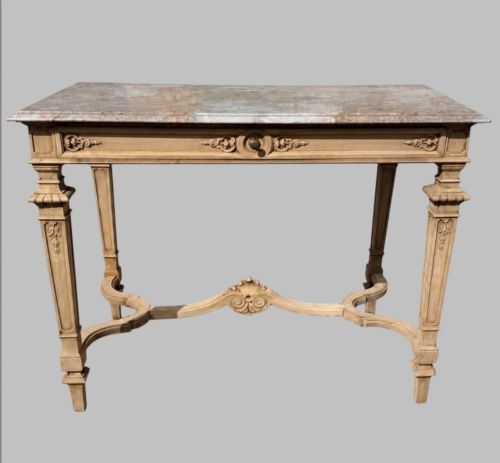
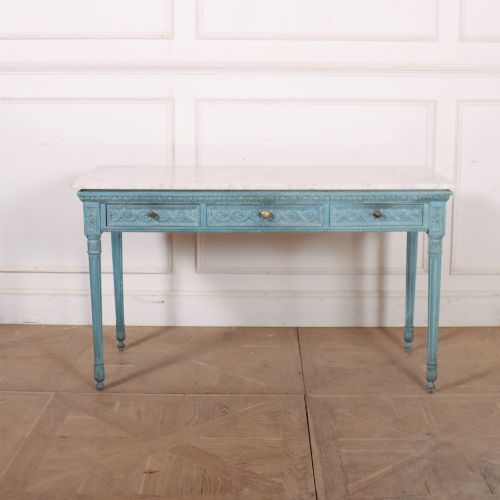
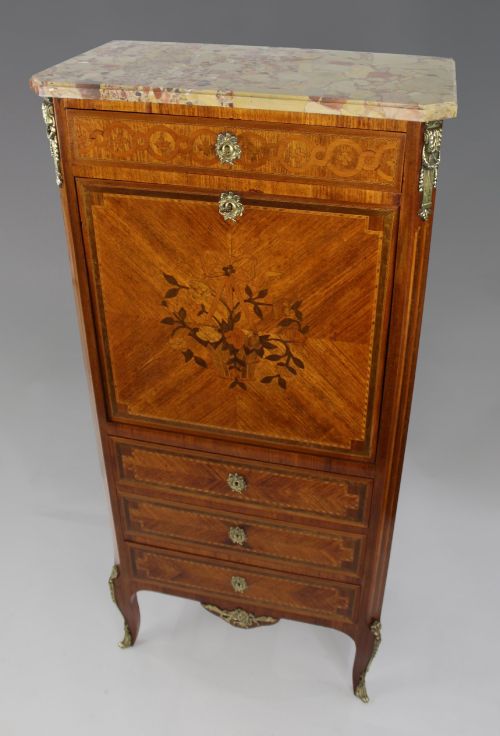
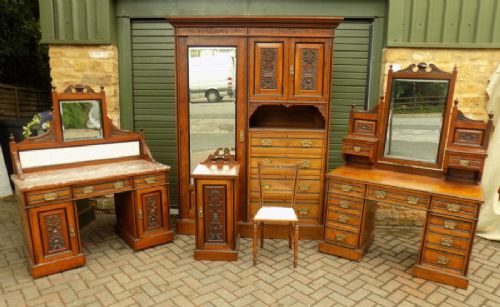
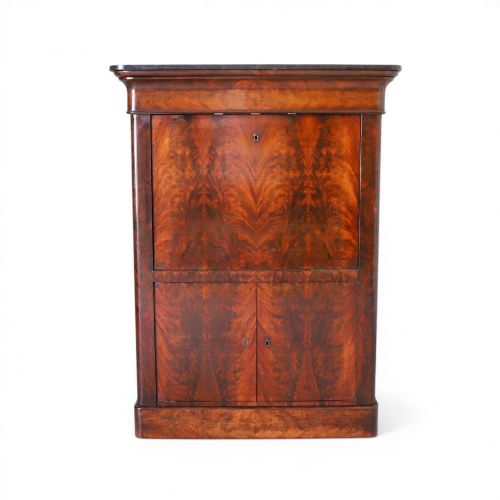
A marbled top desk combines a timber workspace or cabinet structure with a fitted stone slab. Buyers searching for a marbled top desk usually encounter French vertical writing cabinets such as secretaire abattants, alongside kneehole writing tables and occasional desks.
The material combination serves a practical purpose by providing a cool, smooth writing surface that resists ink stains and heavy daily use. Many examples incorporate galleries, brass mounts or enclosed compartments beneath the stone slab.
Most pieces date from the nineteenth century, reflecting various French and British revival styles. Walnut, mahogany, kingwood and satinwood provide the primary timber foundations for these stone-capped writing surfaces.
How they were made
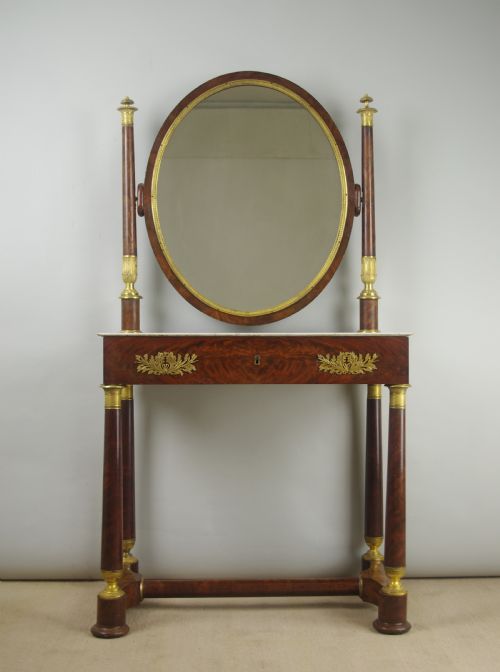
Cabinetmakers constructed these writing surfaces using dense tropical hardwoods and indigenous timbers over softwood carcases, applying veneers in flame mahogany, burr walnut or kingwood. Ormolu, brass and gilt bronze mounts decorate the exterior frames and protect vulnerable corners.
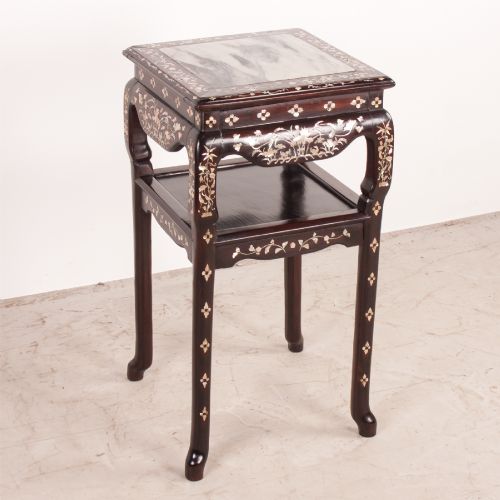
The stone slabs consist of various marbles or fossil stone, cut to fit the exact contours of the timber desk top. Skilled stone masons polished these slabs by hand to create a smooth, reflective finish that complements the polished wood below.
Marbled Top Desk Retail Price Guide 2026
Typical asking prices for marbled top desk among the pieces listed under this phrase on Sellingantiques today, from the lower quarter to the upper quarter. They describe what is for sale here now, not the wider market.
Listings feature nineteenth-century furniture utilising mahogany, walnut, kingwood and marble across French and British stylistic periods.
What varies in quality
The standard of construction relies heavily on the selection of timber veneers and the precision of the parquetry or marquetry patterns. Superior items display book-matched grain and intricate floral or geometric inlay across the fall-front and drawer fronts.
Hardware quality distinguishes finer examples from standard production pieces, particularly the weight and chisel-work of the ormolu mounts and the smooth operation of internal secret drawers. The thickness, colour variation and polish of the marble slab further indicate the grade of the piece.
Blake, London·Paul Sormani·John Mclean·Lefebvre of Belgium·Maples
The Marbled Top Desk Glossary
- Secretaire abattant
- A tall wall-mounted or freestanding cabinet featuring a drop-front writing flap that conceals fitted interior pigeonholes and small drawers. This form frequently incorporates a fitted stone slab across the upper surface.
- Ormolu
- Gilded bronze mounts applied to furniture edges and corners for decoration. The technique involves applying a mercury and gold amalgam to cast bronze.
- Parquetry
- Geometric wood inlay patterns arranged to create repeating designs across table tops and cabinet doors. Craftsmen use contrasting timbers like kingwood and mahogany to achieve this effect.
- Bonheur du du jour
- A small lady's writing desk featuring a tiered superstructure with shelves or small drawers above the main writing surface. These desks often rest on slender legs.
- Vernis Martin
- A type of simulated Japanese lacquer finish developed in France. Furniture makers applied multiple translucent varnish layers to achieve a glossy decorative surface.
Marbled Top Desk: Frequently Asked Questions
What is a secretaire abattant?
A secretaire abattant is a tall writing cabinet with a vertical drop-front panel that opens to reveal a fitted interior of small drawers and pigeonholes.
These cabinets generally feature a fitted stone slab across the top and provide concealed storage behind lower cabinet doors.
How do I clean the stone top?
Clean the stone surface using a soft cloth dampened with warm water and mild, neutral soap. Avoid acidic cleaners or vinegar, which can etch and dull the polished finish of the stone.
Dry the surface thoroughly after wiping to prevent water spots from forming on the polished material.
Where were these desks placed?
These pieces traditionally served in private studies, drawing rooms and bedrooms as designated writing and correspondence stations. The solid stone surface offered protection against ink spills and hot candle wax.
Their decorative facades also allowed them to function as freestanding display furniture in prominent household spaces.
How do I identify French revival styles?
French revival pieces incorporate curved cabriole legs, floral marquetry and asymmetrical gilt bronze mounts reminiscent of earlier royal court designs. Walnut and kingwood veneers define the primary aesthetic of these nineteenth-century interpretations.
Cabinetmakers integrated stone tops to add weight and structural contrast to the elaborate timber frames.