

Marbled Top Console
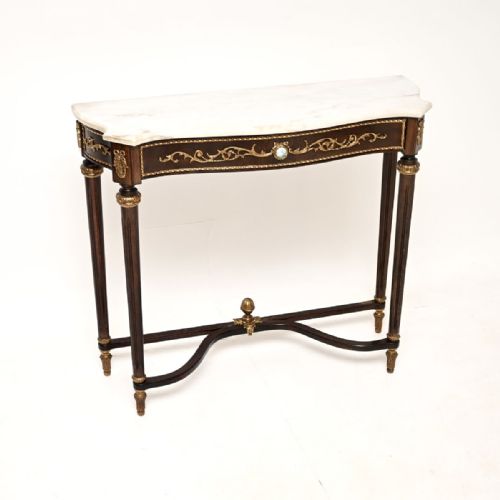
These a marbled top console bring stone and carved timber together to anchor a hallway or reception room.
Marbled Top Console
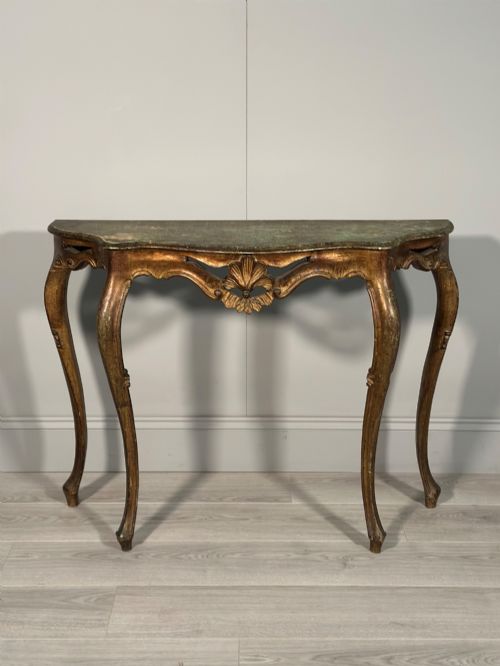
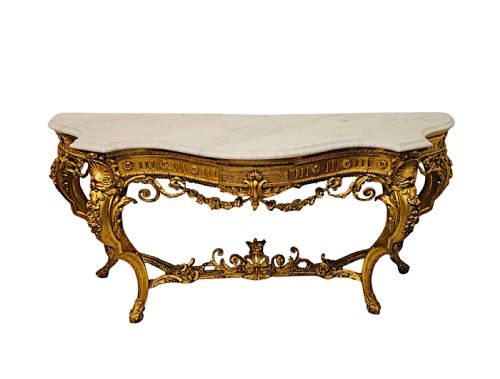
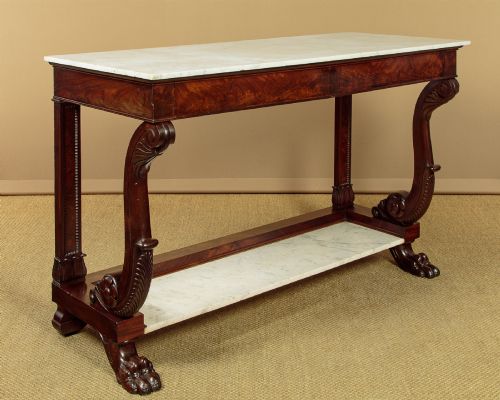
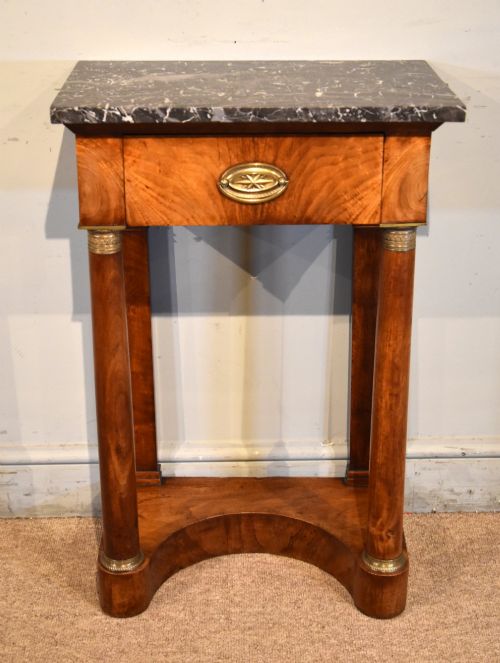
A marbled top console brings together a heavy stone slab and a timber or iron base designed to stand against a wall. The examples on this page span the eighteenth, nineteenth, and early twentieth centuries, drawing on French and Italian design traditions.
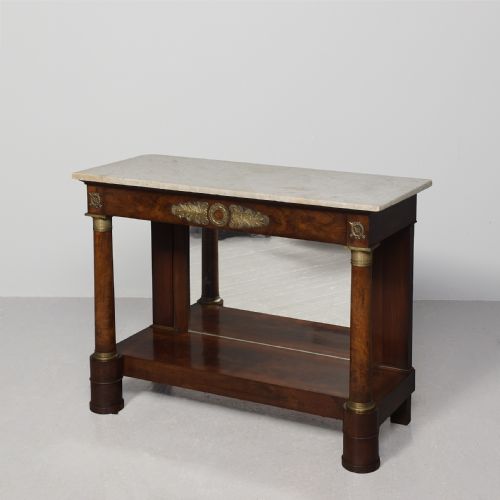
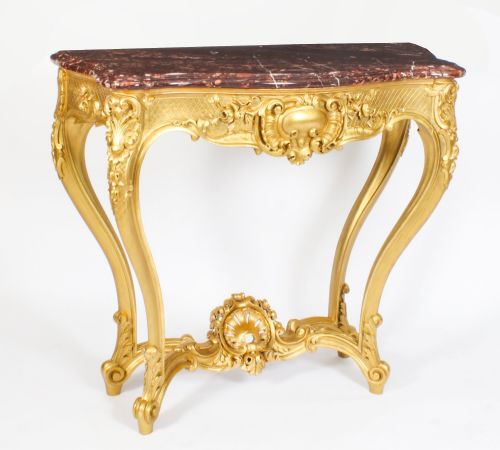
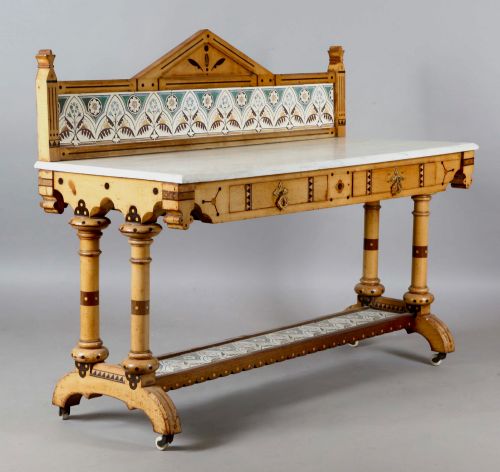
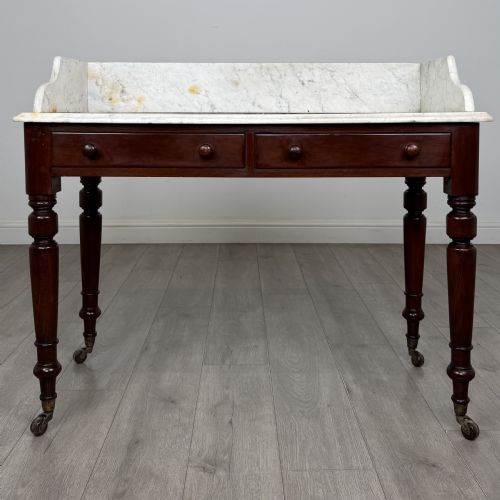
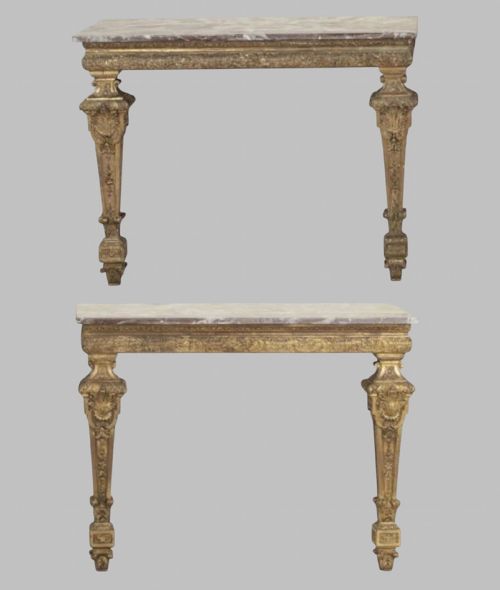
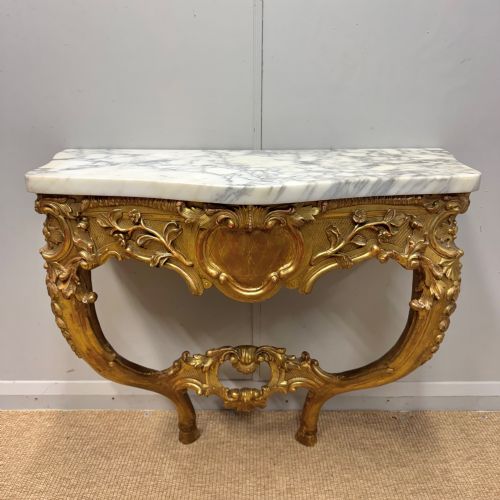
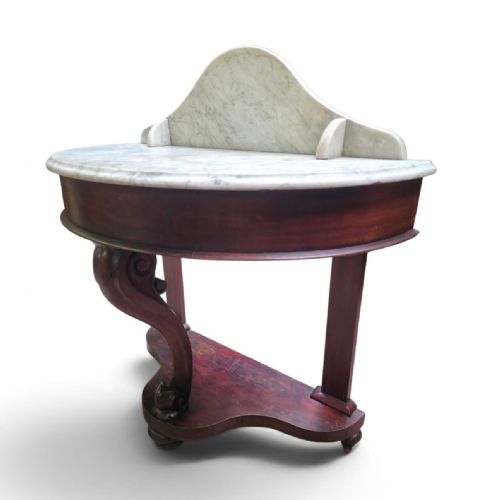
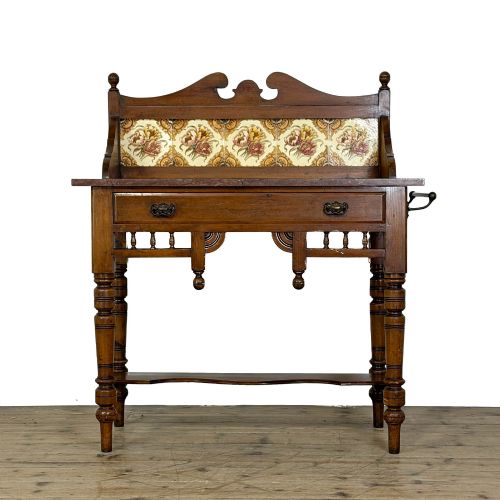
The most frequent form meets the eye as a giltwood or mahogany frame carrying a shaped marble surface, often accompanied by a matching pier mirror. Pieces range from grand Rococo revival tables with carved gesso to simpler mahogany washstands and wrought iron hall tables.
Materials and construction
Carpenters shaped the structural frames from mahogany, walnut, oak, and pine, applying gesso and gold leaf to formal Italian and French giltwood bases. Wrought iron also appears as a sturdy structural medium for supporting heavy stone.
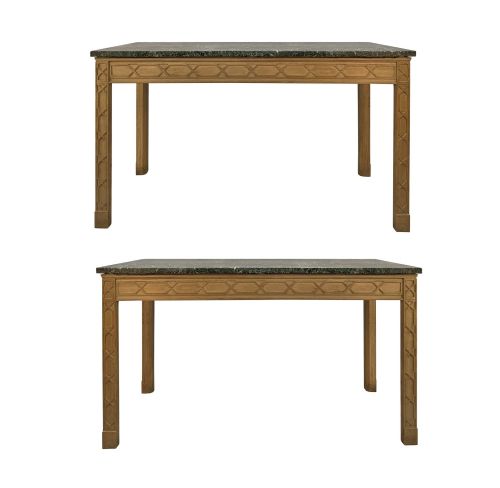
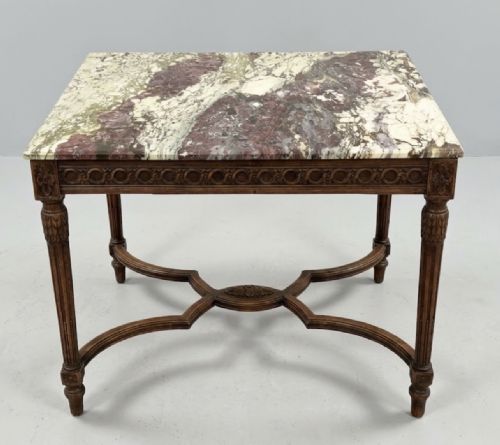
Masons cut and polished the stone slabs, which include varieties of marble and onyx such as rouge marble and breccia. These heavy slabs rest upon the timber or iron frames, secured by their own weight or discrete fixings.
Marbled Top Console Retail Price Guide 2026
Typical asking prices for marbled top console among the pieces listed under this phrase on Sellingantiques today, from the lower quarter to the upper quarter. They describe what is for sale here now, not the wider market.
Listings feature woods including mahogany, walnut, oak, and pine alongside marble, onyx, gesso, and wrought iron.
Assessing execution
Depth and crispness in the wood or gesso carving distinguish the finer examples from routine production. Master carvers rendered foliage and scrollwork with sharp relief, whereas lesser workshops relied on shallow stamping or plain mouldings.
The selection and polish of the stone slab indicate ambition. A thick, figured marble with harmonious veining elevates a piece above standard utility tables fitted with plain or thin stone.
Felix-Alfred Ternisien·Maison Millet·Amleto Bertoni
The Marbled Top Console Glossary
- Console table
- A table designed to stand against a wall, frequently fixed with brackets or designed with front legs only. These tables support decorative objects or mirrors above them.
- Giltwood
- Timber coated with a thin layer of gold leaf over a prepared gesso ground. This finish catches candlelight and daylight in formal interiors.
- Demilune
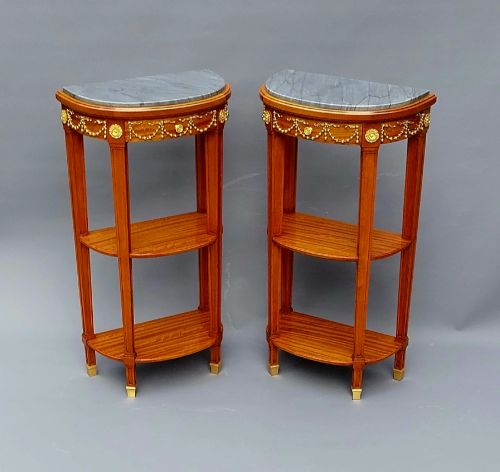
- Half-moon shaped in plan. Such tables fit flush against flat walls while offering a curved front edge.
- Breccia
- A composite stone made of broken fragments of minerals or rock cemented together by a fine-grained matrix. It yields a rich, multicoloured surface highly prized by table makers.
- Pier mirror
- A tall looking glass designed to hang on the pier or wall space between windows, often resting directly upon the back of a console table.
Marbled Top Console: Frequently Asked Questions
What is a marbled top console used for?
These tables traditionally stood in hallways and drawing rooms to display decorative objects, clocks, and lamps. Their shallow depth allowed them to furnish narrow spaces without obstructing movement.
Today, they serve similar decorative functions in modern interiors, providing a sturdy surface that withstands daily use while adding architectural presence to a room.
How do I distinguish eighteenth-century pieces?
Eighteenth-century examples often display hand-carved giltwood frames with deep undercut scrollwork and heavy, characterful stone tops. The joinery employs traditional hand-cut methods appropriate to the period.
Later nineteenth-century revival pieces tend to use machine-assisted timber preparation and heavier gesso layers, though many retained high craftsmanship standards.
Are the marble tops attached to the bases?
Most stone slabs on these tables rest loose upon the wooden frame, held firmly in place by their substantial weight. This traditional method allowed easier transport of heavy furniture.
When moving or positioning a table, lift the stone off separately to prevent damage to the delicate carved frame beneath.
Where should I place a console table?
Place the piece against a flat wall in an entrance hall, living room, or dining space where it can anchor the room visually. Pairing it with a wall mirror or painting completes the traditional arrangement.
Ensure the floor is level so the heavy stone slab rests evenly across the supporting frame without strain.