


Marbled Top Credenza
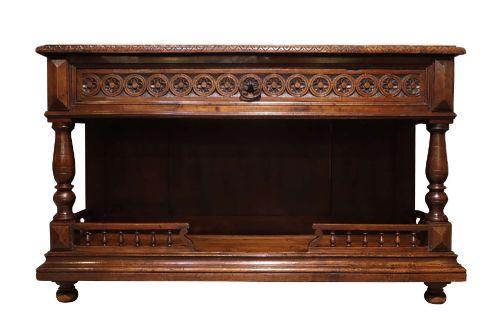
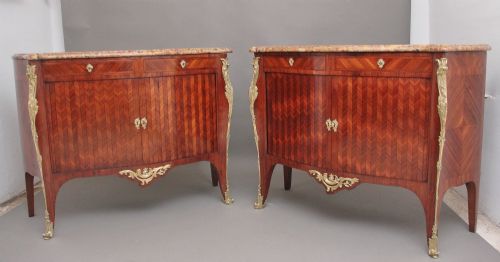
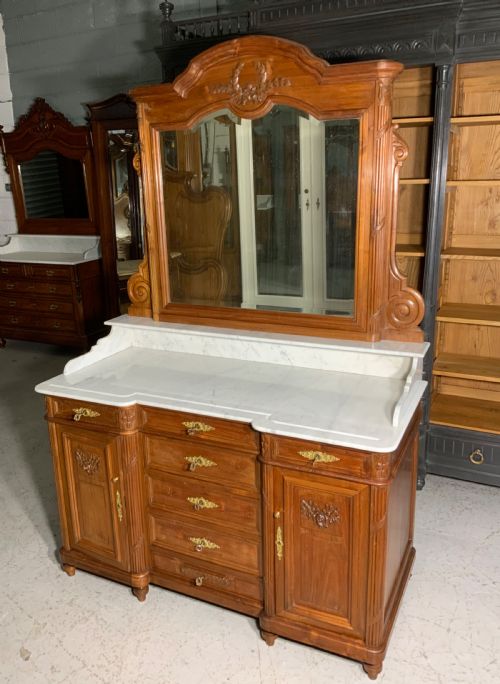
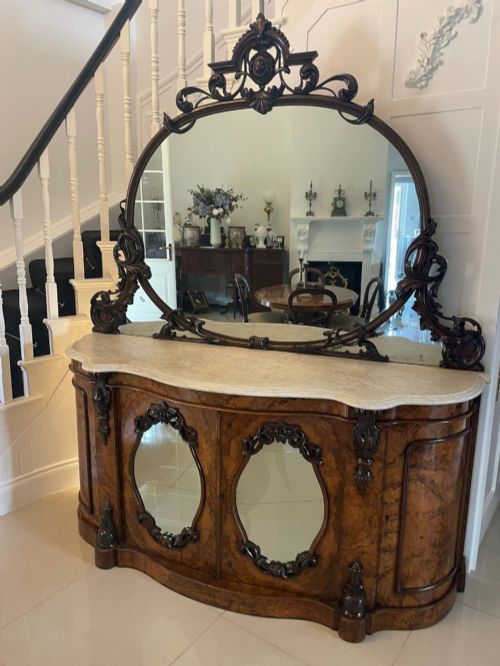
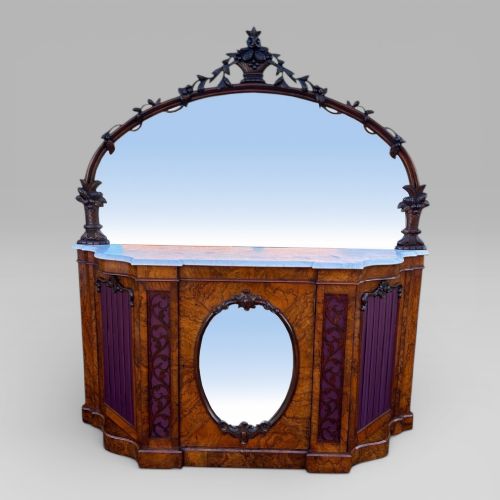
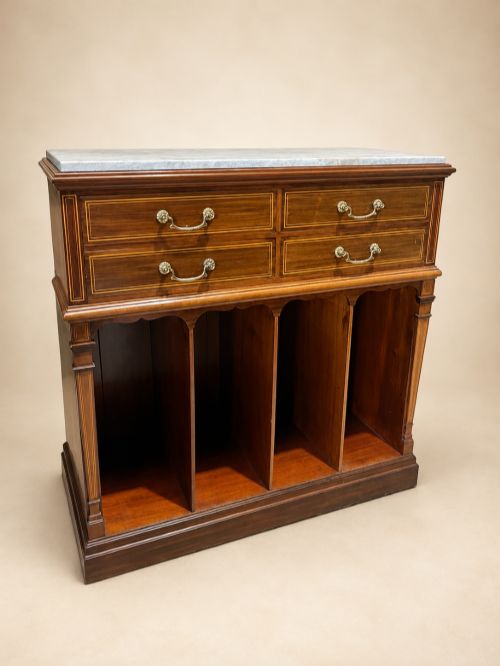
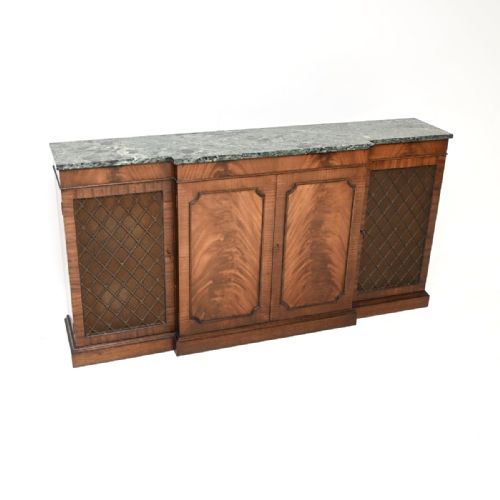
A marbled top antique credenza brings heavy stone and figured timber together in a grand statement piece for the principal room.
Marbled Top Credenza
A marbled top antique credenza is a low-profile storage unit combining a solid stone slab with timber cabinetry, originating mostly from nineteenth-century workshops. The most frequent examples on this page date to the Victorian era and the broader nineteenth century, often showing French revival influences.
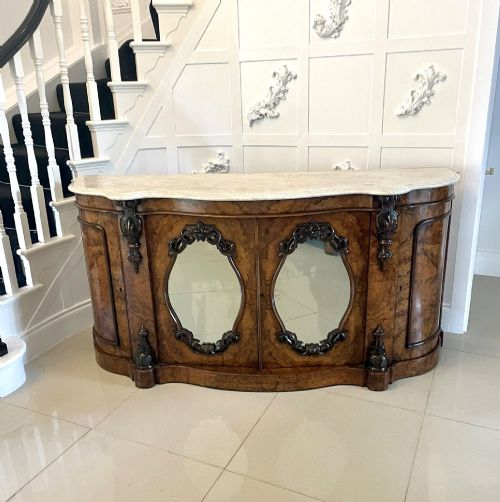
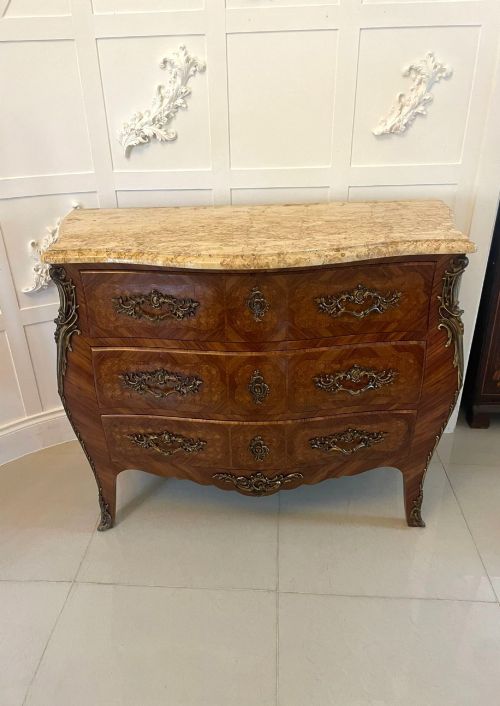
Makers constructed these cabinets to serve as principal sideboards or pier cabinets in formal reception rooms, frequently incorporating mirrored backs or grill doors alongside the heavy stone surfaces. They appear under various descriptions including side cabinets, commodes, and sideboards.
The form spans several distinct stylistic revivals, including Louis XV, Louis XVI, and Regency designs. Walnut, rosewood, and mahogany provide the primary carcases beneath the heavy marble tops.
Materials and construction
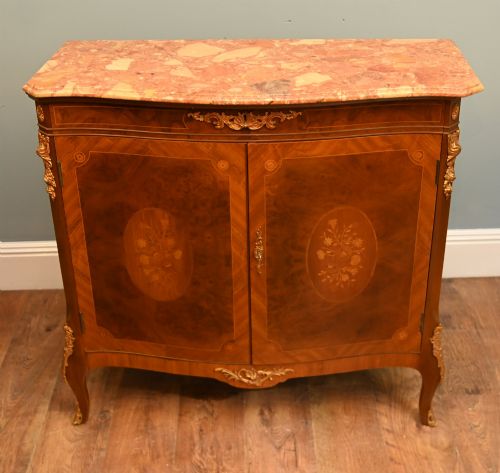
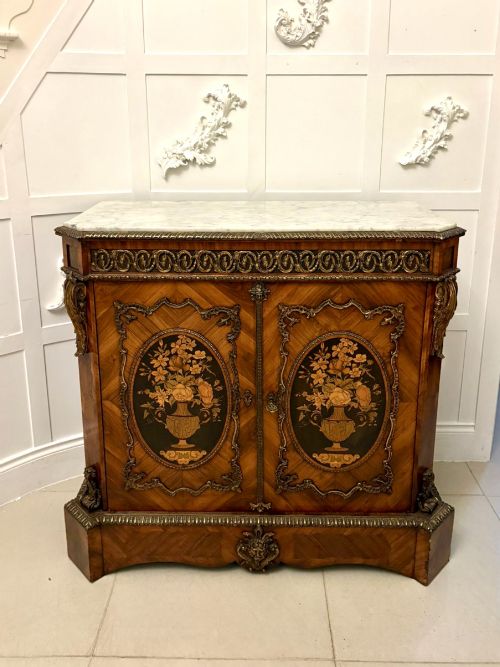
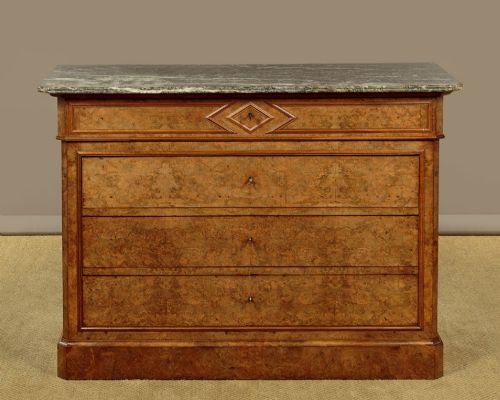
Cabinet makers built these pieces using dense hardwoods like walnut, mahogany, kingwood, and rosewood, often laid as veneers over firmer secondary woods. Burr walnut and marquetry patterns supply decorative surface movement across the doors and drawers.
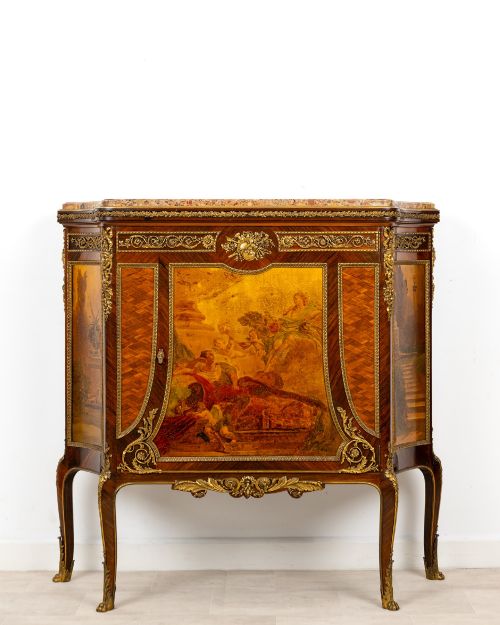
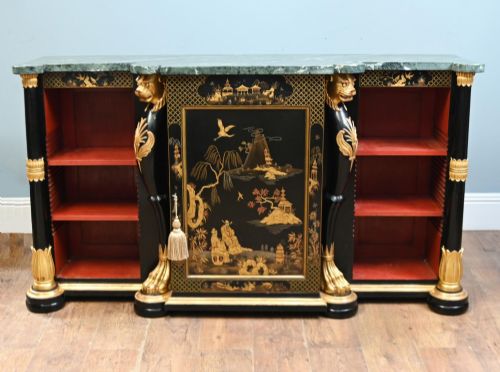
Heavy marble slabs form the functional top surface, paired with cast or chased ormolu mounts and brass inlays. Workshops utilised ebonising, tortoiseshell, and vernis martin lacquer on specific French and Napoleonic pieces to create high-contrast decorative effects.
One unexpected French piece arrived labelled simply as a barn find, complete with a dusty pink marble top.
Judging quality and execution
Quality rests in the crispness of the bronze ormolu mounts and the precision of the timber marquetry or brass inlay work. Superior pieces display deeply figured burr walnut or meticulously matched kingwood veneers across every visible surface.
The integration of the heavy marble slab with the timber carcase demonstrates the maker's competence, alongside the weight and solidity of the internal shelving and doors. Cabinet makers who engaged master bronze-founders produced mounts with sharper chisel work and heavier gilding.
Henry Dasson·Edward Holmes Baldock·Louis Constantin Le Gaigneur·Gillows
The Marbled Top Credenza Glossary
- Credenza
- A low cabinet or sideboard designed for domestic display and storage, typically standing at waist height. These units often feature central cupboards flanked by side doors or open shelving.
- Ormolu
- Gilded bronze mounts applied to furniture for decorative enrichment. This technique involves coating bronze with a gold amalgam and heating it to leave a durable metallic finish.
- Marquetry
- Decorative veneer patterns formed by fitting together thin pieces of wood, shell, or metal to create pictorial or geometric designs. Craftsmen applied these across the main panels of the cabinet.
- Vernis Martin
- A type of simulated Japanese lacquer developed in France during the eighteenth century and imitated in later revival furniture. The finish uses multiple layers of varnish to create a glossy, translucent surface.
- Commode
- A low French chest of drawers or cabinet with doors, functioning as a decorative storage piece. They frequently share the heavy marble tops and ormolu mounts seen on standard credenzas.
Marbled Top Credenza: Frequently Asked Questions
What periods do these credenzas come from?
The listings span the nineteenth century up through the early twentieth century, with a heavy concentration of Victorian and nineteenth-century French revival pieces.
Craftsmen also produced notable examples during the Regency, William IV, and Edwardian periods, utilising traditional timber and stone combinations.
How were these cabinets originally used?
Households utilised them in dining rooms and formal reception spaces for storing ceramics, glass, and silverware. The flat stone surface provided a sturdy staging area for serving food or displaying decorative objects.
Some variants with mirror backs functioned primarily as pier cabinets between windows to reflect natural light into dark drawing rooms.
How do I care for the marble top?
Marble requires gentle cleaning with warm water and a soft cloth to avoid scratching the polished surface. Acidic liquids like wine or vinegar etch stone rapidly, so coasters and prompt wiping are essential.
Applying a specialist neutral stone wax helps protect the finish from moisture rings and daily wear.
How do I tell French and English pieces apart?
French credenzas frequently employ exotic veneers like kingwood, elaborate ormolu mounts, and vernis martin finishes in Louis XV or XVI revival styles. They often feature curved bombe profiles or delicate marquetry.
English equivalents from the Victorian or Regency periods tend to use burr walnut or rosewood with more restrained brass inlay, architectural lines, and solid proportions.