

Marble Topped Entry Table
A marble topped entry table anchors a hallway with weight and a cool stone surface.
Marble Topped Entry Table
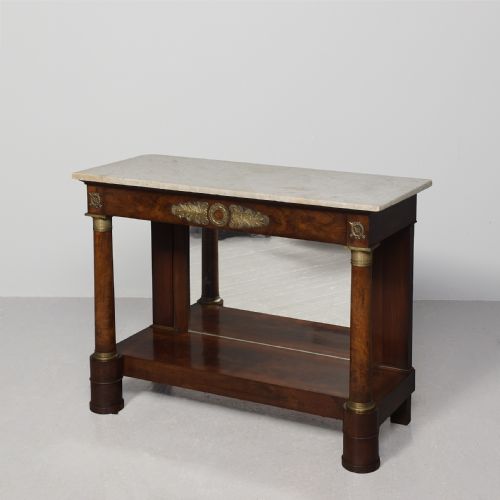
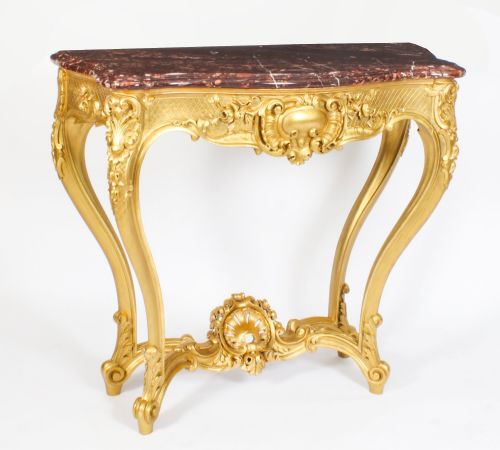
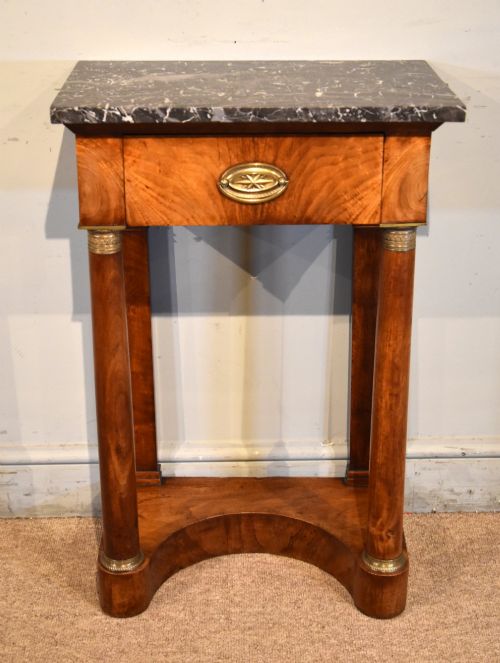
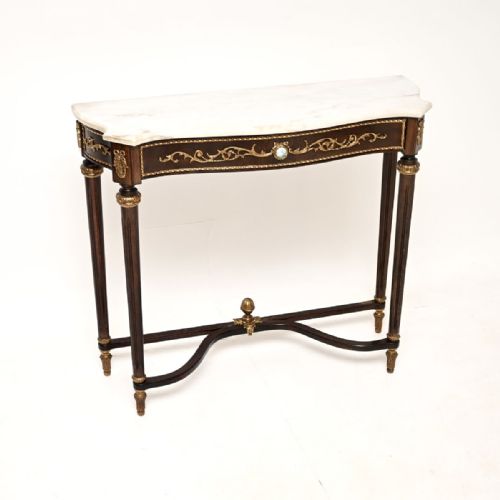
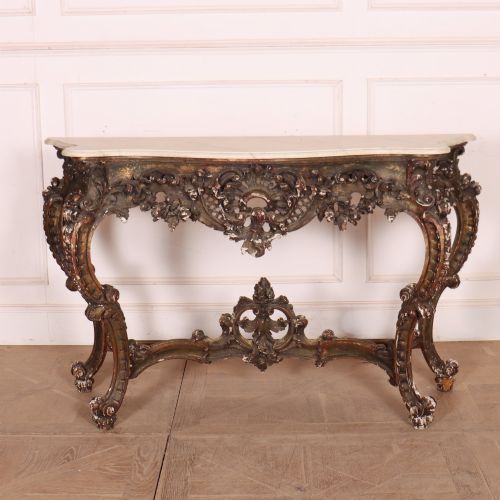
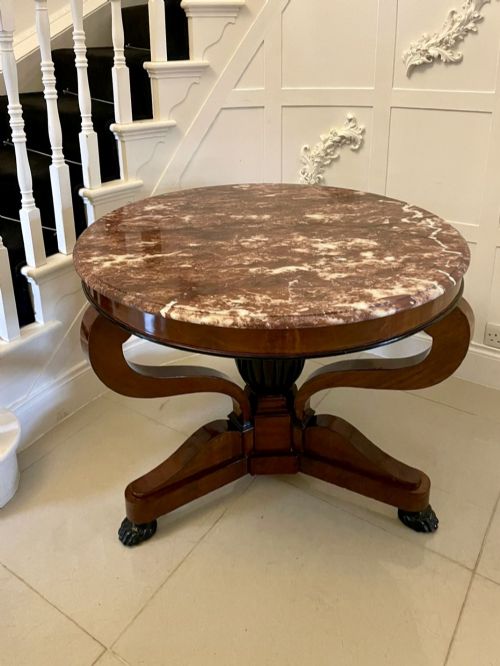
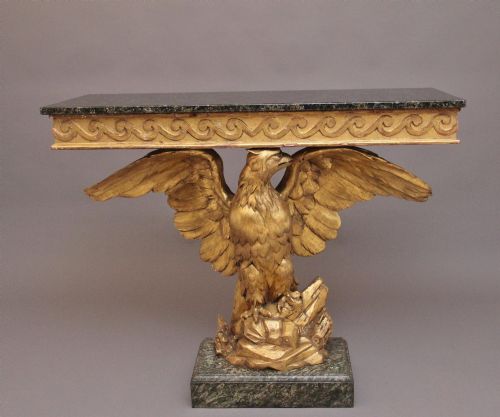
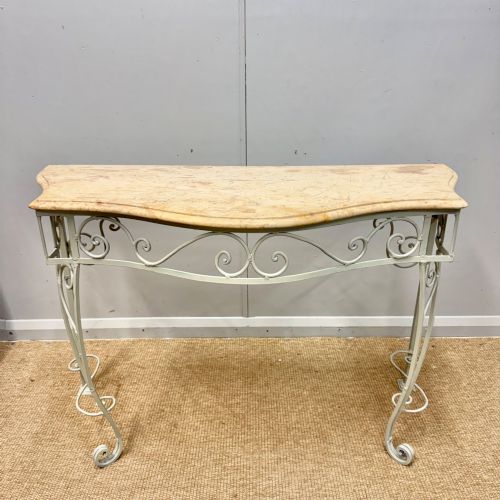
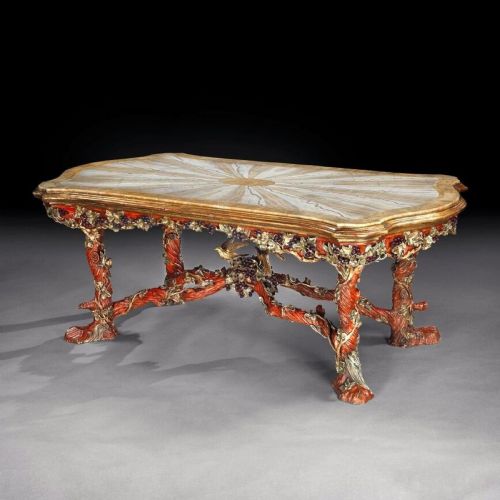
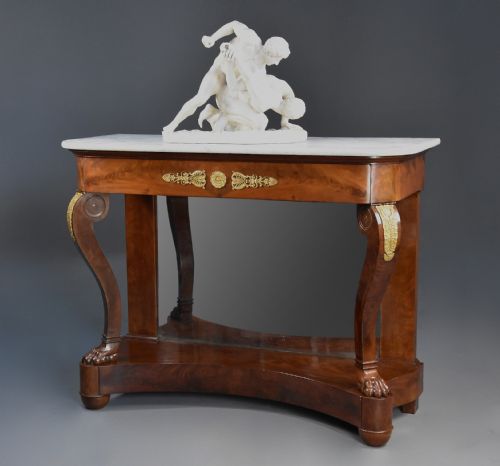
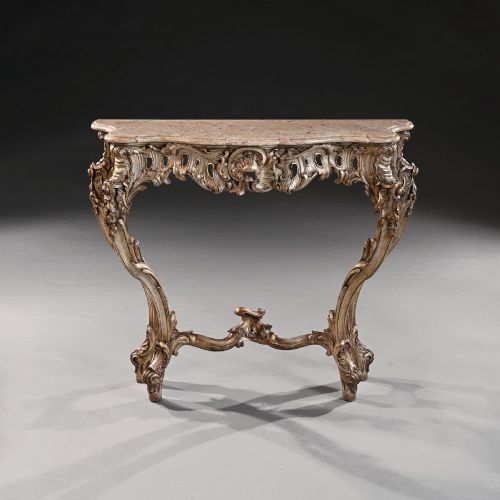
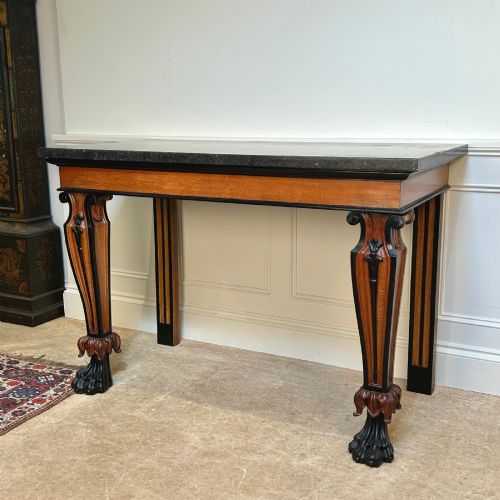
A marble topped entry table appears primarily as console tables, centre tables, and pier tables designed for hallways and reception rooms. These pieces originate from various European traditions spanning the eighteenth and nineteenth centuries, including French and Italian workshops.
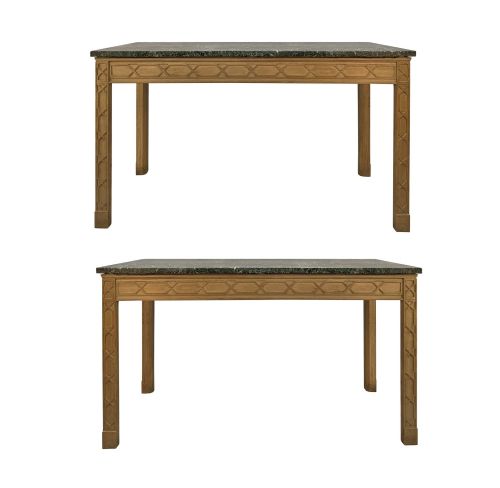
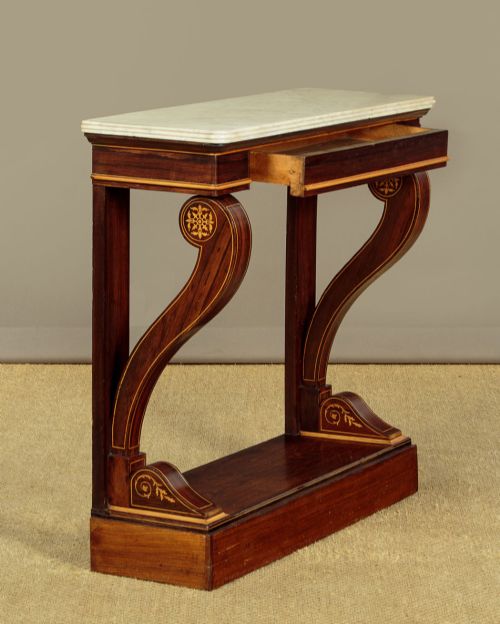
The selection here encompasses formats ranging from wall-fixed console tables with shaped marble slabs to freestanding circular gueridon centre tables. Oak, mahogany, and rosewood form the structural bases supporting these heavy stone tops.
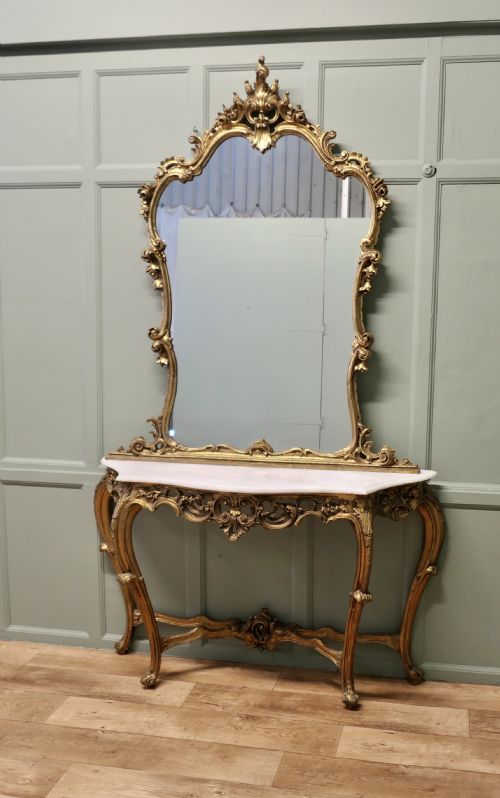
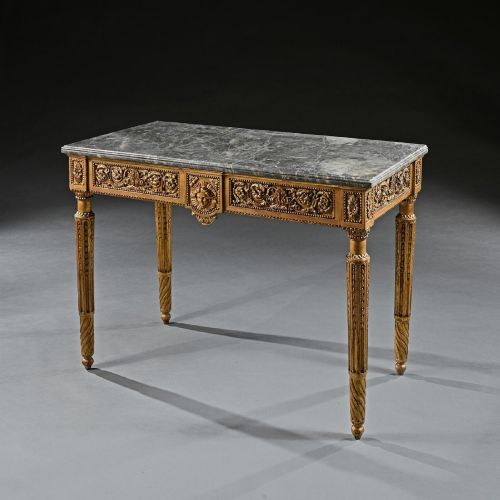
Italian Neoclassical and French Rococo designs provide the decorative vocabulary for many examples, while simpler country house oak pieces offer a robust alternative for domestic interiors.
Materials and Construction
Cabinetmakers utilised dense timbers such as mahogany, kingwood, and oak for the frames and aprons, frequently applying gesso and gold leaf to carved wooden elements. The stone surfaces comprise heavy slabs of white, Sienna, or porphyry-finish marble fitted directly to the wooden chassis.
Giltwood carving and wrought iron provide structural and decorative support, seen particularly in Italian and French console tables. Joinery techniques from the eighteenth and nineteenth centuries secure these substantial stone weights upon wooden pedestals and legs.
Marble Topped Entry Table Retail Price Guide 2026
Typical asking prices for marble topped entry table among the pieces listed under this phrase on Sellingantiques today, from the lower quarter to the upper quarter. They describe what is for sale here now, not the wider market.
Several tables feature faux porphyry finishes, proving that historic decorators enjoyed a clever paint trick just as much as we do.
Evaluating Craftsmanship
Quality rests in the depth and crispness of the hand-carved details upon giltwood frames, alongside the selection of timber veneers like flame mahogany or kingwood. Finer pieces demonstrate precise joinery that supports heavy stone without distortion.
The choice of marble slab also dictates standard, with select pieces featuring coloured varieties like Siena or purple marble rather than plain white stone. Original gilding and untouched patination on the wooden bases distinguish superior examples.
Amleto Bertoni
The Marble Topped Entry Table Glossary
- Console table
- A table supported by wall brackets or front legs, designed to stand against a vertical surface in an entrance hall or reception room.
- Gueridon
- A small circular freestanding centre table, frequently topped with marble and supported by a central pillar or three legs.
- Giltwood
- Timber that has been coated with a thin layer of gold leaf over a prepared gesso ground.
- Pier table
- A table designed specifically to fit against the wall space between two windows, often paired with a matching wall mirror.
- Sienna marble
- A distinctive yellow-brown ornamental marble quarried in Italy, featuring dark grey or purple veins.
Marble Topped Entry Table: Frequently Asked Questions
Where should I place a console table?
These tables fit best against a hallway wall or beneath a mirror where the stone surface can receive everyday objects upon entering a home.
Their narrow depth allows them to occupy corridors and passageways without obstructing movement through the room.
How do I care for the marble top?
Wipe the stone surface using a damp cloth and mild soap, avoiding acidic cleaners that etch polished marble.
Protect the stone from direct contact with liquids and oils to maintain the polish over years of domestic use.
What is the difference between a console and a centre table?
Console tables stand flush against a wall and often require structural fixing for stability due to their front-leg supports.
Centre tables stand independently in the middle of a room, finished with detail on all sides of the wooden base.
How do I identify a nineteenth-century piece?
Examine the timber framing underneath the stone top for hand-cut joinery methods and traditional tool marks typical of earlier cabinetmaking.
Nineteenth-century examples often display specific regional styles such as French Charles X mahogany or Italian carved giltwood.