




Marble Top Hall Mirror
A marble top hall mirror combines stone and silvered glass to anchor an entrance, bringing light and utility to the threshold.
Marble Top Hall Mirror
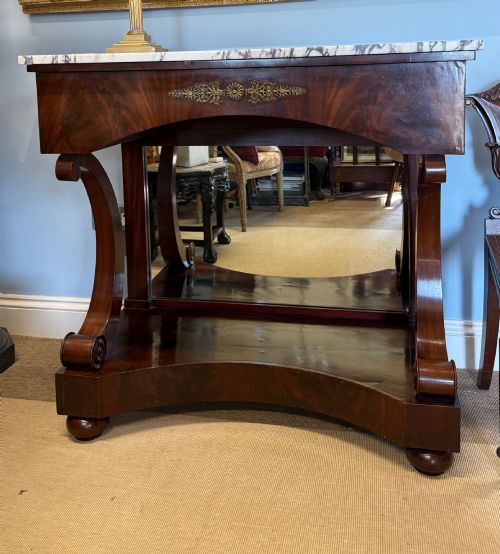
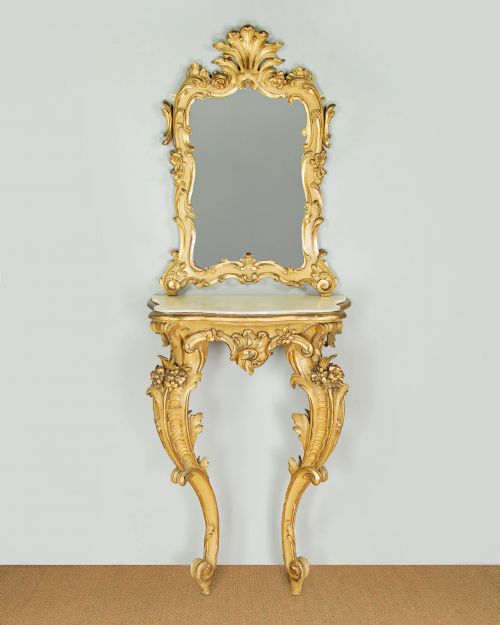
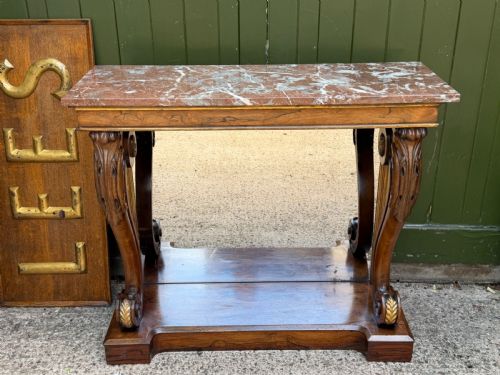
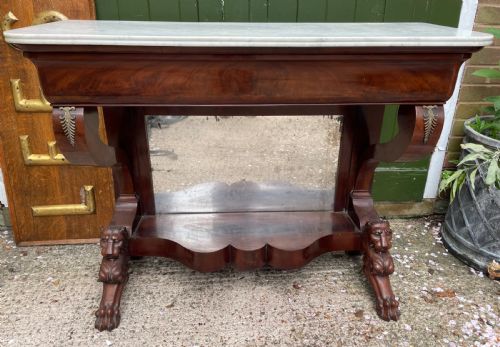
A marble top hall mirror appears in several distinct forms, most commonly as a console table with an integrated or matching mirror back, alongside upright hall stands featuring marble shelves and umbrella racks. These pieces date predominantly from the nineteenth century, encompassing Regency, Victorian, and French revival styles.
Buyers seeking a marble top hall mirror will frequently encounter mahogany, rosewood, and oak frameworks paired with white or figured stone slabs. The selection on this page ranges from modest oak entrance stands to grand giltwood console and pier mirror sets designed for tall reception spaces.
Materials and Construction
Cabinetmakers utilised dense timbers such as mahogany, walnut, and rosewood to support heavy stone slabs, often incorporating parcel-gilt details or carved giltwood frames. Marble surfaces, including Carrara varieties, were cut and polished to fit precise console tops and small hall stand ledges.
Glass plates were silvered and set into tall wooden or cast iron structures, sometimes paired with brass hardware for coat and hat hooks. Joinery methods relied on traditional cabinet techniques to bear the substantial weight of the stone components.
Umbrella wells built into Victorian hall stands collected countless rainy afternoon puddles.
Judging Quality
Quality rests upon the harmony between the stone slab and its supporting timber or giltwood frame, where finer examples display crisply carved details and well-figured mahogany or rosewood. The integration of the mirror back or matching wall glass indicates the original ambition of the piece.
The weight and thickness of the marble top, alongside the depth of the carving in styles such as French Rococo or Italian revival, separate standard utility furniture from exceptional decorative works.
The Marble Top Hall Mirror Glossary
- Console table
- A table designed to stand against a wall, frequently supported by brackets or front legs and paired with a matching mirror.
- Pier mirror
- A tall glass panel specifically proportioned to hang on the wall space between windows.
- Parcel-gilt
- Woodwork partially decorated with thin leaf gold applied to carved highlights.
- Giltwood
- Timber carved and coated with gold leaf for decorative brightness.
- Carrara marble
- A fine white or blue-grey stone quarried in Italy, commonly utilised for tabletops.
Marble Top Hall Mirror: Frequently Asked Questions
How do I clean a marble top?
Wipe the stone surface gently with a damp cloth and mild soap, avoiding acidic cleaning fluids that etch the polished finish.
Dry thoroughly with a soft cloth to maintain the natural lustre of the marble.
Were these always meant for hallways?
Many examples served entrance spaces to reflect light and allow final checks of attire before departure.
Grand console and pier mirror sets also graced formal reception rooms and parlours.
How do I secure a heavy console table?
Largous console pieces with stone tops require secure anchoring to the wall to prevent tipping.
Ensure the weight rests evenly on the floor while utilising appropriate wall brackets for stability.
How do I date a Victorian hall stand?
Examine the timber species, such as oak or mahogany, and the style of the carved decoration or iron hooks.
Cast iron elements from firms like Coalbrookdale provide clear indicators of mid-nineteenth century production.