


Marble Mantelpiece Clock
A marble mantelpiece clock brings solid weight and mechanical movement to a room, turning hours into an architectural display.
Marble Mantelpiece Clock
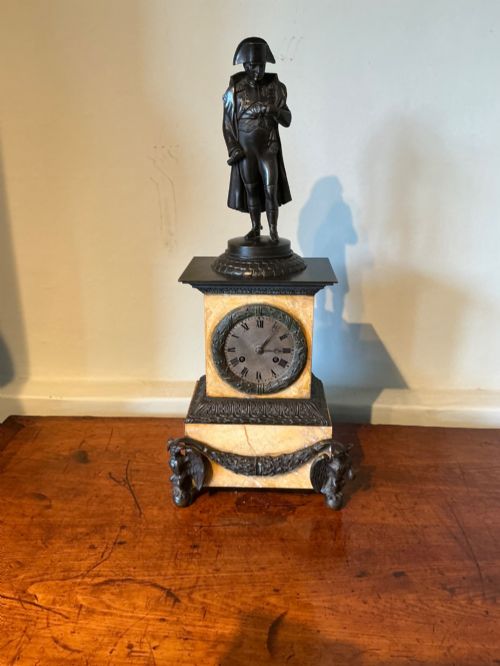
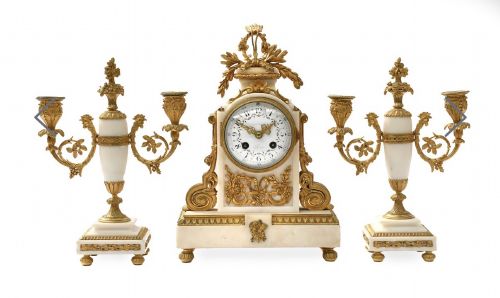
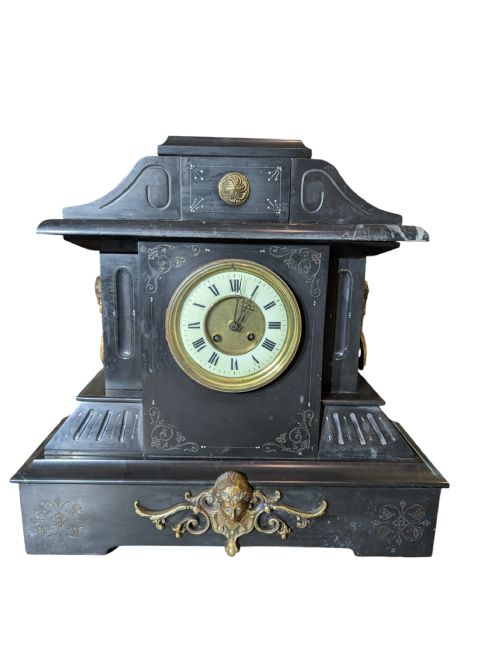
A marble mantelpiece clock combines heavy stone architecture with a functional mechanical movement designed to sit on a fireplace ledge. When you search for this phrase, you meet French and Victorian examples ranging from simple geometric shapes to elaborate garniture sets accompanied by candelabras. The most frequent versions on this page are nineteenth-century French and Victorian pieces, often built with substantial stone cases.
Makers housed these movements in varied housings, including portico clocks, classical temple designs, and ornate architectural blocks. Many pieces arrive as part of a clock garniture, flanked by matching ornaments or side urns that complete the mantel display. The materials span standard black slate and white marble alongside richer red, green, and sienna stones.
Quality and Craftsmanship
The distinction between tiers rests upon the ambition of the stonework and the crispness of the metal cast. Superior examples feature finely sculpted figures like cherubs, animals, or classical subjects cast in bronze or ormolu, rather than basic metal ornaments.
Listings feature periods spanning from 1850 to the 1920s, incorporating Victorian, French Empire, Louis XVI style, and Art Deco designs.
Baby and Jannings
The Marble Mantelpiece Clock Glossary
- Clock garniture
- A set comprising a central clock flanked by matching side pieces such as candelabras or urns. These matching sets were designed to create a balanced display across a fireplace mantel.
- Ormolu
- Gilt bronze created by applying a mercury and gold amalgam to a bronze base and heating it. This technique gives the metal a distinctive warm gold finish seen on many French mounts.
- Portico clock
- A style of clock featuring a case shaped like a classical building with supporting columns. They often frame a suspended pendulum visible through the central opening.
- Slate
- A dense, fine-grained metamorphic rock frequently dyed black and used as a heavy, uniform base for Victorian and French mantel clocks.
- Sienna marble
- A decorative yellow-brown marble with dark veining originating from Italy. It provides a warm, colourful alternative to plain white or black stone cases.
Marble Mantelpiece Clock: Frequently Asked Questions
What is a clock garniture?
A clock garniture is a matched set that pairs a central mantel clock with coordinating side ornaments, such as candelabras or decorative urns. These sets create a symmetrical arrangement on a fireplace mantel or sideboard.
The matching side pieces share the same materials, such as marble or gilt bronze, and echo the decorative style of the clock case itself.
How do I wind the clock?
Most of these mechanical clocks utilise an eight-day movement driven by springs that require winding with a key through holes on the dial face. The key turns the arbour to tension the mainspring inside the movement.
Care should be taken not to overwind the spring, and the pendulum should be secured if the clock needs to be moved to another room.
How do I date a marble clock?
Dating relies on stylistic clues, such as the heavy classical proportions of nineteenth-century French designs or the geometric lines characteristic of Art Deco pieces from the nineteen-twenties. Materials like sienna marble or black slate also point to specific Victorian production eras.
Maker marks stamped on the movement backplate or signatures on the enamel dial can further narrow down the exact period of manufacture.
Where should I place the clock?
These heavy stone clocks require a sturdy, level surface such as a mantelpiece, sideboard, or heavy table to support their substantial weight. A stable foundation ensures the pendulum swings evenly and the movement keeps accurate time.
Avoid placing them in direct sunlight or areas with extreme temperature fluctuations to protect the enamel dial and the polished stone finish.