

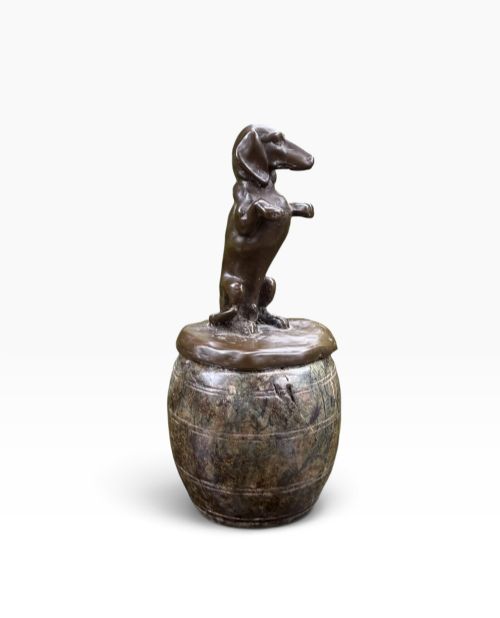
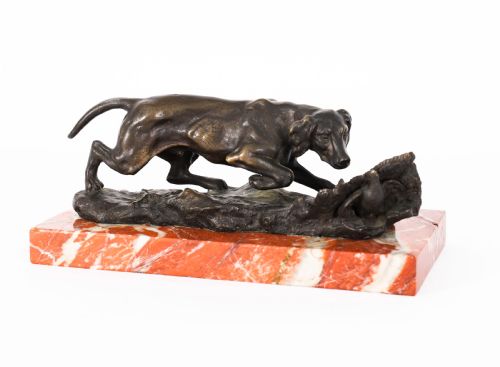
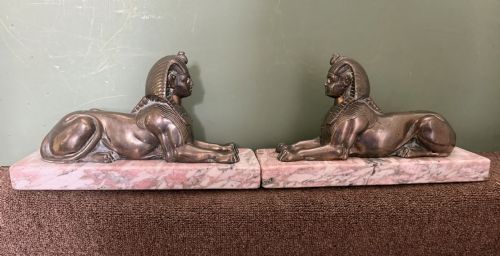


Marble Base Paperweight
A marble base paperweight anchors a miniature sculpture on your desk, combining practical weight with fine nineteenth and twentieth century casting.
Marble Base Paperweight
A marble base paperweight brings together a heavy stone plinth and a cast metal figure, functioning as both a decorative desktop object and a utilitarian weight. The pieces meeting this search phrase frequently take the form of animal studies, classical sphinxes, or architectural models rooted in French and British production from the nineteenth century through the nineteen-thirties.
You will encounter subjects ranging from hunting dogs and sighthounds to Art Deco borzois and Egyptian Revival obelisks. The stone acts as a solid footing, often shaped as a simple slab to balance the detailed metalwork mounted upon it.
Materials and Casting
Foundries utilised traditional bronze casting methods alongside patination, silvering, and chrome plating to finish the metal figures. The resulting sculptures display varied surface treatments from dark patinated bronze to bright metallic sheens.
The plinths employ natural stones such as standard marble and pale onyx, cut and polished to provide a stable, heavy foundation for the mounted figures.
Marble Base Paperweight Retail Price Guide 2026
Typical asking prices for marble base paperweight among the pieces listed under this phrase on Sellingantiques today, from the lower quarter to the upper quarter. They describe what is for sale here now, not the wider market.
A tiny bronze mouse finds permanent repose on a solid block of black marble.
Casting and Stone Selection
The standard of a marble base paperweight rests upon the crispness of the metal casting and the fidelity of the sculptural detail. Finer examples exhibit sharp anatomical definition in animal studies and clean, unblemished stone work.
The integration between the metal subject and the stone base determines the overall integrity of the piece, with superior specimens showing careful mounting and harmonious proportions between the sculpture and its plinth.
Carl Kauba·Pierre Jules Mene
The Marble Base Paperweight Glossary
- Animalier
- A nineteenth century sculptural style focusing on realistic depictions of animals, particularly hounds, big cats, and birds. These figures often form the primary subject mounted on a desk weight.
- Grand Tour
- A term applied to souvenirs and classical replicas acquired by travellers in Europe during the nineteenth century. These objects frequently include bronze figures and architectural models.
- Patinated Bronze
- Bronze treated with chemical solutions to produce a specific surface colour or aged finish. This technique enhances the visual depth of the cast metal.
- Micro-mosaic
- A decorative technique using tiny coloured glass tesserae to create detailed miniature pictures. Panels utilising this method occasionally appear set into stone bases.
- Sphinx
- A mythical creature with a human head and a lion body, popular in Egyptian Revival and nineteenth century classical decorative arts. These subjects are commonly cast in metal for desk use.
Marble Base Paperweight: Frequently Asked Questions
What periods do these pieces date from?
The selection spans the nineteenth century through to the nineteen-thirties, taking in Victorian, Edwardian, and Art Deco eras of production.
Dates are determined by stylistic markers, casting techniques, and historical subjects such as Grand Tour souvenirs.
How were these objects used originally?
They served primarily to hold loose papers in place upon a writing desk while doubling as miniature works of art.
Wealthy households and offices utilised them as decorative desktop accessories that reflected the owner's taste.
What metals are commonly found on the stone bases?
Foundries used bronze, brass, silvered bronze, patinated bronze, and chrome plated metal for the figures mounted on the stone.
Each metal type offers a distinct surface texture and colour contrast against the marble or onyx plinth.
How do I care for a marble and metal desk weight?
Keep the piece away from direct sunlight and excessive moisture to protect both the polished stone and the metal patination.
Dust gently with a dry, soft cloth without applying harsh chemical cleaners to the metal or the marble.