





Marble Base Candle Holders
Marble base candle holders bring heavy stone stability and cast metal warmth together, lighting a room with Regency or nineteenth-century presence.
Marble Base Candle Holders
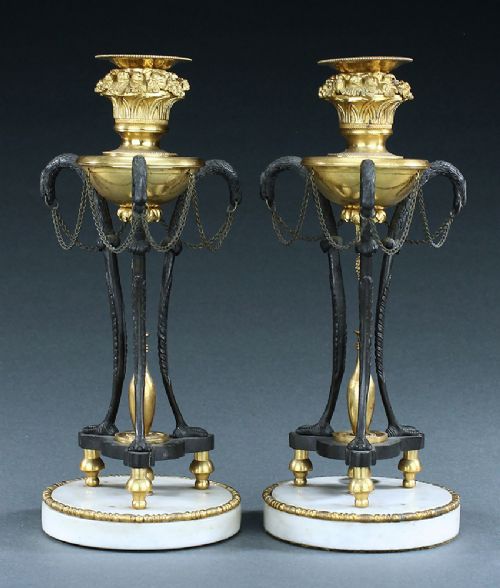
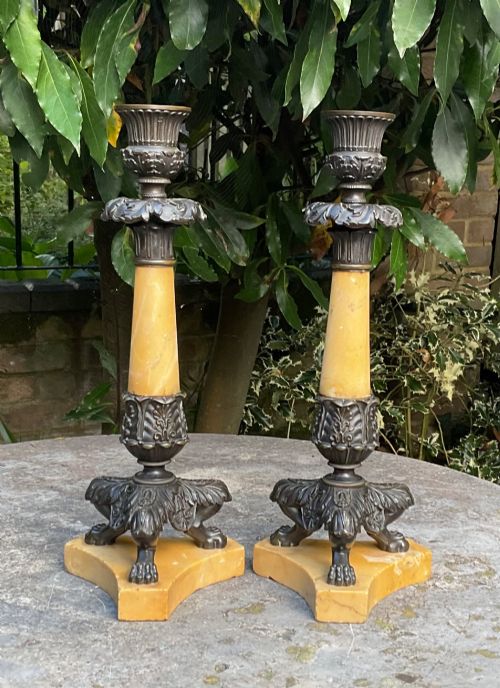
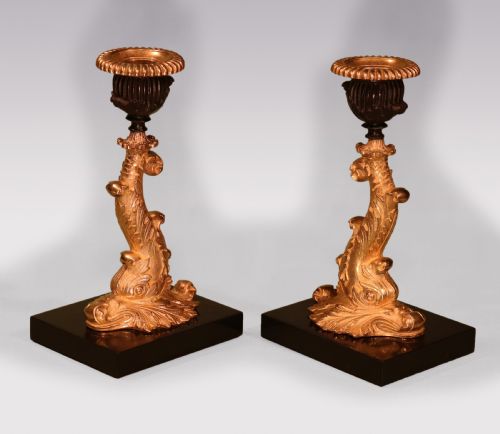
When you search for marble base candle holders, you are looking at nineteenth-century objects that combine stone plinths with metal fittings, often taking the form of candlesticks or candelabra. These pieces span the Regency period through the late nineteenth century, reflecting French Empire, Louis XVI, and Rococo Revival tastes.
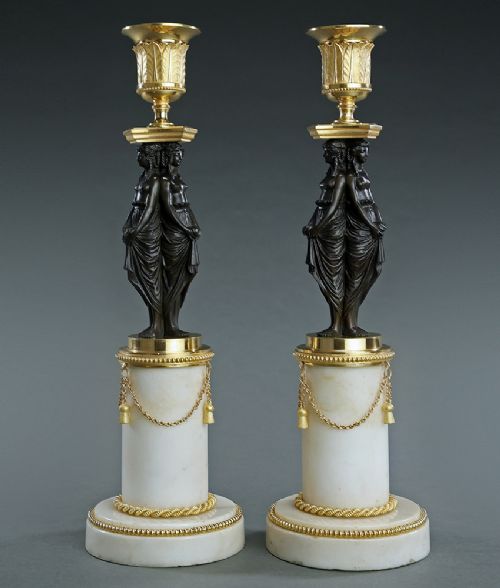
You are most likely to meet pairs featuring bronze putti, cherubs, or caryatids mounted upon white or dark marble bases. Many carry multiple branches for candles, moving from simple single-light sticks to elaborate multi-arm candelabra.
How they were made
Maker workshops combined turned or carved marble for the weight-bearing bases with cast metal components shaped through foundry work. Bronze, ormolu, and gilt metal formed the figures and candle sockets, anchored directly into the stone.
Surface finish involved patination of the bronze alongside fire gilding or parcel gilding to create contrast against the white or dark marble plinths.
Marble Base Candle Holders Retail Price Guide 2026
Typical asking prices for marble base candle holders among the pieces listed under this phrase on Sellingantiques today, from the lower quarter to the upper quarter. They describe what is for sale here now, not the wider market.
Listings feature white marble alongside bronze, ormolu, and glass components across nineteenth-century styles.
What varies in quality
The precision of the metal casting dictates the sharpness of detail in figures such as putti, cherubs, and acanthus leaves. Finer examples display crisp chasing work on the bronze after it leaves the mould.
The selection and density of the marble base also separate output, alongside the integration between the metal mounts and the stone itself.
Claude Clodion·Holtzapffel
The Marble Base Candle Holders Glossary
- Ormolu
- Gilt bronze produced by applying a mercury-gilding amalgam to cast bronze. This technique creates a rich golden surface that resists tarnish over centuries.
- Candelabra
- A branched candlestick holding multiple lights on separate arms. These large pieces often sit as centrepieces on mantelpieces and sideboards.
- Putto
- A figure of a small chubby male child, frequently winged, appearing in Renaissance and revival decorative arts. They support the candle sockets or decorate the marble plinths.
- Caryatid
- A sculpted female figure serving as an architectural support taking the place of a column. In these pieces, they form the upright stem of the candlestick.
- Patinated bronze
- Metal treated with chemicals to darken or colour the surface deliberately. This finish provides contrast against gilded elements and marble bases.
Marble Base Candle Holders: Frequently Asked Questions
How do I clean marble bases?
Dust the marble gently with a soft dry cloth to remove surface particles without scratching the stone. Avoid harsh chemical cleaners or acidic substances that can etch the polished surface.
Ensure no moisture seeps into unsealed joins where the metal meets the stone. Professional advice is recommended if deeper cleaning becomes necessary.
Were these made as pairs?
Many examples survive as balanced pairs designed to sit symmetrically on either side of a fireplace or mirror. Workshops frequently produced candelabra and candlesticks in matched sets for grand interiors.
Single pieces do appear, but matched pairs remain the standard format for formal display.
How do I tell Regency from Louis XVI style?
Regency pieces often display classical English or French neoclassical restraint with bronze and ormolu contrasts. Louis XVI style leans heavily into French decorative motifs like caryatids and urns.
Both styles utilise marble plinths, but the overall silhouette and ornament reveal the specific design lineage.
Can I use real candles in them?
These holders accommodate standard taper candles, though original sockets may require careful sizing. Drip protectors are absent on most antique examples, so monitoring burning candles prevents wax from reaching the metal and stone.
Many collectors prefer to display them without lighting them to preserve the antique finish.