



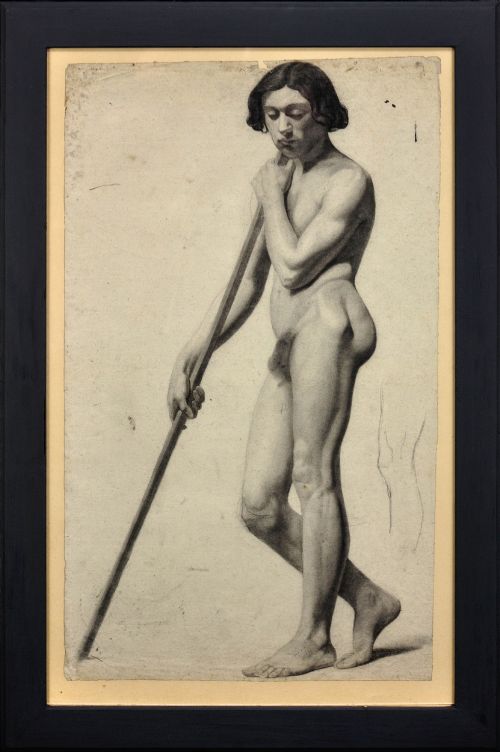

Male Life Study Paper
These male life study paper works are rigorous academic drawings and prints capturing the human form through charcoal, graphite, and wash.
Male Life Study Paper
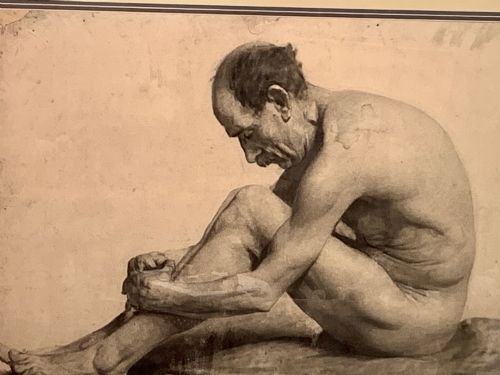
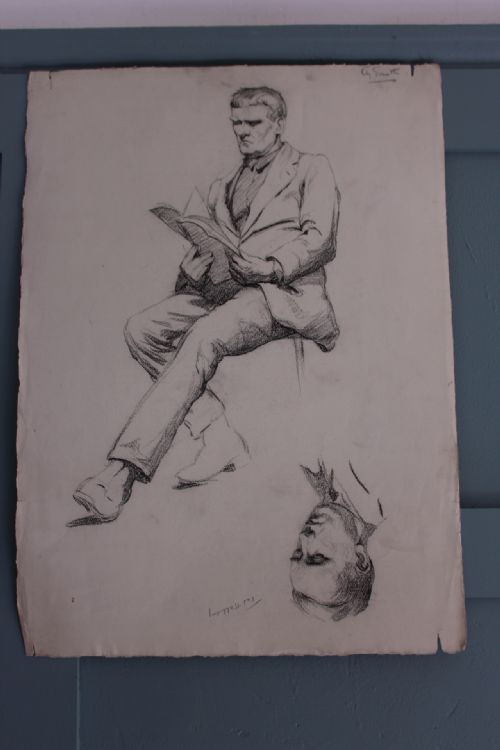
When you search for male life study paper, you are looking at academic fine art works executed on paper support, spanning the Georgian era through to the modernist 1930s. The selection on this page centres primarily on framed graphite and charcoal drawings, alongside occasional wash studies and period prints.
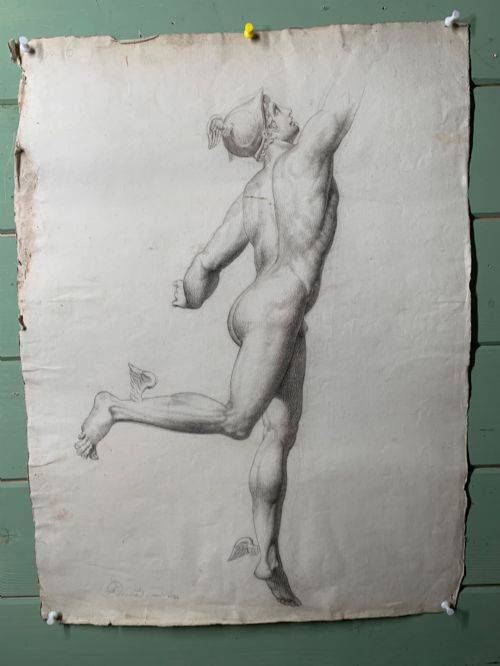
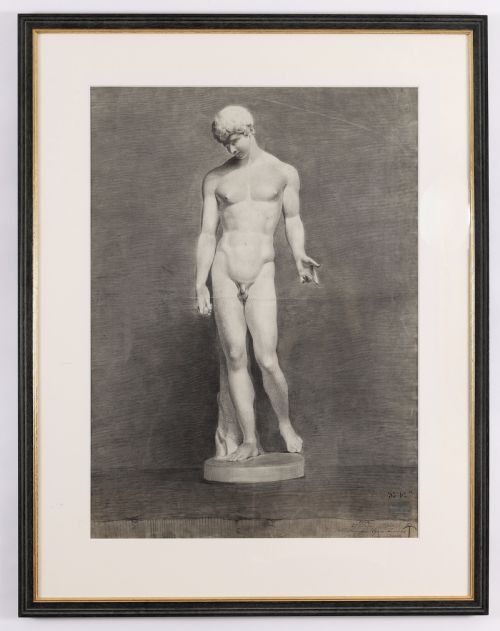
Most pieces represent formal studio training, such as academic life studies of male nudes carrying staffs or throwing arrows, and classical subjects like the god Hermes or the Capitoline Antinous. You will also encounter specific historical submissions, including Grand Prix de Rome entries from the early twentieth century.
The aesthetic shifts visibly across the timeline, moving from precise neoclassical and nineteenth-century academic realism towards expressive modernist interpretations by the art deco period. Each framed drawing or original artwork preserves the rigorous draughtsmanship demanded by traditional academies and studios.
How they were made
The foundation of these works is paper, typically housed behind glass within wooden frames to protect the delicate media. Artists built their compositions utilising graphite, charcoal, wash, and ink to render tone, musculature, and shadow with exacting precision.
Execution relied on direct observation of the live model or classical sculpture within the studio environment. Draughtsmen employed fine pencil work and tonal blending to achieve the sculptural depth characteristic of nineteenth-century academic art.
Male Life Study Paper Retail Price Guide 2026
Typical asking prices for male life study paper among the pieces listed under this phrase on Sellingantiques today, from the lower quarter to the upper quarter. They describe what is for sale here now, not the wider market.
The site listings span from the Georgian period through the nineteenth century and into the 1930s, utilising paper, wood, glass, charcoal, and graphite.
What varies in quality
Quality in these academic works rests upon the surety of the line and the anatomical conviction of the draughtsman. A superior drawing demonstrates an intimate understanding of skeletal structure and muscle tension, whereas lesser examples rely on stiff outlines or hesitant shading.
The survival condition of the paper and the fidelity of the framing contribute significantly to the standing of a piece. Works that retain their original tonal contrast without excessive fading or paper degradation offer a clearer window into the historical studio practice.
Henry Arthur Roberts·Ted Halliday
The Male Life Study Paper Glossary
- Academic Realism
- A style of painting and drawing produced under the influence of European academies of art, prioritising accurate anatomical proportion and classical subject matter. This approach dominated nineteenth-century studio instruction.
- Graphite
- A form of crystalline carbon used as a drawing medium in pencil form. It allows for precise linear work and subtle tonal gradation.
- Wash
- A technique where ink or watercolour is diluted with water to create translucent areas of tone. It provides depth and atmosphere behind primary pencil lines.
- Grand Prix de Rome
- A prestigious French scholarship for arts students, requiring rigorous submissions of historical and life studies. Selected works reflect the pinnacle of academic competition.
Male Life Study Paper: Frequently Asked Questions
What is a male life study?
A male life study is an academic drawing or print created from direct observation of a male model in the studio. These works formed a core component of traditional artistic training.
Artists used them to master human anatomy, proportion, and tonal shading before attempting large historical or mythological paintings.
How should I frame and hang these drawings?
Paper works require protection from direct sunlight and excessive humidity to prevent the graphite or charcoal from fading and the paper from yellowing. Framing behind glass with conservation-grade mount board safeguards the medium.
Hang them in interior spaces with controlled ambient light to preserve the subtle washes and pencil marks for decades.
How do I identify a nineteenth-century drawing?
Nineteenth-century academic drawings typically display strict adherence to neoclassical proportion, often depicting classical figures like Hermes or mythological heroes. The paper stock and framing materials frequently corroborate this period.
Examining the handling of graphite or wash reveals the rigorous academic conventions typical of European studio practice at that time.
What is the difference between academic and modernist works here?
Academic works adhere strictly to realistic human proportion, classical subjects, and precise tonal modelling developed through rigorous studio practice. They prioritize anatomical fidelity and historical convention.
Modernist pieces from the art deco era depart from strict realism to emphasise sculptural form and expressive line, reflecting shifting artistic priorities.