



Male Figure Study
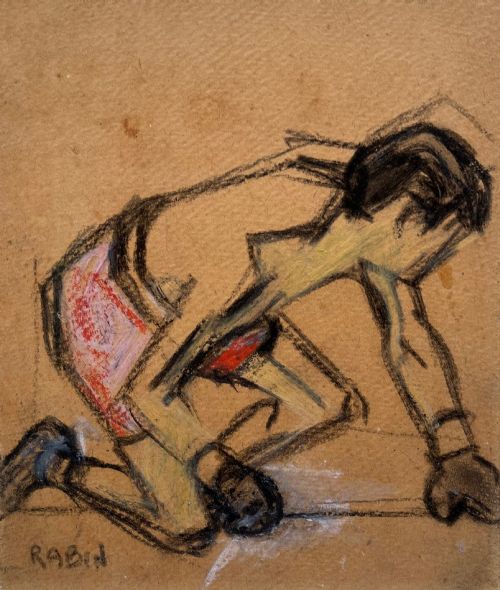
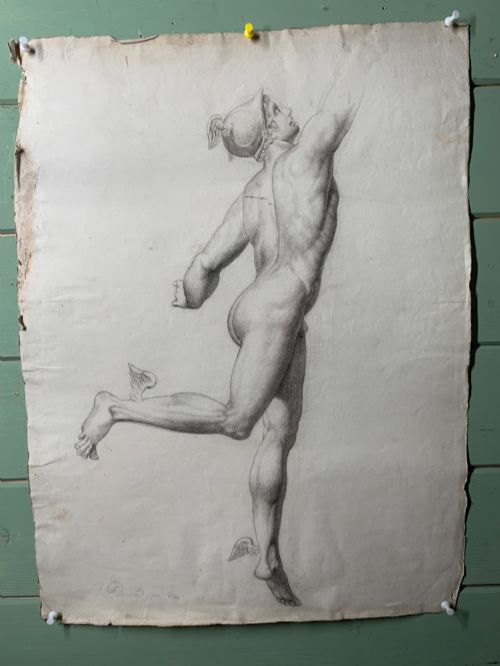
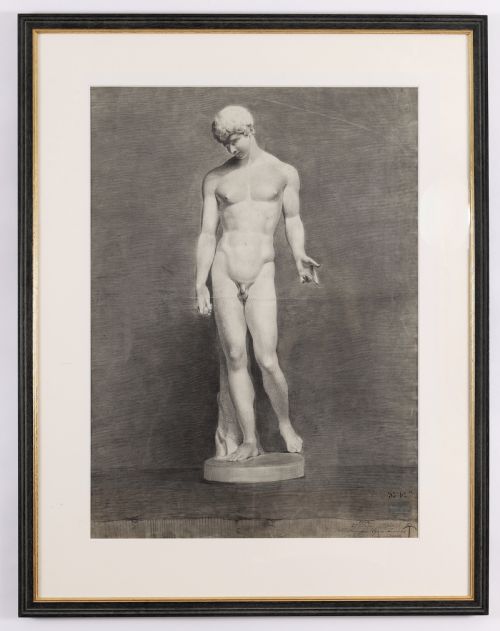
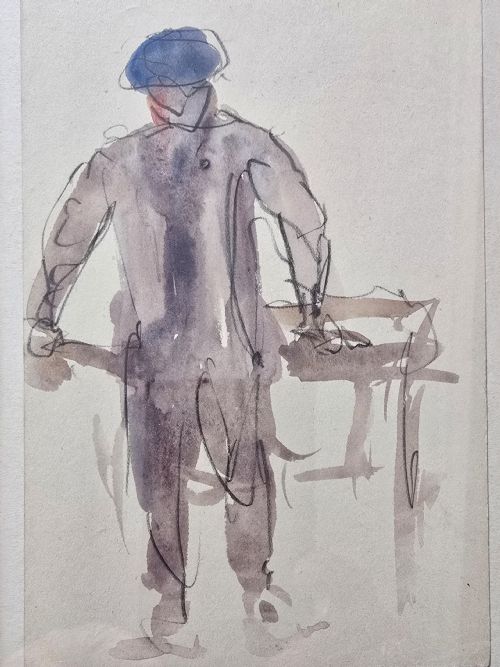
These male figure study works range from academic drawings to bronze sculptures, capturing the human form across multiple centuries and styles.
Male Figure Study
A male figure study captures the human form through various artistic practices, encompassing charcoal, graphite, oil paint, and bronze. Buyers searching for a male figure study will encounter works spanning from the Georgian period through the 1960s, reflecting changing educational and aesthetic standards.
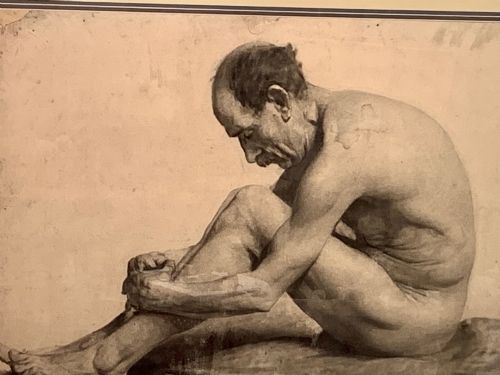
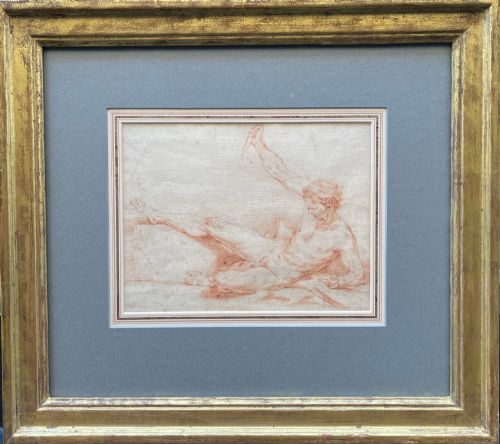
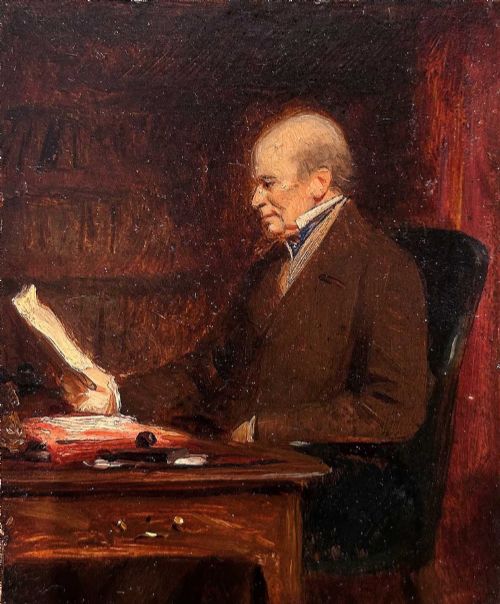
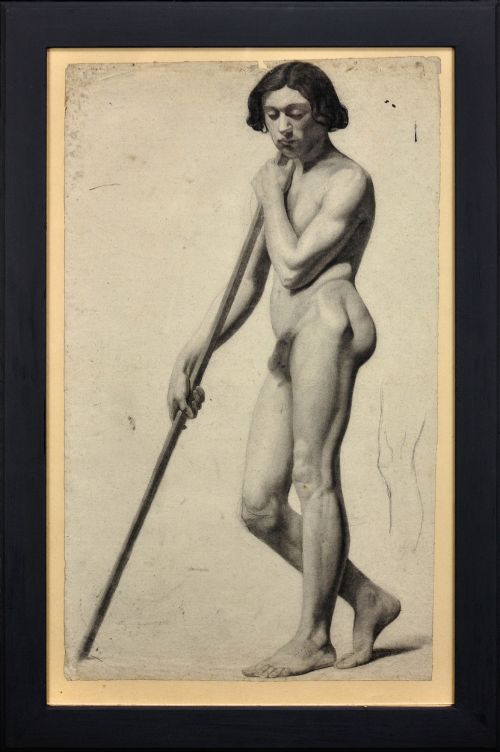
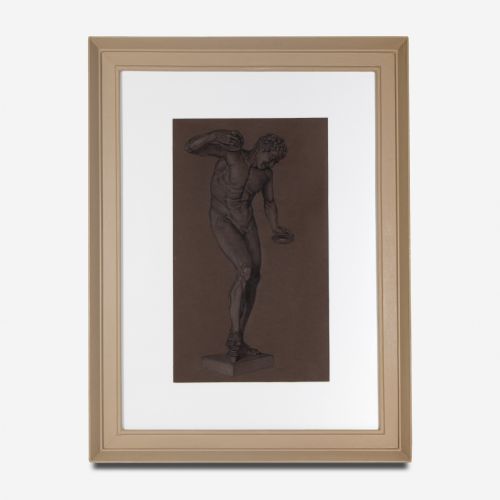
The selection includes academic life studies of nudes carrying a staff, portraits of specific sitters, anatomical models, and mythological subjects like Hermes and the Capitoline Antinous. Many pieces originate from formal studio settings, reflecting rigorous academic training in drawing and sculpture.
The materials vary from paper and canvas for framed drawings and oil paintings to heavy bronze, terracotta, and marble for sculptural forms. Works range from detailed graphite and charcoal drawings on paper to patinated bronze statuettes of figures on horseback or athletes.
Materials and techniques
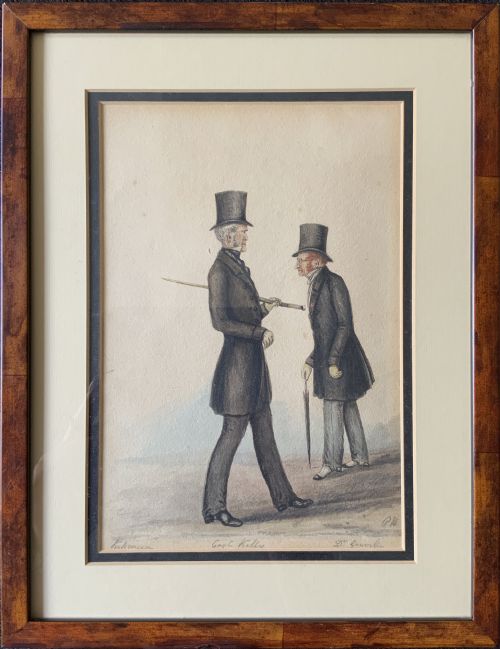
Draughtsmen utilised paper, charcoal, graphite, chalk pastel, and watercolour to render precise academic life studies and portraits. Many pieces rely on meticulous pencil work and tonal shading to define musculature and form, following traditional studio methods.
Sculptors utilised bronze, terracotta, and marble to create three-dimensional representations of the male form. Cast bronze often received patination, while terracotta works captured intricate modelling details typical of early twentieth-century anatomical and artistic production.
The listings span graphite, charcoal, watercolour, oil paint, bronze, marble, and terracotta across periods from the eighteenth century to the 1960s.
Evaluating quality and execution
Quality rests upon the precision of anatomical rendering, the confidence of the draughtsmanship or modelling, and the expressiveness of the form. Masterful control of light, shadow, and proportion distinguishes superior academic drawings and bronze castings from standard studio exercises.
The distinction also lies in the provenance and documentation associated with the piece. Signed works by documented artists or submissions linked to institutional bodies such as the Prix de Rome carry greater artistic weight than anonymous studio outputs.
Stephen Pearce·Samuel Rabin·Julian Mandel·Henry Arthur Roberts·Alexandre-Louis Martin·Bruno Zach·Feridah Francis Forbes Taylor·Francis Dodd·Harry Epworth Allen
The Male Figure Study Glossary
- Academic Realism
- A style of painting and sculpture produced under the influence of European academies of art, prioritising strict adherence to classical standards and precise anatomical rendering.
- Patinated bronze
- A bronze sculpture treated with chemical solutions to produce a specific surface colour or tone, enhancing the definition of the musculature and detail.
- En grisaille
- A painting executed entirely in shades of grey or neutral greyish monochrome, often used to simulate sculpture or for preparatory studies.
- Anatomical model
- A three-dimensional representation of the human body created for instructional study, showing muscular structure and form without clothing.
Male Figure Study: Frequently Asked Questions
What is an academic life study?
An academic life study is a detailed drawing or painting executed from a live human model within a formal training environment. These works prioritise accurate proportion, lighting, and anatomical structure.
Students and established artists produced them to master the complexities of the human form. They often form the foundation of more elaborate historical or mythological compositions.
How do I date a bronze figure study?
Dating bronze sculptures involves examining the casting technique, patination style, foundry marks, and stylistic characteristics. Pieces from the nineteenth century often display heavier casting methods and traditional patinas.
Twentieth-century examples, such as Art Deco works, frequently reflect contemporary modernist influences or athletic themes. Comparing the costume, pose, and signature style provides further chronological context.
Are these drawings original works?
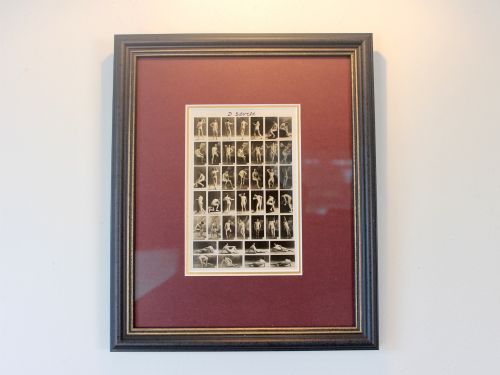
The selection includes original hand-drawn works on paper in graphite, charcoal, and watercolour, alongside period prints and photographic contact sheets. Original studio drawings represent direct observations by the artist.
Listings specify the exact medium used, distinguishing unique works on paper from reproductive prints. Checking the material details clarifies whether a piece is a unique drawing or a printed edition.
Where were these pieces created?
These works originated across various European and British art schools, private studios, and foundries. Many reflect the academic traditions of French and British institutions from the nineteenth and early twentieth centuries.
Artists trained in these academies travelled or submitted work to official exhibitions like the Grand Prix de Rome. Their origins trace back to professional artistic centres committed to rigorous figure drawing.