

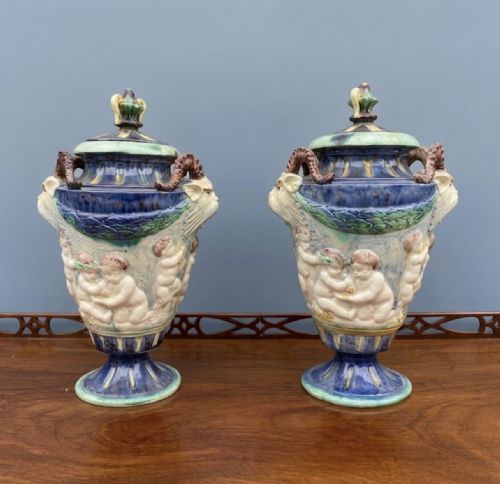
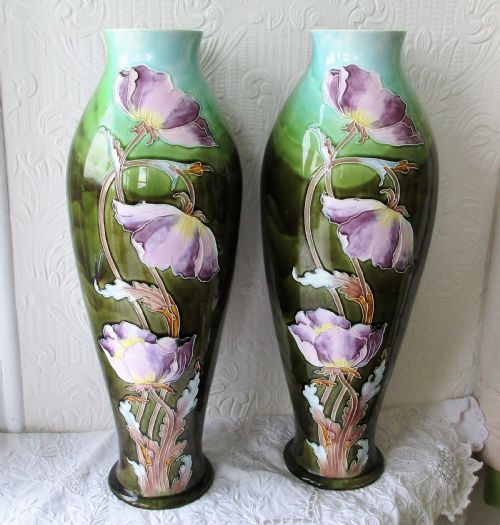

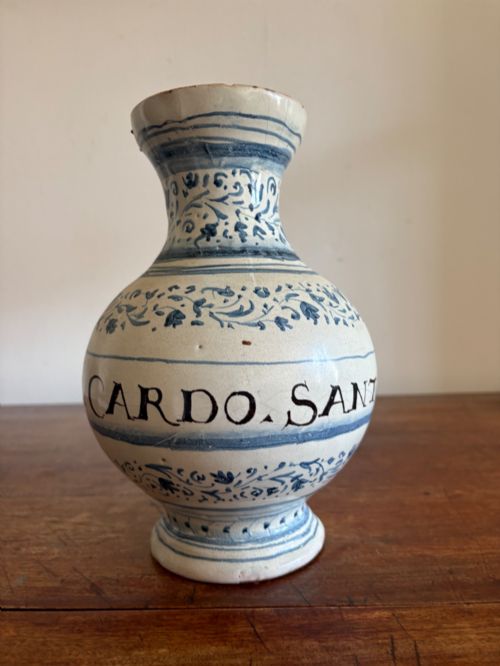


Majolica Ceramic Vase
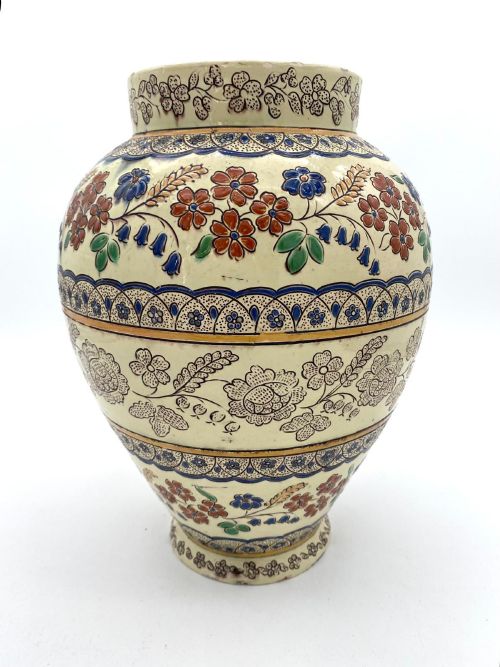
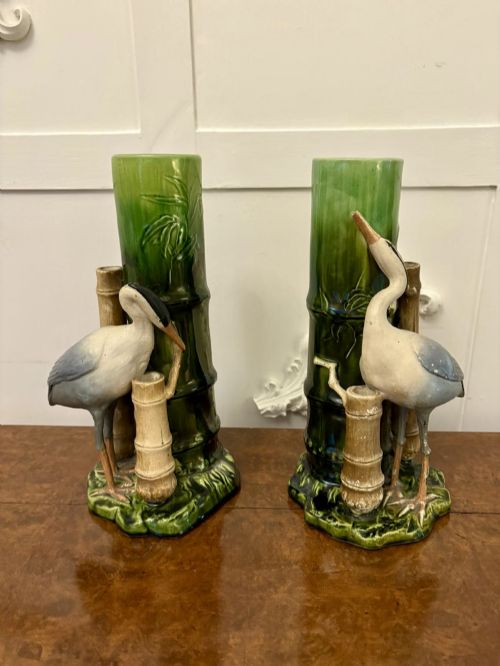
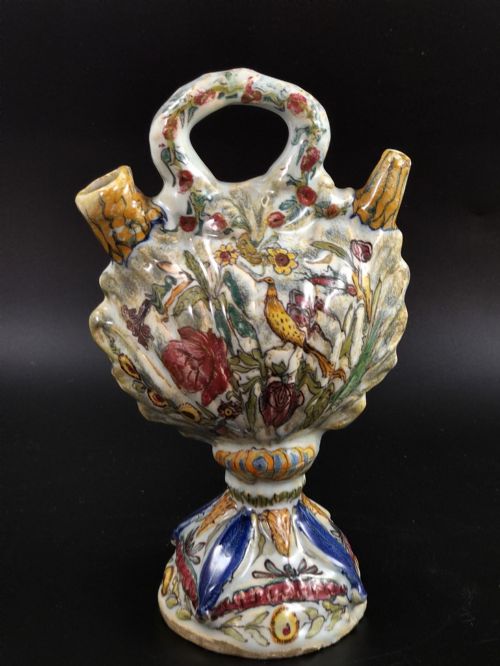
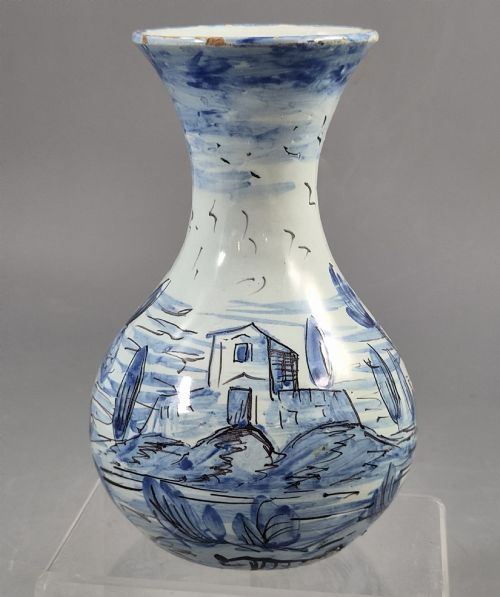
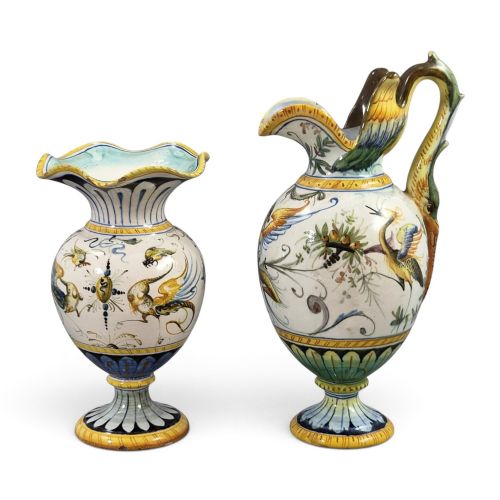
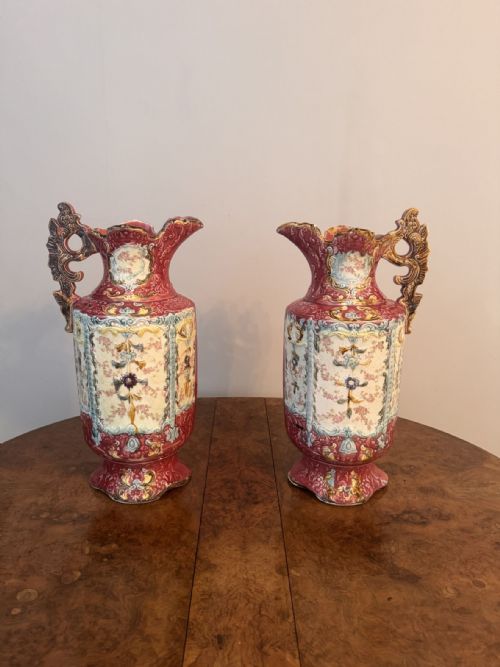
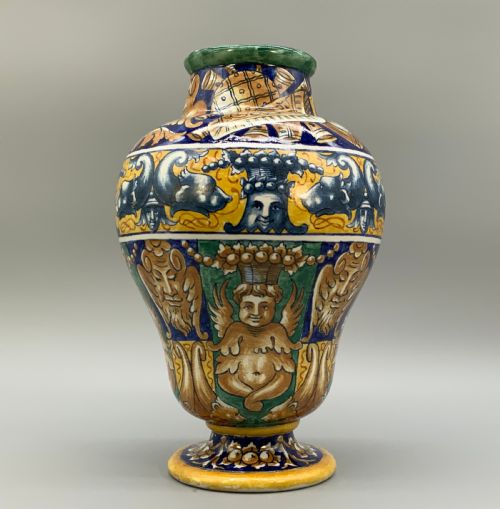
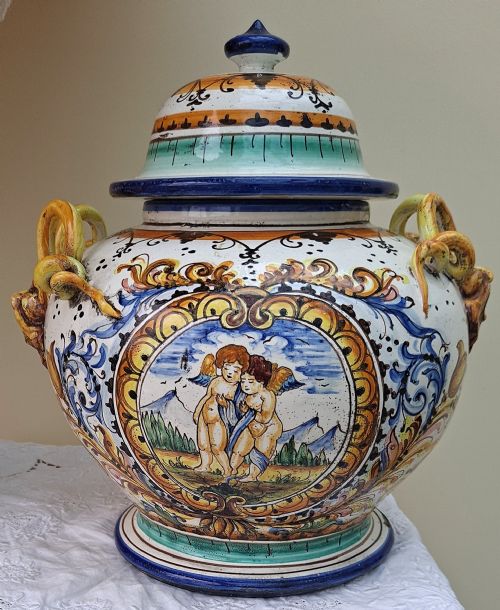
These majolica ceramic vase examples bring colourful tin-glazed earthenware into a room, spanning Italian revivals, French faience, and Victorian production.
Majolica Ceramic Vase
A majolica ceramic vase search reveals diverse forms ranging from 18th-century Italian apothecary jars and pilgrim flasks to monumental Victorian urns and Art Nouveau vessels. Buyers encounter substantial lidded vases, table lamps, ewers, and tulip vases originating mainly from Italian and French workshops.
The material expressions span tin-glazed earthenware, terracotta, and faience, often decorated with Renaissance revival motifs or blue and white palettes. Many pieces reflect 19th-century revivals of earlier Italian styles alongside continental interpretations from Cantagalli and Minton.
How they were made
Potters shaped these vessels from earthenware and terracotta before applying tin glaze to create a smooth, opaque white surface suitable for painting. Artisans utilised polychrome pigments and blue-and-white oxides to execute complex historical revival designs directly onto the unfired glaze.
Subsequent kiln firings fused the metallic oxides into the glaze layer, yielding the characteristic gloss and vibrant colour palette seen on the majolica ceramic vase selections. Some works incorporate applied ormolu mounts to complement the ceramic body.
Majolica Ceramic Vase Retail Price Guide 2026
Typical asking prices for majolica ceramic vase among the pieces listed under this phrase on Sellingantiques today, from the lower quarter to the upper quarter. They describe what is for sale here now, not the wider market.
Listings demonstrate a strong presence of 19th-century Italian majolica alongside French faience and British art pottery forms.
What varies in quality
The refinement of the painted decoration distinguishes simpler production wares from ambitious studio pieces, particularly in the precision of Renaissance motifs and polychrome depth. Sculptural details such as modelled covers, handles, and figural elements show varying degrees of crispness from the mould.
The purity of the tin glaze and the control shown during the high-temperature kiln firing dictate the visual consistency of the surface. Maker attribution, such as documented Cantagalli or Minton factory output, also influences the standing of an individual majolica ceramic vase.
Cantagalli·Minton·Eichwald
The Majolica Ceramic Vase Glossary
- Majolica
- A type of earthenware decorated with an opaque tin glaze and painted with metallic oxide colours. It achieved widespread popularity across 19th-century revivals of Italian Renaissance styles.
- Albarello
- A cylindrical earthenware drug jar used by apothecaries to store herbs and ointments. Originating in the Middle East, this form became a staple of Italian majolica production.
- Faience
- European tin-glazed earthenware produced in France, Germany, and other continental centres. The technique mirrors Italian majolica traditions.
- Pilgrim flask
- A flattened canteen-form vessel fitted with side loops for suspension cords. These decorative flasks often display elaborate historical scenes.
- Tin glaze
- An opaque white glaze produced by adding tin oxide to a lead glaze base. It provides a bright ground for subsequent pigment painting.
Majolica Ceramic Vase: Frequently Asked Questions
What is a majolica ceramic vase?
A majolica ceramic vase is a tin-glazed earthenware vessel decorated with coloured metal oxides, often drawing on Italian Renaissance or Victorian revival styles.
These pieces encompass forms such as lidded jars, ewers, and apothecary vessels produced across the eighteenth and nineteenth centuries.
How do I identify Italian maiolica?
Italian maiolica typically displays tin-glazed earthenware bodies painted with polychrome or blue-and-white historical motifs.
Look for characteristic revival styles, such as 17th-century or Renaissance patterns, executed on continental earthenware forms.
Were these vases used for flowers?
Many forms served decorative display roles rather than everyday floral use, particularly monumental urns, covered jars, and pilgrim flasks.
Specific variations like tulip vases and standard table vessels accommodated stems, while apothecary jars and umbrella stands held dry goods or walking sticks.
How should I display a majolica vase?
Position these vibrantly glazed vessels where natural light illuminates the tin glaze and polychrome pigments without risking physical knocks.
Ensure large urns or pedestal pieces rest on stable, weight-bearing surfaces suited to their substantial earthenware and terracotta construction.