


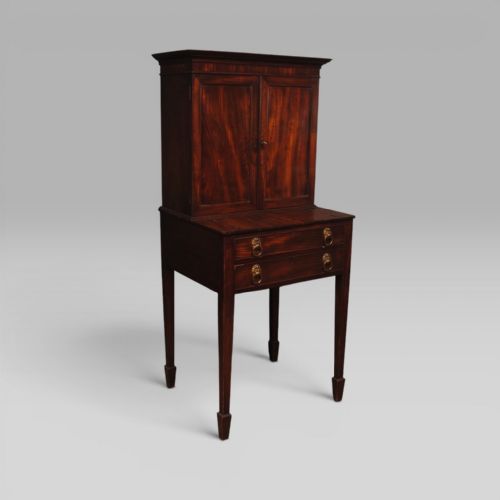


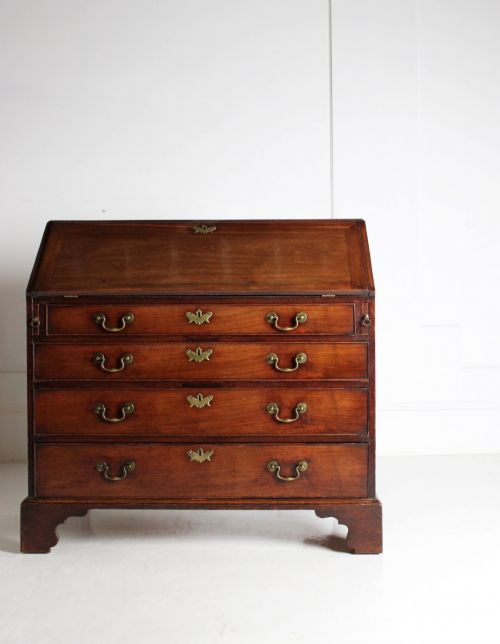


Mahogany Writing Slope Cabinet
Mahogany writing slope cabinet pieces are practical writing furniture designed to hold papers and stationery securely while providing a sturdy writing surface.
Mahogany Writing Slope Cabinet
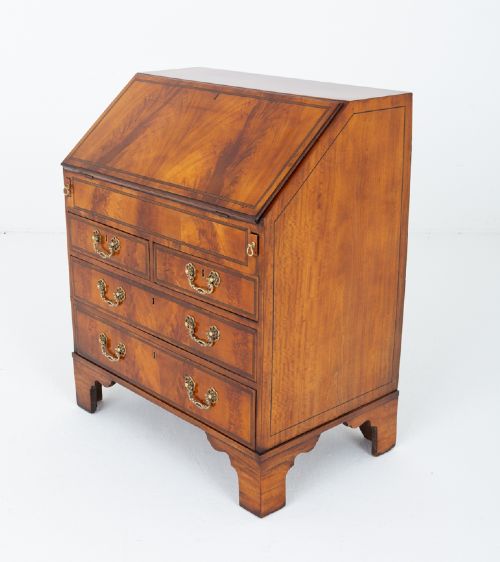
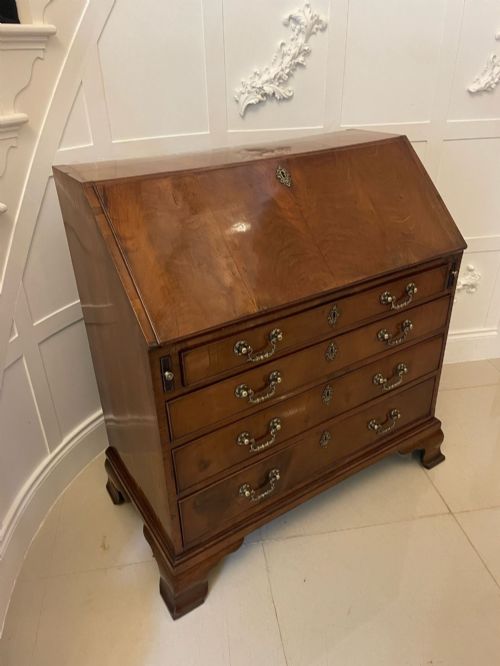
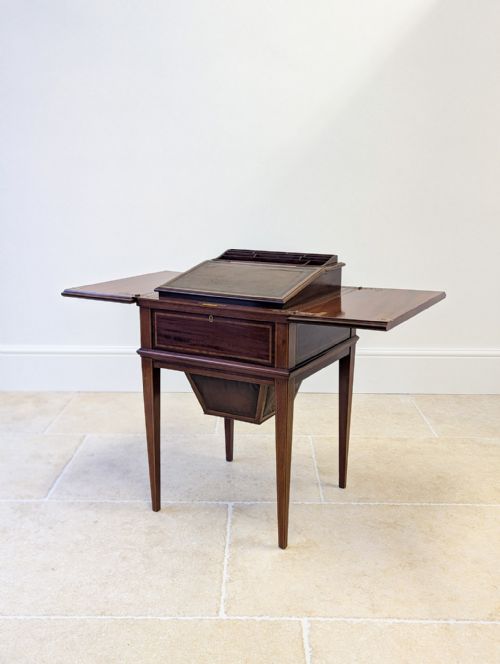
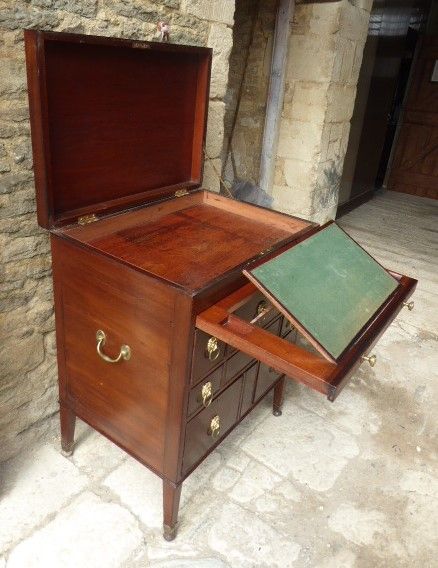
A mahogany writing slope cabinet encompasses a range of traditional desk forms designed for correspondence and storage, including compact bureau boxes, fall-front bureaux, and compact Davenport writing desks. These pieces span multiple historical eras from the Georgian period through the Victorian and Edwardian eras, reflecting changing domestic habits and writing needs.
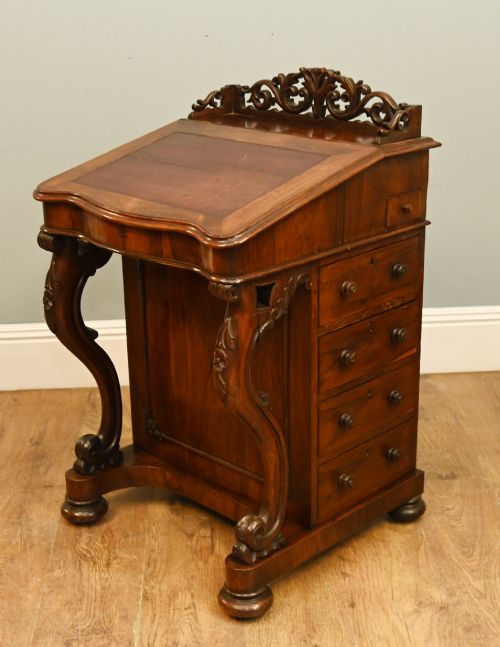
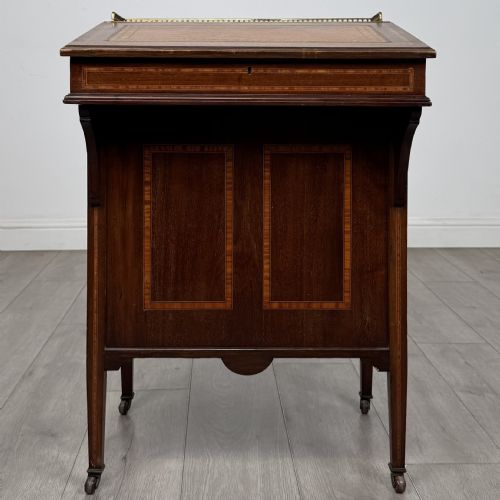
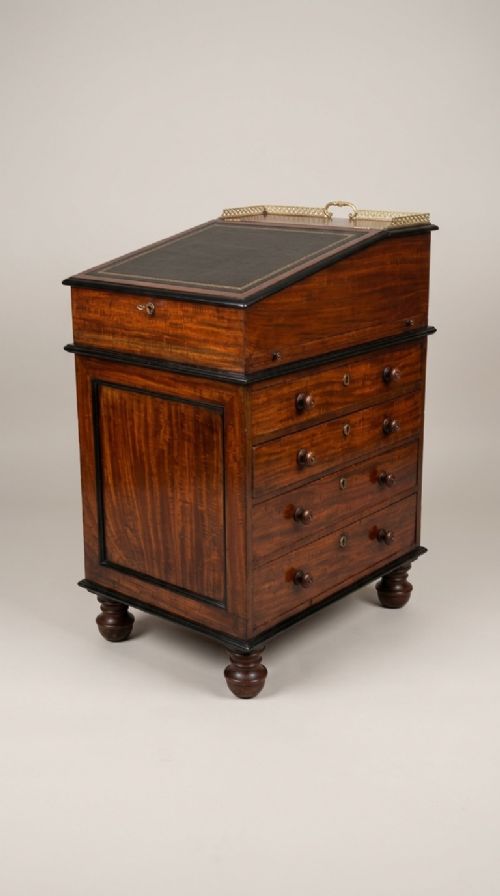
The version most frequently encountered on this page is the classic mahogany bureau or Davenport desk, often dating from the Georgian or 19th Century periods. These pieces combine a writing slope with integrated drawers, pigeonholes, and sometimes bookcase tops to create a self-contained workstation.
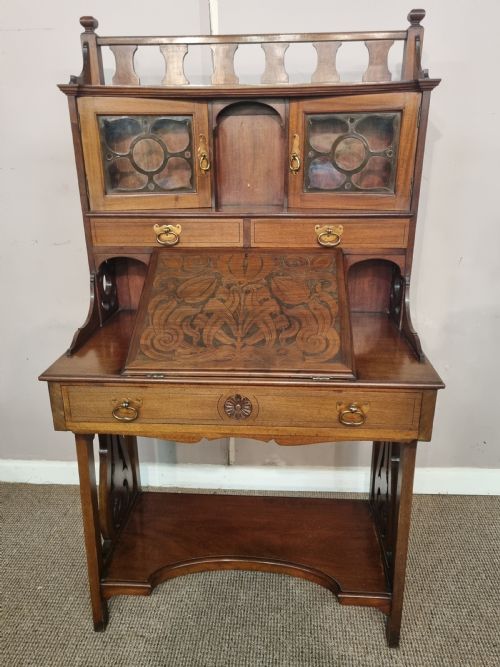
Originating primarily from British workshops, these desks showcase the evolution of domestic cabinetry, shifting from sturdy 18th-century forms to more elaborate Victorian and Edwardian interpretations featuring marquetry, brass fittings, and integrated stationery compartments.
Craftsmanship and distinction
The refinement of the internal fittings largely distinguishes superior examples from simpler utilitarian desks, particularly in the complexity of concealed drawers, pigeonholes, and secret compartments. Finer pieces demonstrate meticulous attention to internal joinery and thoughtful spatial arrangement.
The selection and figure of the mahogany timber heavily influence the visual appeal of a piece, with well-matched veneers and choice solid cuts commanding greater admiration. Superior cabinetry is further evidenced by crisp carving, precise inlay work, and robust brass hardware that integrates seamlessly into the design.
Listings feature pieces spanning the Georgian, Regency, Victorian, and Edwardian periods, constructed primarily in mahogany with brass, leather, and satinwood.
Gillows of Lancaster·William Trotter Edinburgh
The Mahogany Writing Slope Cabinet Glossary
- Bureau
- A desk featuring a sloping hinged lid that drops down to form a writing surface, concealing a fitted interior of small drawers and pigeonholes. These pieces typically rest upon a chest of drawers.
- Davenport
- A compact pedestal desk featuring a sloping writing surface, usually hinged with a small drawer or cabinet space incorporated into the side. It became a popular form during the Regency and Victorian periods.
- Fall front
- A vertical or inclined panel hinged at the bottom which lowers to reveal a writing desk interior. This mechanism allows the writing area to be concealed when not in use.
- Secretaire
- A piece of furniture containing a drawer or compartment specially fitted for writing materials, often disguised as a standard chest of drawers or bookcase base.
- Stationery cabinet
- A tabletop or freestanding box designed specifically to hold writing paper, envelopes, and inkwells, often featuring doors or a tambour front.
- Marquetry
- Decorative veneer work forming pictorial or geometric patterns using various coloured woods, occasionally enhanced with boxwood and satinwood.
Mahogany Writing Slope Cabinet: Frequently Asked Questions
What is a Davenport desk?
A Davenport is a compact form of writing desk that combines a sloping desktop with a bank of drawers beneath. The writing surface is often lined with leather and lifts or folds for access.
These desks were originally designed for domestic writing tasks where space was limited. Their compact footprint made them popular in drawing rooms and bedrooms throughout the 19th Century.
How do I use a bureau daily?
You lower the fall-front flap to create a flat writing surface supported by wooden lopers that pull out from the main body. Inside, you will find small drawers and pigeonholes for organising correspondence.
When writing is finished, papers are tucked inside and the front is closed and locked to keep the workspace tidy. This keeps stationery securely contained within the furniture itself.
How are Georgian and Victorian desks different?
Georgian desks generally favour architectural proportions, clean lines, and understated mahogany surfaces with minimal inlay. The focus rests heavily on solid timber quality and functional internal layouts.
Victorian and Edwardian versions often introduce more elaborate decoration, including richer golden mahogany, marquetry, and specialised stationery compartments. They reflect a broader range of revival styles and increased industrial manufacturing techniques.
Where should I place a writing slope?
These pieces suit studies, living rooms, or hallways where their finished backs and compact proportions allow them to sit comfortably against a wall. Ensure they stay away from direct heat sources to protect the mahogany timber and leather writing surfaces.
Adequate natural light from a window helps illuminate the writing surface and reveals the grain of the wood. Positioning them thoughtfully lets you use the internal storage compartments for everyday organisation.