

Mahogany Wood Credenza
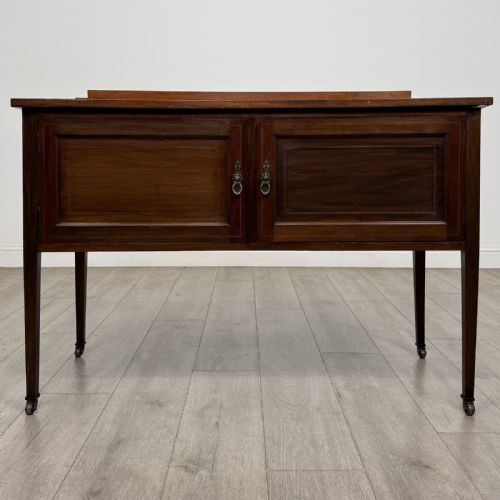
A mahogany wood credenza brings deep timber grain and formal storage into a dining room or hallway.
Mahogany Wood Credenza
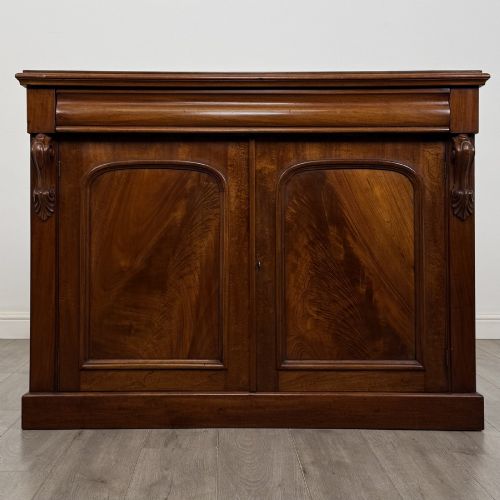
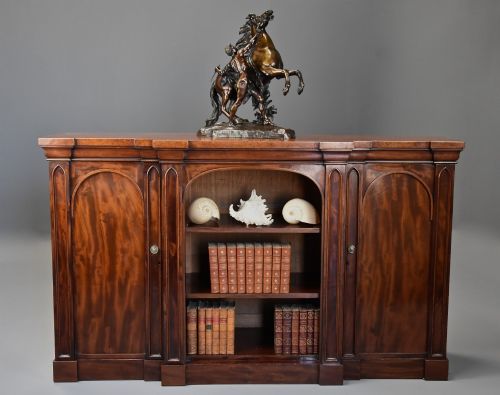
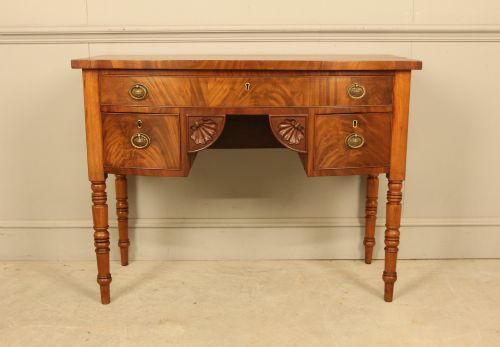
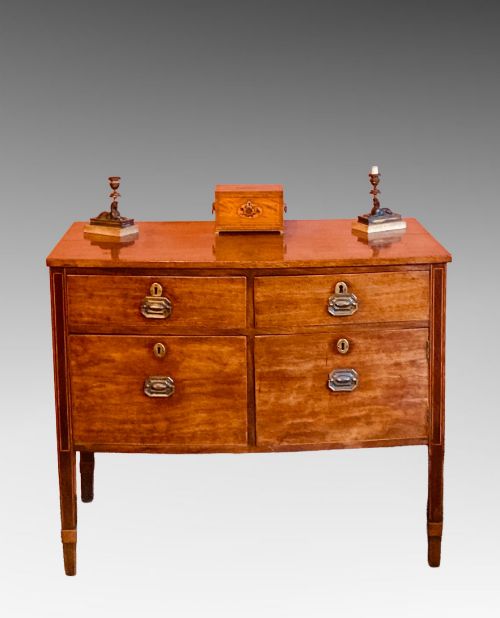
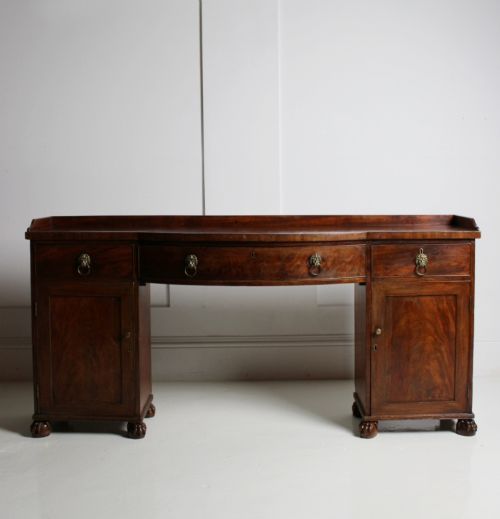
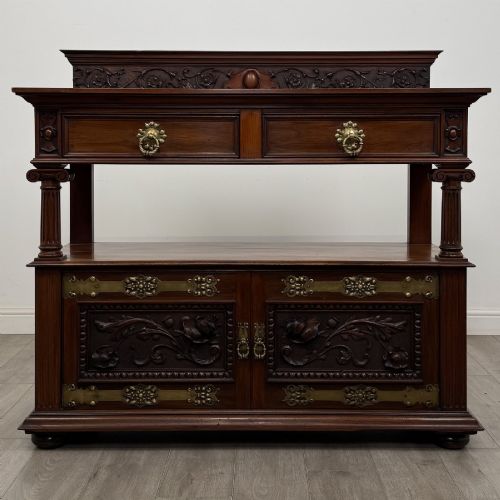
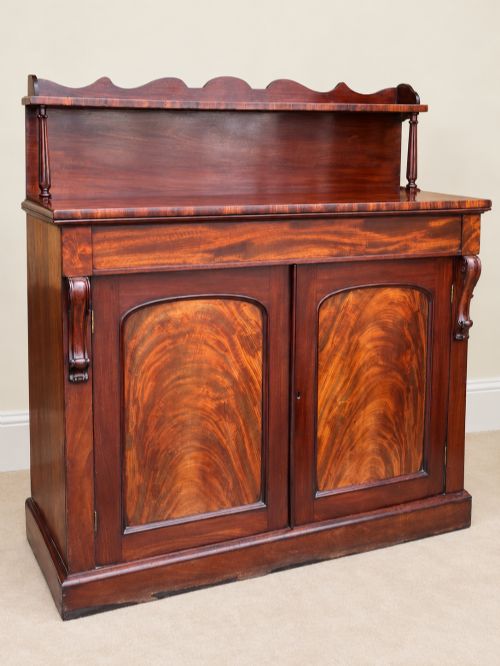
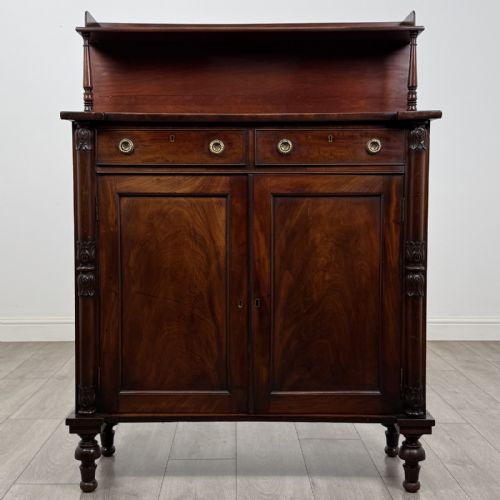
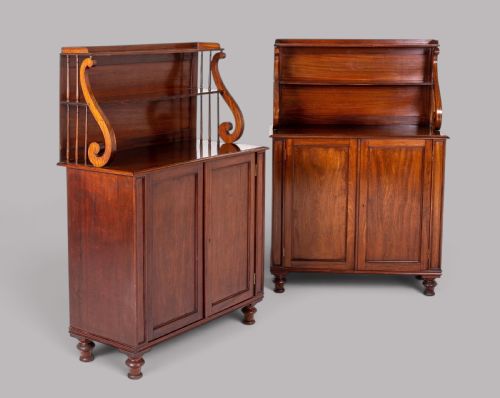
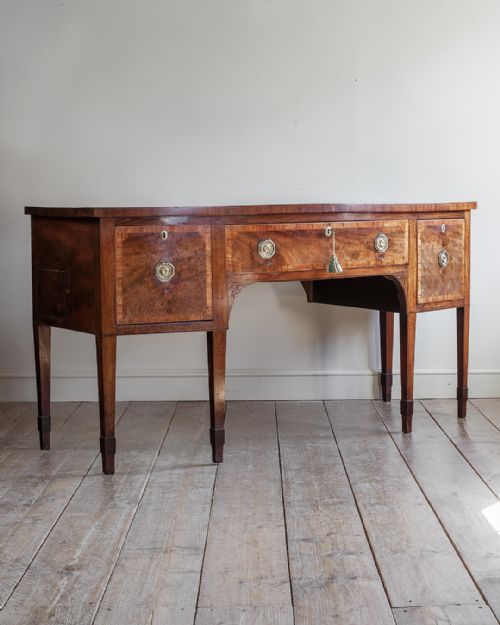
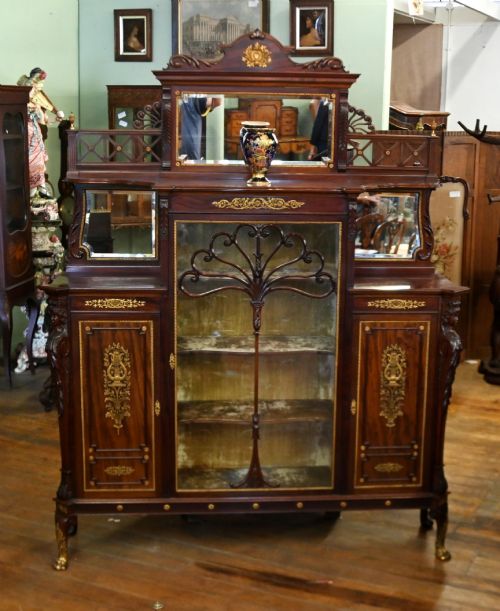
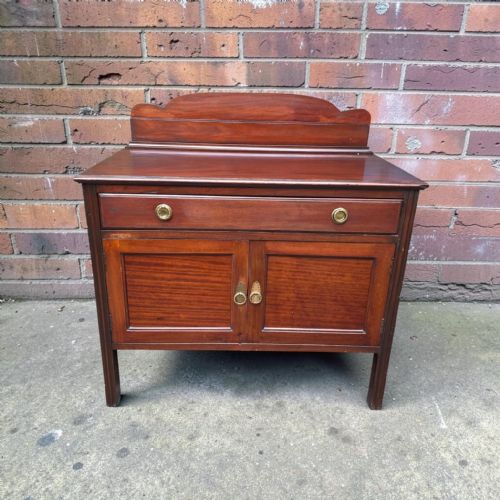
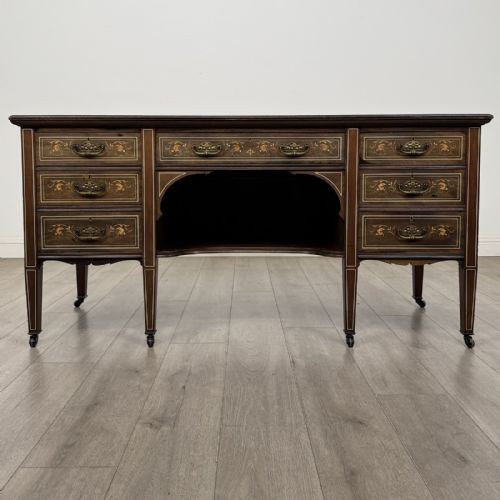
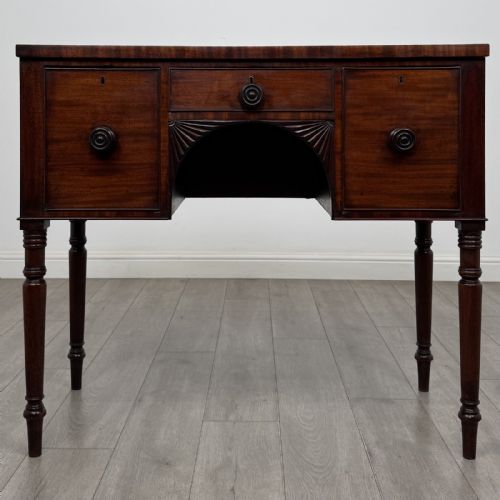
When searching for a mahogany wood credenza, buyers encounter a variety of formal storage forms that span several centuries. Sideboards, side cabinets, chiffoniers, and servers dominate the selection, functioning primarily as dining room or hallway furniture designed for serving and storage.
The pieces appearing on this page originate predominantly from the Georgian, Regency, Victorian, and Edwardian periods. Makers from these eras utilised robust construction methods, resulting in substantial timber bodies intended to anchor large rooms.
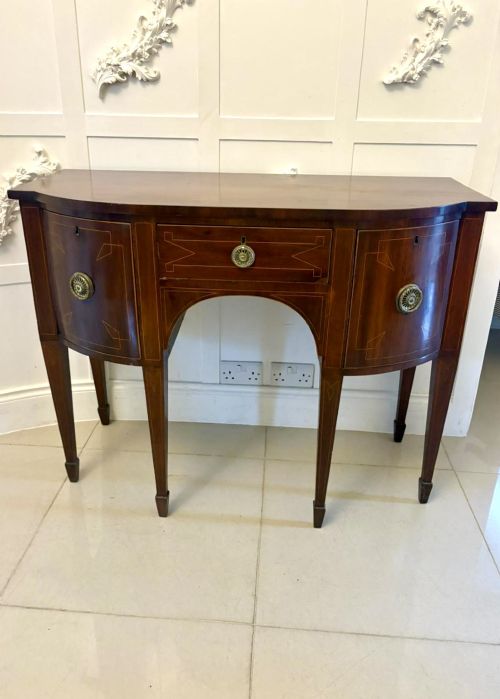
Bowfront profiles, flat fronts, and breakfront shapes recur across the selection, often accompanied by matching cupboards, drawers, and lower shelves. Buyers meet both modest side cabinets and large exhibition pieces featuring mirror backs or marble tops.
What varies in quality
The choice of timber creates a primary distinction between standard examples and exceptional pieces. Figured mahogany and vibrant flame mahogany veneer demand superior selection by the cabinet maker, producing lively grain patterns across the front doors and drawer faces.
Intricacy of hand carving and precision in marquetry or inlay work separate ordinary production from exhibition grade items. Fine execution of tapered legs, bracket feet, and brass fittings indicates skilled workshop origin.
Mahogany Wood Credenza Retail Price Guide 2026
Typical asking prices for mahogany wood credenza among the pieces listed under this phrase on Sellingantiques today, from the lower quarter to the upper quarter. They describe what is for sale here now, not the wider market.
Listings span multiple design movements, ranging from Georgian and Regency cabinet work to Arts and Edwardian craftsmanship.
Whytock & Reid·Hewetsons London
The Mahogany Wood Credenza Glossary
- Chiffonier
- A low sideboard or cabinet featuring enclosed shelving below, frequently topped with a raised gallery or small tier. These pieces gained popularity during the Regency and Victorian periods.
- Bowfront
- A curved convex cabinet front that bulges outward in the centre. This shape softens the profile of large dining room sideboards.
- Crossbanding
- A strip of veneer applied perpendicularly to the surrounding grain along the border of a drawer front or tabletop. This technique frames the primary wood panel.
- Marquetry
- Decorative patterns formed by fitting together small pieces of coloured veneer into a wood panel. Artisans used contrasting timbers to create floral or geometric designs.
- Pier cabinet
- A narrow cabinet designed to stand against the wall space between windows. These pieces often incorporate adjustable shelves and glass doors.
Mahogany Wood Credenza: Frequently Asked Questions
What is a mahogany wood credenza?
A mahogany wood credenza functions as a heavy timber storage and serving piece, typically positioned in a dining room or reception hall.
These items provide interior shelving and drawer space behind panelled doors, constructed from solid mahogany and decorative veneers.
How do I date a sideboard?
Dating relies upon observing the structural style, timber preparation, and decorative details present on the piece. Georgian and Regency examples display distinct carving and leg forms compared to later Victorian and Edwardian iterations.
Examination of the drawer construction, secondary woods, and brass hardware yields further clues regarding the decade of manufacture.
Where should I place a chiffonier?
A chiffonier suits dining rooms, living areas, or hallways where surface display and enclosed storage are required. Their lower profile prevents them from dominating smaller wall spaces.
Placing the piece away from direct heat sources protects the mahogany timber and veneer from splitting over time.