




Mahogany Wine Casket
A mahogany wine casket sits in a room to hold bottles safely and give the sideboard structure.
Mahogany Wine Casket
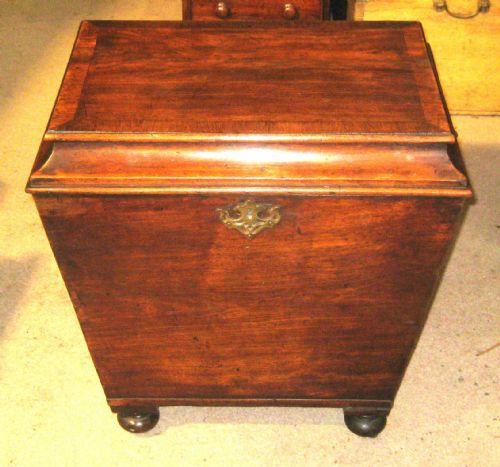
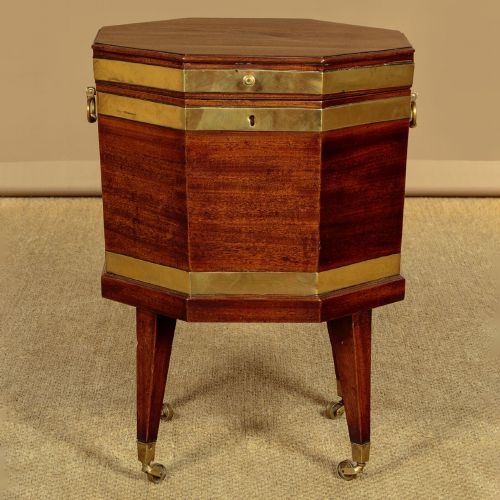
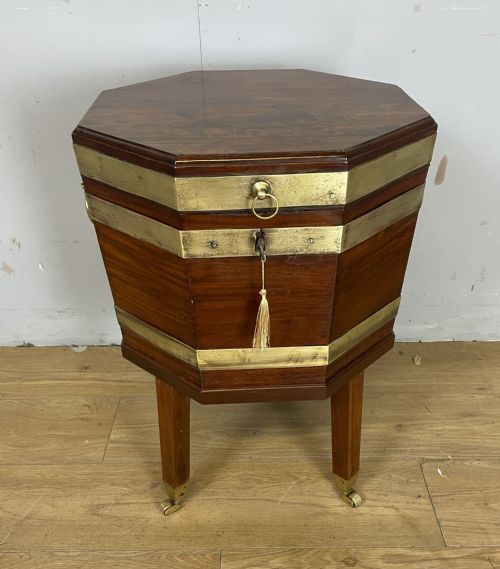
A mahogany wine casket is a formal container made to hold bottles of wine in dining rooms during the Georgian, Regency, George IV, and William IV periods. These pieces appear as cellarettes, wine coolers, and wine boxes in octagonal, sarcophagus, and rectangular forms.
Buyers meet examples shaped like sarcophaguses or octagons, often fitted with brass bands and carried through the nineteenth century. The origins span the eighteenth and nineteenth centuries, featuring styles from the Georgian era through to William IV.
These items served to store wine securely before refrigeration and bottle racks became standard in home dining spaces. The versions on this page demonstrate the cabinetmaker's skill in creating sturdy, lockable storage for valuable vintages.
How they were made
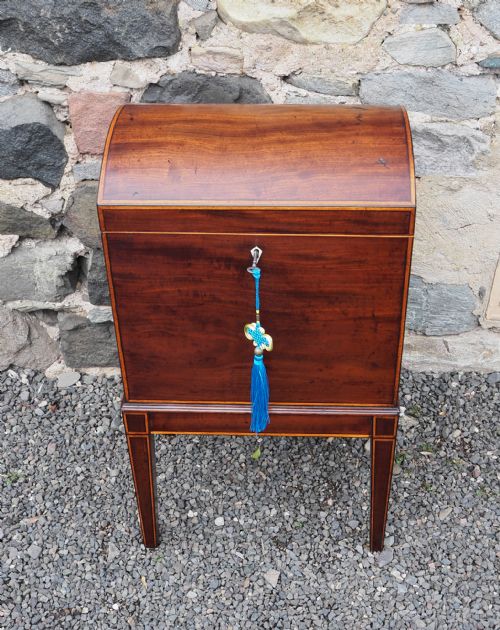
Cabinetmakers constructed these caskets using solid mahogany and flame mahogany veneer over structural timber. They frequently added boxwood inlay and marquetry to enrich the exterior surfaces of the better boxes.
Metal and brass components formed an essential part of the construction, appearing as heavy binding hoops, carrying handles, and secure locks. These metal mounts held the stave construction tight and allowed staff to move the heavy contents.
Listings feature pieces spanning the Georgian, Regency, George IV, and William IV periods, constructed primarily in mahogany with brass and boxwood details.
What varies in quality
Quality rests in the choice of timber, particularly where figured flame mahogany veneer displays deep grain patterns across the front and lid. Finer examples show crisp boxwood inlay and precise marquetry rather than plain surfaces.
The hardware dictates much of the distinction between standard and superior pieces, with heavy brass binding and robust handles marking out workshop production. The joinery of the carcass and the retention of original interior partitions also separate basic boxes from distinguished cabinetwork.
Gillows of Lancaster
The Mahogany Wine Casket Glossary
- Cellarette
- A lockable container used for storing wine bottles near the dining table. They frequently sat on the floor beneath a sideboard during meals.
- Sarcophagus style
- A heavy, flared box shape with a domed lid that mimics ancient stone coffins. Cabinetmakers adopted this architectural form extensively during the Regency period.
- Brass bound
- A construction method where metal hoops encircle the timber body to reinforce the staves. This detail recalls the cooperative techniques used for wooden buckets and casks.
- Flame mahogany
- A veneer cut from the fork of the mahogany tree where the grain twists into flickering patterns. It was selected for the most prominent faces of high-status furniture.
- Boxwood inlay
- Contrasting pale wood inserted into shallow channels cut into the dark mahogany surface. It creates geometric lines and decorative borders around panels.
Mahogany Wine Casket: Frequently Asked Questions
What is a mahogany wine casket?
A mahogany wine casket is a specialised wooden box designed to hold and cool wine bottles in dining rooms. They were standard furnishings in wealthy homes during the Georgian and Regency eras.
These pieces often go by the name of cellarettes or wine coolers. They provided a secure, lockable place to keep expensive vintages close at hand during dinner parties.
How were they used?
These caskets sat on the floor beneath sideboard tables to hold wine bottles ready for the table. Servants would lift bottles from the interior compartments as needed throughout the meal.
Some interiors retained metal linings to hold ice or water for chilling the wine. Others simply acted as secure storage boxes for bottles transportable by their side handles.
How do I date a wine casket?
Dating relies on observing the overall form, timber choices, and decorative motifs used in the construction. Pieces from the mid-eighteenth century often show simpler octagonal shapes, while Regency examples lean towards the heavy sarcophagus form.
Details like brass binding, boxwood inlay, and veneering techniques shift across the decades. Cabinetmakers adapted their styles from Georgian classicism through to the heavier proportions of William IV.
Did they have metal linings?
Many examples included internal metal linings designed to hold ice and keep the wine cool during long meals. These linings protected the wooden carcass from moisture and leaks.
Some caskets dispensed with the metal liner and used wooden dividers to keep individual bottles separated. The presence of a liner often changes the internal depth and configuration of the box.
Where should I place one?
These pieces function well as standalone floor items in dining rooms, living spaces, or studies. Their substantial presence suits placement against large walls or beneath sideboards.
They also serve practical purposes as small storage tables or decorative stands in modern homes. The flat lids allow them to hold lamps or objects while concealing storage space inside.