
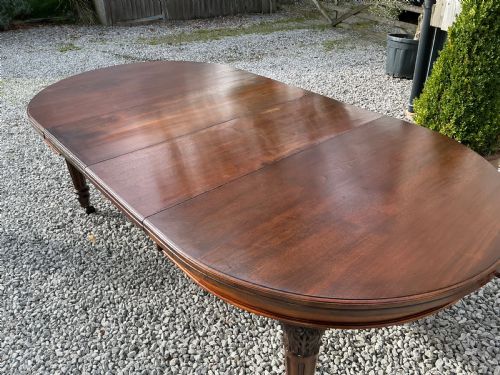
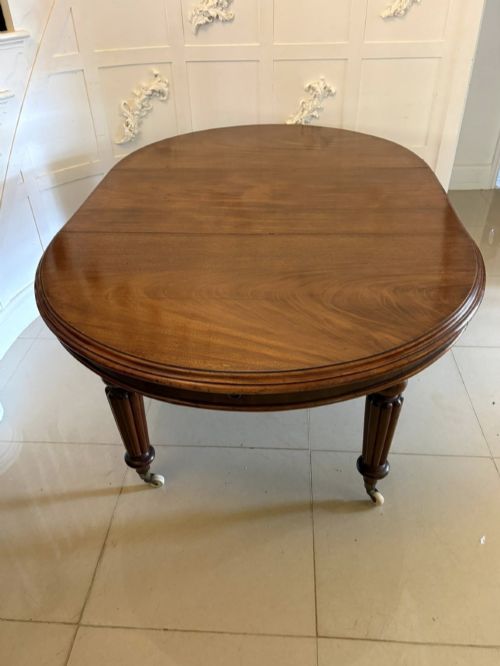
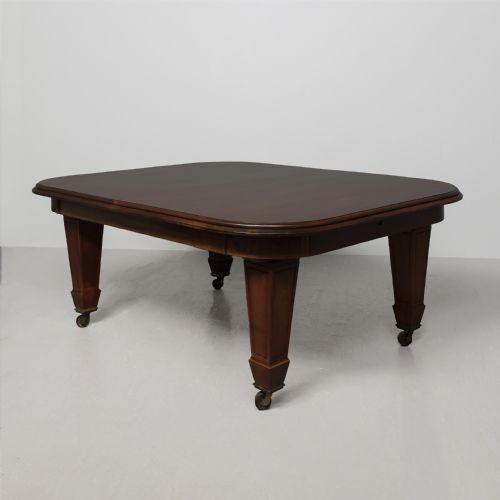
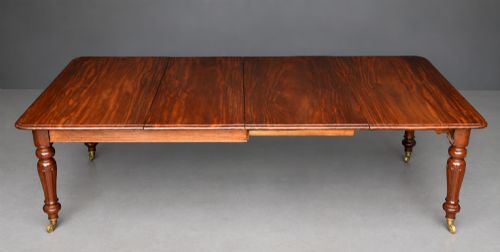



Mahogany Wind Out Table
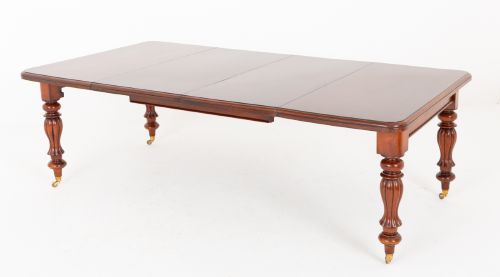
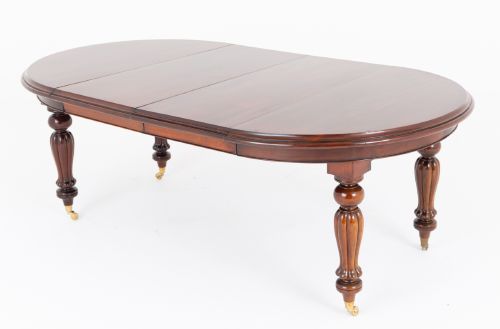
When you want a mahogany wind out table, you are looking for a versatile piece of dining furniture designed to expand easily using a mechanical screw mechanism concealed within the frame.
Mahogany Wind Out Table
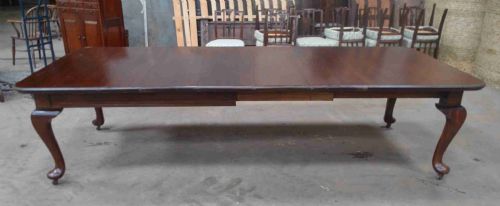
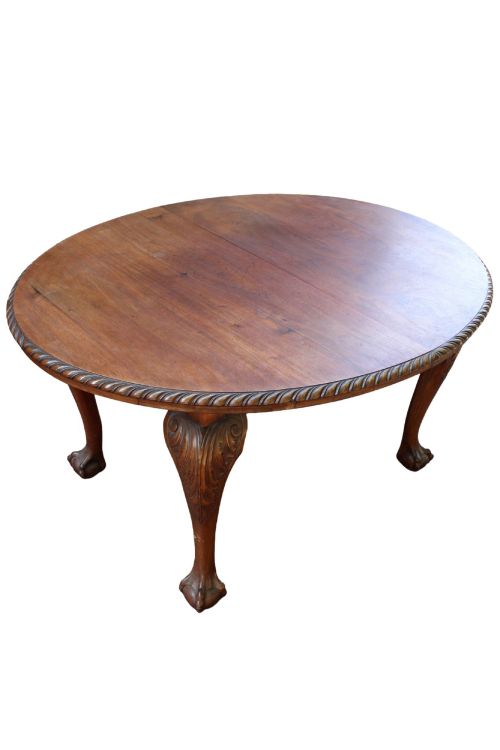
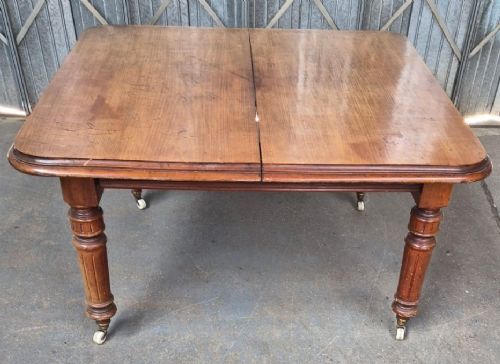
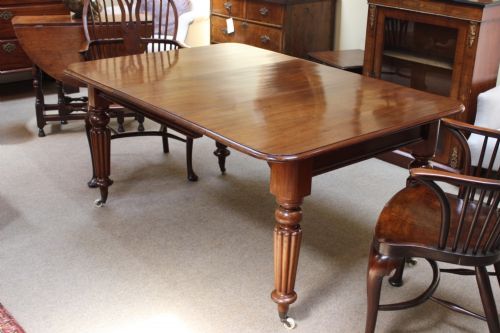
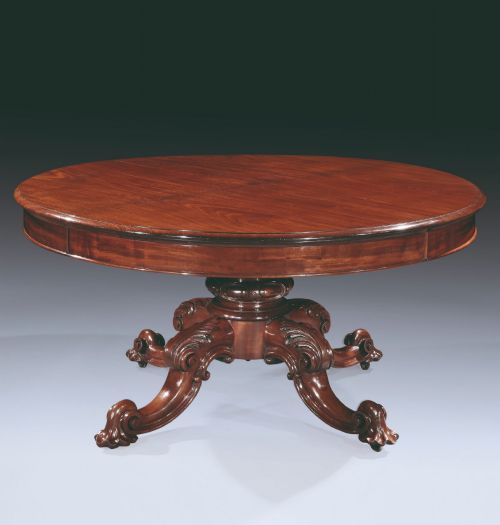
A mahogany wind out table is a heavy dining piece built to accommodate large gatherings through the addition of removable central leaves. When you search for this phrase, you meet primarily Victorian examples, alongside pieces from the Edwardian era and the William IV period.
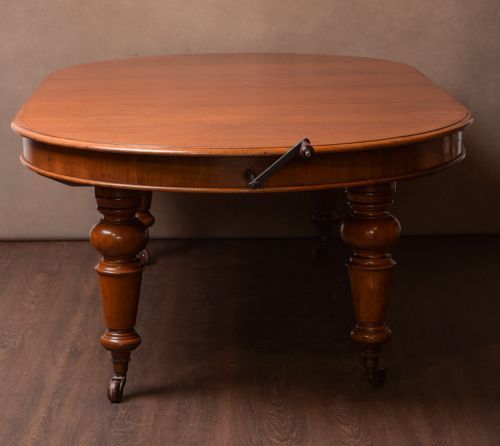
Makers utilised dense timbers such as Cuban mahogany and flame mahogany to provide rich grain patterns across the main top and the accompanying extra leaves. The internal metal and steel mechanism operates via a removable handle inserted into the side apron.
Construction and Materials
Cabinet makers built these frames using solid mahogany and figured veneers, supported by internal iron and steel winding gears that drew the table ends apart. Brass and ceramic castors were fitted to the feet so the heavy sections could move smoothly across the floor without straining the joints.
The extending mechanism relies on a central lead screw turned by a crank handle, which operates wooden or metal runners to expand the framework evenly. Extra leaves slotted securely into the opened gap, held in place by wooden alignment pins and brass clips.
Many tables retain their original winding handles, tucked away safely for over a century like small iron keys waiting to unlock Sunday dinner.
Quality Variations
The finest examples display matched timber grains across every inserted leaf, showing that the maker cut the boards from the same log. Poorer variations suffer from mismatched colour tones or poorly seasoned wood that warps over time.
The precision of the internal metal mechanism dictates how smoothly the table glides apart when turned by the handle. Robust, heavy frames with original brass castors and well-fitted leaves represent the upper tier of surviving pieces.
F & J Smith·Gillows·Joseph Fitter·Robson Newcastle
The Mahogany Wind Out Table Glossary
- Wind-out mechanism
- An internal screw gear operated by a crank handle that extends the table frame to accept extra leaves. It allows a single person to widen the surface.
- Leaf
- A removable section of timber inserted into the middle of the table to increase its overall length. Sets often include between one and five leaves.
- Cuban mahogany
- A dense, dark timber harvested in the Caribbean, prized for its rich grain and durability in large nineteenth-century furniture. Cabinet makers used it for high-status dining pieces.
- Castor
- A small wheel fitted to the bottom of each table leg to facilitate movement. They are frequently made of brass or ceramic.
- Apron
- The wooden border running beneath the edge of the table top that conceals the sliding rails and internal mechanism.
Mahogany Wind Out Table: Frequently Asked Questions
How do you operate the winding mechanism?
You insert a metal crank handle into the socket located beneath the side apron of the frame. Turning the handle rotates an internal screw that pushes the two main halves apart or pulls them together.
Once the gap reaches the desired width, you drop the wooden leaves into position and lock the sections tightly. Removing the handle ensures the mechanism stays concealed during everyday dining use.
Where were these tables made?
These dining tables were produced primarily in British workshops and factories during the nineteenth and early twentieth centuries. Regional cabinet makers and large firms constructed them to meet the demands of large Victorian and Edwardian households.
Many bear the marks of notable makers stamped into the brass mechanisms or timber frames, pointing to specialised manufacturing centres across the country.
How many leaves do these tables usually take?
Most surviving examples accommodate between one and four removable leaves, depending on the original scale of the frame. Tables built for larger dining rooms frequently held five leaves to extend past twelve feet in length.
Storing the leaves safely when not in use is essential to prevent warping and ensure they still match the main top sections.
How do you care for a mahogany surface?
Polishing the timber regularly with traditional beeswax maintains the natural lustre and protects the grain from moisture and sunlight. Avoid placing hot dishes directly onto the polish to prevent marking the antique wood.
Using coasters and table pads during meals preserves the finish of both the main top and the extra leaves.