
Mahogany Whatnot
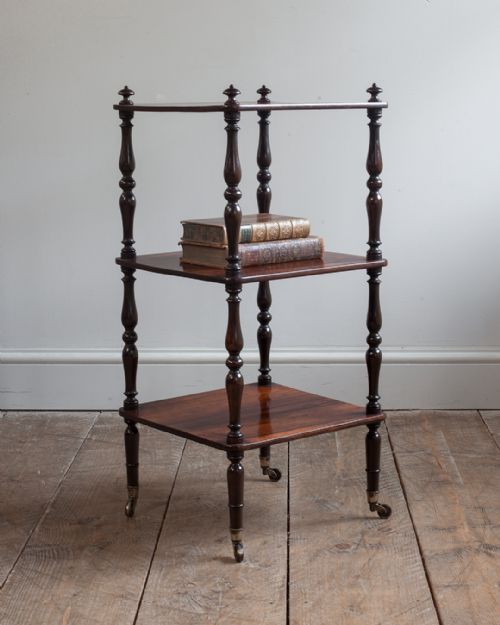
Mahogany whatnot pieces are tiered open shelves built for displaying ornaments, books, or silver, bringing practical vertical display to period rooms.
Mahogany Whatnot
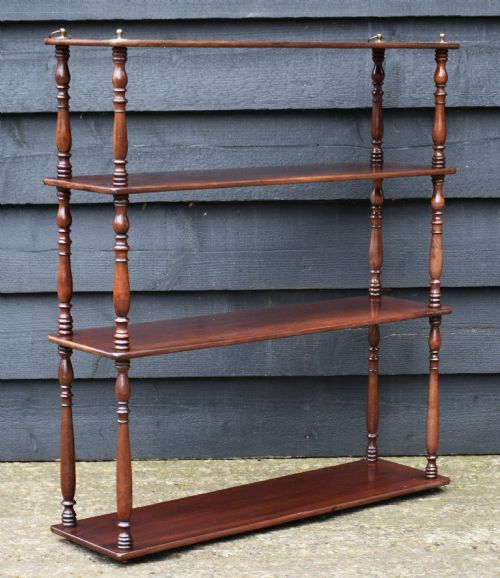
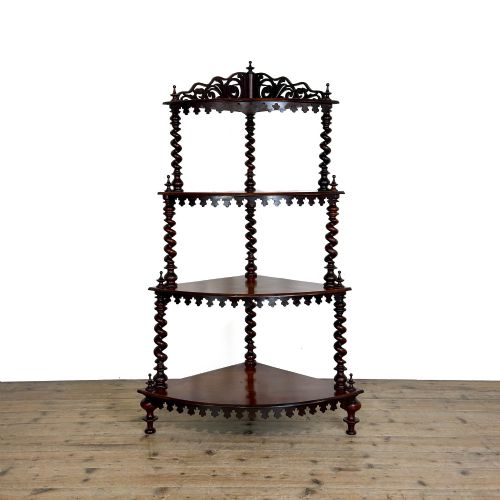
A mahogany whatnot is an open tiered shelving unit designed for organising and displaying small decorative objects, books, or tableware within domestic interiors. When searching for a mahogany whatnot, buyers encounter versatile freestanding multi-tier étagères, corner units, wall hanging shelves, and occasional music stands. These pieces emerge predominantly across Georgian, Regency, William IV, and Victorian periods, reflecting shifting tastes in interior display.
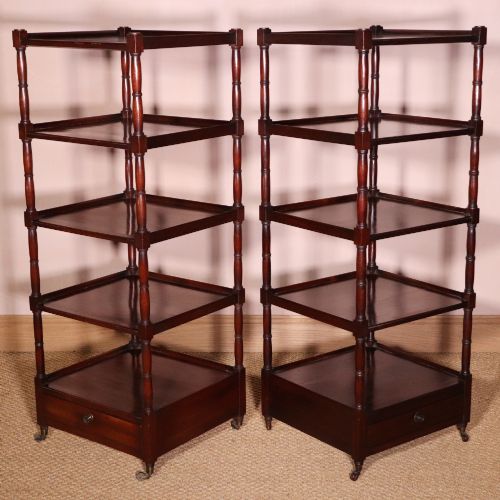
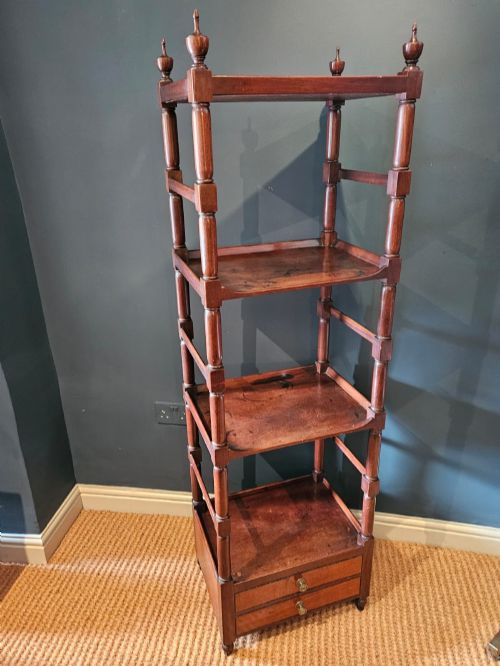
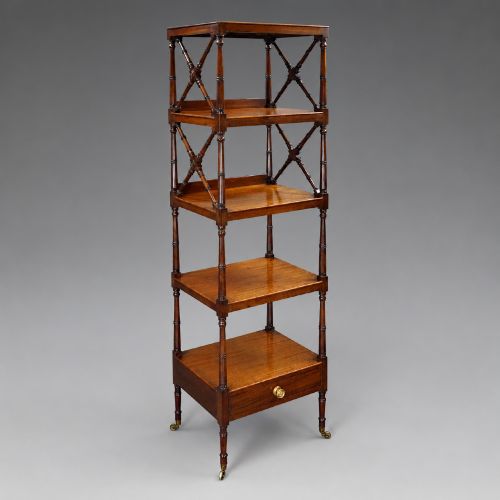
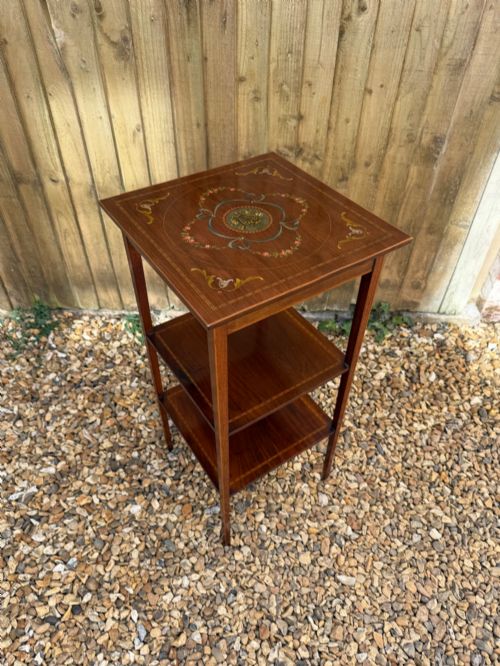
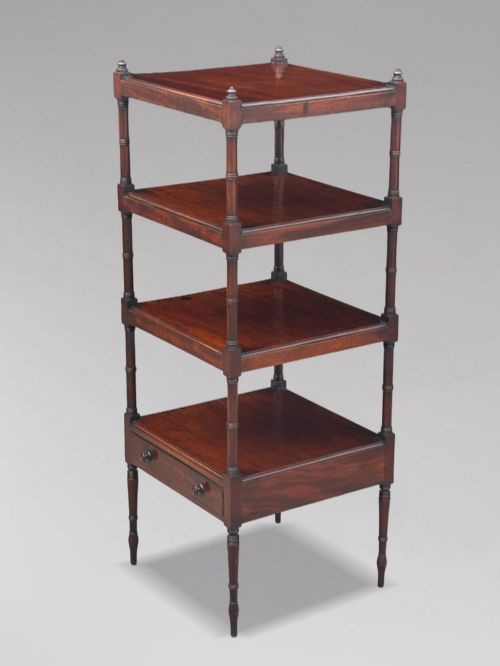
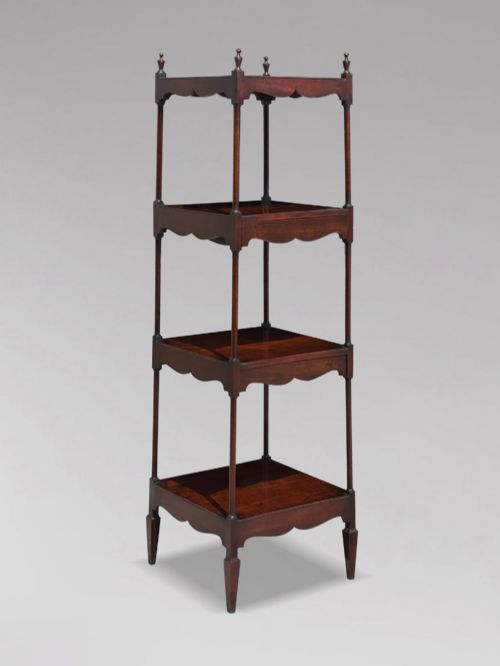
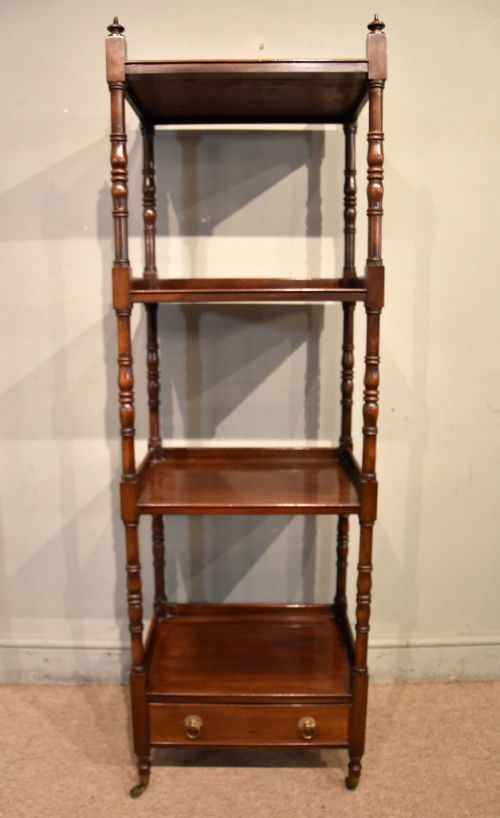
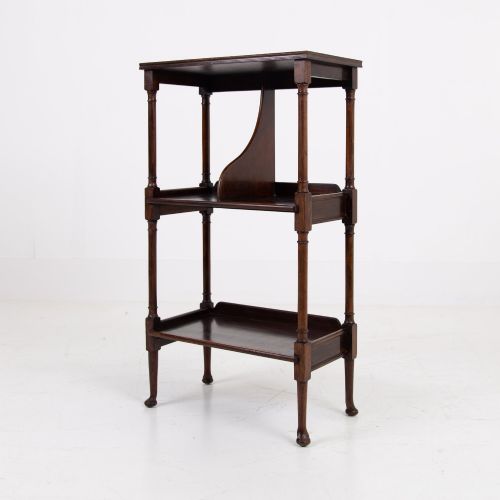
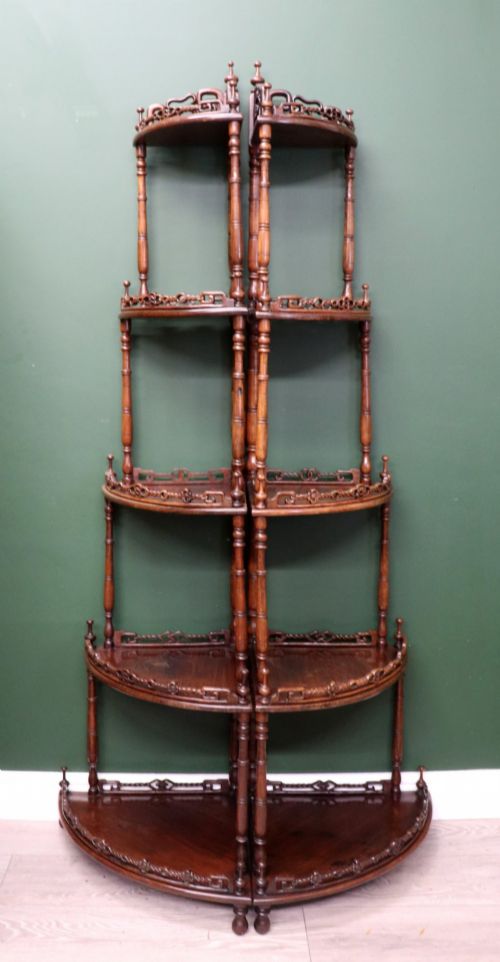
The most common forms on this page include four-tier and three-tier freestanding bookcases, alongside specialised music stands and corner shelves. Pieces span from the late eighteenth century through the nineteenth century, with Victorian adaptations frequently incorporating turned supports, drawers, or mirrors. Smaller occasional tables and étagères also appear, offering compact surfaces for display in limited spaces.
Materials and construction
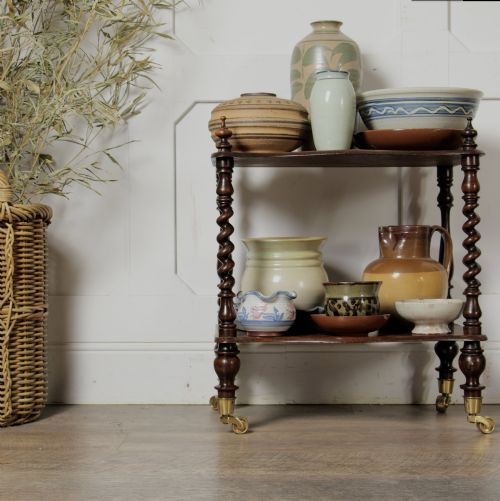
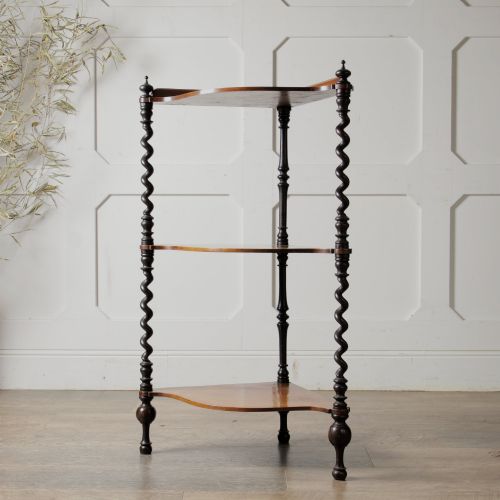
Makers utilised solid mahogany and mahogany veneers as the primary timber, sometimes pairing it with rosewood, walnut, or boxwood inlay for decorative contrast. Structural uprights often take the form of turned supports, classical columns, or barley twist pillars that sustain multiple horizontal tiers.
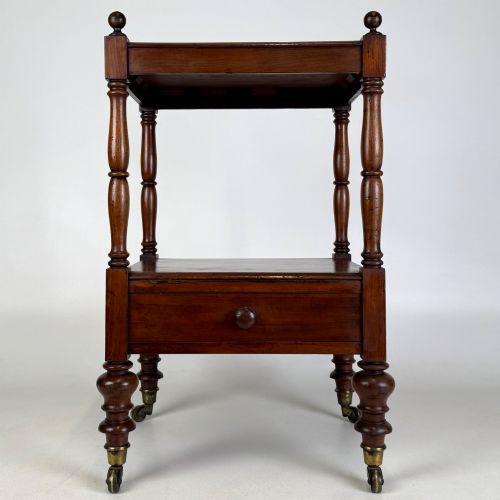
Additional materials integrate into the design through brass castors on freestanding legs, inset glass panels, and painted finishes on later nineteenth-century or Edwardian adaptations. Joints are pegged or screwed to support the weight of stacked shelves while maintaining slender structural profiles.
Some versatile nineteenth-century pieces double as music stands, proving that past generations enjoyed multitasking furniture just as much as we do.
Judging quality
The distinction between standard utility items and superior examples lies in the selection of figured timber, the crispness of the turning on the upright supports, and the overall balance of the tiered structure. Finer pieces demonstrate precise joinery where shelves meet supports, alongside thoughtful proportions that avoid visual heaviness.
Detailing such as boxwood stringing, integrated drawers, or mirrored back panels elevates a piece from simple storage to accomplished cabinet work. The integrity of the original timber surfaces, free from excessive alteration, dictates the standing of an example within its period.
Gillow of Lancaster and London
The Mahogany Whatnot Glossary
- Whatnot
- An open set of tiered shelves designed for holding ornaments, books, or collections. These pieces gained popularity in the eighteenth century and remained staples of Victorian drawing rooms.
- Étagère
- A French term for a piece of furniture consisting of a set of open shelves for displaying small objects. They share similarities with the English whatnot.
- Barley twist
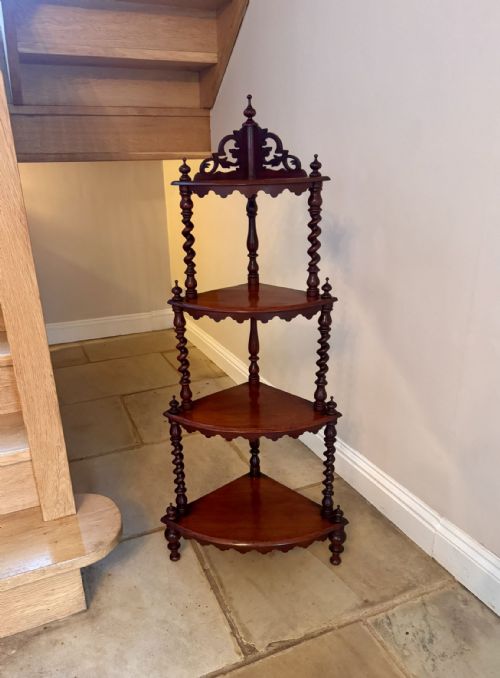
- A type of turning shaped like a helix resembling a twisted rope. This decorative motif appears frequently on the vertical supports of Victorian stands.
- Cellarette
- A fitted container or compartment for holding bottles, occasionally incorporated into lower sections of tiered stands. They reflect the dining and entertaining habits of the Georgian and Regency periods.
- Dumb waiter
- A multi-tiered freestanding piece of furniture used for serving food or holding tableware without servant attendance. Certain Regency examples bridge the category between dumb waiters and open shelving units.
Mahogany Whatnot: Frequently Asked Questions
What is a mahogany whatnot used for?
These tiered units serve primarily as display shelving for decorative objects, books, and collections in living spaces. Their vertical construction allows owners to store and exhibit items efficiently without occupying excessive floor space.
Historically, they functioned as versatile utility furniture in drawing rooms, libraries, and dining rooms. Today, they accommodate plants, ceramics, and daily items while adding period character to modern interiors.
How do I identify a Regency period whatnot?
Regency pieces typically exhibit clean architectural lines, classical column or ring-turned supports, and rich dark mahogany grain. They often take a tapering form or incorporate brass castors for mobility.
Cabinet makers of this era favoured restraint and proportion, avoiding heavy ornamentation in favour of balanced tiers and refined structural joints.
Are corner whatnots functional?
Corner whatnots make effective use of unused room angles by providing vertical shelving without blocking walkways. Their triangular tier design fits snugly into room junctions.
These pieces provide stable display space in compact rooms where standard rectangular furniture would obstruct movement or overwhelm the floor plan.
What distinguishes Victorian whatnots?
Victorian examples frequently introduce bolder turnings, such as barley twist uprights, alongside functional additions like small drawers or mirrored backs. They span from austere mid-century forms to elaborate late-period decorative stands.
The inclusion of painted surfaces or boxwood inlay on certain Victorian and Edwardian pieces demonstrates a shift toward more ornate domestic aesthetics.