


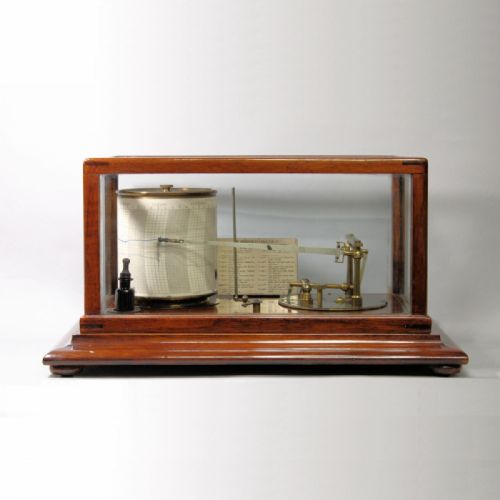


Mahogany Weather Station
Mahogany weather stations are scientific instruments housed in rich timber cases that record atmospheric pressure and temperature for daily domestic use.

Mahogany Weather Station
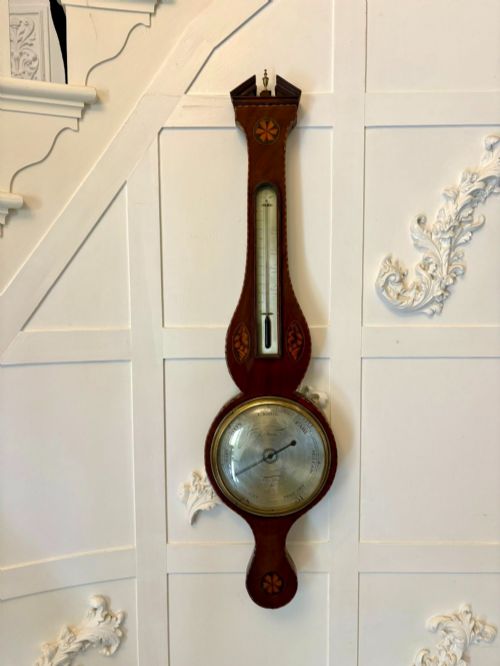
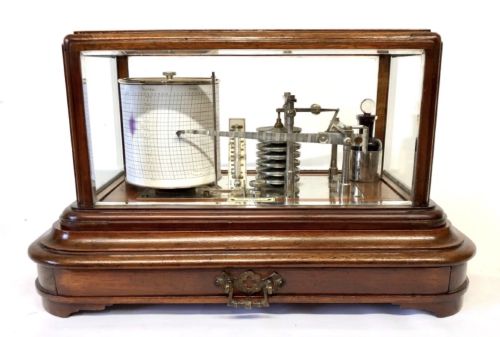
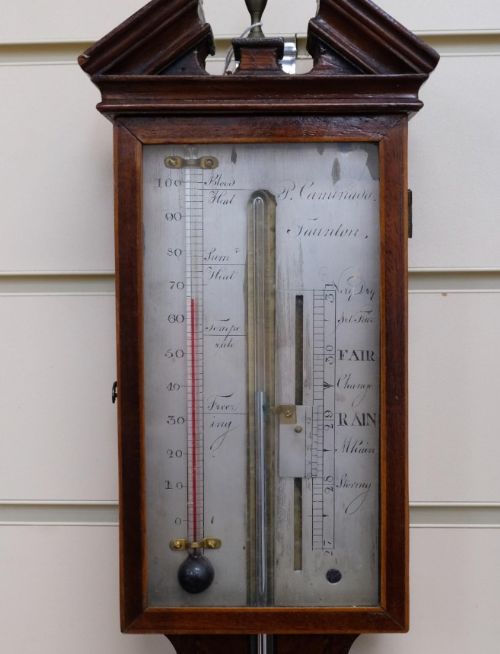
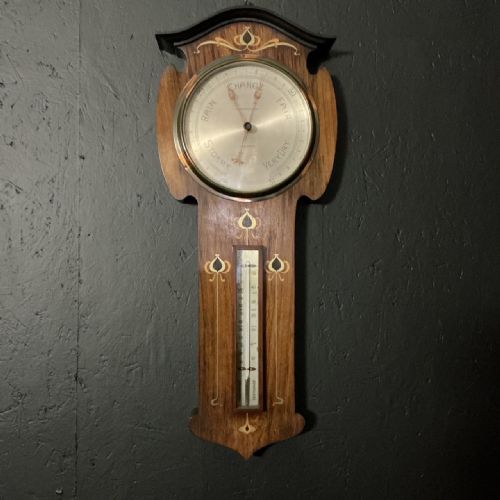
When you search for a mahogany weather station, you encounter a variety of atmospheric instruments including stick barometers, banjo barometers, and mechanical barographs housed in timber enclosures. These pieces originate predominantly from the eighteenth, nineteenth, and early twentieth centuries, spanning the Georgian, Regency, and Victorian periods.
You are most likely to meet wall-mounted banjo barometers and stick barometers on this page, alongside desk-standing barographs featuring brass fittings and glass covers. The selection encompasses restrained Georgian designs as well as more ornate Victorian and Edwardian examples.
Makers ranged from provincial English practitioners to prominent London opticians and instrument firms. Their works document the evolution of domestic meteorology from traditional mercury columns to mechanical recording drums.
Materials and construction
Makers selected solid and veneered mahogany for the structural housings, frequently embellishing the surfaces with satinwood stringing, shell inlay, and marquetry. These timber cases protected the delicate interior mechanisms while serving as polished furniture for the parlour or hallway.
Interior components combined silvered brass dials, engraved glass tubes, and steel linkages with mercury to register barometric fluctuations. Specialised makers signed their silvered metal scales with precise graduation marks for accurate atmospheric reading.
Mahogany Weather Station Retail Price Guide 2026
Typical asking prices for mahogany weather station among the pieces listed under this phrase on Sellingantiques today, from the lower quarter to the upper quarter. They describe what is for sale here now, not the wider market.
Listings feature mahogany weather stations spanning the eighteenth century through to the 1930s, incorporating brass, silvered metal, and glass components.
Markers of quality
Superior examples display crisp dial engraving, substantial brass bezels, and finely figured mahogany grain enhanced by delicate wood inlay. The sophistication of the interior mechanism, whether a delicate stick barometer tube or a complex clockwork barograph drum, dictates the standing of the piece.
The reputation of the maker inscribed upon the dial or backplate significantly elevates the piece, especially when associated with recognised London opticians or precision instrument workshops. Original mercury tubes, intact thermometer attachments, and well-preserved timber patination complete the higher tier of these instruments.
GAUPP & CO HONGKONG & SINGAPORE·NEGRETTI & ZAMBRA LONDON·R Fuess·Short & Mason Limited·S&B Solomons of London
The Mahogany Weather Station Glossary
- Barometer
- An instrument that measures atmospheric pressure to forecast changes in weather. These devices utilise either a mercury column or an aneroid capsule.
- Barograph
- A recording barometer that graphs atmospheric pressure over time onto a revolving drum using clockwork mechanisms. They are typically housed beneath a glass and mahogany cover.
- Stick Barometer
- A tall, slender instrument displaying a vertical mercury-filled glass tube alongside a vernier scale. This form represents the most direct method of reading barometric pressure.
- Banjo Barometer
- A wheel barometer housed within a distinctive curved timber case resembling a banjo. They often incorporate a hygrometer, thermometer, and spirit level alongside the main dial.
- Silvered Metal
- A brass or copper dial plate treated to achieve a silvery finish before being engraved with numbers and makers' names. This surface provides high contrast for legibility.
Mahogany Weather Station: Frequently Asked Questions
How do I read a mercury barometer?
Read the ambient pressure by observing the height of the mercury column against the engraved silvered scale. Tap the instrument gently before reading to settle the mercury.
Compare the current reading with the fixed pointer to see whether pressure is rising or falling, which indicates upcoming weather conditions.
Where should I place a wall barometer?
Hang your instrument on an interior wall away from direct sunlight, radiators, and draughts to ensure consistent temperature readings. Exterior walls can cause internal condensation.
Position the dial at eye level in a hallway or study where it remains stable and accessible for daily consultation.
What is the difference between a stick and banjo barometer?
Stick barometers display a straight vertical tube showing the actual height of the mercury column directly. They offer a purer, more scientific presentation.
Banjo barometers utilise a pulley and weight system inside an expanded wooden case to translate vertical mercury movement onto a circular dial face.
Do barographs require special maintenance?
Barographs rely on a clockwork mechanism that requires occasional winding and professional cleaning to keep the rotating drum moving smoothly. The ink pens also need periodic replacement.
Keep the glass case closed to protect the delicate aneroid metal stacks from dust and accidental damage while allowing air circulation through vent holes.
How can I date a mahogany weather station?
Examine the style of the mahogany case, the shape of the pediment, and the typography of the maker's signature on the dial. Georgian pieces lean toward restrained lines, while Victorian examples often feature bolder mouldings.
Look for tax stamps, patent dates, or retailer inscriptions engraved on the brass backplates and barometer scales to narrow down the decade of production.