



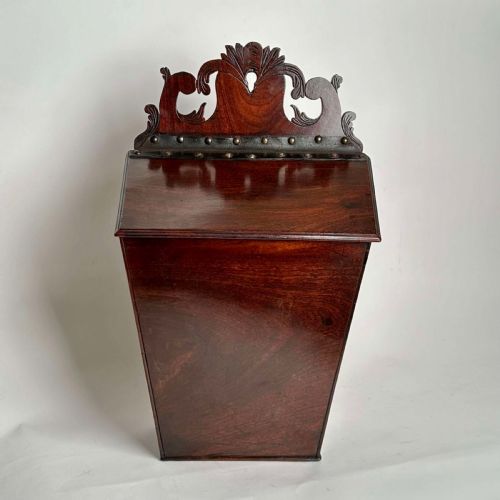
Mahogany Wall Rack
A mahogany wall rack brings orderly display and period warmth to a room, lifting everyday objects into view.
Mahogany Wall Rack
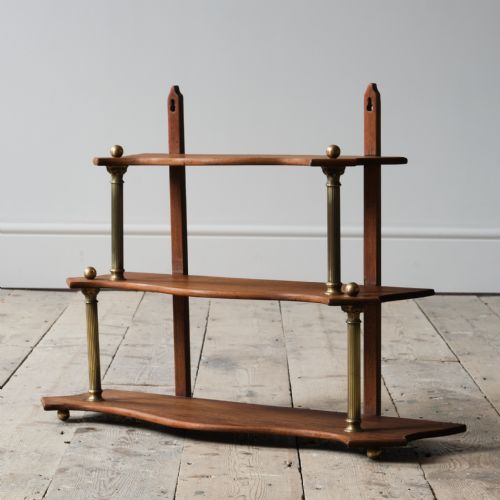
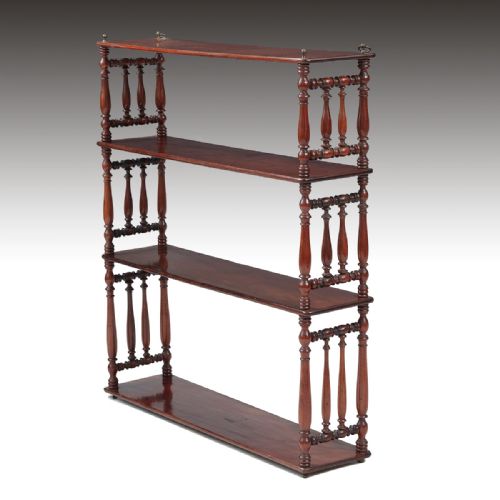
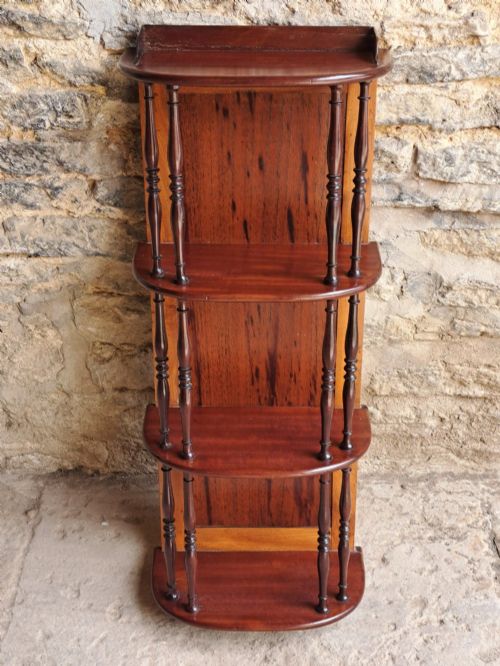
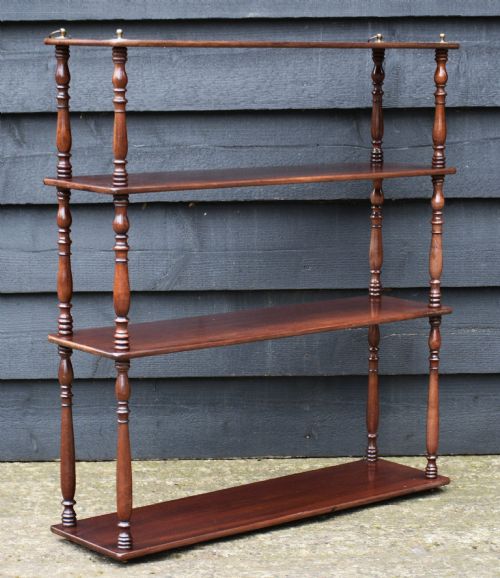
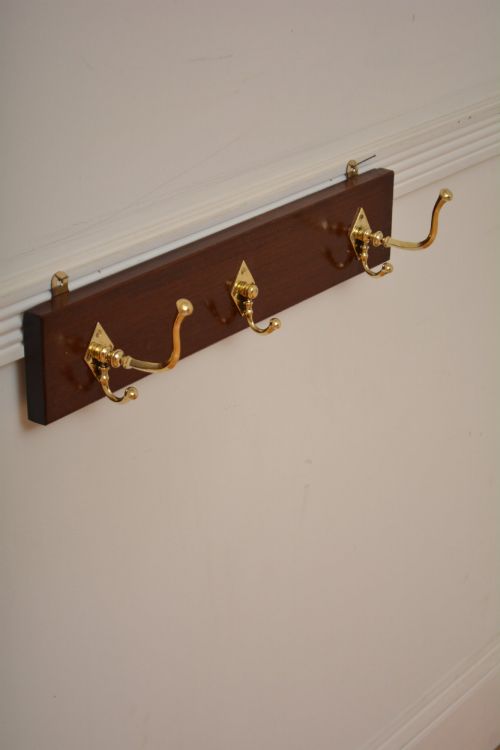
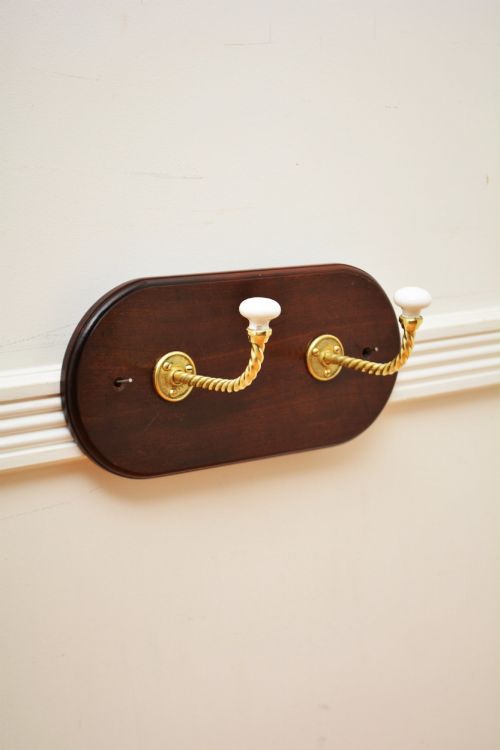
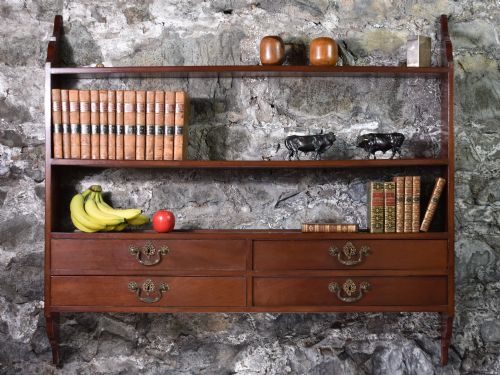
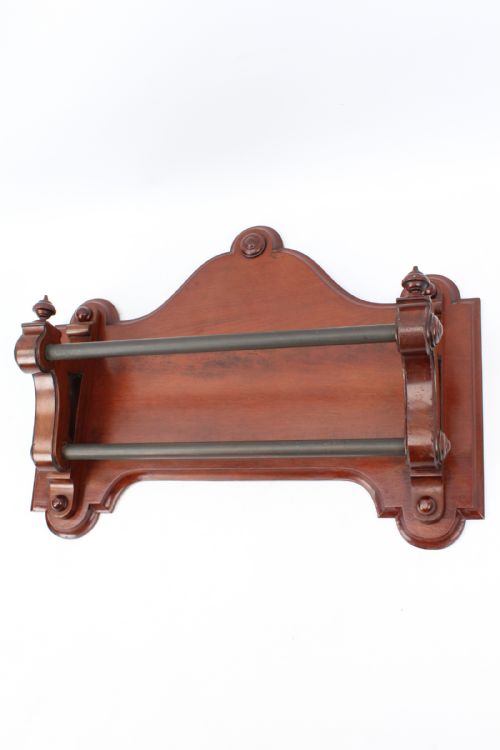
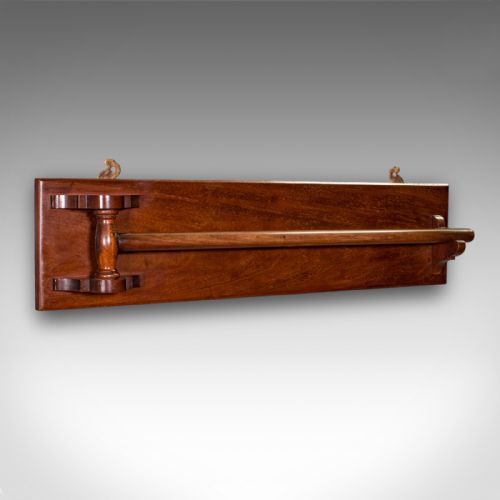
A mahogany wall rack spans several functional types designed to clear floor space, including hanging shelves, coat rails, and wall brackets. These pieces range from compact Georgian plate racks and multi-tiered Victorian display shelves to Edwardian inlaid ledges and sturdy maritime drying rails.
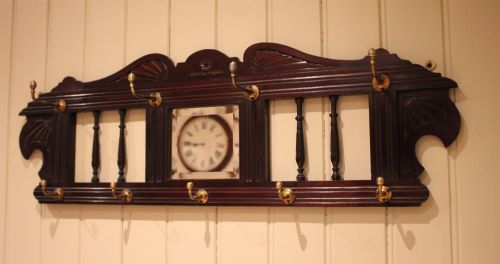
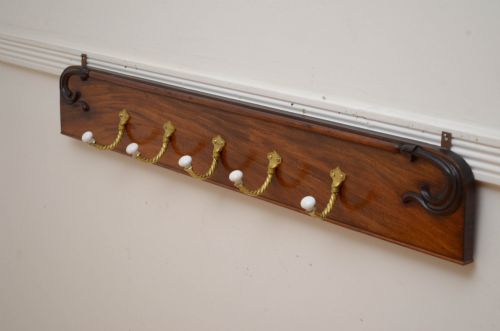
The materials paired with the timber define their specific domestic uses, such as brass hooks for hanging hats and coats, ceramic points for garments, or glass and iron details for structural support. Most examples date from the nineteenth century, reflecting the Victorians' enthusiasm for fitted wall storage and display.
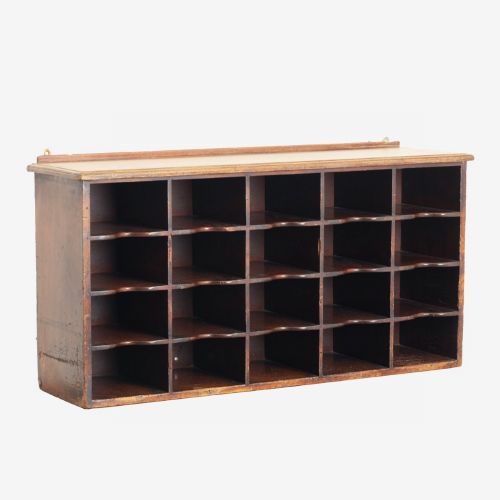
Buyers searching for a mahogany wall rack will encounter multi-tier shelving units, portable bookshelves, and specialised items like horseshoe mirrors fitted with coat hooks. These variations suit hallways, kitchens, and studies alike, combining practical utility with warm timber grain.
What varies in quality
The distinction between standard utility items and finer examples rests on the selection of timber, such as highly figured flame mahogany, and the crispness of carved details like stylized lion heads or neo-classical motifs. Heavier brass castings and well-cast mounting plates indicate superior workshop production compared to simpler stamped metal fittings.
Proportion and architectural balance set superior hanging shelves apart from plainer variants, with well-balanced tiers and delicate fretwork demonstrating advanced cabinetmaking skill. The integration of secondary materials like brass columns, bevelled mirror plates, and inlaid satinwood further distinguishes decorative pieces meant for formal reception rooms.
Some Victorian hallway pieces combined horseshoe-shaped mirrors with heavy brass hooks, offering a spot to check your hat while wishing your guests good fortune.
The Mahogany Wall Rack Glossary
- Flame mahogany
- A highly figured timber grain resembling flickering flames, achieved by cutting across the branch boughs. Cabinetmakers reserved this prized veneer for the most prominent surfaces of display racks.
- Whatnot
- A multi-tiered open shelving unit designed for displaying ornaments and small objects. These pieces often feature graduated tiers supported by turned columns.
- Portmanteau
- A heavy wall-mounted or freestanding rack fitted with hooks and mirrors for hanging coats and hats. They were typically positioned in Victorian and Edwardian entrance halls.
- Fretwork
- Openwork ornamentation carved or pierced through thin wood in geometric or organic patterns. This technique was frequently employed on Chippendale-style wall shelves.
- Brass gallery
- A low metal railing fitted around the edge of a shelf to secure items from sliding off. They are commonly found on maritime and fine display pieces.
Mahogany Wall Rack: Frequently Asked Questions
Where should I hang a wall rack?
These pieces suit entrance halls, kitchens, and bedrooms where wall storage solves space issues while adding character.
Coat and hat versions function best in boot rooms or hallways, while multi-tiered shelves display books or ceramics in living spaces.
How do I date an antique rack?
Dating relies on combining timber characteristics, construction methods, and stylistic cues from periods like the Georgian, Regency, or Victorian eras.
Hand-cut joinery, brass fitting types, and decorative motifs such as neo-classical swags or Aesthetic Movement lines offer clear chronological clues.
Can these shelves hold heavy books?
Strength depends entirely on the specific build, ranging from light display brackets to chunky, multi-tier shelving units.
Solid mahogany structures with substantial wall fixings handle heavier volumes, whereas delicate fretwork or veneer tiers suit lighter decorative objects.
What maintenance does mahogany require?
Keeping the wood in good condition involves simple dusting and occasional treatment with suitable natural waxes.
Avoiding direct sunlight and excessive heat prevents the polished mahogany surface and any applied veneers from drying out over time.